
TL;DR:
- Proper refrigerant levels are essential for efficient heat transfer, humidity control, and system longevity. Both low and high refrigerant charges cause damage, with leaks increasingly regulated by 2026 EPA rules requiring repairs rather than just recharges. Regular professional inspections using manifold gauges and leak detection protect homeowners from costly breakdowns and ensure compliance with new environmental standards.
Refrigerant is the substance your air conditioner uses to absorb heat from inside your home and release it outside, and the amount present in the system determines how well that process works. Understanding why refrigerant levels matter is the difference between a system that cools efficiently and one that quietly drains your energy budget while heading toward a breakdown. Both too little and too much refrigerant cause measurable damage to your HVAC equipment. With 2026 EPA regulations now lowering the mandatory leak repair threshold from 50 to 15 pounds for systems using HFC refrigerants, the importance of refrigerant level maintenance has never been higher for homeowners in Orange County and Los Angeles County.
Why refrigerant levels matter for AC performance
Proper refrigerant charge is the single most critical factor in how effectively your air conditioner transfers heat. When the charge is correct, refrigerant cycles through the evaporator coil, absorbs heat from indoor air, and releases that heat outside through the condenser. The system runs at the pressures and temperatures it was designed for, and your home cools down on schedule.
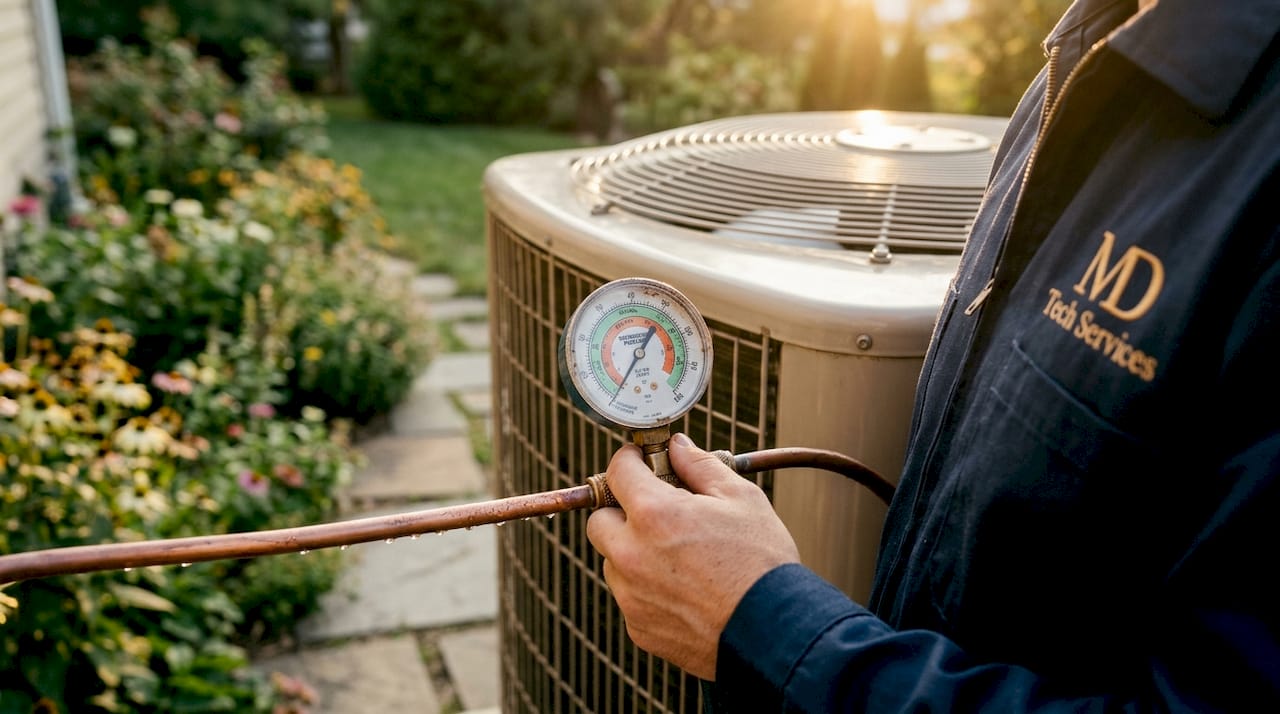
The role of refrigerants in residential cooling goes beyond temperature. Refrigerant also removes moisture from indoor air as it passes over the evaporator coil. When the charge is off, moisture removal drops, leaving your home feeling damp and uncomfortable even when the thermostat reads the right number. That combination of poor cooling and poor dehumidification is a clear sign something is wrong with the refrigerant circuit.
What happens when refrigerant levels are too low or too high?
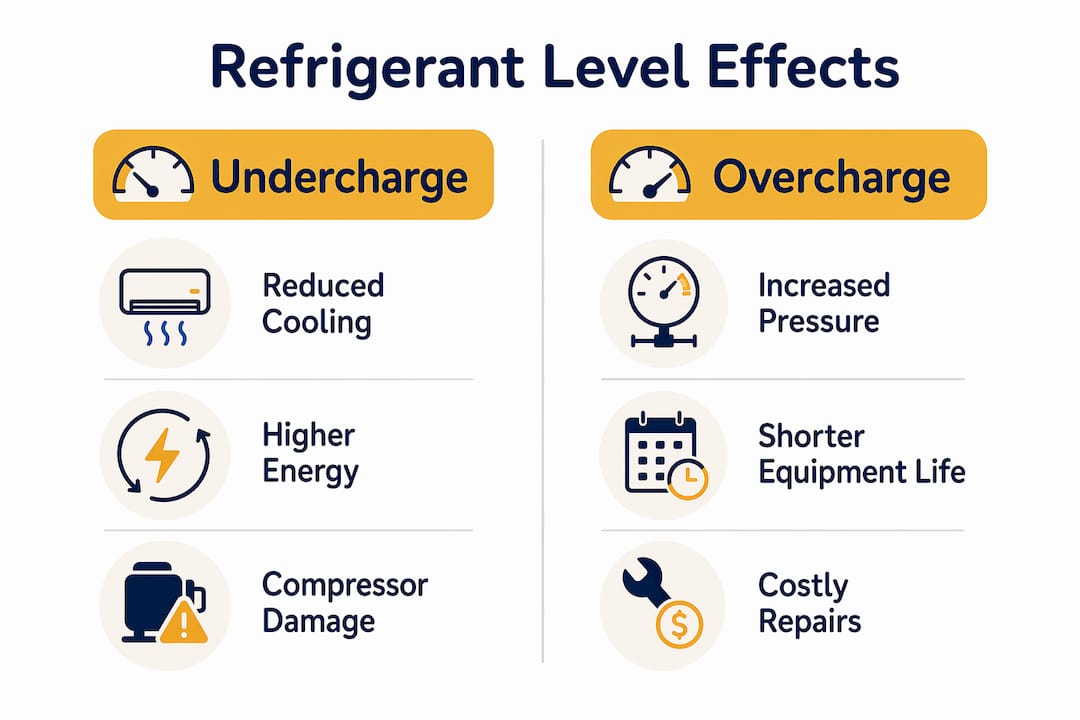
The effects of low refrigerant and high refrigerant are both damaging, but they damage your system in different ways. Knowing both extremes helps you understand what your technician is looking for during a service call.
Effects of low refrigerant (undercharge)
- Reduced cooling output. The system cannot absorb enough heat, so your home stays warm even with the AC running continuously.
- Ice buildup on the evaporator coil. Low pressure caused by undercharge drops coil temperature below freezing, causing moisture to freeze on the coil surface and block airflow.
- Longer run times. The system works harder and runs longer to reach the set temperature, which raises your electricity bill.
- Compressor strain. Running AC with low refrigerant may not trigger obvious discomfort at first, but it strains the compressor and risks early failure.
- Humidity problems. Reduced refrigerant charge lowers the system’s ability to pull moisture from the air, leaving indoor humidity elevated.
Effects of high refrigerant (overcharge)
- Elevated system pressure. Too much refrigerant raises pressure throughout the circuit, stressing the compressor, condenser, and connecting lines.
- Reduced efficiency. The system cannot condense refrigerant properly at high pressure, so heat transfer drops and energy consumption rises.
- Component damage. Sustained high pressure accelerates wear on the compressor and can cause liquid refrigerant to enter the compressor, which destroys it.
Pro Tip: Never assume your system just needs a “top off.” Refrigerant is a sealed substance that should not deplete over time. If levels are low, a leak is the cause and that leak must be found and repaired before any refrigerant is added.
Refrigerant undercharge is reported in 45% of new HVAC systems and 71% of older ones. That prevalence means a significant portion of homes are running on degraded cooling performance without the occupants knowing it.
How do refrigerant leaks affect performance and what do 2026 EPA rules require?
Refrigerant leaks are the primary cause of low charge in residential systems. Leaks develop at fittings, valve cores, brazed joints, and coil surfaces over time. Even a slow leak reduces system efficiency gradually, making the decline hard to notice until the performance drop becomes obvious.
The environmental and regulatory stakes around leaks increased significantly in 2026. The EPA lowered the mandatory leak repair threshold from 50 pounds to 15 pounds for systems using HFC refrigerants like R-410A. This means that if your system holds 15 or more pounds of refrigerant and develops a leak, your HVAC contractor is now required to repair it within a defined timeframe and verify the repair.
| Regulatory Detail | 2026 Requirement |
|---|---|
| Applicable refrigerant type | HFC refrigerants (e.g., R-410A) |
| Minimum system charge threshold | 15 lbs or more |
| Previous leak repair threshold | 50 lbs |
| New leak repair threshold | 15 lbs |
| Verification requirement | Leak repair must be documented and verified |
The Subpart C framework that took effect in 2026 runs alongside the existing Section 608 rules, creating a dual regulatory regime that requires technicians to track leaks carefully across a broader range of systems. Many smaller residential systems now fall under stricter oversight than they did before. For homeowners, this means your HVAC contractor is legally obligated to address leaks rather than simply recharge the system and leave.
The EPA frames these rules as balancing environmental protection with ensuring Americans have access to reliable cooling. The practical effect for you as a homeowner is that a certified technician cannot legally ignore a confirmed leak in a regulated system. That regulatory pressure works in your favor.
How can you recognize signs of refrigerant issues in your home?
Catching refrigerant problems early prevents the compressor damage and energy waste that come with running a system in a degraded state. Common signs of low refrigerant are recognizable once you know what to look for.
- Warm or weak airflow from vents. The air coming out of your registers feels less cold than usual, or the volume of airflow seems reduced.
- Longer cooling cycles. Your AC runs for extended periods without reaching the thermostat setting, which shows up as higher electricity bills.
- Ice on the refrigerant lines or evaporator coil. Visible frost or ice on the copper lines near the indoor unit or on the coil itself is a direct indicator of low charge or airflow restriction.
- Hissing or bubbling sounds. These noises near the indoor or outdoor unit often indicate refrigerant escaping through a leak point.
- Elevated indoor humidity. If your home feels sticky despite the AC running, the system may not be removing moisture effectively due to an improper charge.
Pro Tip: Symptoms like warm airflow or long run times can also point to dirty filters, blocked coils, or a failing blower motor. Use the HVAC troubleshooting process to rule out other causes before assuming refrigerant is the issue. A technician with manifold gauges can confirm the diagnosis in minutes.
One detail worth knowing: a system with a slow refrigerant leak may cool adequately for months before performance drops noticeably. By the time you feel the difference, the compressor has already been under stress for a significant period. Scheduling annual refrigerant charge checks catches this before it becomes expensive.
What are best practices for maintaining correct refrigerant levels?
Proper refrigerant level maintenance requires professional tools and a diagnostic approach, not a simple refill. The following practices protect your system and your investment.
- Never add refrigerant without a leak diagnosis first. Adding refrigerant to a leaking system wastes money and delays the repair that will actually fix the problem. Diagnosing leaks before recharging is the correct sequence every time.
- Require manifold gauge measurements. Accurate diagnosis using manifold gauges and subcooling or superheat measurements confirms the exact charge condition. Guessing the charge level by feel or by adding a set amount is not acceptable practice.
- Schedule annual refrigerant charge checks. Including a charge verification in your annual AC tune-up catches slow leaks before they cause compressor damage.
- Confirm refrigerant type compatibility. R-410A and R-22 systems require different refrigerants and cannot be mixed. A licensed technician will verify the correct type for your equipment before adding anything.
- Request a written leak repair record. Under 2026 EPA rules, leak repairs on regulated systems must be documented. Ask for that paperwork and keep it with your home maintenance records.
- Hire licensed HVAC technicians only. Handling refrigerants requires EPA Section 608 certification. Unlicensed work exposes you to liability and risks improper charging that damages your system.
Understanding what refrigerant recharging involves before your service appointment helps you ask the right questions and verify that your technician is following proper procedures.
Key takeaways
Correct refrigerant charge is the foundation of efficient, reliable home cooling, and both undercharge and overcharge cause measurable damage to your system and your energy budget.
| Point | Details |
|---|---|
| Refrigerant charge drives efficiency | Incorrect levels reduce heat transfer, raise energy bills, and stress the compressor. |
| Undercharge is widespread | Field studies report undercharge in 45% of new and 71% of older HVAC systems. |
| Leaks require repair, not just refill | Adding refrigerant without fixing the leak wastes money and accelerates equipment failure. |
| 2026 EPA rules lower the threshold | Systems with 15+ lbs of HFC refrigerant now face stricter leak repair and documentation requirements. |
| Annual checks prevent costly failures | Routine refrigerant charge verification catches slow leaks before compressor damage occurs. |
What we’ve learned from years of refrigerant service calls
After handling HVAC calls across Orange County and Los Angeles County, the pattern we see most often is homeowners who waited too long because the cooling decline was gradual. The system still ran. The house still cooled down, eventually. But the compressor was working at elevated stress for months, and by the time the call came in, the repair cost was significantly higher than it would have been with an earlier diagnosis.
The misconception we hear most is that refrigerant is like fuel. People assume it gets used up and needs periodic topping off. Refrigerant does not get consumed. If levels are low, refrigerant has escaped somewhere, and that somewhere needs to be found and sealed. A technician who adds refrigerant without performing leak detection is not solving the problem. They are delaying it.
The 2026 EPA threshold change matters more than most homeowners realize. A system holding 15 pounds of R-410A is a standard residential unit. The new rules mean your contractor has a legal obligation to address leaks in that system, not just recharge it. That is a meaningful protection for you as a homeowner, and it aligns with what responsible HVAC service has always required.
Refrigerant management is not glamorous maintenance. It does not come with visible results the way a new filter does. But it is the category of HVAC care that most directly determines whether your compressor lasts 15 years or 8. That difference is worth paying attention to.
— MDTECH
Get your refrigerant levels checked by a licensed technician
If your AC is running longer than usual, your energy bills are climbing, or you have noticed ice on the refrigerant lines, those are signs that your system needs a professional refrigerant assessment now.

Mdtechservices provides licensed HVAC inspection, leak detection, and refrigerant charging for homeowners and tenants throughout Orange County and Los Angeles County. Our technicians use manifold gauges and follow EPA-certified procedures to diagnose the actual cause before adding anything to your system. We document all leak repairs to keep you compliant with 2026 regulations. Learn more about residential HVAC repair or find out why timely repairs prevent small refrigerant issues from becoming full compressor replacements. Call Mdtechservices to schedule your inspection today.
FAQ
What causes refrigerant levels to drop in a home AC system?
Refrigerant levels drop because of leaks, not normal use. Leaks develop at fittings, coil surfaces, and valve cores over time, and the only correct fix is to locate and repair the leak before recharging the system.
How do I know if my AC has low refrigerant?
Common signs include warm or weak airflow from vents, ice buildup on the refrigerant lines or evaporator coil, longer cooling cycles, rising energy bills, and elevated indoor humidity despite the AC running.
Can I add refrigerant to my AC myself?
No. Handling refrigerants requires EPA Section 608 certification, and adding refrigerant without diagnosing the underlying leak wastes money and risks compressor damage. Only a licensed HVAC technician should perform refrigerant service.
What are the 2026 EPA refrigerant leak repair rules?
The EPA lowered the mandatory leak repair threshold from 50 to 15 pounds for systems using HFC refrigerants like R-410A. Systems at or above that charge level must have leaks repaired and documented within the required timeframe under the Subpart C framework.
Does refrigerant level affect my energy bill?
Yes. Both undercharge and overcharge reduce system efficiency, forcing the AC to run longer to reach the set temperature. Field studies show undercharge is present in 45% of new HVAC systems, making it one of the most common causes of unexplained energy waste in residential cooling.