
TL;DR:
- A CCTV sewer scope inspection is a separate, non-destructive process that visually examines underground pipes using waterproof cameras. It reveals common defects like root intrusion, cracks, and buildup, helping homeowners avoid costly repairs through early detection. Scheduling these inspections before purchasing, after recurring problems, or periodically ensures long-term plumbing health and property protection.
Most homeowners assume their standard home inspection covers everything underground. It does not. A pipe inspection, formally known as a CCTV sewer scope inspection, is a separate procedure that examines the inside of your drain and sewer lines using a waterproof camera. Understanding what is a pipe inspection, how it works, and what it reveals can protect you from expensive surprises — think sewage backups, collapsed lines, or root damage that builds silently for years before you notice anything wrong.
Table of Contents
- Key takeaways
- What a pipe inspection actually is
- Common defects pipe inspections uncover
- What to expect during a pipe inspection service
- The importance of pipe inspections for your property
- Pipe inspection techniques and choosing the right service
- My perspective on pipe inspections as a plumbing professional
- How Mdtechservices can help protect your plumbing
- FAQ
Key takeaways
| Point | Details |
|---|---|
| Separate from home inspections | Standard home inspections do not examine underground sewer pipes; a dedicated pipe inspection is required. |
| Video technology at the core | Cameras on flexible cables provide live footage of cracks, roots, and blockages without any digging. |
| Standardized defect reporting | NASSCO PACP coding gives you consistent severity ratings that contractors can act on directly. |
| Costs $150 to $450 on average | Residential inspections typically fall within this range, with the national average near $250 to $300. |
| Prevents costly emergencies | Proactive detection helps you avoid last-minute repair bills that routinely run into the thousands. |
What a pipe inspection actually is
A pipe inspection is a direct visual examination of your underground plumbing using specialized camera equipment. The industry standard method is CCTV pipe inspection, where a waterproof camera on a cable is fed through your drain system to capture live video of the pipe interior. You get a real-time view of conditions that no amount of exterior observation or guesswork could reveal.
Here is what the process looks like in practice:
- A technician accesses the sewer line through a cleanout fitting or by removing a toilet to reach the drain.
- A flexible cable with a high-resolution waterproof camera is pushed through the pipe.
- Live video streams to a monitor at surface level, where the technician observes and records everything.
- Defects like cracks, root intrusions, corrosion, grease buildup, and misaligned joints appear in real time.
- The camera’s position is tracked using a locator, so defect locations are measured accurately.
One thing that surprises many homeowners: the process is entirely non-destructive. No excavation is needed to see what is happening 10 feet underground. The camera does the work. This is why pipe inspection services have become standard practice before purchasing a home, after persistent drain problems, or as part of scheduled plumbing maintenance.
Pro Tip: Ask the technician to use a locator tool alongside the camera. This device pinpoints exactly where a defect sits underground, giving your repair contractor precise depth and distance measurements so they dig in the right spot the first time.
The scope does have practical limits. Cameras cannot inspect pipes that are fully blocked or collapsed, since the cable cannot pass through. Very old clay pipes with significant root infiltration may only be partially accessible. Even so, a partial inspection delivers far more information than no inspection at all.
Common defects pipe inspections uncover
Understanding what pipe inspections regularly find helps you appreciate why they matter. These are not rare problems. They are issues developing inside thousands of homes right now, undetected.
- Root intrusion. Tree and shrub roots seek out moisture and will find hairline cracks in clay, cast iron, or even PVC pipes. Once inside, they grow and eventually block the line entirely.
- Cracks and fractures. Ground movement, age, and temperature changes cause pipes to crack. Small fractures let groundwater in and sewage out, contributing to soil erosion beneath your foundation.
- Bellied pipe sections. When a pipe sags due to soil settlement, waste pools in the low spot instead of draining away. These sections create persistent blockages and accelerate deterioration.
- Offset joints. Pipes join at couplings, and when those joints shift out of alignment, you get partial blockages and potential leak points that worsen over time.
- Corrosion and scale buildup. Cast iron pipes corrode from the inside out. The rough, deteriorated surface catches debris and narrows the flow path significantly.
- Grease and debris blockages. Cooking fats, wipes labeled as flushable, and other debris accumulate into thick obstructions that slow drainage and can cause full backups.
Left alone, each of these problems escalates. A small crack becomes a broken section. Partial root intrusion becomes a full blockage. A belly causes repeated slow drains that your plunger cannot fix. The real value of pipe condition assessment is catching these issues at the stage where a targeted repair costs a fraction of what emergency excavation would.
What to expect during a pipe inspection service
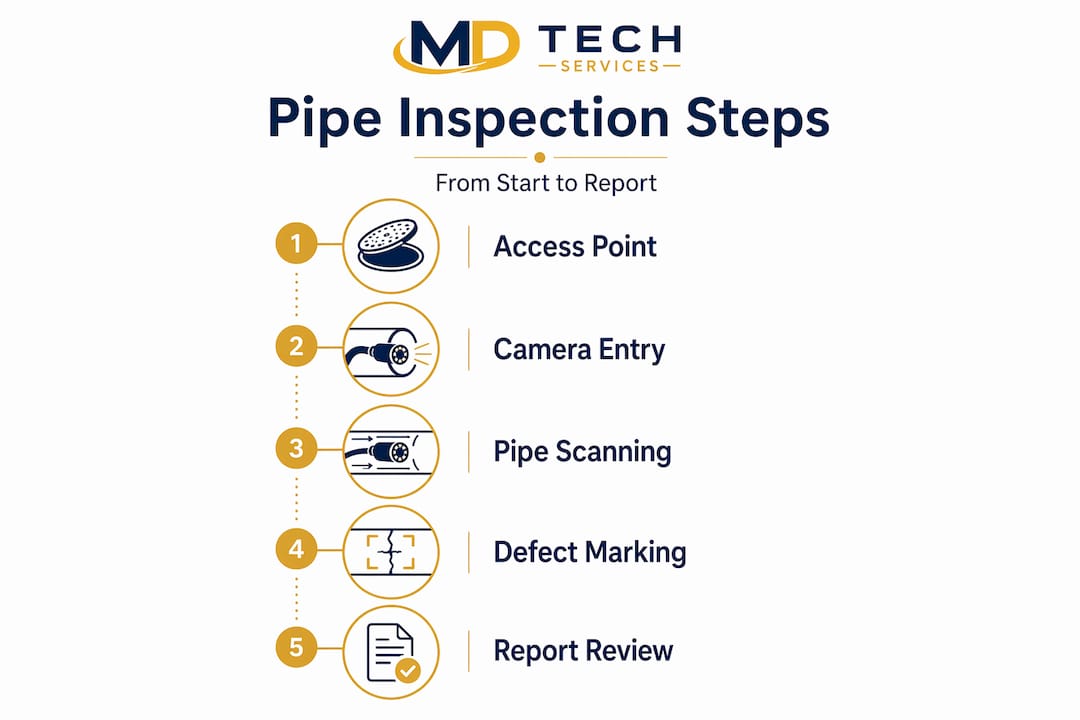
Knowing what the process involves makes the experience much less intimidating. Here is a straightforward step-by-step overview of how residential inspections typically run:
- Scheduling and access. You schedule with a licensed technician who will need access to a cleanout or toilet. Plan for one to two hours on site for a standard residential sewer line.
- Camera insertion. The technician feeds the camera into the drain from the access point and begins advancing it toward the main sewer.
- Live monitoring. The technician watches the monitor and narrates what appears, noting defect locations, severity, and approximate distances from the access point.
- Locator marking. At any significant defect, the technician may surface-mark the location above ground for repair reference.
- Report delivery. After the inspection, you receive the full video file along with a written summary, photographs, and documented defect locations.
A residential sewer scope inspection typically costs between $150 and $450, with the national average around $250 to $300. Metro areas like Los Angeles or Orange County often sit closer to the higher end due to service complexity.
| Inspection type | Typical cost | What you receive |
|---|---|---|
| Basic sewer scope | $150 to $250 | Video footage, verbal summary |
| Full report with coding | $250 to $400 | Video, written report, defect codes, location data |
| Inspection with locator | $350 to $450 | All of above plus GPS or surface-marked defect locations |
The report itself deserves attention. A quality report includes video footage with timestamped observations and written descriptions of every defect, how far from the house each issue sits, and a severity assessment. Many professional technicians use NASSCO PACP standards for defect coding. PACP, which stands for Pipeline Assessment and Certification Program, is the North American standard that assigns consistent severity codes to defects, making your report readable and usable by any contractor.
Pro Tip: When you receive your report, confirm it includes the distance measurement to each defect from the access point. Location and timestamp data on your report translates directly into faster, more accurate repair quotes and prevents contractors from guessing where to dig.
The importance of pipe inspections for your property
Here is where the financial case becomes very clear. Sewer line repairs without prior inspection often result in contractors digging in multiple locations trying to find the problem. That guesswork costs you money every time a shovel hits the ground.
The benefits of pipe inspection go well beyond just finding problems:
- Preventative maintenance. Catching root intrusion or early corrosion means a hydro-jet cleaning or spot repair, not a full pipe replacement.
- Accurate repair guidance. The video combined with quality documentation gives your contractor a precise roadmap. No guessing, no unnecessary excavation.
- Pre-purchase protection. A sewer scope before buying a home can save buyers up to $15,000 by revealing hidden sewer defects that would become your repair responsibility after closing.
- Property documentation. For property managers, inspection records create a baseline for tracking pipe deterioration over time and justify capital expenditure decisions.
- Trenchless repair preparation. Proceeding with pipe relining or trenchless repairs without a prior CCTV baseline risks undiscovered issues and can void warranties on the new lining.
- Regulatory and sale compliance. Some municipalities and real estate transactions require documented sewer condition. A properly coded inspection report satisfies those requirements immediately.
When should you schedule an inspection? Before buying any property. After persistent slow drains or recurring backups. Every five to seven years on homes older than 30 years. After any significant landscaping work near sewer lines, since roots respond quickly to soil disturbance.
Pipe inspection techniques and choosing the right service
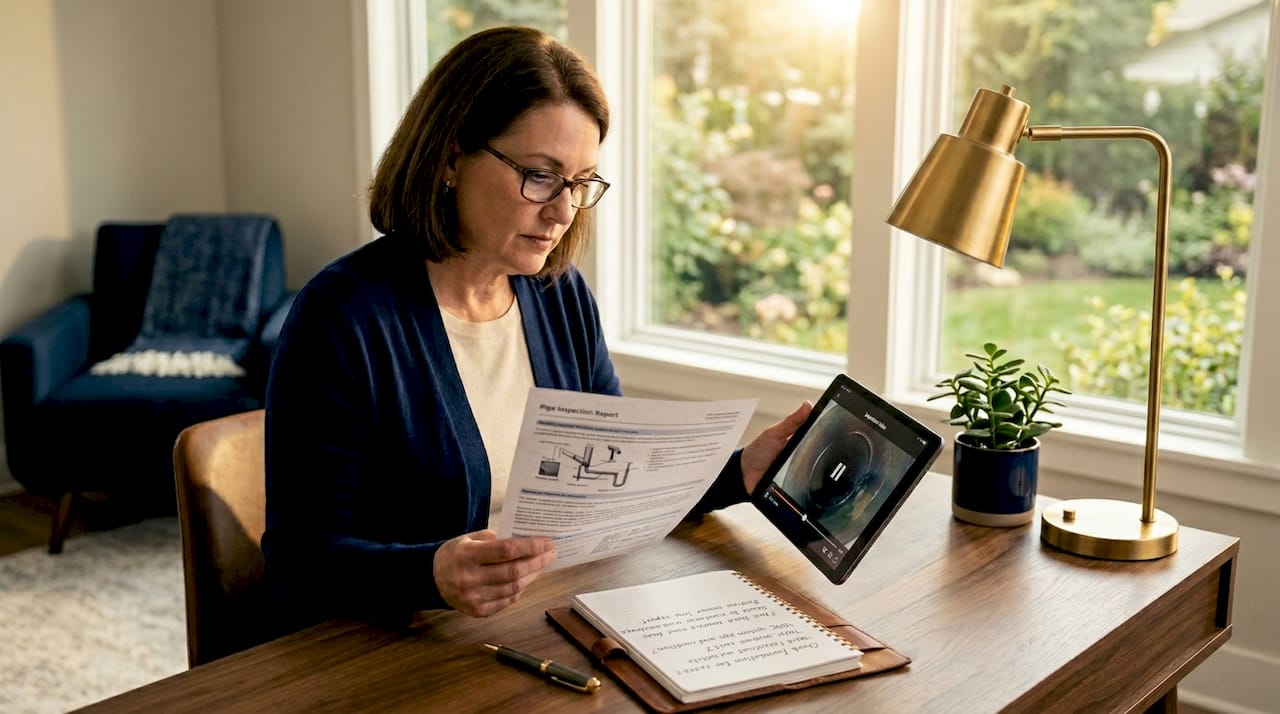
Not all inspections are the same, and knowing your options helps you ask the right questions when you call a provider.
| Method | Best for | Key limitation |
|---|---|---|
| CCTV video inspection | Standard residential lines, defect documentation | Cannot pass full blockages |
| Manual rod inspection | Simple blockage clearing only | No visual documentation of pipe condition |
| Hydro-jet with camera | Grease or debris blockage plus condition check | Higher cost; not always necessary |
| Smoke testing | Finding connection leaks and illegal hookups | Requires access to multiple points |
Video pipe inspection is the standard choice for most homeowners. It balances thoroughness, cost, and practical output. Manual rod inspections can clear a clog but tell you nothing about your pipe’s condition or what caused the blockage in the first place.
When evaluating pipe inspection services, look for technicians who are licensed plumbers or certified inspection specialists. Ask whether they use NASSCO PACP coding in their reports, since standardized PACP data transforms raw video into structured information you can use for long-term planning. Verify they provide both the video file and a written report. Checking how to verify a licensed plumber before hiring is a straightforward step that protects you from unqualified operators.
Technology in this field keeps advancing. Automated defect recognition software can now flag anomalies in the video feed in real time, and digital reporting platforms allow technicians to deliver coded reports within hours of the inspection.
My perspective on pipe inspections as a plumbing professional
I’ve watched homeowners spend thousands of dollars on repairs that could have cost a fraction of that amount with proper prior documentation. In my experience, the biggest problem is not that people refuse pipe inspections. It’s that they simply do not know the inspections exist until they are already in crisis mode.
What I’ve learned from working on residential plumbing in the Los Angeles and Orange County area is that underground pipes are the most ignored part of any home. Roofs get inspected. HVAC systems get serviced. Pipes get forgotten until water backs up through a floor drain at the worst possible time.
The other pitfall I’ve seen consistently is homeowners accepting inspection results that lack location data. A report that says “root intrusion detected” without telling you where in the line that intrusion sits is close to useless for a contractor. You deserve specifics, and a good technician delivers them.
My honest recommendation: treat a pipe inspection the same way you treat any other scheduled home maintenance. It is not a luxury. It is one of the most cost-effective tools available for protecting your property’s plumbing infrastructure. The documentation alone, when standardized with PACP coding, becomes a long-term asset management record rather than a one-time snapshot.
— MDTECH
How Mdtechservices can help protect your plumbing
If you are ready to move from understanding to action, Mdtechservices is here to help. Our licensed technicians serve homeowners and property managers throughout Orange County and Los Angeles County, providing reliable plumbing inspections backed by clear reporting and real locational data.

Whether you need a pre-purchase sewer scope, a periodic condition check, or follow-up repairs after an inspection, our team gives you the information you need to make confident decisions. Explore our full range of plumbing services for homeowners or review our routine plumbing maintenance guidance to keep your entire system in top condition. Contact Mdtechservices today to schedule your inspection and get a report you can actually use.
FAQ
What does a pipe inspection involve?
A pipe inspection involves inserting a waterproof camera on a flexible cable into your sewer line through a cleanout or toilet. The camera captures live video showing cracks, root intrusion, blockages, and corrosion without any digging required.
How much does a residential pipe inspection cost?
Residential sewer scope inspections typically range from $150 to $450, with the national average around $250 to $300. Final cost depends on your location, line length, and whether a full coded report is included.
How often should homeowners inspect their pipes?
Homes older than 30 years benefit from an inspection every five to seven years. You should also schedule one before purchasing a property, after recurring drain problems, or following any major landscaping work near sewer lines.
What is NASSCO PACP coding in pipe reports?
NASSCO PACP is the North American standard for assigning consistent severity codes to pipe defects. It turns raw inspection video into structured, auditable data that contractors and property managers can use for repair planning and long-term maintenance tracking.
Can a pipe inspection replace a standard home inspection?
No. A pipe inspection examines underground drain and sewer lines specifically, while a standard home inspection covers above-ground systems, structure, and visible components. The two inspections complement each other and address entirely separate aspects of a property.