
TL;DR:
- Effective tenant communication accelerates repairs, builds trust, and reduces legal risks in property management.
- Clear documentation and timely updates are legally required and essential for tenant satisfaction, especially in California.
When a tenant’s refrigerator stops working or an HVAC unit fails in the middle of a California summer, the clock starts ticking immediately. Most property managers focus on finding a technician fast, but tenant communication is crucial for timely repairs, trust, reduced turnover, and legal compliance in Orange and LA County rentals. The real bottleneck in most repair situations is not technician availability. It is the communication chain between tenant, property manager, and service provider. Get that chain right, and repairs resolve faster, tenants stay longer, and your legal exposure drops significantly.
Table of Contents
- Why tenant communication makes or breaks repair outcomes
- Key legal requirements for repair requests in California
- How to streamline repair communications for fast results
- Clarifying maintenance responsibilities and expectations
- The risks and rewards of automating tenant communication
- Our perspective: Why communication outperforms speed every time
- Streamline your repairs with expert help
- Frequently asked questions
Key Takeaways
| Point | Details |
|---|---|
| Fast response builds trust | Acknowledging and updating tenants quickly on repairs increases satisfaction and reduces turnover. |
| Written records prevent disputes | Documenting repair communication in writing helps you stay legally compliant. |
| Clear roles reduce issues | Spelling out maintenance duties in leases and regular reminders prevents confusion and repeat calls. |
| Balanced automation works best | Automation speeds up repairs but personal touch maintains tenant relationships for the long term. |
Why tenant communication makes or breaks repair outcomes
Property management is fundamentally a relationship business, and repairs are where that relationship gets tested most. When communication breaks down around a maintenance issue, the consequences stack up quickly. Tenants who feel ignored will either escalate the issue legally or attempt their own fixes, which often results in more costly damage and more complicated repairs.
The numbers tell a clear story. Research shows that 41% of landlords cite maintenance as their top operational challenge, while 26% point specifically to communication issues as the root cause of repair delays and disputes. Fast, responsive communication can boost lease renewals by up to 25%, and the average cost of tenant turnover runs around $1,750. That figure does not account for lost rent during vacancy or the time spent screening new applicants.
Here is what good repair communication actually protects you from:
- Tenants pursuing repair-and-deduct remedies under California law
- Negative reviews that damage your reputation and affect future tenant quality
- Repeat service calls for the same issue due to insufficient follow-up
- Legal liability from undocumented verbal agreements
- Escalating damage from ignored or delayed reporting
“Keeping tenants informed throughout the repair process, from acknowledgment to completion, is not optional for landlords who want to stay compliant and build long-term occupancy.” This principle is especially important in competitive rental markets like Orange County and Los Angeles.
Using a proactive approach also helps you catch small issues before they become expensive ones. An appliance checklist for property managers is one practical tool that keeps your units in better shape year-round and gives you a communication baseline to reference with tenants.
The truth is that tenants do not always expect instant fixes. What they expect is to be heard, updated, and treated with respect. When you deliver on those expectations consistently, trust builds naturally, and that trust directly reduces turnover, disputes, and maintenance friction over time.
Key legal requirements for repair requests in California
California has clear legal frameworks around repair communication, and Orange and LA County landlords need to know them well. Missing a deadline or failing to document a response properly can shift legal liability in a hurry.
The basic timeline structure works like this:
| Repair type | Required response window |
|---|---|
| Emergency (no heat, flooding, gas leak) | 24 to 48 hours |
| Urgent (broken HVAC in extreme weather) | 1 to 14 days |
| Routine (non-essential appliances, cosmetic) | Up to 30 days |
Misjudging these timelines gives tenants the legal right to pursue remedies like repair-and-deduct, where they hire their own contractor and subtract the cost from rent. In the worst cases, tenants may also claim constructive eviction if habitability conditions go unaddressed.
The documentation side is equally important. Landlords should use online portals and email for written records, and California Civil Code requires tenants to notify landlords in writing when reporting habitability issues. If a tenant calls to report a broken HVAC unit but never puts it in writing, you may have limited legal exposure. However, if you are aware of the issue verbally and do nothing, the law will not protect you on that technicality alone.
Here is a step-by-step process that keeps you legally protected:
- Acknowledge every repair request in writing within 12 to 24 hours, even if just to confirm receipt.
- Categorize the issue by urgency and communicate the expected timeline to the tenant.
- Schedule the repair with a licensed technician and share the appointment window with the tenant.
- Document all technician visits, parts ordered, and completion dates in a written log.
- Follow up with the tenant after the repair to confirm resolution and record their response.
Landlords must acknowledge requests within 12 to 24 hours in Orange County and provide regular updates on technician arrival and repair status. This is not just courteous. It is expected practice under local property management standards.
Pro Tip: When scheduling appliance repairs, always send the tenant a written confirmation with the technician’s name, company, and expected arrival window. This small step dramatically reduces friction and shows professionalism.
If there is any question about whether a repair delay is justified, prioritizing repairs after an inspection helps you document the condition of the unit and establish a defensible repair order based on safety and urgency.
How to streamline repair communications for fast results
Once you understand the legal framework, the next step is building a system that executes repair communication reliably and efficiently. Ad hoc approaches, like texting tenants from your personal phone and keeping notes in a spiral notebook, create gaps that will eventually cause problems.
A well-structured repair communication workflow includes three core stages:
- Acknowledgment. Auto-respond to all incoming requests within four hours during business hours. If you use a property management portal, enable automatic confirmation messages that include a ticket number and expected response window.
- Status updates. Check in with the tenant when the technician is scheduled, when they are en route, and when the repair is complete. Three updates in total, minimum.
- Post-repair follow-up. Send a short satisfaction check within 24 to 48 hours after the repair is done. This closes the loop, catches any lingering issues early, and builds goodwill.
Here is how common communication channels compare for repair scenarios:
| Channel | Best use case | Key advantage | Key risk |
|---|---|---|---|
| Online portal | All routine requests | Creates automatic written record | Tenants may not use it |
| Scheduling, documentation | Easy to reference and forward | Slower for urgent issues | |
| Text message | Quick updates, confirmations | Fast and direct | Not always documented |
| Phone call | Emergencies, complex issues | Immediate clarity | No automatic written record |
Implementing 24/7 portals for repair requests with auto-acknowledgment, priority triage, and status updates is now considered standard best practice for HVAC and appliance repairs in professional property management.
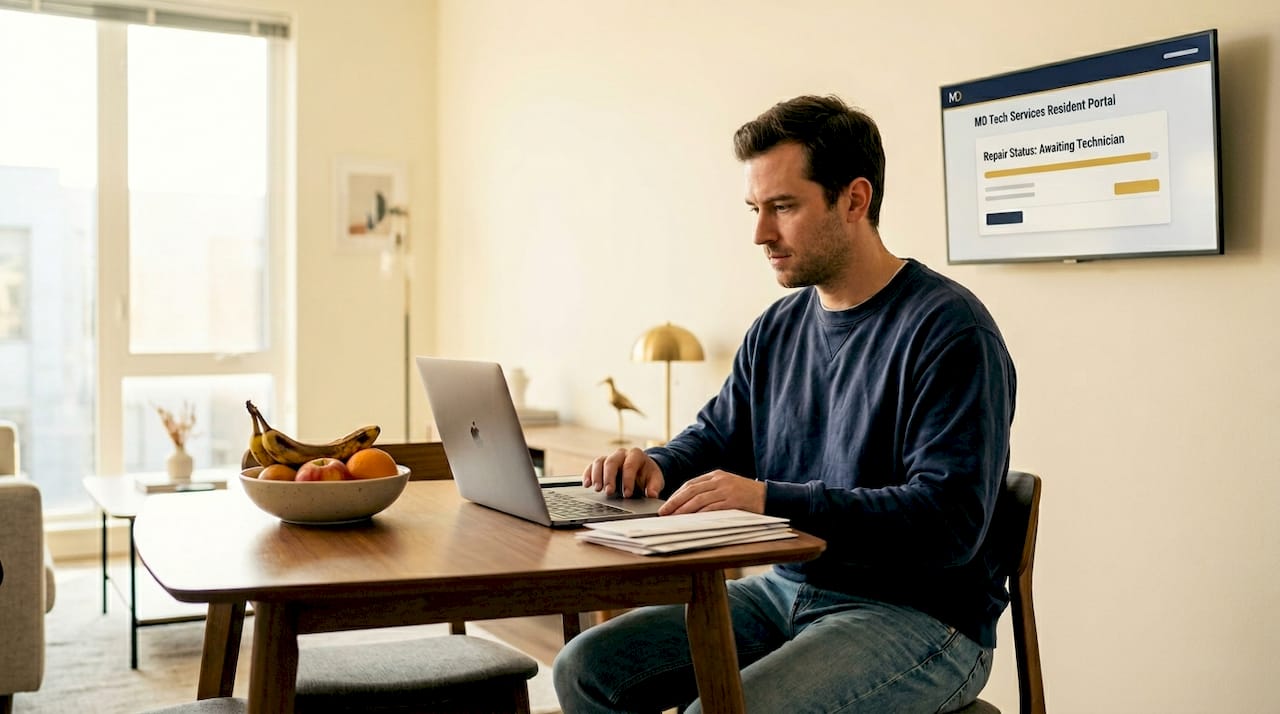
The most effective property managers set service-level agreements (SLAs) that define response time targets. For example, acknowledgment under four hours, scheduling confirmation within 24 hours, and repair completion within the legally required window. Automating roughly 80% of communications keeps the system scalable, while reserving personal outreach for complex or escalated situations maintains trust.
Pro Tip: Automate the routine updates but write the exceptions yourself. When a repair is delayed, a personal message from you explaining the reason and offering a realistic new timeline does more for tenant satisfaction than any automated system can.
Two areas where fast communication directly translates to cost savings are reducing appliance downtime and saving energy through prompt repairs. When repairs are scheduled and executed quickly, tenants stay comfortable and your property avoids the secondary costs of neglected equipment.
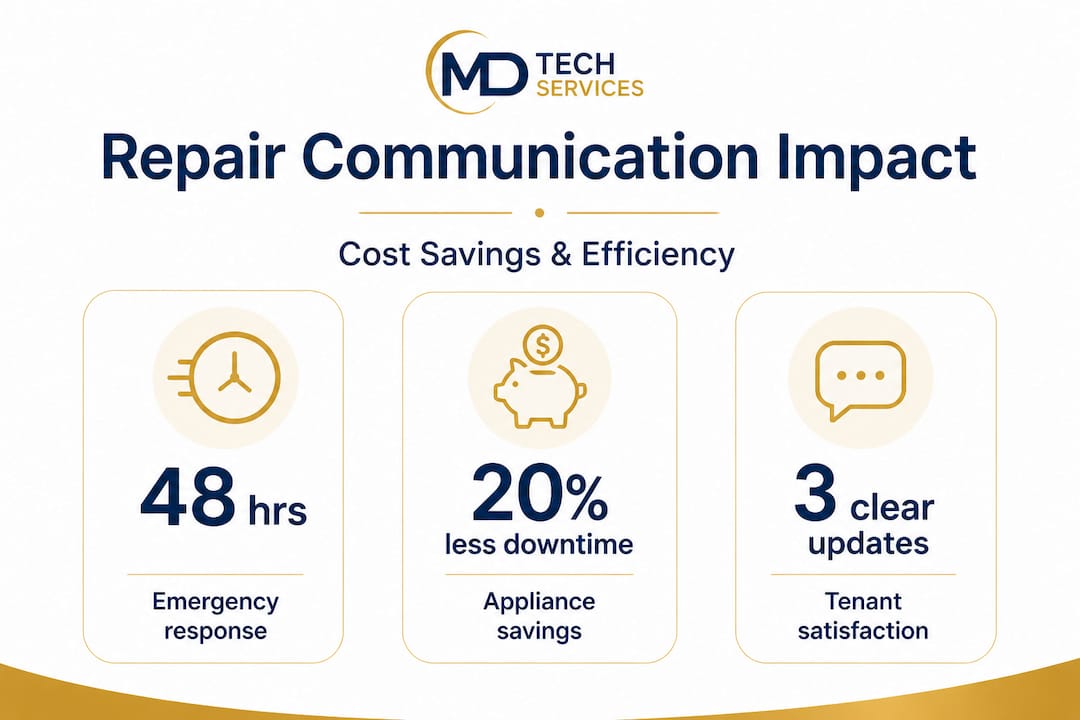
For properties with multiple units, building structured repair reports from inspection data can help you communicate proactively with tenants before an issue becomes urgent.
Clarifying maintenance responsibilities and expectations
One of the most common sources of repair conflict is not a broken appliance. It is confusion about who is responsible for fixing it. This confusion is entirely preventable if you build responsibility clarity into your lease from day one and reinforce it with regular communication.
Your lease should address the following at minimum:
- HVAC filters: Typically the tenant’s responsibility to replace on a monthly or quarterly basis
- Appliance maintenance: Tenants should clean and maintain appliances in normal use; landlords handle mechanical failures
- Reporting requirements: Tenants must report issues promptly and in writing to preserve their rights and limit their liability
- Emergency contacts: Who to call, when, and for what types of issues
- Escalation paths: What happens if a repair is not resolved within a set period
Preventive maintenance and clear lease terms on responsibilities, such as HVAC filter changes falling to tenants and major mechanical repairs falling to landlords, measurably reduce issues over the life of a tenancy. When tenants understand what they own in the maintenance relationship, they report issues earlier and take better care of the property.
Seasonal reminders are a practical extension of this approach. Send a brief email or portal message each spring and fall reminding tenants to change HVAC filters, check smoke detectors, and report any appliance issues they have been putting off. This kind of proactive outreach prevents the cluster of emergency calls that often hits right after peak usage seasons.
Pro Tip: Address edge cases in your lease directly rather than leaving them to interpretation. For example, specify what constitutes tenant-caused damage versus normal wear and tear for appliances. This prevents disputes when issues arise and makes it much easier to assign repair costs fairly.
Resources on preparing appliances for tenants and understanding warranty terms in appliance repairs are both useful references when you are setting up a new tenancy or renewing a lease. They help you communicate clearly about appliance conditions and coverage before any issues arise. You can also find broader guidance on preparing rental property for long-term tenants that covers the full picture of property readiness.
The risks and rewards of automating tenant communication
Automation tools have made property management dramatically more efficient. Portals, auto-responders, and repair tracking software reduce manual effort and keep communication consistent. But automation also introduces a real risk that experienced property managers take seriously.
Benefits of automation in repair communication include:
- Consistent acknowledgment speed regardless of time of day
- Automatic record-keeping that supports legal compliance
- Reduced time spent on routine follow-ups
- Easier tracking of open and closed repair tickets across multiple units
The risk is equally real. Repairs top the list of tenant frustrations, with 49% of complaints tied to perceived indifference from property managers rather than just the repair delay itself. When tenants receive a string of automated messages and never hear from an actual person, they begin to feel like a number. That feeling accelerates dissatisfaction, increases the likelihood of self-help actions, and raises the risk of negative reviews or legal escalation.
“Tenants do not just want repairs completed. They want to feel that someone is paying attention and cares about their living conditions.”
California Civil Code Section 1942.5 also provides specific retaliation protections for tenants who report habitability issues. This means that if a tenant reports a broken HVAC and then faces a rent increase or eviction notice shortly after, they have legal grounds to claim retaliation. Knowing this law and communicating professionally around every repair request protects you from those claims. Timely HVAC repairs in particular are a high-stakes area where legal and tenant satisfaction concerns converge sharply.
The best approach is a hybrid one. Automate the workflow but retain human judgment at key decision points, such as when a repair is delayed, when costs are disputed, or when a tenant has submitted multiple unresolved requests.
Our perspective: Why communication outperforms speed every time
After working with property managers and homeowners across Orange County and Los Angeles, we have seen a consistent pattern. The landlords who have the fewest disputes are not always the ones who fix things fastest. They are the ones who communicate most honestly.
A repair that takes five days with three clear updates along the way produces less frustration than a repair that takes three days with no communication. That is not a theory. The data supports it, and we see it in practice regularly. Tenants who know what to expect will wait patiently. Tenants who feel ignored escalate immediately.
The most effective framework we have seen applied consistently is straightforward: acknowledge the issue within hours, clarify the next steps and expected timeline, and check in with the tenant at every significant milestone until the repair is closed. That is it. Three steps, consistently applied, outperform any amount of scrambling to get a technician on-site faster.
Property managers who overinvest in clear, honest communication see fewer disputes, longer tenancies, and lower turnover costs. A simple explanation like “the part is backordered and we expect delivery by Thursday” does more for tenant confidence than silence followed by a completed repair. You can learn more about current appliance repair best practices and how professional service providers support this kind of structured, transparent process.
Speed matters. We are not dismissing that. But communication is the foundation that makes speed possible and meaningful.
Streamline your repairs with expert help
Managing repair communication well takes a reliable service partner, not just good intentions. When you need appliance or HVAC repairs handled quickly and professionally across Orange County and Los Angeles County, MDTech Services is ready to support you.

Our licensed technicians respond promptly, document their work thoroughly, and communicate clearly at every stage of the repair process. That means you have the records you need for compliance, and your tenants receive the service quality that keeps them satisfied and renewing their leases. Explore our homeowner repair guide and HVAC repair guide to see how we approach every job. Whether you manage one unit or an entire portfolio, MDTech Services gives you the responsive, expert partner your property deserves. Contact us today to book a service appointment online.
Frequently asked questions
How quickly must a landlord respond to a repair request in LA or Orange County?
Landlords must acknowledge repair requests within 12 to 24 hours and follow up with timeline and technician details as the repair progresses. Delays beyond this window increase legal exposure and tenant frustration.
What types of repairs require written notification in California?
Tenants must notify in writing for habitability issues under California Civil Code, which includes major appliance and HVAC failures. Written notice protects both parties and establishes a clear record.
What are common consequences of poor repair communication?
Misjudging repair timelines can lead to repair-and-deduct claims, tenant self-help actions, or formal legal disputes. Poor communication is one of the top drivers of early lease terminations.
Do landlords have to use online portals for repair communications?
Online portals are not legally required, but using portals or email creates automatic written records that support compliance and protect landlords in disputes. Most professional property managers consider them essential.
Can tenant neglect void a landlord’s repair responsibility?
Yes. Tenant neglect shifts responsibility to the tenant when their actions or inaction directly caused the damage. However, landlords must document this carefully to avoid retaliation claims under California Civil Code 1942.5.