
TL;DR:
- Regular appliance inspections prevent hidden hazards and reduce fire risks.
- DIY checks are suitable for cords, plugs, and GFCI testing; professionals handle gas and electrical faults.
- Ongoing vigilance, including professional assessments, ensures home safety in Southern California.
Most appliance accidents don’t announce themselves. A frayed cord behind the dryer, a heater too close to the curtains, a CO detector with a dead battery — these are the quiet hazards that put Southern California families at real risk. In fact, portable heaters alone are involved in roughly 1,600 fires per year, causing about 70 deaths nationally. Here in Orange County and Los Angeles County, where mild winters mean we sometimes underestimate heating risks and rainy seasons can cause hidden water damage, a structured appliance safety checklist is one of the smartest tools you have. This guide gives you exactly that.
Table of Contents
- Getting ready: What you need before starting
- Step-by-step appliance safety checklist
- Troubleshooting and common mistakes
- Verification: How to ensure your home is truly safe
- How appliance safety really works: Lessons from local experts
- Next steps: Get expert appliance safety and repairs
- Frequently asked questions
Key Takeaways
| Point | Details |
|---|---|
| Ventilation is essential | Keeping appliances clear of combustibles and maintaining three feet of space helps prevent fires and improves efficiency. |
| Monthly checks improve safety | Regular testing of alarms, shutoffs, and GFCIs reduces risk and helps catch issues before they become dangerous. |
| DIY has limits | Visual inspections are useful but professional help is required for gas, electrical, or water-related problems. |
| Local laws matter | California mandates 10-year sealed smoke alarm batteries; be aware of local standards for appliance safety. |
| Documentation prevents forgetfulness | Keep records of safety checks and schedule future inspections to keep your home safe year-round. |
Getting ready: What you need before starting
Now that we’ve established the need for vigilance, let’s look at what you’ll need to start your inspection. Walking through your home without the right tools leads to incomplete checks and missed hazards. Before you begin, assemble a short list of essentials.
Tools and gear to gather:
- Work gloves (to handle components safely)
- A flashlight or headlamp (for dark corners and behind appliances)
- A non-contact voltage tester (to check for live current without touching wires)
- A notepad or phone for documenting findings
- Appliance manuals (check the manufacturer’s website if you’ve lost the paper copy)
- Local emergency numbers, including Southern California Gas Company and your local fire department
Having these ready before you start keeps the inspection moving and prevents shortcuts.
It’s also important to know your limits. DIY inspections are best for visual checks, but gas leaks, electrical faults, and post-flood damage require a licensed professional. This matters especially in SoCal, where rainy seasons can push water into crawl spaces and behind appliances without obvious signs. Our appliance inspection checks page explains what a professional inspection typically covers so you know what to expect.
Here’s a quick guide to help you decide when to DIY and when to call:
| Situation | DIY or Pro? |
|---|---|
| Checking cords and plugs visually | DIY |
| Testing GFCI outlets | DIY |
| Smell of gas near appliances | Pro immediately |
| Electrical sparks or burning smell | Pro immediately |
| Water around appliances post-rain | Pro recommended |
| Routine cleaning and clearance check | DIY |
Pro Tip: After every significant rainstorm, do a quick walk-through to check for moisture near appliances, especially in garages and laundry rooms. Water intrusion during SoCal’s rainy season is a common cause of hidden appliance damage.
Step-by-step appliance safety checklist
With your gear and knowledge ready, follow this checklist for safe, thorough appliance inspections.
- Check ventilation and clearance. Every heat-producing appliance needs space to breathe. Keep at least 3 feet of clearance around heaters, dryers, and stoves, and make sure nothing combustible is nearby.
- Inspect all cords and plugs. Look for fraying, cracking, or discoloration. A damaged cord is a fire hazard. Replace it before using the appliance again.
- Avoid extension cords for major appliances. Refrigerators, washers, dryers, and ovens need to be plugged directly into wall outlets. Extension cords cannot handle the load safely.
- Test your GFCI outlets. Press the test and reset buttons monthly on outlets in kitchens, bathrooms, garages, and outdoor areas. If the outlet doesn’t trip and reset, it needs replacement.
- Check smoke and CO alarms. Test them monthly and replace batteries as needed. California requires 10-year sealed batteries in new installations.
- Look for water damage signs. After rainy periods, check behind and beneath appliances for rust, discoloration, or moisture. This is particularly important in SoCal homes.
- Verify emergency shutoff access. Know where your gas and electrical shutoffs are and confirm they are accessible and clearly labeled.
Our guides on appliance safety inspections and inspection steps for homeowners go deeper on each of these points.
“Portable heaters are involved in roughly 1,600 fires per year and cause around 70 deaths. Always plug them directly into a wall outlet and keep them at least 3 feet from curtains, bedding, and furniture.”
| Appliance | Key safety check | Frequency |
|---|---|---|
| Portable heater | 3 ft clearance, direct plug | Monthly in season |
| Dryer | Lint trap, vent hose, clearance | Monthly |
| Refrigerator | Coil cleaning, door seals | Every 6 months |
| Stove/oven | Burner condition, ventilation | Monthly |
| Washer | Hose connections, level surface | Every 3 months |
Pro Tip: Set a recurring reminder on your phone for the first of every month labeled “appliance safety check.” It takes less than 20 minutes and keeps small problems from becoming expensive ones.
Troubleshooting and common mistakes
While following the checklist, be aware of frequent mistakes that cause hidden hazards. Even well-intentioned homeowners make errors that undermine their best safety efforts.
The most common mistakes we see include:
- Ignoring early warning signs like unusual noises, burning smells, or slow performance
- Skipping periodic tests for GFCIs, alarms, and emergency shutoffs because “nothing seems wrong”
- Using undersized or overloaded extension cords with high-draw appliances
- Forgetting to check appliance clearance after rearranging furniture or adding new items
- Overlooking the garage and laundry room, which are frequent sites of appliance hazards
One of the most consistent findings from our team: homeowners unplug small appliances far less often than recommended. Toasters, coffee makers, and countertop appliances left plugged in continuously draw power and increase risk. Unplug them when not in use, and never overload a single outlet with multiple devices.
“Outlet overloads and improper extension cord use account for a significant portion of residential electrical fires. Plugging major appliances directly into wall outlets is one of the simplest, most effective safety habits you can build.”
Frayed cords are another frequent culprit. Once insulation cracks or wears through, the risk of shock or fire rises sharply. Check cords during every monthly inspection and replace them at the first sign of damage. Don’t tape over a frayed cord and call it fixed.
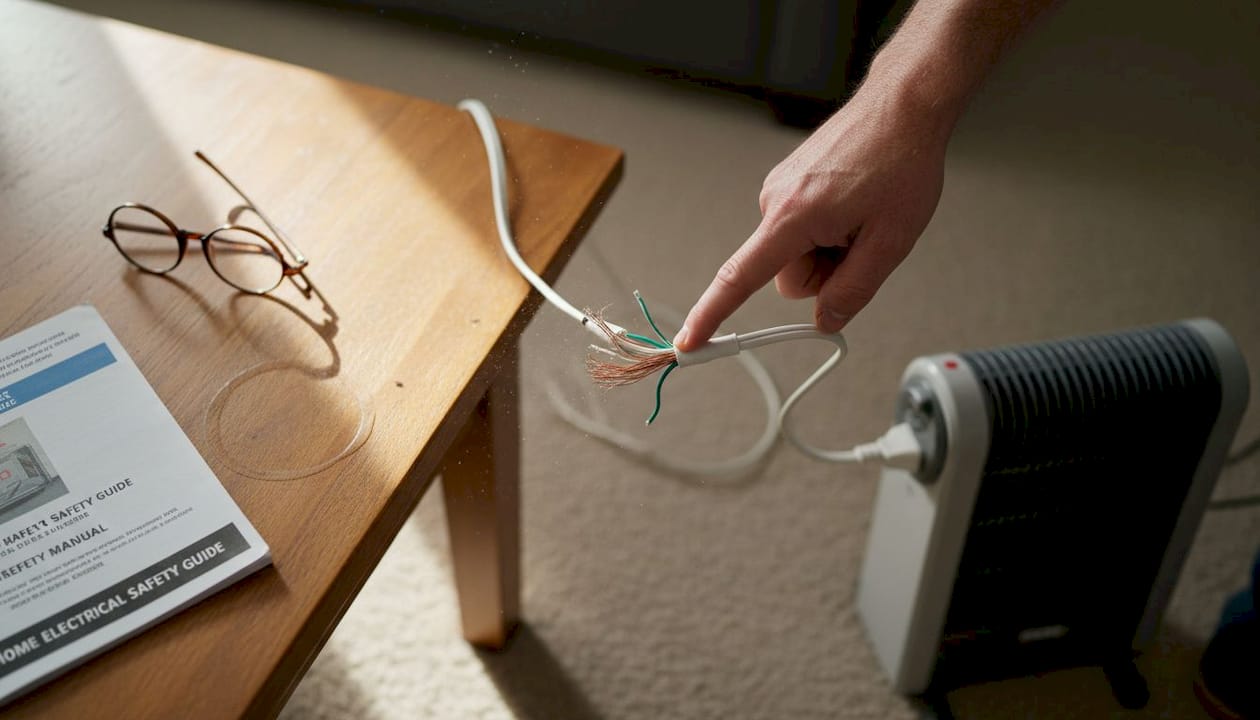
Understanding the signs of appliance failure early can prevent expensive repairs. And if you want your appliances to last longer overall, our appliance lifespan tips are a practical resource for ongoing maintenance habits.
Pro Tip: Mark your calendar for a dedicated monthly “safety test day.” Test every GFCI, smoke alarm, and CO detector in your home. It takes about 15 minutes and gives you documented proof that your home’s safety systems are working.
Verification: How to ensure your home is truly safe
After troubleshooting, it’s time to verify that your home’s appliances are as safe as possible and set up ongoing peace of mind. Completing a checklist once is a great start. Making it a habit is what actually keeps your family safe.
Steps to verify and maintain safety:
- Take photos or notes after each inspection so you have a record of what was checked and when
- Write the date on new batteries when you install them so you know exactly when they need replacing
- California requires 10-year sealed batteries in new smoke alarm installations, so check that your alarms meet this standard
- Confirm CO detectors are placed near sleeping areas and within 10 feet of fuel-burning appliances
- Schedule an annual professional inspection to catch anything a visual check might miss
Test your GFCIs, emergency shutoffs, and smoke/CO alarms monthly, and set up a simple log to track when each test was completed. LA County Fire also emphasizes CO awareness and gas shutoff readiness as year-round priorities, not just seasonal ones.
| Task | Frequency | Who does it |
|---|---|---|
| Visual cord and plug check | Monthly | Homeowner |
| GFCI and alarm testing | Monthly | Homeowner |
| Appliance clearance review | Monthly | Homeowner |
| Full professional inspection | Annually | Licensed technician |
| Smoke/CO alarm battery check | Every 6 months or per alarm | Homeowner |
| Post-storm inspection | After major rain events | Homeowner + Pro if needed |
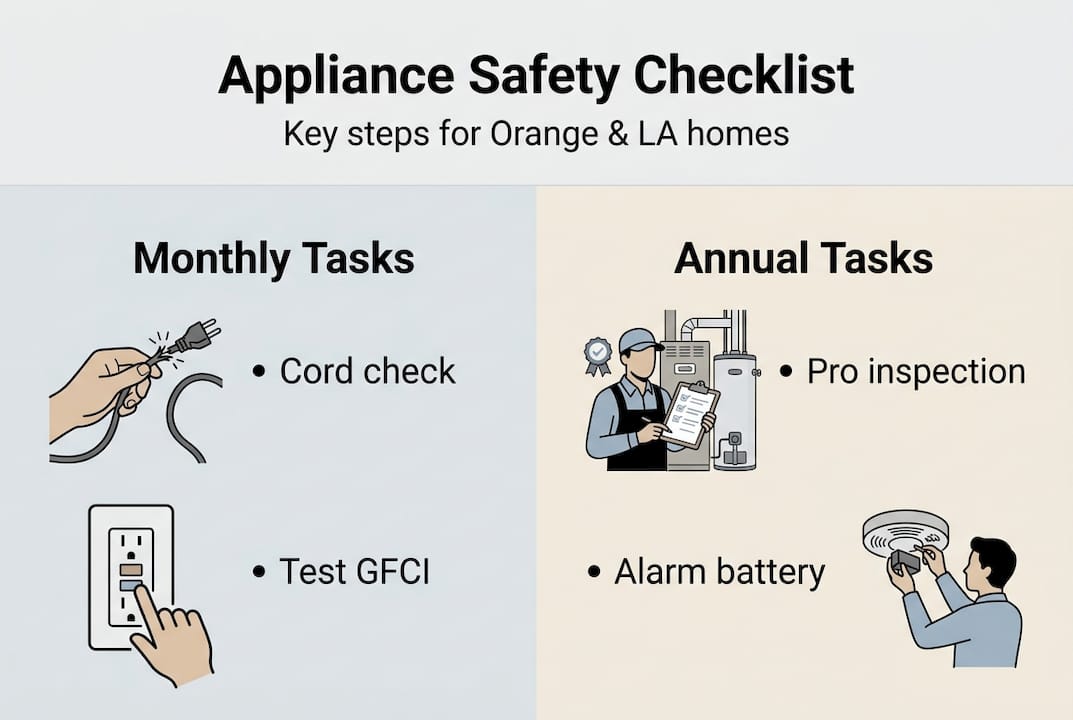
Planning your annual appliance checkups in advance makes them easier to follow through on. If you’re a landlord or preparing a property for tenants, our tenant appliance preparation checklist is also a useful resource.
How appliance safety really works: Lessons from local experts
Let’s be direct about something: most homeowners do the easy part of appliance safety pretty well. They replace batteries when alarms beep and wipe down the stovetop regularly. What gets missed is the layer underneath. The gas connection that hasn’t been inspected in years. The GFCI that was never tested. The dryer vent that’s been slowly clogging since 2021.
We’ve seen these situations regularly in homes across Orange County and Los Angeles County. The honest truth is that DIY visual checks are valuable, but they don’t replace professional eyes on gas lines and electrical connections. LA County Fire’s home safety guidelines consistently emphasize gas shutoff awareness and CO detector placement as priorities that homeowners often overlook until something goes wrong.
California’s 10-year sealed battery requirement for smoke alarms and SoCal’s rainy season water intrusion risks are local factors that generic national checklists don’t address. And appliance safety is not a one-time event. It works only when it’s repeated. Our effective checklist steps are designed specifically for this ongoing approach, not a single annual review.
Next steps: Get expert appliance safety and repairs
If you want to turn your checklist into lasting safety, consider connecting with appliance experts for help and ongoing support. Working through a visual checklist yourself is a strong first step. But some issues, from worn electrical connections to gas line wear, need trained hands.

At MDTech Services, our licensed technicians serve homeowners throughout Orange County and Los Angeles County with responsive, professional appliance repair services and full installations. Whether you’ve found something during your checklist inspection or just want a professional set of eyes on your appliances, we’re ready to help. Our safe installation guide is a great starting point if you’re adding or replacing appliances. Call us or book an appointment online to get started today.
Frequently asked questions
What appliances need special attention on a safety checklist?
Heaters, dryers, stoves, and any fuel-burning appliances require extra attention because of their ventilation needs and elevated fire risk. Always confirm at least 3 feet of clearance around these appliances and away from combustibles.
How often should I test safety features like GFCIs and alarms?
Test GFCIs, emergency shutoffs, and smoke and CO alarms at least monthly and again after major storms. Monthly testing of these features is the standard recommended by LA County Fire.
Are there new appliance safety requirements for California in 2026?
California requires 10-year sealed batteries in new smoke alarm installations, but NFPA and CPSC standards remain broadly consistent with previous years according to LA County Fire guidance.
When should I call a professional instead of doing a DIY check?
Call a professional for any gas smell, electrical sparks, or signs of water damage after storms. Professional help is required for gas and electrical issues, while visual inspections are appropriate for homeowners to handle on their own.