
TL;DR:
- Acting quickly and correctly can prevent minor issues from becoming major disasters.
- Homeowners should know shut-off locations and maintain essential tools for emergencies.
- Regular maintenance significantly reduces the risk of urgent repairs and costly damage.
A burst pipe at midnight. An AC unit that quits during a July heat wave. A faint gas smell you can’t quite place. These situations don’t give you time to think, and every minute you spend guessing costs you more money and puts your family at greater risk. For homeowners in Los Angeles and Orange County, acting quickly and correctly is the difference between a manageable repair bill and a full-scale disaster. This guide gives you a clear, step-by-step plan to handle the most common home emergencies safely and efficiently, so you’re never caught off guard again.
Table of Contents
- Assess the situation and prioritize safety
- Gather essential tools and contacts
- Take immediate action: Step-by-step emergency response
- Special challenges in LA/OC homes
- Prevent future emergencies: Maintenance and best practices
- Our perspective: The overlooked keys to emergency repair success
- Need help now? Connect with local experts
- Frequently asked questions
Key Takeaways
| Point | Details |
|---|---|
| Safety first | Always shut off utilities and evacuate for gas, sewage, or major flooding emergencies. |
| Be prepared | Keep basic tools and emergency pro contacts ready for immediate use. |
| Act fast | Quick, step-by-step response reduces damage and repair costs. |
| Know local risks | Older LA/OC homes face unique issues like hard water, old pipes, and seismic shifts. |
| Stay proactive | Routine maintenance prevents most emergencies before they start. |
Assess the situation and prioritize safety
After understanding why quick and informed action is crucial, your next step is to make the space safe for you and your family. Before you touch anything, take 30 seconds to identify exactly what you’re dealing with. The three most common emergency categories in LA and OC homes are:
- Plumbing emergencies: Active leaks, flooding, sewage backup, or a water heater failure
- HVAC emergencies: No cooling or heating, refrigerant leaks, or a unit that won’t respond
- Appliance emergencies: Sparks, burning smells, water pooling under a dishwasher, or a refrigerator that stops cooling
Once you’ve identified the category, take the right first action. For any plumbing issue, shut off the main water supply immediately to prevent further damage. Your main shut-off is typically near the water meter, which in most LA and OC homes sits at the front of the property near the curb. After you’ve cut the water supply, turn off the water heater to prevent it from running dry and burning out its heating elements.
For HVAC issues, switch off the system at the thermostat and then at the breaker if you smell burning. For appliances, unplug the unit if it’s safe to do so.
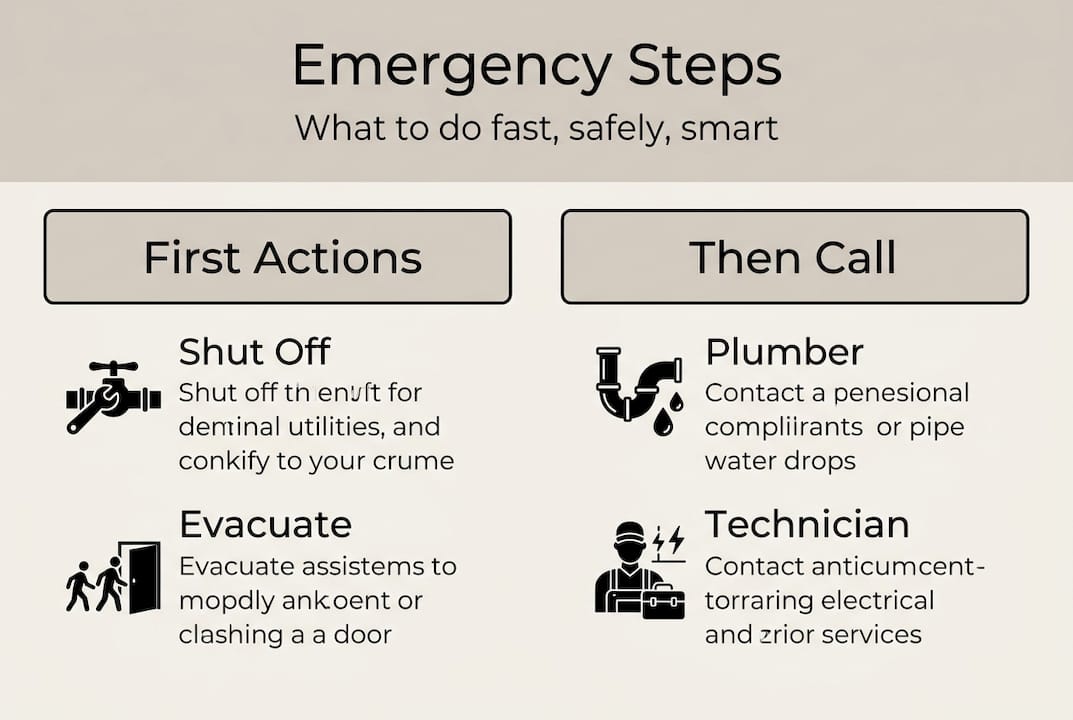
Safety warning: If you smell gas, notice sewage backing up into multiple drains, or see flooding near electrical outlets, do not attempt any repairs. Evacuate immediately and call 911 or your gas utility before contacting a repair service. These are not situations for DIY fixes.
Never attempt electrical or gas repairs yourself. Licensed technicians have the tools and training to handle these safely. Reviewing emergency plumbing steps before an emergency happens is one of the smartest things you can do as a homeowner. Understanding emergency plumbing basics also helps you communicate clearly with a technician when every second counts.
Pro Tip: Walk through your home right now and locate every shut-off valve, including the main water supply, individual toilet valves, and the water heater shut-off. Take a photo and save it in your phone. You’ll thank yourself later.
Gather essential tools and contacts
Once safety is confirmed, being prepared with the right tools and contacts will speed up response and reduce stress. A well-stocked emergency kit and a short list of reliable contacts can cut your response time in half.
Here’s what your home emergency kit should include:
| Tool or Material | Why You Need It |
|---|---|
| Adjustable pipe wrench | Tightening or shutting off pipe connections |
| Plumber’s tape (Teflon) | Temporary seal on leaking threaded joints |
| Wet/dry vacuum | Removing standing water fast |
| Flashlight and spare batteries | Working in dark utility areas |
| Bucket and old towels | Containing water while you shut off supply |
| Voltage tester | Checking if an outlet or circuit is live |
| First aid kit | Handling minor injuries during an emergency |
Beyond tools, your contact list is just as important. Always choose licensed and insured pros who offer upfront pricing and service guarantees. Knowing which plumbing service types are available in your area helps you call the right specialist the first time. Keep a printed list of emergency plumbers near you in a visible spot, like inside a kitchen cabinet door.
When you call a professional, be ready to share:
- The exact problem and when it started
- Whether you’ve shut off water, gas, or power
- The location of the issue inside the home
- Access instructions (gate codes, parking notes)
- Your home’s age and any known system quirks
This information helps technicians arrive prepared with the right parts and equipment, which means faster repairs and lower costs for you.
Take immediate action: Step-by-step emergency response
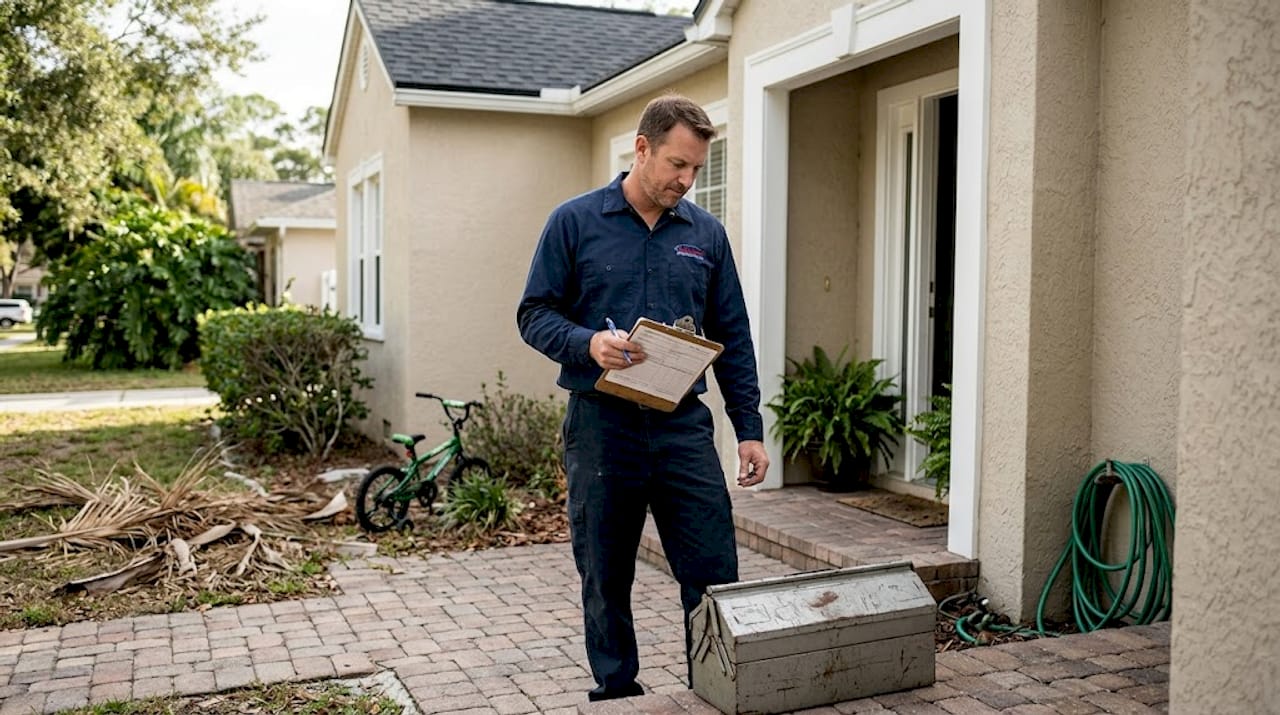
With the essentials in hand, it’s time to act quickly and methodically. Here’s how to handle each situation as it unfolds.
For plumbing emergencies:
- Shut off the main water supply at the meter
- Turn off the water heater to protect the unit from dry firing; for electric heaters, flip the dedicated breaker
- Use towels or a wet/dry vacuum to remove standing water
- Take photos and video of all visible damage for insurance purposes
- Call a licensed plumber and share the details you’ve already gathered
For HVAC emergencies:
- Turn the system off at the thermostat
- Check and replace the air filter if it’s visibly clogged
- Look for visible ice on the unit or water pooling near the air handler
- Switch off the breaker if you smell burning
- Call for HVAC service, especially for refrigerant leaks or complete cooling failure
| You can handle it | Wait for a pro |
|---|---|
| Shutting off water or power | Any gas line issue |
| Replacing an air filter | Refrigerant leaks |
| Mopping up minor water | Sewage backups |
| Resetting a tripped breaker | Electrical panel work |
| Tightening a loose hose | Pipe bursts inside walls |
Reputable services in LA and OC follow a 1-2 hour arrival window as the standard benchmark. You can review common repair scenarios to better understand what to expect. A clear plumbing repair workflow also helps you stay organized while waiting for help.
Pro Tip: When you call the technician, describe the problem in one or two clear sentences. Say “Water is actively leaking from under my kitchen sink and I’ve shut off the main supply” rather than “Something’s wrong with my pipes.” Specific details get you faster, more targeted help.
Special challenges in LA/OC homes
LA and Orange County homes can bring surprises. Here’s what makes emergency repairs here different from other regions.
The region’s housing stock includes everything from 1920s craftsman bungalows to 1970s tract homes, and many of these properties carry infrastructure risks that newer construction doesn’t face. Older homes with cast iron pipes are especially prone to corrosion, hard water mineral buildup, tree root intrusion in sewer lines, and stress fractures from seismic activity.
Here are the most common LA/OC-specific emergency triggers:
- Cast iron and galvanized pipes that corrode from the inside out, often with no visible warning signs
- Hard water deposits that clog water heater tanks, reduce appliance efficiency, and accelerate pipe wear
- Tree root intrusion into clay or older PVC sewer lines, causing slow drains and backups
- Seismic shifts that loosen pipe joints, crack foundations, and stress gas line connections
- Aging HVAC systems pushed hard by summer heat and Santa Ana wind conditions
Local 24/7 emergency services report handling over 20,000 emergency cases annually across the LA and OC region, with the majority responded to within two hours. That volume reflects just how active and unpredictable home systems are in this area. Certain edge cases, like a sewer camera inspection after root intrusion or a full repiping of a corroded system, require specialized equipment that only experienced local pros carry. Reviewing LA/OC emergency examples gives you a realistic picture of what local technicians encounter most often.
Prevent future emergencies: Maintenance and best practices
Handling emergencies is one thing. Stopping them before they start is where real homeowner confidence begins.
The most effective way to avoid a 2 a.m. crisis is a consistent maintenance schedule. Here are the top preventive actions every LA/OC homeowner should take:
- Flush your water heater annually to remove sediment buildup, which reduces efficiency and causes premature failure. Annual water heater flushing and hose checks on washers and dishwashers are among the highest-impact steps you can take.
- Schedule HVAC maintenance twice a year, ideally before summer and before winter. Twice-yearly HVAC service significantly reduces the risk of unexpected breakdowns during peak demand.
- Inspect washing machine and dishwasher hoses every six months for cracks, bulging, or soft spots. Replace rubber hoses with braided stainless steel versions for added durability.
- Monitor exposed pipes in garages and under sinks for signs of corrosion, moisture, or discoloration.
- Test your main water shut-off valve once a year to confirm it actually closes fully. Valves that haven’t been turned in years can seize or fail when you need them most.
Understanding why appliance maintenance matters is the first step toward building better habits. A preventative maintenance guide can help you set up a schedule that fits your home. Regular appliance maintenance also extends equipment lifespan and keeps warranties valid. For heating and cooling systems, an HVAC troubleshooting guide helps you catch small issues before they become expensive failures.
Pro Tip: Create a simple home maintenance log, either a notebook or a shared note on your phone, and record the date every time you complete a maintenance task. Add calendar reminders six months out. This habit alone can prevent the majority of avoidable home emergencies.
Our perspective: The overlooked keys to emergency repair success
Beyond these practical steps, our own field experience in LA and OC reveals a few truths most guides miss.
The homeowners who handle emergencies best aren’t the ones who know the most about plumbing or HVAC. They’re the ones who spent 10 minutes preparing before anything went wrong. Knowing where your shut-off valves are, having a licensed pro’s number saved in your phone, and keeping a basic tool kit stocked will save you hours and potentially thousands of dollars when a crisis hits.
In LA and OC specifically, the combination of hard water, aging infrastructure, and seismic activity makes what looks like a “basic” emergency far less predictable than it would be elsewhere. A slow drain in a 1950s home isn’t always a simple clog. It might be the beginning of a root intrusion or a corroded pipe that’s close to failing.
“The difference between a $300 repair and a $3,000 one is almost always how fast the homeowner acted and whether they called the right person the first time.”
Systems that look fine on the surface can hide serious problems underneath. That’s why appliance care insights and annual professional checkups are your most reliable defense. Most emergency calls we respond to could have been prevented with one maintenance visit.
Pro Tip: Create a home emergency binder with your utility shut-off locations, appliance model numbers, warranty documents, and your go-to repair contacts. Keep it somewhere every adult in the household can find it quickly.
Need help now? Connect with local experts
If you’re facing an urgent repair right now, or you want to get ahead of the next one, MDTech Services is ready to help. We serve homeowners across Orange County and Los Angeles County with fast, reliable, and transparent repair solutions.

Our licensed technicians handle everything from expert appliance repairs to full HVAC repair services and fast plumbing help, all backed by upfront pricing and a commitment to your safety. Whether it’s a refrigerator that stopped cooling, an AC unit that quit mid-summer, or a pipe that let go overnight, we respond quickly and get the job done right. Book your appointment online or call us now to get a local expert to your door fast.
Frequently asked questions
What is the first thing I should do in a plumbing emergency?
Shut off the main water supply immediately to stop flooding and prevent further damage to your home. Locate the shut-off valve at your meter before an emergency happens so you’re not searching for it under pressure.
How fast will a technician arrive for emergency repairs in LA or OC?
The industry standard is a 1-2 hour arrival window for reputable services in the LA and OC area. Traffic conditions may affect timing, and reliable companies will keep you updated on their ETA.
Why are emergencies more common in older LA/OC homes?
Older homes with cast iron pipes experience corrosion, hard water mineral buildup, and greater vulnerability to seismic stress. These factors combine to make infrastructure failures more frequent and less predictable than in newer construction.
Can maintenance really prevent most appliance or HVAC emergencies?
Yes. Annual water heater flushing and regular hose and HVAC checks catch the majority of problems before they become emergencies. Consistent maintenance is the single most effective way to protect your home systems long term.
Recommended
- Emergency repair examples for Orange County homeowners
- Step-by-step guide to emergency plumbing repairs: 2026
- What Is Emergency Appliance Repair? Complete Guide
- Minor Appliance Repairs Save 25% Energy: Act Fast in 2026
- Essential residential moving checklist: streamline your move