
TL;DR:
- Air ducts accumulate dust, allergens, mold, pet dander, and biological contaminants over time.
- Regular professional cleaning improves indoor air quality and can extend HVAC system lifespan.
- Recommended cleaning intervals range from every 3 to 5 years, or sooner with specific risk factors.
Most homeowners assume their air ducts are fine as long as nothing visible is blowing out of the vents. That assumption can cost you. The air circulating through your home in Orange County or Los Angeles County passes through a network of ducts that collect dust, allergens, and biological contaminants over time. These invisible buildups affect your health, your comfort, and your energy bills. This guide breaks down what really accumulates in your ducts, why regular cleaning matters more than most people think, and how to make confident, informed decisions about your home’s air quality.
Table of Contents
- Understanding what accumulates in your air ducts
- Benefits of professional air duct cleaning for your home and HVAC system
- When and how often should you clean your air ducts?
- What to expect from a professional air duct cleaning
- The real story: Cutting through the air duct cleaning controversy
- Ready to breathe easier? Connect with local HVAC experts
- Frequently asked questions
Key Takeaways
| Point | Details |
|---|---|
| Indoor air quality boost | Cleaning air ducts removes allergens, dust, and mold for healthier home air. |
| HVAC efficiency gains | Professional cleaning lowers HVAC strain, increases airflow, and can trim energy costs significantly. |
| Best cleaning timing | Clean every 3–5 years or after major triggers like renovations, pest evidence, or visible mold for maximum value. |
| Choose certified pros | Insist on standards-based service using negative pressure equipment and full-system cleaning for safety and effectiveness. |
Understanding what accumulates in your air ducts
Your HVAC system pulls air from every room in your home, filters it, conditions it, and pushes it back out. Every pass through the system leaves a little something behind. Over months and years, your ductwork becomes a collection point for a surprising range of contaminants.
The most common materials found inside residential ducts include:
- Dust and debris from everyday activity, tracked-in soil, and skin cells
- Pollen from outdoor plants, especially during Southern California’s extended bloom seasons
- Pet dander that recirculates constantly in homes with dogs or cats
- Mold spores that thrive in ducts when humidity or moisture is present
- Bacteria and viruses that travel on airborne particles
- Insulation fibers from older duct materials that deteriorate over time
Southern California’s climate adds a layer of complexity. LA and Orange County experience warm, dry conditions for much of the year, followed by periods of higher humidity that create ideal conditions for mold growth inside ductwork. Urban air pollution adds fine particulate matter that your HVAC system draws indoors. Seasonal pollen counts from grasses, trees, and weeds are consistently high, meaning your ducts collect allergens year-round.
“Air duct cleaning improves indoor air quality by removing dust, allergens, pollen, pet dander, mold, and bacteria.”
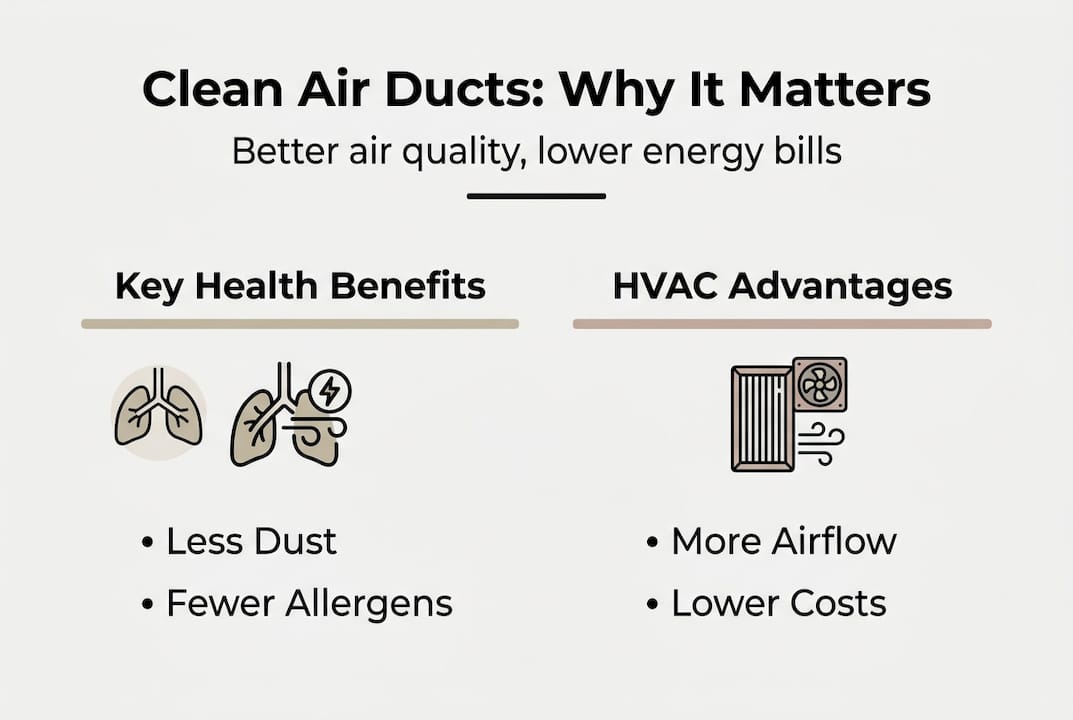
Not everyone reacts to these contaminants the same way. Children, elderly residents, and anyone with asthma or allergies are most vulnerable. For these groups, respiratory health and contaminants in circulated air can trigger symptoms ranging from mild irritation to serious flare-ups. Even healthy adults may notice persistent sneezing, fatigue, or headaches that clear up after a thorough duct cleaning.
Understanding HVAC and indoor air quality helps you see why the duct system is central to how clean your indoor air actually is. It is not just about comfort. It is about what you and your family breathe every single day.
Benefits of professional air duct cleaning for your home and HVAC system
Cleaning your ducts is not just a health decision. It directly affects how hard your HVAC system works, how long it lasts, and what you pay to run it every month.
When dust and debris coat the interior of your ducts and settle on components like the blower and coils, airflow becomes restricted. Your system has to work harder to push conditioned air through the home. Research shows that fan/blower energy savings of 41 to 60 percent and airflow improvements of up to 46 percent are achievable after cleaning extends HVAC lifespan and boosts efficiency by removing debris that restricts airflow.
| Benefit | Impact |
|---|---|
| Fan/blower energy savings | 41 to 60 percent reduction |
| Airflow improvement | Up to 46 percent |
| HVAC system lifespan | Extended with regular maintenance |
| Repair frequency | Reduced due to lower component strain |
| Monthly energy bills | Lower due to improved efficiency |
Those numbers translate directly to lower utility bills and fewer service calls. When your blower motor does not have to fight through clogged ducts, it runs cooler and lasts longer. The same applies to your evaporator coil. A clean coil transfers heat efficiently. A dirty one struggles and can eventually fail.
Signs your system may be overworking include:
- Uneven temperatures between rooms
- Higher-than-usual energy bills with no change in usage
- Dusty buildup around supply registers
- Frequent filter replacements needed
- Unusual noise from the air handler
Pro Tip: Before investing in a new thermostat, zoning system, or upgraded equipment, schedule a professional duct cleaning first. You may find that your existing system performs significantly better once airflow is restored. Review our HVAC efficiency checklist to see where your system stands before spending on upgrades.
Understanding HVAC filtration and energy savings gives you a fuller picture of how connected your filter, ducts, and system efficiency really are. And if you are wondering how often to stay on top of this, regular HVAC checks in SoCal are especially important given the region’s dust and pollen levels.
When and how often should you clean your air ducts?
Frequency is one of the most debated topics in this space, and the answer depends on your home, your household, and your local environment.
Two major authorities offer guidance, and their recommendations differ in approach:
| Authority | Recommended interval | Key conditions |
|---|---|---|
| NADCA | Every 3 to 5 years | Standard recommendation for most homes |
| EPA | When issues are visible | Mold, vermin, or excessive dust present |
| Both | More often | Pets, allergies, smokers, renovations |
The EPA’s cleaning guidance recommends cleaning every 3 to 5 years per NADCA standards, or more often with pets, allergies, renovations, or smoking, while the EPA itself advises cleaning only when visible mold, vermin, or contaminants are confirmed.
For homeowners in Orange and LA County, certain local conditions push the needle toward more frequent cleaning. High pollen seasons, coastal humidity, and urban particulate matter all accelerate buildup. If you live near a construction zone or wildfire-prone area, your ducts can collect debris faster than the standard timeline suggests.
Here is how to check whether your ducts need attention right now:
- Remove a supply register and look inside with a flashlight. Visible dust coating the duct walls is a clear sign.
- Check your air filter. If it clogs within two to three weeks, your ducts may be contributing to the load.
- Look for dark streaks or discoloration around registers, which can indicate mold or heavy particulate buildup.
- Notice whether allergy symptoms worsen when your HVAC is running.
- Check for any musty or stale odor when the system kicks on.
Pro Tip: Schedule a professional duct cleaning immediately after any home renovation, water leak, or rodent activity. These events introduce contaminants directly into your duct system and should not wait for a routine interval.
For California homeowners, keeping up with regular HVAC maintenance is one of the most cost-effective things you can do to protect your home and your family’s health year-round.
What to expect from a professional air duct cleaning
Knowing what a legitimate cleaning looks like helps you avoid low-quality providers and get the results you are paying for.
A professional cleaning following NADCA standards involves more than vacuuming out the vents. Here is what the full process looks like:
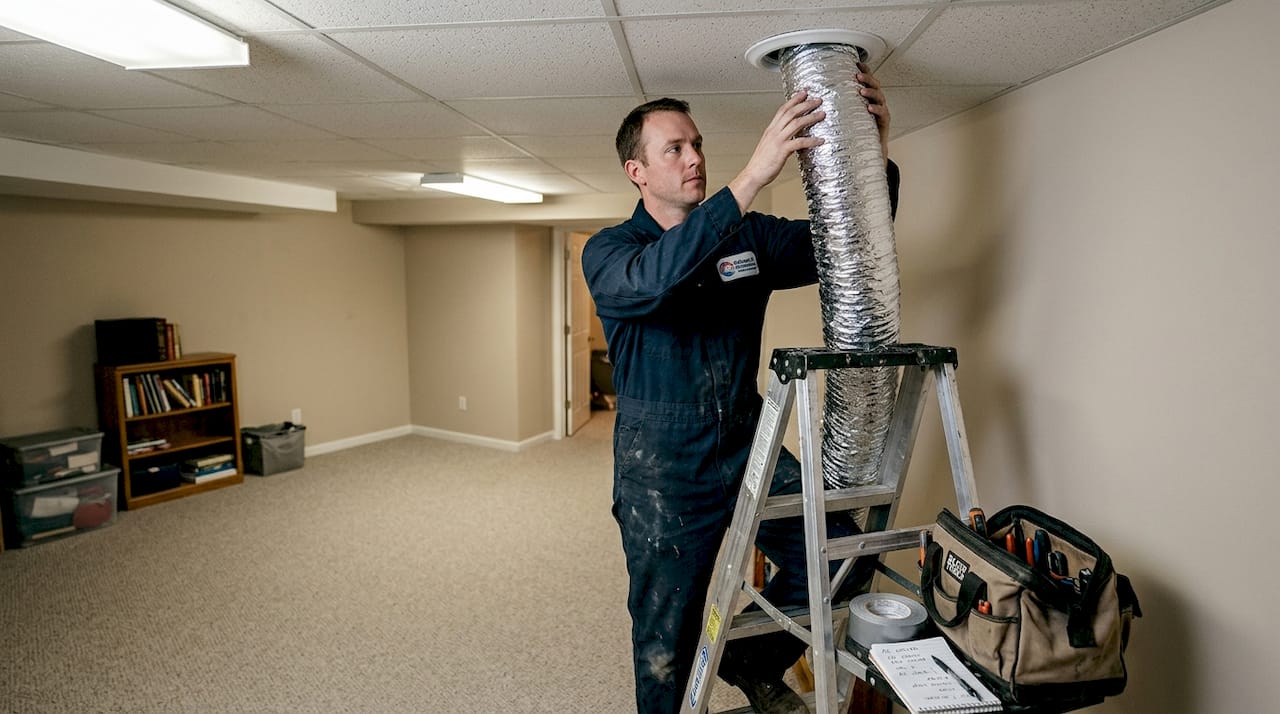
- Inspection first. A reputable technician inspects the system before starting, often using a camera to assess buildup and identify any damage.
- Negative pressure setup. A powerful HEPA-rated vacuum is connected to the main trunk line to create negative pressure, preventing debris from spreading into your living space.
- Agitation of duct surfaces. Technicians use brushes, air whips, or compressed air tools to loosen debris from duct walls and drive it toward the vacuum.
- Cleaning all components. This includes supply and return lines, branch ducts, registers, grilles, the blower unit, and the evaporator coil.
- Final inspection and report. A trustworthy company documents what was found and what was done.
“NADCA standard methodology uses source removal with HEPA vacuums, agitation methods, and full-system cleaning. The EPA now endorses source control as the preferred approach.”
The EPA’s updated position is significant. For years, the agency was cautious about recommending proactive duct cleaning. Its recent endorsement of source removal methods aligns with what NADCA-certified professionals have practiced for decades.
When choosing a company, ask these key questions: Are your technicians NADCA certified? Do you use HEPA-rated equipment? Will you clean the blower and coil, or just the ducts? Can you show before-and-after documentation?
Understanding the residential HVAC repair process gives you context for how cleaning fits into overall system care. It is also worth knowing when to inspect HVAC filters as part of your ongoing maintenance routine.
The real story: Cutting through the air duct cleaning controversy
The debate between the EPA and NADCA has left many homeowners unsure what to believe. For years, the EPA was cautious, and some took that as a reason to skip cleaning entirely. NADCA took a more proactive stance, recommending regular intervals regardless of visible symptoms. The EPA’s updated position now acknowledges value in proactive cleaning and endorses source removal methods, which closes much of the gap between the two.
Our view: waiting for visible mold or vermin before acting is a reactive strategy that often means the damage is already done. In high-dust, high-allergen environments like Southern California, practical logic strongly favors periodic cleaning, even without a clinical trial to back every interval.
The real risk is not cleaning too often. It is hiring an unqualified company that does a surface-level job, or worse, damages your ductwork. Focus on visible dirt, known risk triggers in your home, and verified credentials when choosing a provider. That approach will serve you far better than waiting for a problem to become obvious.
Ready to breathe easier? Connect with local HVAC experts
You now have a clear picture of what builds up in your ducts, how it affects your health and your system, and what a proper cleaning involves. The next step is putting that knowledge to work in your own home.

MDTech Services provides experienced, reliable HVAC repair, maintenance, and appliance repair services across Orange County and Los Angeles County. Our licensed technicians understand the specific demands of Southern California homes and deliver results you can trust. Whether you need a full system evaluation, targeted repairs, or guidance on timely HVAC repairs, we are ready to help. Review our HVAC repair guide to understand your options, then schedule a consultation with our team for complete peace of mind.
Frequently asked questions
How do I know if my air ducts really need cleaning?
Check supply registers for visible dust buildup, look for signs of mold or rodent activity, and pay attention to worsening allergy symptoms when your HVAC runs. The EPA recommends cleaning when visible mold, vermin, or excessive dust are confirmed, and after events like renovations.
Will cleaning air ducts improve my energy bills?
Yes. Removing debris restores proper airflow and reduces strain on your system, with studies showing 41 to 60 percent fan and blower energy savings along with up to 46 percent airflow improvement after cleaning.
Do air duct cleanings really help with allergies or asthma?
Cleaning removes dust, pollen, pet dander, and other allergens from your duct system, which can make a noticeable difference for anyone sensitive to indoor air quality issues.
Is routine duct cleaning endorsed by the EPA?
The EPA now supports cleaning when contaminants are visible and endorses source removal methods, but does not recommend routine cleaning for prevention alone in the absence of visible issues.
Recommended
- Role of HVAC in Indoor Air Quality—What Homeowners Need to Know
- HVAC filtration: cleaner air and energy savings in 2026
- Why Upgrade HVAC Systems: Bigger Savings, Cleaner Air
- Smart HVAC efficiency tips to cut home energy costs
- Keep your respiratory and vocal system free of contaminants! – TMRG Solutions