
Most American families in Orange County and Los Angeles County face higher energy bills every summer and winter, with studies showing that neglecting HVAC maintenance can cut system efficiency by up to 40%. Small problems with heating or cooling often go unnoticed until they lead to expensive repairs or sudden breakdowns. Knowing what expert maintenance really involves helps homeowners avoid common misconceptions, save money, and keep every room comfortable year-round.
Table of Contents
- Regular HVAC Maintenance Defined and Debunked
- How Preventive Service Improves System Efficiency
- Extending HVAC Lifespan and Preventing Breakdowns
- Impact on Energy Bills and Home Comfort
- Common Risks of Skipping HVAC Maintenance
Key Takeaways
| Point | Details |
|---|---|
| Regular Maintenance is Essential | Schedule professional HVAC maintenance twice annually to prevent breakdowns and enhance system efficiency. |
| DIY Cannot Replace Professional Service | Professional maintenance includes critical diagnostics and calibration that are often overlooked in DIY approaches. |
| Preventive Service Saves Money | Routine inspections can significantly reduce energy consumption and extend the lifespan of HVAC systems. |
| Neglect Risks Serious Consequences | Skipping maintenance can lead to increased energy bills, system failures, and health issues due to poor air quality. |
Regular HVAC Maintenance Defined and Debunked
Regular HVAC maintenance represents a systematic approach to keeping heating, ventilation, and air conditioning systems operating at peak performance. At its core, maintenance involves scheduled inspections, cleaning, and servicing designed to prevent unexpected breakdowns and sustain system efficiency. Homeowners in California often misunderstand what truly constitutes comprehensive maintenance beyond simple filter replacements.
Professional maintenance encompasses much more than basic cleaning. Testing, Adjusting, and Balancing (TAB) processes represent critical procedures that ensure HVAC systems meet precise design specifications for airflow, temperature, and pressure. These systematic measurements and adjustments help maintain optimal system performance, which is especially crucial in California’s variable climate conditions where heating and cooling demands can fluctuate dramatically.
Common misconceptions about HVAC maintenance include believing that systems do not require service if they are functioning and that DIY approaches can replace professional expertise. In reality, preventive maintenance involves specialized tasks like belt inspections, component lubrication, calibration of sensors, and comprehensive system diagnostics that require professional training and specialized equipment. Skipping these critical steps can lead to reduced system efficiency, higher energy consumption, and potential premature system failure.
Pro tip: Schedule professional HVAC maintenance twice annually – ideally before summer and winter seasons – to catch potential issues early and maintain peak system performance.
Here’s how professional HVAC maintenance compares to DIY maintenance approaches:
| Aspect | Professional Service | DIY Maintenance |
|---|---|---|
| Inspection Depth | System-wide diagnostics | Basic visual checks |
| Tools Required | Specialized equipment | Household tools |
| Common Tasks | Calibration, diagnostics | Filter replacement, surface cleaning |
| Risk of Overlooked Issues | Low – trained technicians | High – limited knowledge |
| Impact on Efficiency | Optimal, measured results | Minimal efficiency gains |
How Preventive Service Improves System Efficiency
Preventive HVAC maintenance plays a critical role in enhancing system performance and energy efficiency for California homeowners. Systematic maintenance processes directly impact how effectively heating and cooling systems operate, addressing potential performance issues before they escalate into costly repairs. By implementing routine inspections and targeted interventions, homeowners can significantly reduce energy consumption and extend the operational lifespan of their HVAC equipment.
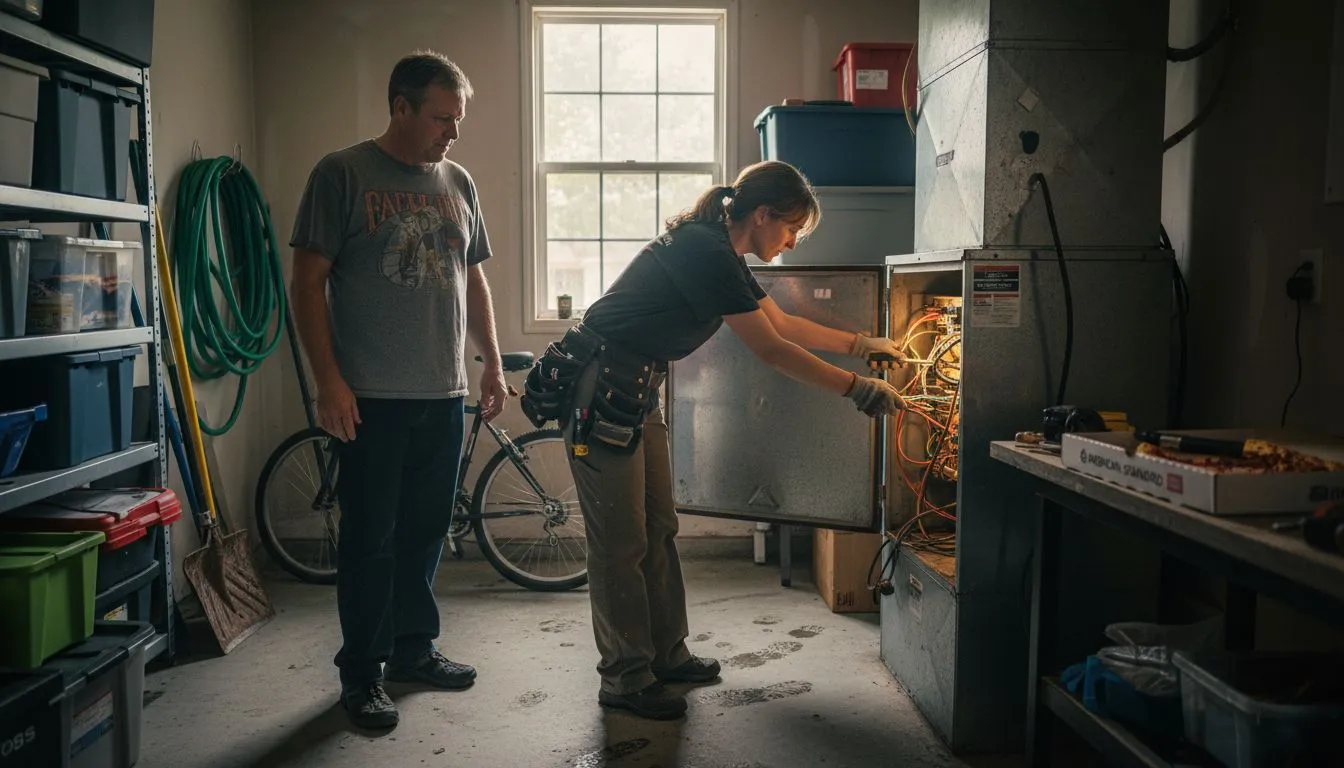
The core components of preventive service include comprehensive tasks that go well beyond simple filter replacements. Technicians conduct detailed assessments such as cleaning air conditioning coils, verifying refrigerant charge levels, inspecting electrical connections, and calibrating system controls. These precision interventions ensure that every mechanical component functions at optimal efficiency, preventing airflow restrictions and minimizing energy waste that can drive up utility costs.
Energy efficiency gains from preventive maintenance are substantial and measurable. Professional service helps identify and correct minor performance issues that can cause significant energy drain over time. Potential problems like restricted airflow, refrigerant leaks, or misaligned components can reduce system efficiency by up to 15%, translating to higher monthly energy bills and increased environmental impact. Regular maintenance not only preserves system performance but also provides homeowners with predictable comfort and lower long-term operational expenses.
Pro tip: Request a detailed efficiency report from your HVAC technician after each maintenance visit to track your system’s performance metrics and energy consumption trends.
Extending HVAC Lifespan and Preventing Breakdowns
Extending the operational lifespan of an HVAC system requires strategic preventive maintenance that addresses potential vulnerabilities before they escalate into major failures. Preventive maintenance strategies are critical for California homeowners seeking to maximize their equipment’s durability and performance. By implementing routine inspections and targeted interventions, homeowners can significantly reduce mechanical stress and prevent unexpected system breakdowns that often result in costly emergency repairs.
The most effective approach to preventing HVAC system failures involves comprehensive maintenance that goes beyond basic filter replacements. Technicians focus on critical areas like lubricating moving parts, checking electrical connections, cleaning coils, and verifying refrigerant levels. These precision interventions help identify early warning signs of potential mechanical issues, allowing homeowners to address minor problems before they compromise the entire system’s functionality. Specific maintenance tasks can reduce wear and tear by up to 50%, dramatically extending the equipment’s operational lifespan.
California’s unique climate presents distinctive challenges for HVAC systems, making proactive maintenance even more crucial. Extreme temperature variations and high dust levels can accelerate component degradation, making professional inspections essential for detecting subtle signs of mechanical stress. Studies have consistently shown that well-maintained HVAC systems can operate efficiently for 15-20 years, compared to just 10-12 years for systems with irregular or minimal maintenance, representing a significant long-term investment in home comfort and energy efficiency.
Pro tip: Create a dedicated maintenance log to track all HVAC service visits, repairs, and performance metrics, helping you anticipate potential issues and maintain comprehensive equipment documentation.
Impact on Energy Bills and Home Comfort
Maintaining an efficient HVAC system directly correlates with reducing household energy expenses and preserving optimal indoor comfort. Energy efficiency programs highlight that poorly maintained systems consume significantly more electricity, leading to unnecessarily high utility bills. For California homeowners, this means that seemingly minor maintenance issues can translate into hundreds of dollars in additional annual energy costs, making professional system care a critical financial strategy.
The relationship between HVAC maintenance and home comfort extends beyond simple temperature control. Precision maintenance ensures consistent airflow, balanced humidity levels, and improved air quality, creating a more comfortable living environment. Technicians address subtle issues like refrigerant levels, duct seal integrity, and component calibration that directly impact how evenly and efficiently your home is heated or cooled. Unaddressed mechanical problems can result in uneven temperature distribution, unexpected system shutdowns, and increased indoor air pollution.
California’s diverse climate presents unique challenges for home comfort and energy efficiency. From coastal areas with high humidity to inland regions experiencing extreme temperature fluctuations, HVAC systems must adapt continuously. Regular maintenance becomes a crucial intervention that helps homeowners navigate these environmental variations, ensuring that heating and cooling systems respond quickly and efficiently to changing conditions. By investing in professional maintenance, residents can expect to reduce energy consumption by up to 30%, stabilize indoor temperatures, and create a more sustainable home environment.
Pro tip: Install a smart thermostat alongside regular HVAC maintenance to track energy usage and identify potential efficiency improvements in real-time.
This table summarizes typical effects of regular HVAC maintenance versus neglect on California homes:
| Maintenance Habit | Energy Bills Impact | Comfort Level | Equipment Lifespan |
|---|---|---|---|
| Regular (Pro Service) | Lower, predictable expenses | Stable temperatures | 15–20 years |
| Irregular or Skipped | Higher, unexpected spikes | Uneven comfort | 10–12 years |
Common Risks of Skipping HVAC Maintenance
Neglecting HVAC maintenance exposes homeowners to a range of significant risks that can dramatically impact system performance, energy efficiency, and household comfort. Preventive maintenance research reveals that skipping routine service can lead to unexpected breakdowns, escalating repair costs, and substantially reduced equipment lifespan. For California homeowners, this means potential system failures during critical temperature periods, leaving families vulnerable to extreme heat or cold with minimal warning.
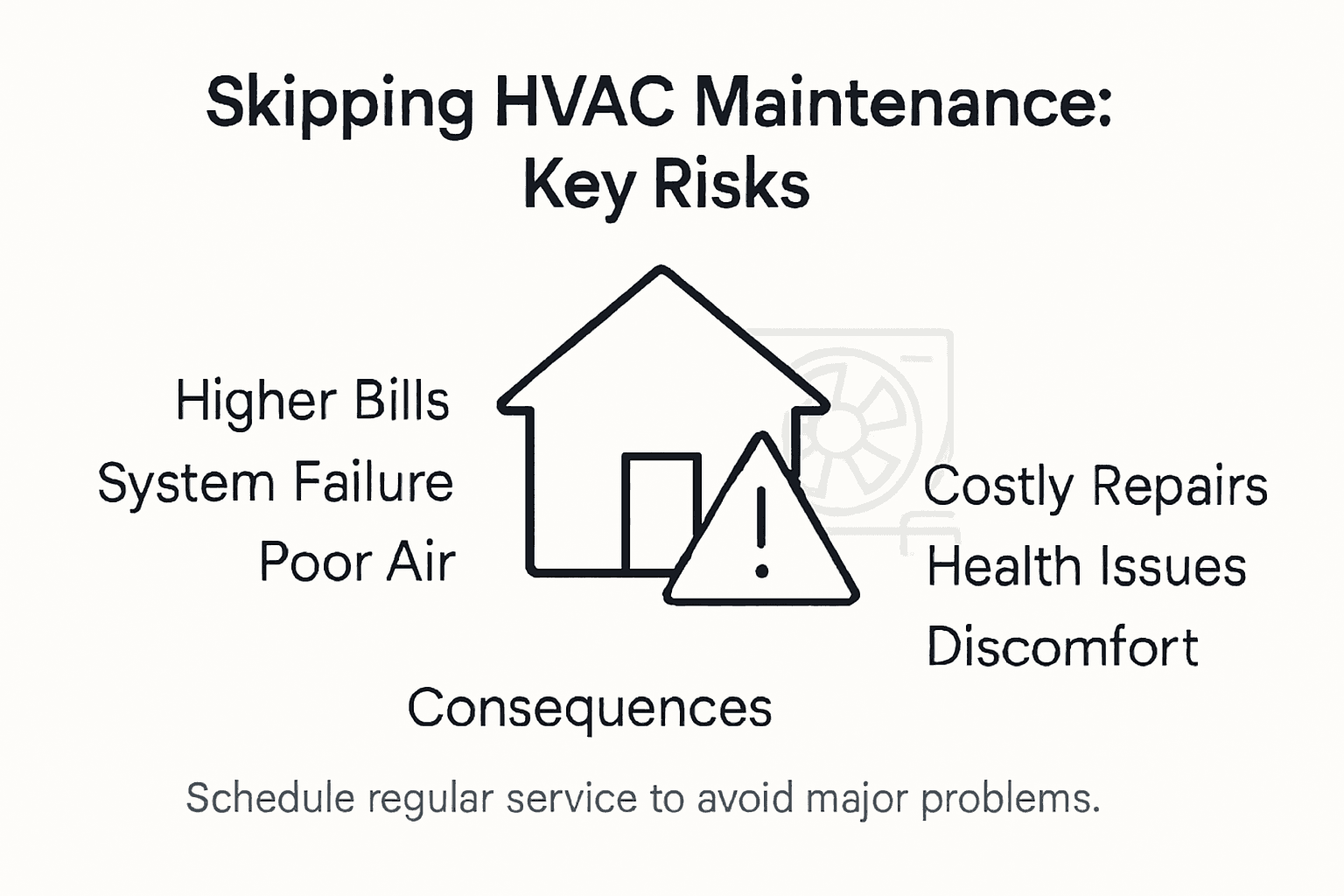
The financial consequences of overlooking HVAC maintenance extend far beyond simple repair expenses. Unmaintained systems consume significantly more energy, causing utility bills to spike dramatically. Inefficient systems work harder to maintain desired temperatures, leading to increased wear on critical components and accelerated mechanical degradation. Dirty filters, uncalibrated thermostats, and neglected electrical connections can reduce system efficiency by up to 40%, translating to hundreds of dollars in unnecessary energy costs annually.
Beyond financial implications, skipping maintenance poses serious risks to indoor air quality and household health. Unmaintained HVAC systems become breeding grounds for dust, allergens, mold, and bacteria that circulate through home ventilation systems. These contaminants can trigger respiratory issues, allergic reactions, and chronic health problems, particularly affecting children, elderly residents, and individuals with pre-existing respiratory conditions. In California’s diverse climate, where dust, pollen, and environmental pollutants vary widely, consistent HVAC maintenance becomes crucial for maintaining a healthy indoor environment.
Pro tip: Schedule professional HVAC inspections during seasonal transitions to proactively identify and address potential system vulnerabilities before they escalate into costly repairs.
Keep Your California Home Comfortable with Expert HVAC Maintenance
The challenge many California homeowners face is ensuring their HVAC systems receive professional, regular maintenance to prevent costly breakdowns and maintain energy efficiency. As the article explains, skipping essential upkeep can lead to unexpected repairs, higher energy bills, and reduced home comfort due to uneven temperature control and poor indoor air quality. Your HVAC system deserves more than just basic DIY efforts. It needs the precise calibration, thorough inspections, and preventive care that only licensed experts can provide.
At MDTech Services, we understand the importance of maintaining your heating and cooling equipment with the expertise highlighted in the article, such as testing, adjusting, balancing, and component diagnostics. Our skilled technicians serve Orange County and Los Angeles County with trusted HVAC repair and maintenance services that keep your system running smoothly year-round. We prioritize your safety, reliability, and peace of mind by addressing maintenance challenges specific to California’s climate.
Make a smart decision for your home today and avoid costly surprises during extreme weather.
Discover how professional HVAC service can extend your system’s life, reduce energy expenses, and ensure stable home comfort.
Schedule your expert HVAC maintenance with MDTech Services now to experience dependable service and lasting results.

Frequently Asked Questions
What is included in regular HVAC maintenance?
Regular HVAC maintenance includes scheduled inspections, cleaning, and servicing designed to prevent unexpected breakdowns and sustain system efficiency. This involves tasks such as testing, adjusting, and balancing airflow, cleaning coils, checking refrigerant levels, and calibrating system controls.
How often should I schedule HVAC maintenance?
It is recommended to schedule professional HVAC maintenance twice annually, ideally before the summer and winter seasons, to catch potential issues early and maintain peak system performance.
What are the benefits of preventive HVAC maintenance?
Preventive maintenance helps improve energy efficiency, extend the lifespan of the HVAC system, and reduce the risk of unexpected breakdowns. It also ensures better indoor air quality and more consistent comfort in your home.
What risks does skipping HVAC maintenance pose?
Skipping HVAC maintenance can lead to unexpected breakdowns, increased energy consumption, and poorer indoor air quality. It may also result in higher utility bills and can significantly reduce the lifespan of your HVAC system.