
Most homeowners in Orange County and Los Angeles County have been there: a plumber arrives, starts talking about backflow preventers, P-traps, and GPF ratings, and suddenly you feel lost in your own home. That confusion is not just frustrating. It can cost you real money. When you cannot clearly describe a problem or understand a repair quote, you risk overpaying, approving unnecessary work, or missing a compliance issue that delays a home sale. This guide gives you the plain-English plumbing vocabulary you need to communicate confidently with any service provider, understand your repair invoices, and keep your home in top shape.
Table of Contents
- Why plumbing terms matter for homeowners
- Essential plumbing terms defined
- Key plumbing parts: Materials and their uses
- Water flow and efficiency: GPM, GPF, and CA regulations
- Diagnosing and fixing common clogs explained
- Leak repair: From temporary fixes to long-term solutions
- Critical home plumbing valves: Shutoffs and backflow explained
- MDTech Services is here when you need a licensed plumber
- Frequently asked questions
Key Takeaways
| Point | Details |
|---|---|
| Know key terms | Understanding basic terms helps you explain problems and avoid costly repair errors. |
| Check CA regulations | California requires low-flow toilets, showers, and backflow prevention for home compliance. |
| Choose correct materials | Learning about PVC, PEX, and copper guides you to the best pipe material for each repair. |
| Use the right tool | Plungers, snakes, and hydrojets each serve a specific type of clog and situation. |
| Test your shutoffs | Locate and label main and fixture shutoff valves to stop water promptly in an emergency. |
Why plumbing terms matter for homeowners
Not knowing the right words puts you at a disadvantage before the conversation even starts. If you tell a plumber “the water is doing something weird under the sink,” you will wait longer and pay more than the homeowner who says “I think my P-trap is dry or cracked.” Precise language speeds up diagnosis and reduces billable time.
California adds another layer of complexity. The state enforces specific plumbing standards that directly affect your repair and renovation decisions. Here is what you need to know:
- Low-flow fixture standards apply to all new installations and replacements in Orange and LA County homes.
- Backflow testing is often required annually for properties with irrigation systems or commercial connections.
- Inspectors and permit offices use technical vocabulary, and failing to use the right terms can delay approvals.
- Understanding the role of licensed plumbers helps you verify credentials and ask the right questions before hiring.
“Homeowners who understand basic plumbing terminology make faster decisions, avoid unnecessary upsells, and stay compliant with local codes without relying entirely on their contractor.” — Experienced residential plumbing professional
Knowing these terms is not about becoming a plumber yourself. It is about staying in control of your home and your budget.
Essential plumbing terms defined
Here are the must-know terms, explained in plain language with real context for Southern California homeowners.
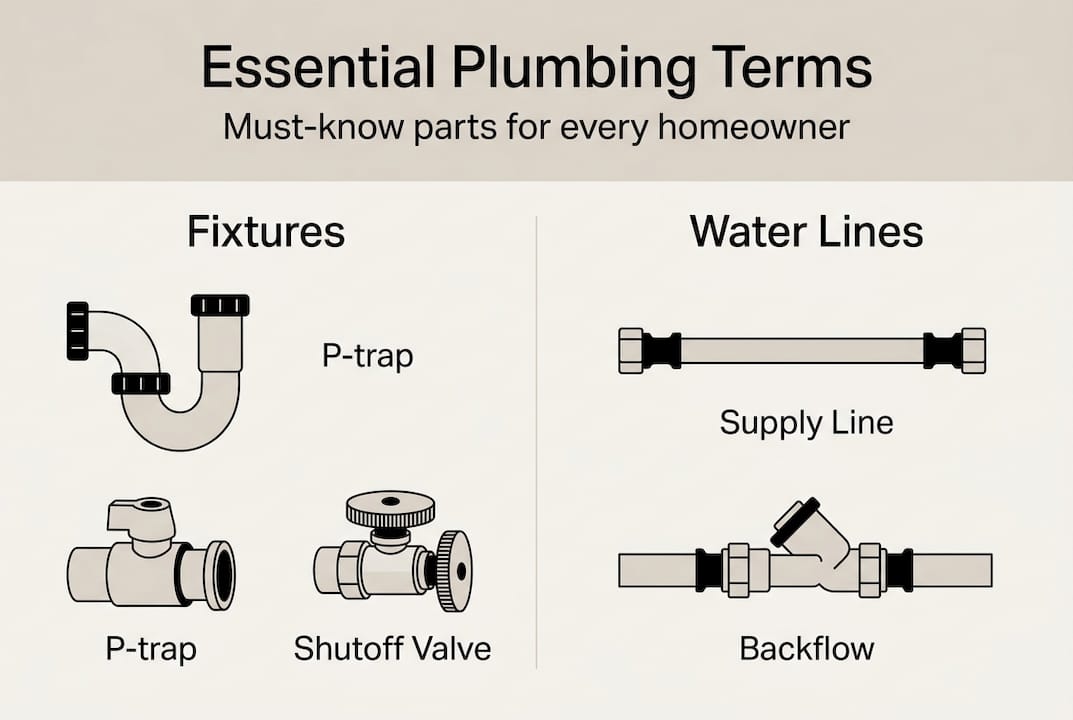
Backflow refers to water flowing in reverse, which can contaminate your potable (drinkable) water supply. Backflow preventers are devices installed to stop this from happening, and they are required in many OC and LA County properties.
P-trap is the curved pipe section under your sink or tub drain. It holds a small amount of water that acts as a seal, blocking sewer gases from entering your home. If you smell something foul near a drain, the P-trap is usually the first place to check.
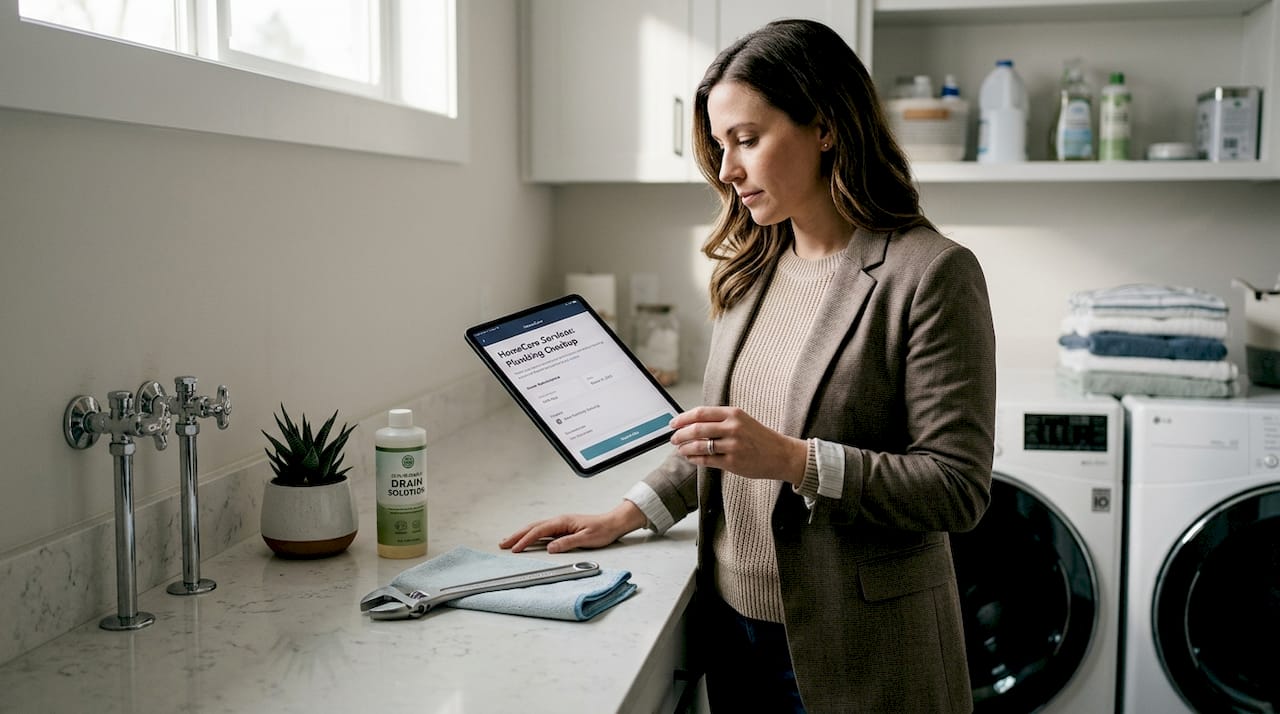
Aerator is a small screen device screwed onto the tip of your faucet. It mixes air into the water stream, reducing flow and splashing while maintaining pressure. Cleaning or replacing aerators is one of the easiest DIY maintenance tasks.
Shutoff valve controls water flow to a specific fixture or to your entire home. Knowing where yours are located is critical during any leak or repair.
Vent stack is the vertical pipe that runs through your walls and exits through the roof. It allows sewer gases to escape and keeps drain pressure balanced. Gurgling drains often point to a blocked vent stack.
Supply line is the flexible or rigid tube connecting your water supply to a fixture like a toilet or faucet. These wear out over time and are a common source of slow leaks.
The ASSE Plumbing Dictionary is the authoritative reference for technical definitions if you want to go deeper.
| Term | Where you find it | Why it matters |
|---|---|---|
| Backflow preventer | Near irrigation or main line | Prevents water contamination |
| P-trap | Under sinks and tubs | Blocks sewer gas entry |
| Aerator | Faucet tip | Controls flow rate |
| Shutoff valve | Behind toilets, under sinks | Stops water during repairs |
| Vent stack | Inside walls, exits roof | Balances drain pressure |
| Supply line | Connects fixture to supply | Common leak source |
Pro Tip: When a plumber hands you an invoice, scan it for these terms. If you see a charge for “P-trap replacement” or “supply line swap,” you will know exactly what was done and why.
Regular maintenance reduces repairs significantly, and knowing these terms helps you stay proactive rather than reactive.
Key plumbing parts: Materials and their uses
Beyond terminology, you need to recognize the physical materials in your plumbing system. Different materials serve different purposes, and knowing which you have affects repair costs and options.
PVC, PEX, and copper are the three most common pipe types in Southern California homes:
- PVC (polyvinyl chloride): Rigid plastic used primarily for drain lines. It is affordable and easy to cut, but it cannot handle high heat.
- PEX (cross-linked polyethylene): Flexible plastic tubing used for water supply lines. It resists freezing better than copper and is faster to install.
- Copper: The traditional choice for hot and cold water supply lines. It is durable and long-lasting but costs more and requires soldering to join.
| Material | Best use | Cost | Durability | Heat resistance |
|---|---|---|---|---|
| PVC | Drain lines | Low | High | Low |
| PEX | Supply lines | Medium | High | Medium |
| Copper | Hot/cold supply | High | Very high | High |
Understanding your pipe material helps you ask informed questions during repairs. A plumber recommending copper replacement in a drain line, for example, should raise a question. Review plumbing maintenance basics to learn how to inspect your system regularly.
Pro Tip: Before any major repair, ask your plumber to show you what type of piping you have. Take a photo for your home records. This saves time and money on future service calls.
Water flow and efficiency: GPM, GPF, and CA regulations
Two numbers appear on nearly every fixture you buy: GPM and GPF. Understanding them keeps you compliant and saves water.
GPM (Gallons Per Minute) measures how much water flows from a faucet or showerhead per minute. GPF (Gallons Per Flush) measures how much water a toilet uses per flush. California sets strict limits on both:
- Toilets: 1.28 GPF or less
- Showers: 1.8 GPM or less
- Lavatory faucets: 1.2 GPM or less
- Kitchen faucets: 1.8 GPM or less
These numbers matter when you replace a fixture, sell your home, or apply for a permit. A non-compliant toilet can hold up a home sale inspection. Switching to compliant toilets can save roughly 13,000 gallons of water per household per year, which adds up fast on an LA County water bill.
You can find GPM and GPF ratings printed on the fixture label, the box, or the manufacturer’s spec sheet. If the label is missing, look up the model number online. Staying current with basic maintenance and compliance protects your home’s value. Upgrading fixtures also connects to water heater efficiency, since lower flow rates reduce the demand on your water heater.
Diagnosing and fixing common clogs explained
Clogs are the most common plumbing complaint in residential homes. Knowing the tools and methods plumbers use helps you decide when to handle it yourself and when to call for help.
Here is how professionals approach different types of clogs:
- Toilet clogs: A plunger is the first tool used. It creates suction to dislodge soft blockages near the drain opening.
- Sink and tub clogs: A drain snake (also called an auger) is a flexible cable that reaches deeper into the pipe to break up or pull out the clog.
- Main line clogs: Hydrojetting uses high-pressure water to blast through stubborn buildup, grease, or debris in the main sewer line.
- Root intrusion: Tree roots that grow into pipes require drain root removal methods and often a camera inspection to assess the damage.
Plunging, snaking, and hydrojetting each address different levels of blockage severity. If multiple drains in your home back up at the same time, that signals a main line issue, not a simple fixture clog. That is the moment to stop plunging and call a licensed plumber. Staying on top of regular maintenance helps prevent these situations from escalating.
Pro Tip: When you call a plumber about a clog, mention whether it is isolated to one fixture or affecting multiple drains. That single detail helps them bring the right equipment and saves you a second service call.
Leak repair: From temporary fixes to long-term solutions
Leaks range from a slow drip under a sink to a burst pipe behind a wall. Knowing the terminology helps you understand what your plumber is proposing and whether it is a short-term patch or a real fix.
Cutting and replacing damaged pipe sections with couplings is the standard permanent repair for copper and PVC pipes. Temporary fixes like pipe clamps or epoxy putty can stop water flow in an emergency, but they are not designed to last.
Here is when a temporary fix makes sense, and when it does not:
- Use a clamp or epoxy when you need to stop water immediately and a plumber cannot arrive for several hours.
- Do not rely on temporary fixes for pinhole leaks caused by corrosion, high water pressure, or aging pipes. These indicate a systemic problem.
- Replace the section when the pipe shows visible corrosion, repeated leaks in the same area, or damage longer than a few inches.
- Check water pressure if pinhole leaks keep appearing. High pressure above 80 PSI accelerates pipe wear and is a fixable issue.
“Every homeowner should know where their main shutoff valve is and test it at least once a year. In a leak emergency, those first 60 seconds matter more than anything else.” — Licensed residential plumber
For urgent situations, understanding emergency plumbing procedures and reviewing emergency repair steps can prevent thousands of dollars in water damage.
Critical home plumbing valves: Shutoffs and backflow explained
Valves are your first line of defense in any plumbing emergency. Knowing where they are and how they work is non-negotiable for every homeowner.
Here is how to locate, test, and maintain your key valves:
- Main shutoff valve: Usually located near the water meter, at the front of the house, or in a utility room. Turning it off stops all water flow into the home.
- Angle stop valves: Found behind toilets and under sinks. These shut off water to a single fixture without affecting the rest of the house.
- Fixture shutoffs: Similar to angle stops but may also appear near washing machines and water heaters.
- Backflow preventer: Installed on irrigation lines or where non-potable water could mix with your supply. Test it annually as required by many OC and LA County jurisdictions.
Locating and testing shutoff valves annually prevents them from seizing up when you need them most. A valve that has not been turned in years may not close fully, which defeats its purpose entirely.
Pro Tip: Label each shutoff valve with a small tag indicating which fixture it controls. This takes five minutes and saves enormous stress during an emergency. Review emergency plumbing importance and bookmark emergency valve shutoff steps so you are prepared before a problem occurs.
MDTech Services is here when you need a licensed plumber
Now that you have the vocabulary, you are ready to have a real conversation with a plumbing professional. But knowing the terms is only half the equation. You also need a reliable, licensed team that will explain the work clearly, respect your home, and get the job done right the first time.

MDTech Services serves homeowners across Orange County and Los Angeles County with licensed plumbing, appliance repair, and HVAC services. Our technicians communicate clearly, provide transparent quotes, and never recommend work you do not need. Whether you are dealing with a stubborn clog, a leaking supply line, or a fixture that does not meet California’s flow standards, we are ready to help. Book your appointment online or call us directly. We make it easy to get expert service without the guesswork.
Frequently asked questions
What is the most important plumbing term every homeowner should know?
The main shutoff valve is the single most critical term to know. Locating and testing it annually means you can stop water flow immediately during a leak and prevent serious property damage.
How do I check if my toilets or faucets are compliant with California’s low-flow standards?
Look for the GPF and GPM ratings printed on the fixture or its label. California mandates toilets at 1.28 GPF or less and lavatory faucets at 1.2 GPM or less.
What causes sewer odors under sinks and how can I fix them?
A dry or damaged P-trap under the sink is almost always the cause. Run water to refill it, or replace the trap if it is cracked or corroded.
When should I call a plumber instead of using a plunger or snake?
If multiple drains back up at the same time or you suspect root intrusion, stop and call a professional. A camera inspection for persistent blockages is far more effective than repeated plunging and protects your main line from further damage.