
Every homeowner in Orange and Los Angeles County knows the struggle of keeping their home cool when summer heat hits. When your HVAC system’s drainage fails, even the best equipment can become a source of costly stress. Proper drainage systems are vital, preventing water damage, mold, and system breakdowns so your air conditioner keeps running efficiently. This guide reveals how a well-maintained drainage system protects your home and health, highlighting smart solutions for consistent climate control.
Table of Contents
- Role of Drainage in Residential HVAC Systems
- How Drainage Systems Prevent System Failures
- Common Drainage Problems and Their Impact
- How Drainage Works in Air Conditioners
- The Condensation Process and Collection
- Components of the Drainage System
- Why Drainage Fails and How to Spot Problems
- Common HVAC Drainage Issues and Causes
- Clogged Drain Lines: The Most Common Problem
- Faulty Drain Pans and Improper Installation
- Condensate Pump Failures and Design Issues
- Recognizing When Something Is Wrong
- Best Practices for Drainage Installation
- The Foundation: Proper Slope and Pipe Sizing
- Materials and Protection Against Corrosion
- Access for Maintenance and Redundancy
- Compliance with Local Codes and Standards
- Risks and Costs of Poor Drainage Maintenance
- Water Damage and Structural Threats
- Mold Growth and Indoor Air Quality Threats
- Equipment Corrosion and Shortened Lifespan
- Energy Efficiency Loss and Higher Utility Bills
- The Prevention Formula: Save Thousands
Key Takeaways
| Point | Details |
|---|---|
| Importance of Drainage | Proper drainage in HVAC systems prevents water accumulation, which can lead to mold growth and structural damage. |
| Regular Maintenance | Routine inspection and cleaning of drain lines can save homeowners from costly repairs, avoiding damages that can range from $2,500 to over $10,000. |
| Signs of Issues | Homeowners should monitor for warning signs like water pooling or musty odors to catch drainage problems early and mitigate damage. |
| Investment in Prevention | Spending a small amount on drainage maintenance can prevent significant costs associated with water damage and equipment failure in the future. |
Role of Drainage in Residential HVAC Systems
Your air conditioning system produces water constantly, whether you realize it or not. Every time your AC cools your home in Orange and Los Angeles County’s warm climate, moisture condenses from the air inside your house. That condensation needs to go somewhere. Without proper drainage systems, that water accumulates inside your equipment and eventually causes serious damage to your home’s structure, ductwork, and the HVAC unit itself.
The primary function of HVAC drainage is removing this condensate water safely and efficiently. When your air conditioning runs, refrigerant cools the indoor coil, and humid air passes over it. The temperature difference causes water vapor to condense into liquid—sometimes gallons per day during peak summer months in our region. This water must drain away from your system continuously. Without effective drainage management, water pools inside the air handler, supporting mold growth and creating conditions that damage your equipment and threaten your home’s air quality.
How Drainage Systems Prevent System Failures
A properly designed HVAC drainage system protects your home in several critical ways:
- Prevents mold and mildew growth inside ducts and air handlers that thrive in wet environments
- Stops water damage to ceilings, walls, and insulation when condensate leaks from corroded pipes
- Maintains system efficiency by keeping water away from coils and components that need to stay dry
- Extends equipment lifespan by protecting metal components from rust and corrosion
- Protects indoor air quality by preventing microbial contamination that spreads through your ductwork
Improper drainage causes approximately 50% of moisture-related HVAC failures in residential systems, making it one of the most preventable problems homeowners face.
In Orange and Los Angeles County homes, condensate drainage typically flows through a drain pan beneath your indoor air handler. This pan collects all the water your AC produces and directs it through a drain line—usually PVC pipe—that carries it away from your equipment to a safe discharge point. Some systems use gravity drainage to a floor drain or exterior location. Others rely on a condensate pump to push water upward or to distant drain locations when gravity alone won’t work.
The drain line itself becomes a vulnerability point. Over time, algae and bacteria grow inside the pipe, creating blockages that trap water. When the drain backs up, water has nowhere to go except into your home. We’ve seen countless cases where homeowners discovered water pooling in attics or basements because a simple drain line clogged with organic growth. Many of these failures could have been prevented with regular maintenance.
Common Drainage Problems and Their Impact
Drainage failures don’t announce themselves clearly. Often, damage occurs silently until you notice obvious signs. Watch for:
- Visible water pooling around your indoor unit or in the condensate pan
- Musty odors coming from your vents or ductwork
- Stains or discoloration on ceilings below your unit
- Reduced cooling performance because water interferes with system operation
- Standing water or rust inside your air handler when you inspect it
Since proper HVAC maintenance includes drain line inspection and cleaning, addressing these issues early prevents them from escalating into expensive repairs. A clogged drain line costs $150-300 to clear. A flooded attic costs $2,000-5,000 to repair.
The difference between a $200 drain line cleaning and a $5,000 water damage repair comes down to whether you caught the problem in time.
Pro tip: Schedule drain line cleaning as part of your spring HVAC maintenance routine before the cooling season begins. This simple step prevents 90% of condensate-related failures and keeps your system operating reliably through Orange County’s hot months.
How Drainage Works in Air Conditioners
Your air conditioner is essentially a water-making machine, and most homeowners never realize it. When warm, humid air from your home passes over the cold evaporator coil inside your indoor unit, something remarkable happens. That cold coil pulls moisture from the air—the same way water beads up on a cold glass of iced tea on a hot day. Except your AC isn’t collecting a few drops. During summer cooling cycles in Orange and Los Angeles County, a typical residential system can produce 5 to 20 gallons of condensate water daily. All that water has to go somewhere, and that’s where your drainage system becomes critical to keeping your home safe.
The Condensation Process and Collection
Understanding how your AC drainage works starts with understanding where the water comes from. When warm air passes over cold evaporator coils, the temperature difference causes moisture in that air to condense into liquid droplets. Think of it like your bathroom mirror after a hot shower—the warm, humid air meets the cool glass surface and instantly forms water.
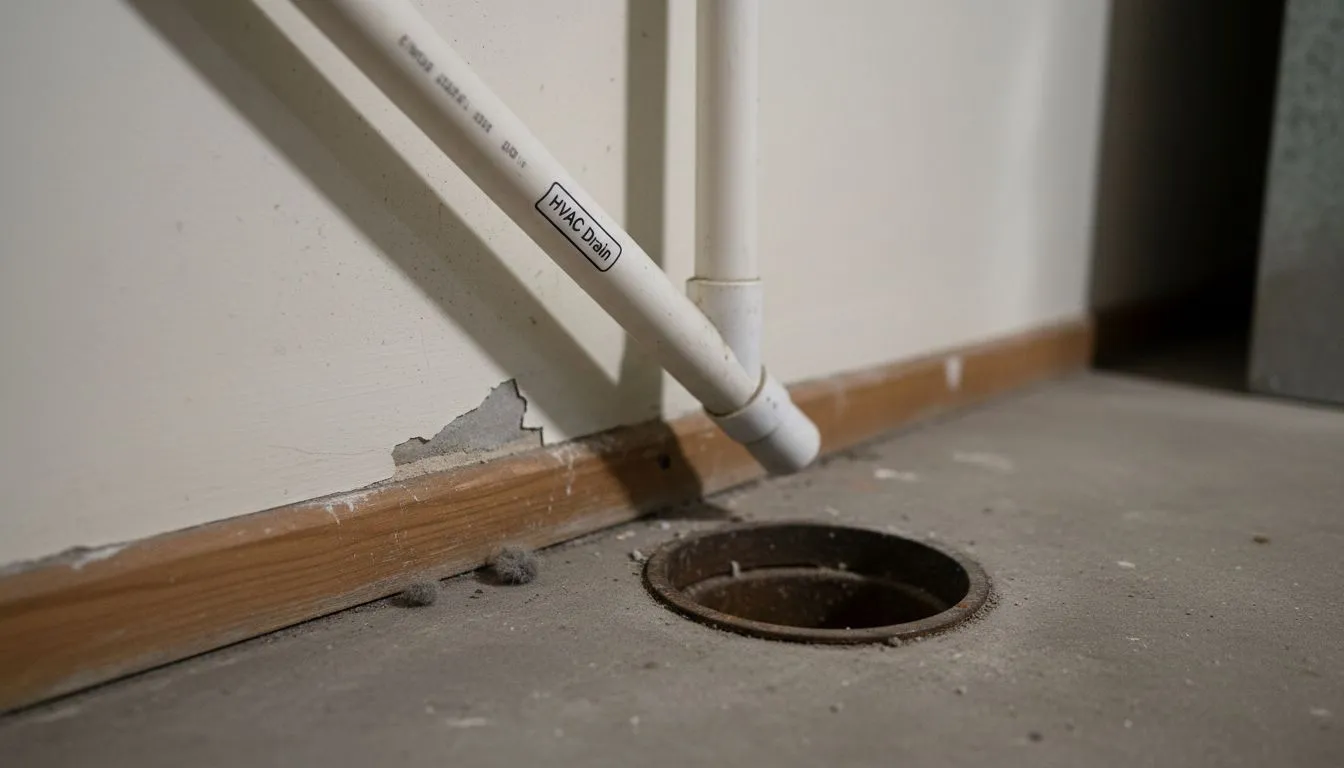
Your AC’s indoor unit has a condensate pan positioned directly underneath the evaporator coil to catch all these water droplets. This pan slopes slightly so water naturally flows toward a drain opening. From there, a drain line—typically made of PVC pipe about three-quarters of an inch in diameter—carries the water away from your equipment to a safe discharge point. The drain line might empty into a floor drain, a sump pump, or an outdoor location depending on your system’s installation.
The key word here is “slope.” Gravity does the work, pulling condensate through the drain line. But if the line isn’t installed with the correct slight angle, water gets trapped and pools inside the pipe, creating the perfect environment for algae, mold, and bacteria growth.
Components of the Drainage System
Your HVAC drainage system has several important parts working together:
- Evaporator coil where moisture condenses from the air
- Condensate pan that collects all the water droplets
- Drain line that carries water away from your unit
- Drain trap that maintains a water seal to prevent air from entering the system
- Secondary drain line (on some systems) that catches overflow if the primary drain clogs
- Condensate pump on systems where gravity drainage isn’t possible
Without proper slopes and regular maintenance, even a small blockage can cause your entire drainage system to back up, sending water into your attic, walls, or basement within hours.
The condensate pump deserves special attention. If your indoor unit sits below the primary drain level—common in basement installations or when the drain line must travel upward—a pump automatically activates to push water to a higher discharge point. These pumps are reliable but require electricity and can fail if the float switch gets stuck or if sediment blocks the small discharge line.
The following table compares gravity drainage and condensate pump systems for air conditioners:
| Feature | Gravity Drainage | Condensate Pump System |
|---|---|---|
| Installation Cost | Lower, minimal moving parts | Higher, requires electrical wiring |
| Maintenance Needed | Less frequent, simple checks | Regular pump and line inspections |
| Failure Risk | Rare if sloped properly | Increased if pump or switch fails |
| Application | Above-floor or outdoor discharge | Basements or upward drain required |
Why Drainage Fails and How to Spot Problems
Common drainage issues arise from blockages, improper slope, or faulty drain components, all of which can leave your system vulnerable. Over time, the drain line becomes a breeding ground for organic material. Algae thrives in warm, dark, moist pipes. Dust and debris from your ductwork settle into the drain line. When combined, they create a clog that stops water flow completely.
You might miss these problems for weeks or months because the water isn’t dripping from your unit—it’s backing up inside the condensate pan and overflowing into your home. By the time you notice water damage, the problem has already caused significant harm.
Watch for these warning signs:
- Water pooling around your indoor unit or in the condensate pan
- Musty, moldy smells coming from your vents
- Visible mold growth on your air handler or in ducts
- Reduced cooling output because water interferes with coil efficiency
- Alarms on your air handler indicating a float switch activation
Prevention is far easier than repair. Regular drain line cleaning removes buildup before it becomes a serious blockage. This simple maintenance task keeps water flowing freely and prevents the mold growth that damages air quality and your equipment.
Pro tip: Pour a cup of bleach down your condensate drain line at the start of each cooling season to kill algae and bacteria before they can form blockages; this inexpensive step prevents most drainage problems homeowners experience.
Common HVAC Drainage Issues and Causes
Drainage problems don’t happen overnight. They develop gradually, often invisibly, until suddenly your system fails or water appears where it shouldn’t. Most drainage issues stem from a handful of recurring causes that are entirely preventable with awareness and basic maintenance. Understanding what goes wrong helps you catch problems early before they turn into expensive repairs costing thousands of dollars.
Clogged Drain Lines: The Most Common Problem
Your HVAC drain line is a magnet for buildup. Inside that narrow PVC pipe, algae grows rapidly in the warm, dark, moist environment. Dust and debris from your ductwork settle into the pipe. Mineral deposits accumulate over time. When these materials combine, they create blockages that stop water flow completely.
A clogged drain line doesn’t announce itself loudly. Water doesn’t spray from your ceiling immediately. Instead, it backs up inside the condensate pan and slowly overflows into your home. By the time you notice puddles around your indoor unit or musty smells from your vents, the blockage has already been restricting drainage for weeks.
The culprits behind clogs include:
- Algae and mold growth thriving in the dark, wet pipe
- Dust accumulation from your ductwork and air filter
- Mineral deposits from hard water in your region
- Debris like leaves or insects (especially in secondary drain lines)
- Pipe degradation causing rough interior surfaces that trap material
Blocked drain lines account for approximately 50% of residential HVAC drainage failures, making this the single most common issue homeowners face.
Faulty Drain Pans and Improper Installation
Common drainage issues also arise from damaged or rusted drain pans and insufficient maintenance, both of which compromise your system’s ability to manage condensate effectively. Your drain pan sits directly under your evaporator coil and must slope properly toward the drain opening. If it’s installed incorrectly, water pools in low spots instead of flowing toward the drain line.
Over time, metal drain pans corrode and develop small holes or cracks. When this happens, water leaks directly into your attic, walls, or ductwork instead of flowing through the drain line. Plastic drain pans can crack if the system vibrates excessively or if someone steps on them during maintenance.
Problems with drain pans and installation include:
- Improper slope preventing water from flowing to the drain
- Rust and corrosion creating holes in metal pans
- Cracks in plastic pans from age or impact damage
- Disconnected drain lines that separate from the pan opening
- Missing drain pan on older systems that were never upgraded
Condensate Pump Failures and Design Issues
If your indoor unit sits below the primary drain level, your system relies on a condensate pump to push water upward to a discharge point. These pumps work reliably in most cases, but they can fail without warning. The float switch might get stuck by sediment. The discharge line might clog. The pump itself might burn out from overuse.
When a pump fails, water has nowhere to go. It backs up in the pan and overflows into your home within hours. Many homeowners don’t discover the failure until they notice water damage because the pump operates silently in a closet or basement.
Blocked drain lines and failed condensate pumps are frequent root causes of HVAC system malfunctions leading to costly repairs. Some systems also suffer from inadequate drainage design from the start. If your drain line doesn’t have enough slope, or if it’s too small for your system’s condensate production, problems are inevitable.
Common pump and design issues:
- Float switch stuck by sediment or debris
- Discharge line clogged preventing water discharge
- Pump motor failure from age or electrical issues
- Inadequate slope on drain lines in the installation
- Drain line too small for system capacity
- No secondary drain installed as backup protection
Recognizing When Something Is Wrong
Catch drainage problems before they cause major damage. Watch for these warning signs and take action early using basic HVAC troubleshooting:
- Water pooling around your indoor unit or in the condensate pan
- Musty, moldy odors from your vents or air handler
- Visible mold or slime inside your condensate pan
- Moisture stains on ceilings or walls below your unit
- Your air handler making a gurgling sound
- Alarms sounding from your condensate pump float switch
- Reduced cooling performance or humidity problems
The moment you notice any of these signs, have your drain line inspected and cleaned. Don’t wait. Water damage gets worse every day it continues.
Pro tip: Schedule drain line inspection at the start of spring and again in mid-summer; catching problems during routine checks prevents emergency situations and keeps your system running reliably through Orange County’s hot months.
Best Practices for Drainage Installation
Proper drainage installation is where everything starts. A system designed and installed correctly prevents 90% of the moisture problems homeowners experience later. When your HVAC system is new, you have a critical window to get drainage right. Poor installation decisions made today create expensive problems years down the road. Whether you’re replacing an old unit or installing a new system in your Orange or Los Angeles County home, understanding installation best practices protects your investment.
The Foundation: Proper Slope and Pipe Sizing
Gravity does the heavy lifting in HVAC drainage. Water flows downhill naturally, but only if your drain line has the right slope. Best practices for drainage installation require ensuring proper slope for condensate drain lines along with use of corrosion-resistant materials and adherence to local codes. Industry standards specify that drain lines should slope downward at a minimum of one-quarter inch per 10 feet of horizontal run. Not enough slope and water pools in low spots. Too much slope and the water moves too fast, potentially leaving sediment behind that clogs the pipe.
Pipe sizing matters equally. Your drain line must be large enough to handle your system’s condensate production. A typical residential air conditioner produces 5 to 20 gallons daily during peak summer cooling. If your drain line is undersized, water backs up during high-production periods. Most residential systems use three-quarter-inch PVC pipe, which handles typical condensate loads. However, larger systems or those with condensate pumps might require one-inch pipe.
Key installation slope requirements:
- Minimum slope of one-quarter inch per 10 feet horizontally
- Maximum slope is not specified, but avoid creating pressure situations
- Continuous slope throughout the entire drain line with no low spots
- Pipe size large enough for your system’s condensate capacity
- Rigid or semi-rigid piping that maintains consistent slope over time
Materials and Protection Against Corrosion
Your drain line carries water that sits in pipes for hours between condensation events. In Orange County’s coastal areas, this creates corrosion risk, especially with metal piping. Modern best practices emphasize corrosion-resistant materials like PVC, which resists rust and mineral deposits far better than older copper or galvanized steel pipes.
PVC pipe requires proper support to prevent sagging that disrupts slope. Clamps or straps should be installed every three to four feet. The pipe should be protected from UV damage if it’s exposed to sunlight, which can weaken plastic over time. Insulation around the drain line prevents condensation on the outside of the pipe, which can drip onto ceiling materials or create water stains.
Material best practices include:
- PVC pipe as the primary choice for residential drainage
- Proper support every three to four feet to maintain slope
- UV protection if pipes run through sunlit areas
- Insulation wrapping to prevent external condensation
- Anti-siphon trap seals to prevent air infiltration into the system
Installing the right materials and slope from the beginning costs a few hundred dollars more but prevents thousands in water damage repairs down the road.
Access for Maintenance and Redundancy
No matter how well you install a drain line, it will need cleaning eventually. Build maintenance access into your installation plan from the start. Provide access points where the drain line can be cleared without disassembling your entire system. Some installers add clean-out tees or valves that allow a technician to flush the line with water or compressed air.
Redundancy saves your home if your primary drain fails. Modern systems include a secondary drain line that catches overflow from the condensate pan if the primary line clogs. This secondary line typically routes to a visible location like an exterior wall or a floor, where water leaking alerts you to a problem before major damage occurs. Some systems also include a float switch that activates an alarm or shuts down the system if water backs up in the pan.
Installation features for maintenance and safety:
- Clean-out access points where the drain line can be flushed
- Secondary drain line that catches overflow from the pan
- Float switch that detects water backup and sounds an alarm
- Visible discharge points so you notice if drainage fails
- Accessible drain pan for inspection and cleaning
- Clear labeling identifying drain lines and components
Compliance with Local Codes and Standards
Your local building department has specific requirements for HVAC drainage installation. These codes exist to protect your home and ensure systems work properly. Before installation begins, work with your contractor to understand what your jurisdiction requires. Some areas mandate that condensate must discharge into the plumbing system rather than flowing outside. Others allow gravity drainage to daylight but require secondary drains as backup.
Integration with overall building water management systems enhances durability and performance, meaning your HVAC drainage should coordinate with your home’s other water management, such as gutters, downspouts, and foundation drainage. Discharging HVAC condensate directly against your foundation or in a location where it pools creates moisture problems elsewhere in your home.
Code compliance checklist:
- Verify local requirements before installation begins
- Install secondary drain lines if required by code
- Ensure proper discharge location away from foundations
- Use approved materials for your jurisdiction
- Have the system inspected before final approval
- Keep documentation of installation specifications
Pro tip: Ask your HVAC contractor for written documentation of the drain line specifications including pipe size, slope measurements, and discharge location; this documentation proves your system was installed to code and helps future technicians understand your drainage design.
Risks and Costs of Poor Drainage Maintenance
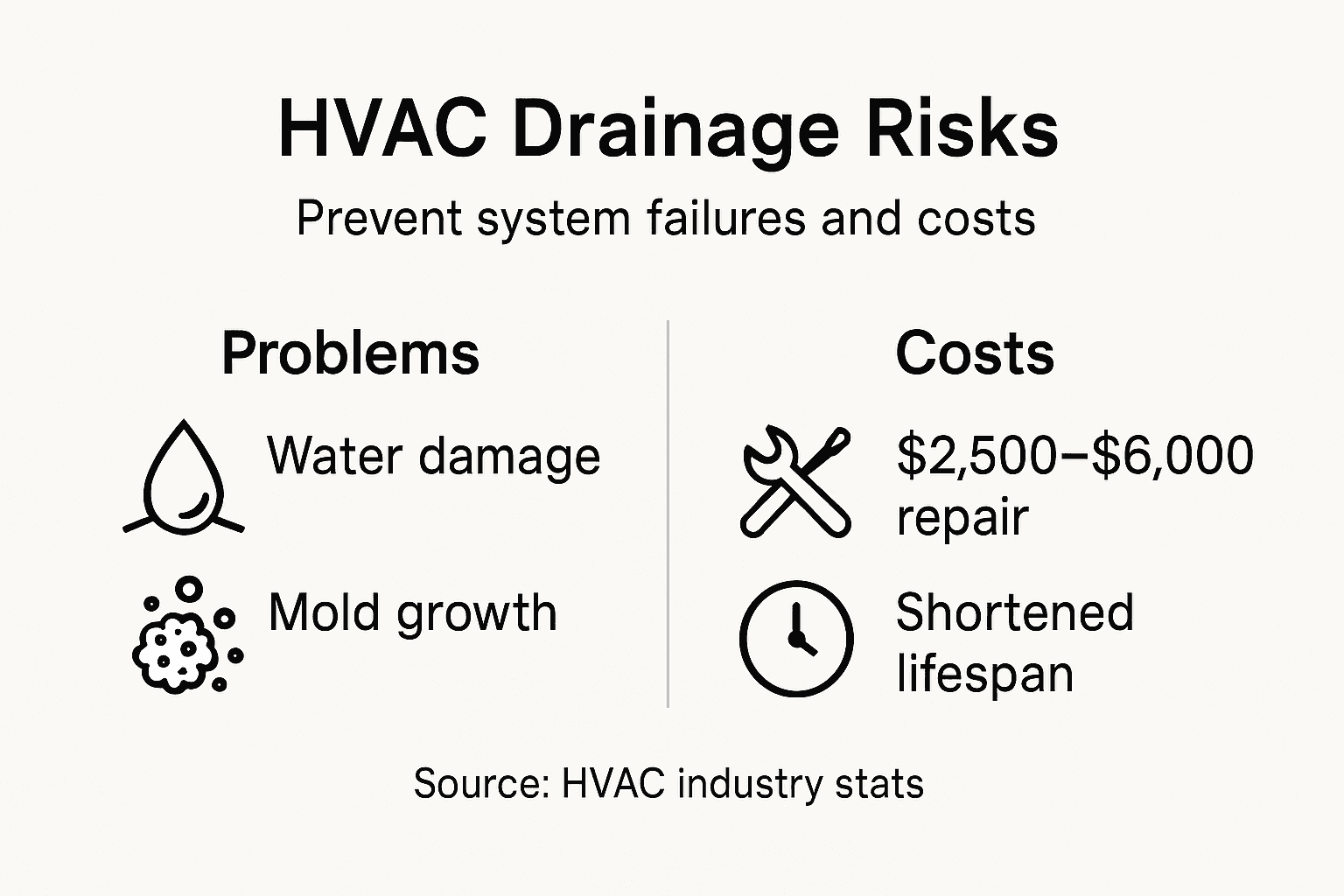
Neglecting your HVAC drainage maintenance creates a cascade of problems that cost far more to fix than prevention ever would. Most homeowners don’t realize that a $150 drain line cleaning today prevents $5,000 to $10,000 in water damage repairs tomorrow. The math is simple, but the motivation often comes too late—after water has already damaged your home. Understanding the real financial and health risks of poor drainage maintenance helps you prioritize this critical maintenance task.
Water Damage and Structural Threats
Water finding its way into your home because of a clogged drain line causes damage that spreads quickly and silently. Unlike a burst pipe that announces itself loudly, backed-up condensate seeps slowly into insulation, drywall, and structural components. By the time you notice water stains on your ceiling or smell something wrong, the damage is already extensive.
Poor drainage maintenance in HVAC systems leads to elevated risks of water damage and equipment corrosion, threatening both your equipment and your home’s structure. Water ruins insulation, weakens wood framing, and destroys drywall. If water reaches your attic, it can rot roof decking. If it seeps into walls, it compromises structural integrity and creates conditions where mold thrives.
Common water damage scenarios from poor drainage:
- Ceiling stains and water intrusion in rooms below your air handler
- Attic water damage when drain lines discharge upward without proper support
- Basement flooding from drain lines discharging into basements
- Drywall deterioration around ducts or equipment
- Insulation damage that reduces R-value and system efficiency
- Wood rot in structural components exposed to prolonged moisture
Repairing water damage averages $2,500 to $5,000 per incident. Major structural repairs involving roof decking or wall framing can exceed $10,000. These costs come on top of repairing or replacing your HVAC system itself.
Mold Growth and Indoor Air Quality Threats
Mold isn’t just an aesthetic problem. It’s a serious health issue, especially in homes with children, elderly residents, or people with respiratory conditions. Mold spores travel through your ductwork and spread throughout your home every time your system runs. Once mold colonizes your air handler or ducts, it’s expensive and invasive to remove.
When moisture sits in your condensate pan or drain line for hours between cooling cycles, it creates the perfect breeding ground for mold and bacteria. These microorganisms multiply rapidly in warm, dark, wet environments. Within days, mold growth becomes visible as black, slimy buildup inside your pan. Within weeks, spores enter your ductwork and distribute throughout your home.
Mold-related risks from poor drainage:
- Respiratory problems including asthma attacks and allergic reactions
- Persistent coughing and wheezing from mold spore inhalation
- Allergy symptoms that worsen during cooling season
- Immune system stress for vulnerable household members
- Expensive mold remediation if growth spreads into ducts or walls
Mold remediation costs between $2,000 and $6,000 for residential HVAC systems. If mold penetrates into your walls or attic, costs escalate dramatically. Prevention through proper drainage maintenance costs less than $300 annually.
Equipment Corrosion and Shortened Lifespan
Your air handler wasn’t designed to operate in wet conditions. When moisture backs up in the condensate pan, it soaks metal components that should stay dry. Steel and copper corrode rapidly when exposed to constant moisture. Aluminum coils develop pinhole leaks. Electrical connections rust and fail.
Equipment failures from water exposure cost between $1,500 and $3,000 to repair, or $5,000 to $8,000 to replace—far exceeding the cost of routine drain line maintenance.
A properly maintained HVAC system lasts 15 to 20 years. When drainage fails and equipment corrodes, system lifespan drops to 8 to 12 years. You lose thousands of dollars in premature replacement costs simply because maintenance was neglected. Metal drain pans rust through, developing holes that leak directly into your attic. Coils develop corrosion that reduces cooling efficiency. Electrical components fail when moisture reaches circuit boards and connections.
Energy Efficiency Loss and Higher Utility Bills
When your system can’t drain condensate properly, water interferes with heat transfer at the evaporator coil. Your air conditioner has to work harder and run longer to cool your home, directly increasing your utility bills. A system struggling with drainage problems uses 15% to 25% more energy than a properly maintained system.
Poor drainage contributes to energy inefficiency and increased operational costs, meaning you pay higher electricity bills every month while your system delivers worse cooling performance. Over a typical 15-year system lifespan, this inefficiency costs thousands in wasted energy. Multiply that across Orange and Los Angeles County’s hot summer months, and the financial impact becomes substantial.
Energy efficiency impacts of poor drainage:
- 15% to 25% increase in energy consumption
- Higher monthly utility bills throughout cooling season
- Reduced cooling performance despite higher energy use
- Faster compressor wear from continuous operation
- Shortened equipment lifespan from overwork
The Prevention Formula: Save Thousands
Regular drain line cleaning and inspection costs $150 to $300 annually. Compare that to potential costs:
- Water damage repair: $2,500 to $5,000
- Mold remediation: $2,000 to $6,000
- Equipment replacement: $5,000 to $8,000
- Water damage from failures: $10,000 to $15,000 in severe cases
- Extra utility costs over 15 years: $2,000 to $4,000
Your choice is clear. Spending $300 today prevents $10,000 to $20,000 in potential costs tomorrow.
Pro tip: Document your drain line maintenance with dated receipts and photos showing service dates; this documentation proves you maintained your system properly if water damage ever occurs, supporting your homeowner’s insurance claim.
Here is a summary of common HVAC drainage issues and their potential costs:
| Problem Type | Typical Repair Cost | Long-Term Impact | Prevention Action |
|---|---|---|---|
| Clogged drain line | $150-$300 | Water damage, mold growth | Annual cleaning |
| Flooded attic or basement | $2,000-$5,000 | Structural repairs | Inspection before summer |
| Mold remediation in HVAC | $2,000-$6,000 | Health and air quality risks | Routine drain line care |
| Equipment replacement | $5,000-$8,000 | System lifespan shortened | Maintain proper drainage |
Protect Your Home with Expert HVAC Drainage Services
Proper drainage is crucial for keeping your HVAC system running smoothly and preventing costly water damage, mold growth, and equipment failures highlighted in this article. If you are experiencing issues like clogged drain lines, musty odors, or water pooling around your indoor unit, acting now can save you thousands in repairs and protect your family’s health.

MDTech Services specializes in residential HVAC repair and maintenance across Orange County and Los Angeles County, providing thorough drain line cleaning, inspections, and expert system evaluations to stop drainage problems before they escalate. Trust our licensed technicians to ensure your drain pans, condensate pumps, and drain lines are installed and maintained with precision. Don’t wait for water damage to appear schedule your service today through our easy online booking system at MDTech Services. Learn more about how we keep your home’s systems safe with HVAC troubleshooting tips and effective maintenance strategies that support longer equipment life and improved indoor air quality.
Frequently Asked Questions
What is the purpose of drainage in HVAC systems?
The primary purpose of drainage in HVAC systems is to remove condensation water produced during the cooling process, preventing damage to equipment, mold growth, and air quality issues.
What are common signs of drainage problems in HVAC systems?
Common signs of drainage issues include visible water pooling around the indoor unit, musty odors from vents, stains on ceilings, reduced cooling performance, and alarms from the air handler.
How can I prevent drainage issues in my HVAC system?
To prevent drainage issues, schedule regular maintenance, including drain line inspections and cleaning, and consider pouring bleach down the condensate drain to kill algae and bacteria at the start of the cooling season.
What should I do if my HVAC drainage system is clogged?
If your HVAC drainage system is clogged, it’s important to address the issue immediately. You can clear the clog by hiring a professional for cleaning, or if you’re knowledgeable, you can try using a wet/dry vacuum or flushing the line with water.
Recommended
- 7 Common Examples of HVAC Issues and How to Fix Them
- What Is an HVAC System and Why It Matters
- HVAC Efficiency Checklist for Homeowners: Save Energy Fast
- Role of HVAC in Homes: Comfort, Air Quality, and Efficiency
- 7-Step Drain Maintenance Checklist for London Property Owners
- Gutter Drainage Systems: Safeguarding Florida Homes