
TL;DR:
- Pipes burst due to internal water pressure exceeding their structural capacity or wall degradation, often caused by freezing, corrosion, or improper installation. Preventive measures include insulating pipes, managing water pressure, and conducting regular professional inspections to detect early signs of damage. Addressing these factors helps homeowners avoid costly water damage and reduces the risk of sudden pipe failures.
Pipes burst when internal water pressure exceeds the structural capacity of the pipe material, or when the pipe wall weakens to the point where normal pressure causes a rupture. This is the core definition of pipe failure, and it applies whether you have copper, PEX, iron, or PVC running through your walls. The causes of pipe bursts range from freezing temperatures and corrosion to high water pressure and installation errors. Understanding these factors gives you a real advantage in preventing burst pipes before they flood your home and generate thousands of dollars in repair costs.
Why do pipes burst: the main causes explained
Pipes fail for one of two reasons. Either the pressure inside the pipe rises beyond what the material can handle, or the pipe wall degrades until it can no longer contain normal pressure. Most homeowners assume freezing is the only culprit, but freezing typically triggers failure in pipes already weakened by corrosion or metallurgical fatigue. That distinction matters because it means a pipe that looks fine on the outside may already be compromised.
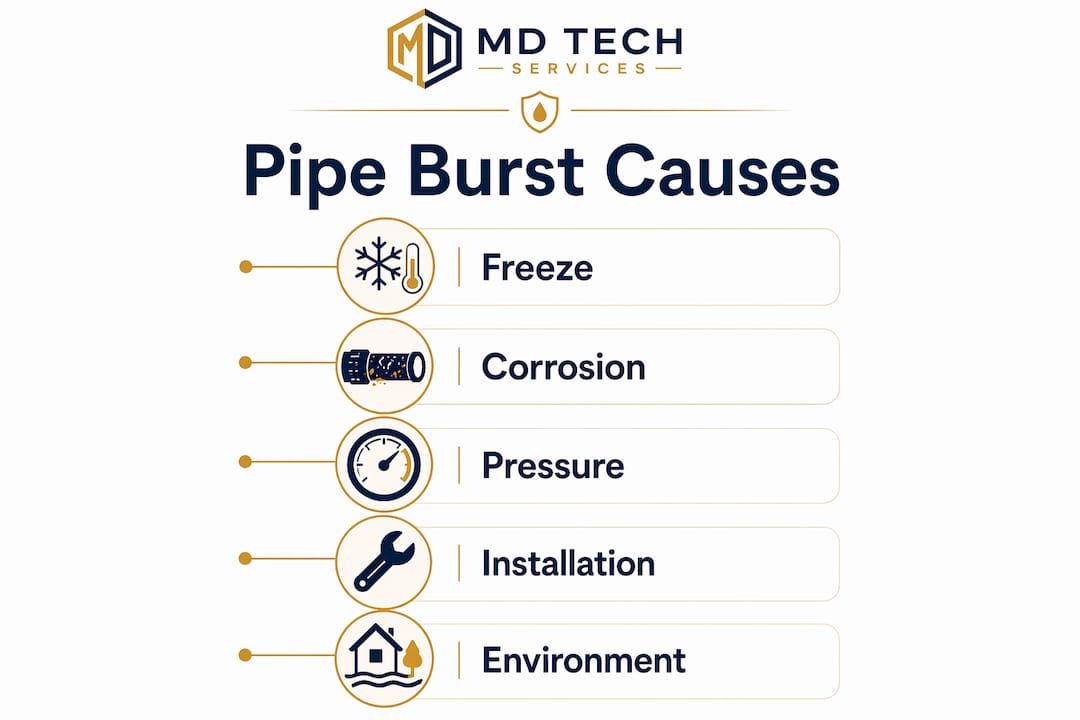
The main factors for pipe failure fall into five categories: thermal stress from freezing, corrosion and aging, excessive water pressure, installation errors, and environmental forces. Each one acts differently on your plumbing system, and several can work together. A corroded pipe in an uninsulated exterior wall, for example, faces both chemical degradation and freeze risk at the same time.
Knowing which category applies to your home helps you prioritize. Older homes in Orange County and Los Angeles County with original iron or copper plumbing face different risks than newer construction with PEX. The sections below break down each cause with the detail you need to act on it.
How freezing temperatures cause pipes to break
Freezing is the most dramatic cause of pipe bursts, and the physics behind it are straightforward. Water expands about 9% when it freezes inside a pipe, generating pressure spikes that can exceed 25,000 psi. Residential pipes are not designed to handle that level of force, so failure is almost inevitable once a full ice blockage forms.
One fact that surprises most homeowners: pipes burst near ice blockages, not necessarily at the frozen section itself. The ice acts as a plug, and pressure builds in the liquid water trapped between the blockage and a closed valve or fixture. The weakest point in that pressurized zone is where the rupture occurs. Forensic examination of copper pipes shows freeze bursts produce distinct longitudinal tears, while defects or oxidation cause brittle snaps. That difference tells a trained technician exactly what caused the failure.
Pipes most vulnerable to freezing include:
- Exterior walls with no insulation between the pipe and outside air
- Crawl spaces and attics where temperatures drop sharply overnight
- Garage supply lines that serve outdoor hose bibs or utility sinks
- Pipes near unheated areas such as basements without climate control
Pro Tip: If you are leaving your home for more than 48 hours during cold weather, keep your thermostat set to at least 55°F and open cabinet doors under sinks on exterior walls. This simple step keeps air circulating around the pipes and significantly reduces freeze risk.
How corrosion and aging lead to pipe failure
Corrosion is the slow, invisible cause of pipe damage reasons that homeowners most often miss until a pipe has already failed. Iron pipes have a typical service life around 50 years, but internal rust and aggressive soil chemistry can accelerate thinning and rupture well before that threshold. Copper pipes corrode differently, developing pitting that creates small holes rather than large tears.
Soil chemistry plays a major role in external pipe degradation. Saline or acidic soils cause exterior pipe wall thinning and physical stress that contribute directly to failure. Homes built near coastal areas or on clay-heavy soil face higher corrosion risk on buried supply lines. This is a factor many homeowners in Southern California overlook entirely.
| Pipe material | Average lifespan | Primary corrosion risk |
|---|---|---|
| Iron/galvanized steel | 40 to 70 years | Internal rust, tuberculation |
| Copper | 50 to 70 years | Pitting corrosion, pinhole leaks |
| PVC | 25 to 40 years | UV degradation, joint failure |
| PEX | 40 to 50 years | Chemical depletion, micro-cracking |
The early warning signs of corrosion are visible if you know what to look for. Discolored water (brown or yellow tint from the tap), reduced flow at fixtures, and wet spots around fittings or under sinks all indicate pipe wall degradation. Acting on these signs early is far less expensive than repairing water damage after a full rupture.
Pro Tip: If your home was built before 1980 and still has original plumbing, schedule a professional pipe inspection. A licensed plumber can use camera inspection tools to assess internal corrosion without opening walls, giving you a clear picture of your pipe condition.
How water pressure and water hammer damage pipes
Excessive water pressure is one of the most underestimated causes of pipe bursts. Most residential plumbing systems are designed to operate between 40 and 80 psi. When pressure consistently runs above that range, it stresses pipe walls and wears out valves and fittings over time. High water pressure and water hammer loosen fittings and accelerate material fatigue, turning what should be a 50-year pipe into a 20-year liability.
Water hammer is a specific pressure event that deserves its own attention. It occurs when water flow stops suddenly, such as when a washing machine valve closes fast, and the momentum of the moving water creates a shockwave through the pipe. Water hammer sounds serve as a direct warning sign of critical pressure issues that accelerate pipe and fixture wear. If you hear banging or thudding in your walls after a valve closes, that is not a minor annoyance. It is a signal that your system is under stress.
Signs your home may have a water pressure or hammer problem:
- Banging or knocking sounds in walls after appliances shut off
- Fixtures that fill unusually fast (toilet tanks, washing machines)
- Frequent dripping faucets or running toilets
- Visible vibration in exposed pipes when water is running
Two devices solve these problems directly. A pressure reducing valve (PRV) installed at the main water supply line keeps system pressure in the safe range. A water hammer arrestor, installed near fast-closing valves like those on washing machines and dishwashers, absorbs the shockwave before it travels through the pipes. Both are inexpensive compared to the cost of a burst pipe repair.
How installation errors and material issues cause bursts
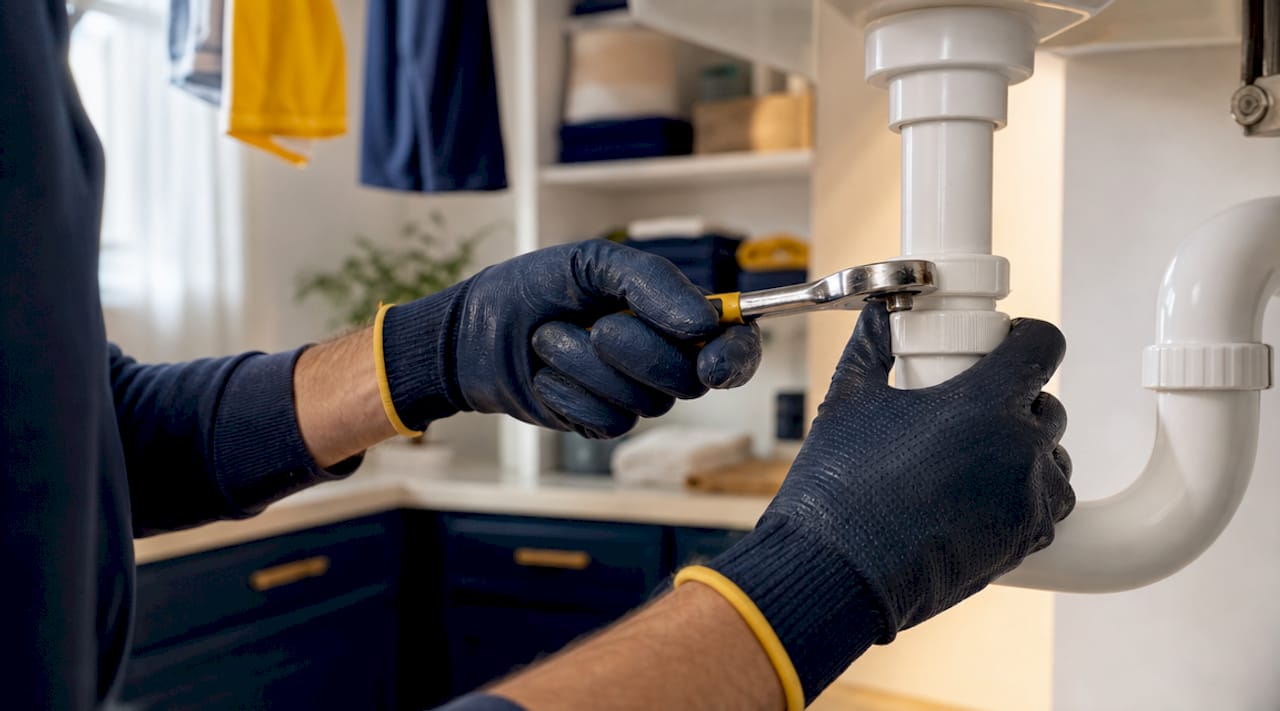
Poor installation is a leading but rarely discussed factor for pipe failure. Improper joint assembly, incorrect adhesive application on PVC fittings, and using the wrong tools on copper connections all create weak spots that hold up initially but fail under sustained pressure or temperature change. These failures can appear years after installation, making the original error hard to trace.
Plastic pipes like PEX and CPVC require specific allowances for thermal expansion. Failing to allow for thermal expansion in plastic pipes causes joint failures and cracks regardless of pipe quality. When a contractor fastens PEX too rigidly to framing without expansion loops, the pipe has nowhere to move as it heats and cools. Over time, that repeated stress cracks joints and fittings. Thermal expansion in PEX is underestimated by many contractors, leading to rigid systems that crack or leak at joints over time.
Material compatibility is another installation issue. Connecting copper directly to galvanized steel without a dielectric union accelerates galvanic corrosion at the joint. The two metals react electrochemically, and the weaker material degrades faster than it would on its own. Additionally, chemical exposure depletes antioxidants in PEX pipes, leading to internal brittleness and micro-cracking that is only visible under laboratory inspection. Long-term chlorine exposure from municipal water supplies is the primary driver of this degradation.
| Installation error | Result | Fix |
|---|---|---|
| No thermal expansion allowance | Joint cracking in PEX/CPVC | Add expansion loops, use flexible supports |
| Incompatible metal connections | Accelerated galvanic corrosion | Install dielectric unions at transitions |
| Improper adhesive on PVC | Weak joints that fail under pressure | Use correct primer and cement, allow cure time |
| Rigid fastening of plastic pipe | Stress fractures at fittings | Use pipe clamps that allow movement |
Environmental and physical factors that damage pipes
Beyond temperature and pressure, the ground and physical environment around your pipes create ongoing stress that contributes to why pipes break over time.
-
Soil movement. Clay soils in particular expand when wet and contract when dry. This repeated cycle pushes and pulls on buried pipes, stressing joints and causing cracks. Soil chemical composition and moisture changes cause exterior pipe degradation and physical deformation that leads directly to failure.
-
Tree root intrusion. Roots follow moisture, and even a hairline crack in a buried pipe is enough for a root to enter. Once inside, tree roots infiltrate small cracks and spread blockages and structural damage that eventually rupture the pipe. Mature trees planted close to supply or sewer lines are a known risk factor.
-
Construction and landscaping impact. Heavy equipment operating near buried pipes, or deep digging for landscaping projects, can crack or shift pipes without any visible surface sign. The damage may not show up as a leak for months.
-
Thermal cycling fatigue. Repeated temperature fluctuation causes thermal cycling stresses that weaken pipe joints and material over time. Pipes in uninsulated areas experience the widest temperature swings and degrade fastest. This is especially relevant for pipes in attics and crawl spaces in Southern California, where daytime and nighttime temperatures can vary significantly.
Reviewing common plumbing issues related to your home’s specific environment helps you identify which of these factors poses the greatest risk.
Key takeaways
Pipes burst because of pressure overload or material weakness, and most failures involve both factors working together over time.
| Point | Details |
|---|---|
| Freezing causes extreme pressure | Water expanding 9% in frozen pipes generates over 25,000 psi, rupturing the nearest weak point. |
| Corrosion weakens pipes silently | Iron and copper pipes degrade from rust and soil chemistry long before visible signs appear. |
| Water hammer signals pressure stress | Banging sounds after valve closure indicate shockwaves that accelerate fitting and pipe wear. |
| Installation errors create hidden faults | Rigid PEX fastening and incompatible metal connections cause failures years after installation. |
| Environmental forces add ongoing stress | Tree roots, soil movement, and thermal cycling damage buried and uninsulated pipes over time. |
What we’ve learned from years of plumbing calls in Orange County
After responding to hundreds of plumbing service calls across Orange County and Los Angeles County, the pattern is consistent: most burst pipes were not sudden failures. They were the result of conditions that had been building for months or years. Homeowners call us after the damage is done, but the signs were there well before the rupture.
The single most common oversight we see is ignoring water hammer. Homeowners hear the banging in the walls, assume it is normal, and move on. It is not normal. It is your plumbing system telling you that pressure management is failing. Installing a water hammer arrestor on your washing machine line costs under $30 and takes 20 minutes. Ignoring it can cost you a flooded laundry room and a damaged subfloor.
We also see a lot of PEX failures in homes built in the 2000s where the original installation did not account for thermal expansion. The pipes themselves are fine. The installation method created the problem. This is why routine pipe inspections matter even in newer homes. A camera inspection catches internal micro-cracking and joint stress before it becomes a rupture.
Professional inspections detect early corrosion, pressure problems, and installation faults before a burst occurs, and early detection reduces repair costs by almost 40%. That number reflects what we see in practice. The homeowners who invest in preventative plumbing maintenance spend far less over the life of their home than those who wait for a failure.
— MDTECH
Protect your home with professional plumbing services from Mdtechservices
If this article has you thinking about the condition of your pipes, that is exactly the right response. Mdtechservices provides professional plumbing inspections, pressure diagnostics, and repair services for homeowners across Orange County and Los Angeles County. Our licensed technicians identify hidden corrosion, pressure irregularities, and installation faults before they become costly emergencies.

A professional inspection takes less time than you think and gives you a clear picture of your plumbing system’s condition. Whether you need a pressure check, a camera inspection of buried lines, or a full annual plumbing maintenance checklist review, Mdtechservices has the experience and equipment to handle it. Contact us today to schedule your inspection and stop a burst pipe before it starts.
FAQ
Why do pipes burst in winter?
Pipes burst in winter because water expands about 9% when it freezes, generating pressure spikes that exceed the structural limits of residential pipe materials. The rupture typically occurs near the ice blockage, not at the frozen section itself.
What are the most common causes of pipe bursts?
The most common causes of pipe bursts are freezing temperatures, corrosion and aging, excessive water pressure, water hammer, and installation errors. These factors often work together, with corrosion weakening a pipe that then fails under freeze pressure.
How can I tell if my pipes are at risk of bursting?
Warning signs include discolored water, reduced flow at fixtures, banging sounds in walls after valves close, and wet spots around fittings or under sinks. Each of these signals a specific type of pipe stress that warrants a professional inspection.
Can high water pressure alone burst a pipe?
Yes. Sustained pressure above 80 psi stresses pipe walls and wears out fittings over time, eventually causing failure. A pressure reducing valve installed at the main supply line keeps your system in the safe operating range.
How do I stop pipes from bursting in my home?
Preventing burst pipes requires insulating exposed pipes, maintaining water pressure below 80 psi, installing water hammer arrestors on fast-closing valves, and scheduling regular professional inspections to catch corrosion and installation faults early.