
TL;DR:
- A blower motor moves conditioned air through your home’s ductwork, directly impacting comfort and energy efficiency. Regular maintenance, like replacing filters and testing capacitors, can extend its lifespan and prevent costly failures. Replacing a failed motor without proper diagnosis often leads to unnecessary expenses and ineffective repairs.
A blower motor is the electric motor inside your HVAC system that drives the fan to push heated or cooled air through your home’s ductwork. Without it, your furnace or air conditioner produces conditioned air that goes nowhere. Brands like Goodman and Trane build their systems around this component because air distribution depends entirely on the motor’s ability to move air consistently through every room. Understanding what a blower motor does, how it fails, and when to replace it saves you money and keeps your home comfortable year-round.
What is a blower motor and how does it work?
A blower motor converts electrical energy into mechanical force, spinning a squirrel-cage fan that pushes air across your heat exchanger or evaporator coil and into your supply ducts. That spinning fan is what actually moves conditioned air from your furnace or air handler into every room of your home. The motor must also overcome the static pressure created by air filters, duct bends, and grilles. That resistance is constant, which is why the motor runs under load every time your system cycles on.
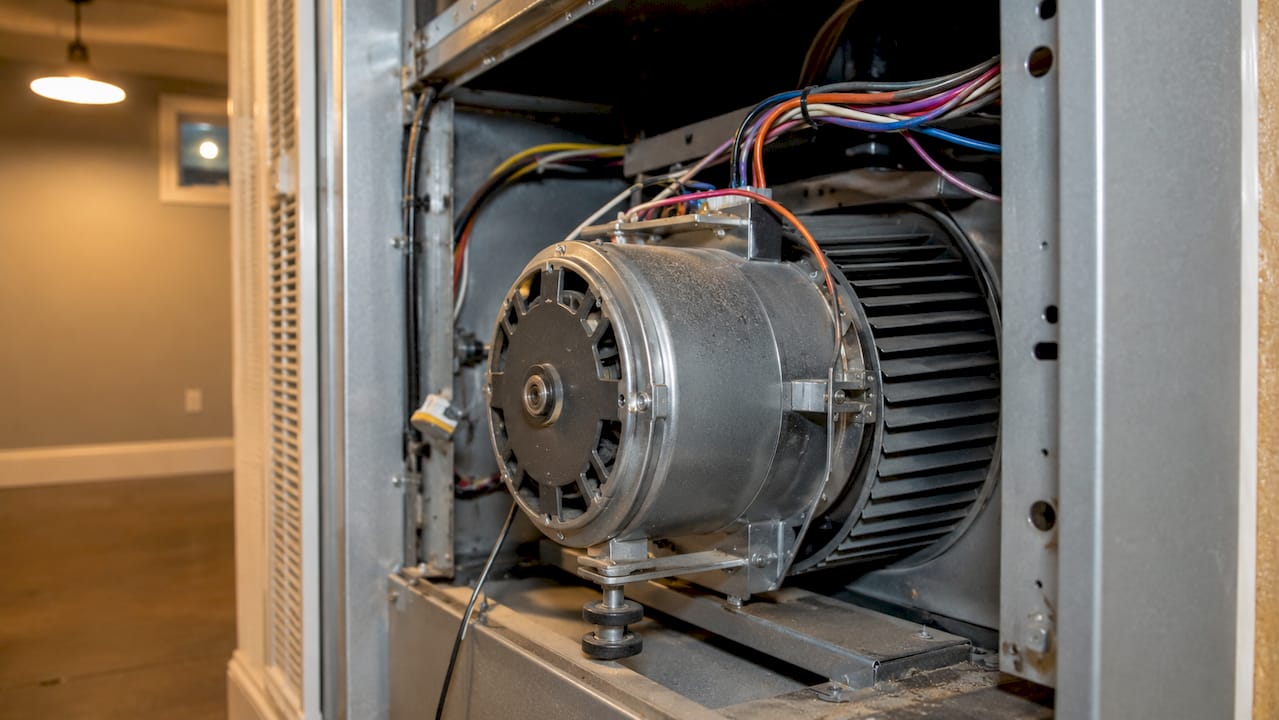
The motor sits in the lower compartment of an upflow furnace or inside a dedicated air handler. It appears as a cylindrical housing connected to the blower wheel, tucked behind a service panel. You will typically find it near the return air side of the system, pulling air in before pushing it out through supply ducts.
Most residential systems use one of two operating modes. Single-speed motors run at full power every cycle, regardless of demand. Variable-speed motors adjust output based on real-time conditions, which improves comfort and reduces energy use. The difference between these two modes matters more than most homeowners realize, and it directly affects your monthly utility bill.
Pro Tip: If your system runs but rooms heat or cool unevenly, the blower motor is the first component to inspect. Uneven airflow is a classic early warning sign before full motor failure.
What are the signs of a bad blower motor?
A failing blower motor gives clear warnings before it quits completely. Catching these signs early prevents bigger problems like frozen evaporator coils or system shutdowns.
- Weak or no airflow from vents. Reduced airflow can cause frozen evaporator coils or overheating within short time frames. If your vents feel weak even with a clean filter, the motor is a likely cause.
- Rattling or grinding noises. Worn bearings or a loose blower wheel create mechanical noise during operation. Grinding typically means the motor is close to seizing.
- Burning or electrical odors. Overheating insulation on motor windings produces a distinct smell. Shut the system off immediately if you detect this.
- System cycling on and off. Thermal overload protection trips when the motor runs too hot. Frequent short cycles often point to a motor struggling under load.
- No air movement at all. A completely dead motor means the fan does not spin, even though the furnace or AC unit may still attempt to run.
One critical nuance: blower motors do not act alone. Control boards, resistors, and capacitors all affect motor behavior. Weak airflow might trace back to a failed resistor or control board, not the motor itself. A full diagnosis before replacement saves you from buying a new motor you did not need.
Pro Tip: Before assuming the motor is dead, check the run capacitor. Capacitors are a cheaper failure point than the motor and are a standard first test in any blower motor troubleshooting process.
Types of blower motors and efficiency considerations
Choosing the right motor type affects both comfort and energy costs. The two most common types in residential HVAC systems are PSC and ECM motors.
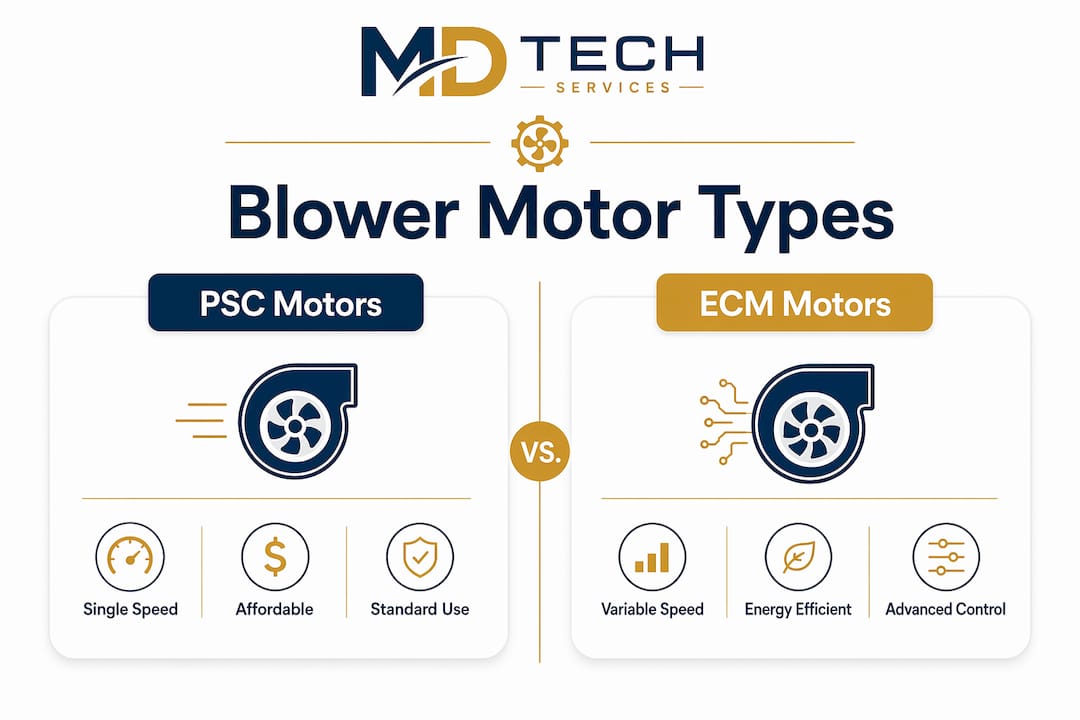
| Motor Type | Speed | Efficiency | Best For |
|---|---|---|---|
| PSC (Permanent Split Capacitor) | Single speed | Standard | Budget systems, older homes |
| ECM (Electronically Commutated Motor) | Variable speed | High | New installs, energy-conscious homeowners |
PSC and ECM motors represent the two ends of the residential spectrum. PSC motors are simple, affordable, and widely available, but they run at full power every cycle. ECM motors adjust speed based on demand, which means they use less energy during partial-load conditions and deliver more consistent airflow.
The physics behind motor speed and energy use is worth understanding. The Fan Affinity Laws state that power consumption increases as the cube of fan speed. That means doubling the fan speed requires eight times the power. This explains why running a motor faster than necessary wastes energy rapidly and increases mechanical wear. The optimal operating range for centrifugal blower fans is 70–85% of rated RPM, which balances airflow delivery with energy consumption.
Proper sizing matters as much as motor type. A motor that is too small cannot overcome the static pressure in your duct system. A motor that is too large runs inefficiently and creates noise. Matching the motor’s specifications to your system’s actual static pressure is the correct approach, not simply buying the most powerful unit available. Reviewing your HVAC efficiency checklist before purchasing a replacement motor helps you avoid this common sizing mistake.
How to maintain, test, and decide on repair vs. replacement
Routine maintenance extends blower motor life significantly. These steps apply to most residential furnaces and air handlers.
- Replace air filters on schedule. A clogged filter forces the motor to work harder against higher static pressure. Replace filters every 1–3 months depending on your home’s dust load.
- Inspect the motor compartment annually. Dust buildup on the motor housing reduces heat dissipation. A clean motor runs cooler and lasts longer.
- Check electrical connections. Loose wiring at the motor terminals causes intermittent failures and can damage the control board. Tighten connections during your annual inspection.
- Listen during startup. A healthy motor starts smoothly and quietly. Hesitation, humming without movement, or grinding at startup signals a problem worth investigating.
- Test the run capacitor first. Testing run capacitors and relays is standard practice before any motor replacement. These components fail more often than the motor itself and cost far less to replace.
Pro Tip: Always disconnect power at the breaker before opening the blower compartment. The motor housing is behind a service panel with live electrical connections. Skipping this step risks serious injury.
When deciding between repair and replacement, consider the motor’s age and the cost of parts. A capacitor replacement costs a fraction of a new motor. If the motor itself has failed and the system is more than 10 years old, full blower motor replacement often makes more financial sense than repairing an aging unit. A licensed technician can measure motor amperage draw and winding resistance to confirm whether the motor is salvageable. For a step-by-step approach to HVAC maintenance at home, Mdtechservices provides a detailed homeowner guide that covers blower motor inspection alongside other key system checks.
DIY testing has real limits. Checking a capacitor with a multimeter is within reach for most homeowners. Diagnosing a failed control board or measuring winding resistance requires professional tools and training. Knowing where your skill level ends protects both you and your equipment.
Key Takeaways
A blower motor is the single component that determines whether your HVAC system actually delivers conditioned air to every room, making its health directly tied to your home’s comfort and energy costs.
| Point | Details |
|---|---|
| Core function | The blower motor drives the squirrel-cage fan that pushes conditioned air through all supply ducts. |
| Failure symptoms | Watch for weak airflow, grinding noises, burning odors, and frequent short cycling. |
| Test capacitors first | Run capacitors fail more often than motors and cost far less to replace. |
| ECM motors save energy | Variable-speed ECM motors adjust output to demand, reducing energy use compared to single-speed PSC motors. |
| Sizing matters | Match motor specifications to your system’s static pressure to avoid inefficiency and premature wear. |
What years of HVAC work taught me about blower motors
Most homeowners think about the blower motor only when the heat stops working on a cold night. That reactive approach is the most expensive way to own an HVAC system. After working on residential systems across Orange County and Los Angeles County, the pattern is consistent: the homes with the fewest emergency calls are the ones where someone changed the filter regularly and scheduled an annual inspection.
The biggest misconception I see is that a bigger or faster motor is always better. It is not. Running a motor beyond its rated range wastes energy and shortens its life, exactly as the Fan Affinity Laws predict. A motor spinning at the right speed for your duct system will outlast an oversized one running under constant stress.
The second misconception is that a dead motor always needs replacing. A surprising number of “failed” motors come back to life after a capacitor swap. Homeowners who skip that test and order a new motor spend three to four times more than necessary. Full diagnosis before replacement is not optional. It is the only responsible approach.
Proactive care also protects indoor air quality. A blower motor’s failure rapidly diminishes both comfort and air quality throughout the home. Staying ahead of that failure with regular maintenance is the most reliable way to keep your family comfortable and your repair bills predictable. For a practical starting point, the balanced airflow guide from Mdtechservices explains exactly how motor health connects to whole-home air distribution.
— MDTECH
Blower motor repair and HVAC service from Mdtechservices
Mdtechservices serves homeowners across Orange County and Los Angeles County with licensed HVAC repair and appliance service. If your blower motor is showing signs of failure or you want a professional inspection before a small problem becomes a costly one, our team is ready to help.

Our technicians diagnose the full system, not just the motor, so you get an accurate repair recommendation the first time. Whether you need a capacitor swap, a full blower motor repair, or guidance on whether repair or replacement makes more sense for your system, Mdtechservices delivers reliable answers. You can also explore our HVAC repair guide to understand what a full residential HVAC service covers. Book your appointment online or call us directly to get your system running right.
FAQ
What does a blower motor do in an HVAC system?
A blower motor drives the fan that pushes heated or cooled air through your home’s ductwork. Without it, conditioned air stays inside the furnace or air handler and never reaches your living spaces.
What are the most common signs of a bad blower motor?
The most common signs include weak airflow from vents, rattling or grinding noises, burning odors, and the system cycling on and off repeatedly. Any of these symptoms warrants a professional inspection.
How do I test a blower motor before replacing it?
Start by testing the run capacitor with a multimeter, since capacitors fail more often than the motor itself. If the capacitor tests good, check the relay and control board before concluding the motor has failed.
What is the difference between a PSC and an ECM blower motor?
A PSC motor runs at a single speed and is standard in older or budget systems. An ECM motor runs at variable speeds, uses less energy, and delivers more consistent airflow, making it the better choice for new installations.
How long does a blower motor typically last?
Blower motor lifespan depends on maintenance, filter changes, and operating conditions. A well-maintained motor in a properly sized system can last well over a decade, while a neglected one may fail in half that time.