
TL;DR:
- Pipe insulation is essential for reducing heat loss, preventing freezing, and controlling condensation in residential plumbing systems. It offers energy savings by maintaining hotter water temperatures and requires proper sealing and vapor barriers to prevent moisture damage, especially in humid spaces. IRC 2024 mandates minimum R-3 insulation on specific pipe sections, emphasizing the importance of correct installation for longevity and performance.
Pipe insulation is defined as a thermal barrier material wrapped around water pipes to slow heat transfer, prevent freezing, and control condensation in residential plumbing systems. The role of pipe insulation covers three core functions: reducing heat loss in hot water pipes, delaying freeze damage in cold spaces, and stopping moisture buildup on cold pipes. You’ll find it applied in basements, crawl spaces, attics, garages, and exterior walls. The IRC 2024 and the U.S. Department of Energy both recognize pipe insulation as a practical, low-cost upgrade with measurable energy and damage-prevention returns.
How does the role of pipe insulation affect energy savings?
Pipe insulation works by adding thermal resistance between the pipe surface and the surrounding air. That resistance slows conductive, convective, and radiative heat transfer, which means hot water stays hotter longer as it travels from your water heater to the faucet.
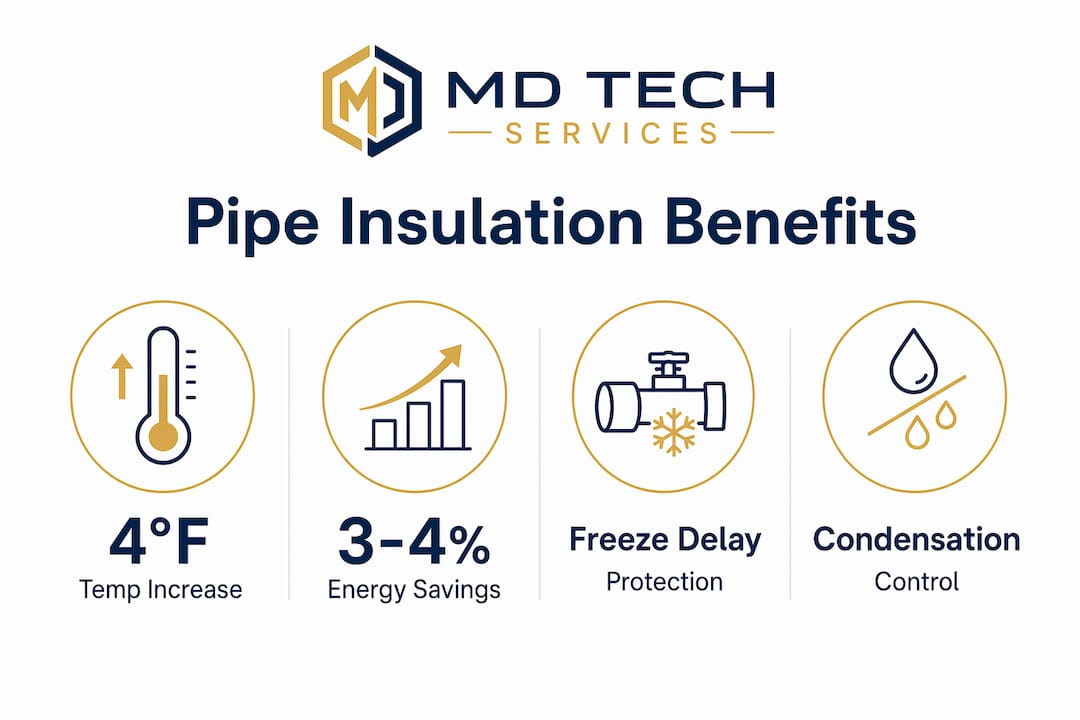
The practical payoff is real. Insulating hot water pipes raises faucet water temperature by 2–4°F compared to uninsulated pipes. That gain lets you safely lower your water heater thermostat setting without losing comfort at the tap. The result is approximately 3%–4% annual savings on water heating costs by reducing standby heat loss. For a household spending $500 per year on water heating, that’s $15–$20 back in your pocket every year with almost no maintenance required.
Where to prioritize insulation for maximum impact
Not every pipe in your home needs insulation equally. Prioritize the first few feet leaving the water heater and any pipe runs through cold or unconditioned spaces. These sections experience the most standby heat loss when left bare. Pipes running through an unheated garage, a vented crawl space, or an exterior wall lose heat continuously, forcing your water heater to work harder to compensate.
| Location | Heat Loss Risk | Insulation Priority |
|---|---|---|
| First 8 feet from water heater | High | Immediate |
| Pipes in unconditioned basement | High | Immediate |
| Pipes in crawl spaces or attics | Very High | Immediate |
| Interior pipes in conditioned space | Low | Optional |
| Recirculation lines (any location) | High | Required by IRC 2024 |
Pro Tip: If your hot water takes more than 30 seconds to arrive at a faucet, uninsulated pipe runs through cold spaces are almost always the cause. Insulating those runs first delivers the fastest return.
What are the benefits of pipe insulation beyond energy efficiency?
The benefits of pipe insulation extend well past lower utility bills. Freeze protection, condensation control, noise reduction, and pipe longevity are all direct results of proper insulation. Each one prevents a different category of home damage.
Freeze protection: what insulation can and cannot do
Pipe insulation delays freezing time but does not guarantee that pipes will never freeze. Sustained temperatures below freezing or extended periods with no water flow can still cause freezing eventually. This distinction matters for homeowners in Orange County and Los Angeles County, where occasional cold snaps can catch unprotected pipes off guard. Insulation buys you time. Combining it with listed heat cables or proper pipe placement in conditioned spaces provides complete protection.
Condensation control and moisture damage prevention
Cold water pipes sweat in warm, humid air. That sweating is condensation, and it causes wood rot, mold growth, and corrosion on metal pipe surfaces. Condensation control requires insulation surface temperature above the dew point, plus a vapor barrier to stop water vapor from reaching the cold pipe. Without a vapor barrier, moisture migrates into the insulation itself, reducing thermal resistance and accelerating damage.
Here are the main benefits pipe insulation delivers beyond energy savings:
- Freeze delay: Slows the rate at which pipe temperature drops during cold snaps, reducing burst risk.
- Condensation prevention: Keeps pipe surface temperature above dew point to stop sweating and moisture damage.
- Mold and corrosion reduction: Dry pipe surfaces resist mold growth and metal corrosion far better than wet ones.
- Noise dampening: Foam and rubber insulation materials absorb water hammer and flow noise in supply lines.
- Extended pipe lifespan: Stable temperatures and dry surfaces reduce the physical stress that causes pipe fatigue over time.
- Lower repair costs: Preventing a single burst pipe saves far more than the cost of insulating an entire home.
Pro Tip: On cold water pipes in humid areas like a laundry room or basement, use closed-cell foam or rubber insulation with a factory-sealed vapor barrier. Open-cell or fibrous materials without a continuous vapor barrier invite moisture ingress and defeat the purpose.
What are the code requirements for residential pipe insulation?
The IRC 2024 requires at least R-3 insulation for the first 8 feet of hot water pipe from the water heater and for all hot water pipes running through unconditioned spaces. Recirculation pipes must be insulated regardless of where they run. These requirements set the compliance floor, not the performance ceiling.
Freeze protection requirements under IRC 2024
Water supply pipes in freezing locations must be protected by insulation, proper pipe placement, or listed heat cables. Pipes in garages, crawl spaces, and attics fall under this requirement. Insulation alone may not be enough in extreme cold. The code recognizes this and allows combined solutions.
Code minimums vs. real-world performance
| Requirement | IRC 2024 Minimum | Better Practice |
|---|---|---|
| Hot water pipe near heater | R-3, first 8 feet | R-4 or higher for longer runs |
| Pipes in unconditioned spaces | R-3 | R-4 to R-6 depending on climate |
| Recirculation lines | Insulated, all locations | Closed-cell rubber with vapor barrier |
| Cold pipes in humid spaces | Not specified | Vapor-barriered closed-cell foam |
| Freeze-risk locations | Insulation or heat cable | Both combined for extreme cold |
Code minimum insulation values are compliance floors. Some installations need thicker or vapor-barriered assemblies to meet local climate conditions safely. In Southern California, the freeze risk is lower than in northern states, but condensation on cold pipes in warm, humid spaces is a year-round concern. Sizing up from R-3 to R-4 costs very little and performs noticeably better.
A common DIY mistake is using the wrong insulation type for the application. Fiberglass wrap works for hot pipes but performs poorly on cold pipes in humid spaces because it lacks a vapor barrier. Closed-cell rubber products like Armaflex or foam pipe sleeves with factory-sealed skins are the right choice for cold pipe applications.
How can homeowners install pipe insulation themselves?
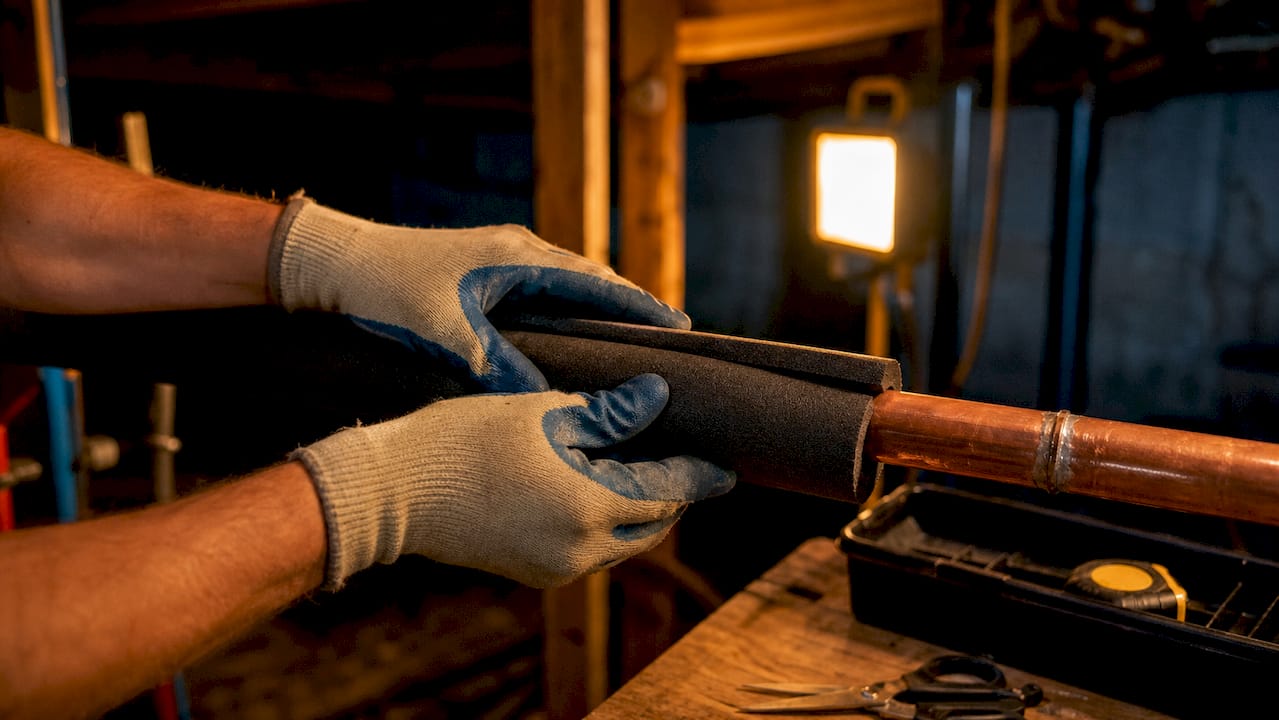
DIY pipe insulation is one of the most accessible home improvement projects available. You need a tape measure, a utility knife, and the right insulation material. Most foam pipe sleeves from brands like Frost King or Armaflex come pre-slit and sized for standard pipe diameters.
Follow these steps for a clean, effective installation:
- Measure the pipe diameter and run length. Use a tape measure to find the outside diameter of the pipe and the total length of the run you want to cover.
- Select the right insulation. Use closed-cell foam or rubber sleeves for cold pipes and condensation control. Use foam or fiberglass wrap for hot water pipes. Match the sleeve’s inner diameter to the pipe’s outer diameter.
- Cut sleeves to length. Use a utility knife or scissors to cut foam sleeves cleanly. Angled cuts work better at elbows and tees.
- Fit the sleeve over the pipe. Snap pre-slit sleeves over the pipe and press the seam closed. For pipes already in place, this is the standard method.
- Seal all seams and joints. Use manufacturer-recommended tape or contact cement at every seam, joint, and termination. Sealing joints and maintaining vapor barriers are the most critical steps for lasting performance.
- Inspect for compression or damage. Do not allow insulation to be pinched against framing or straps. Damaged or compressed sections cause heat loss or condensation issues at those points.
- Check your work after the first cold or humid period. Look for sweating on cold pipes or warm spots on hot pipes. Either signals a gap or failed seam that needs resealing.
For a pipe inspection before insulating, especially on older plumbing, it’s worth confirming pipe condition first. Insulating over a corroded or leaking pipe hides the problem and makes it worse. When the scope of work involves pipes inside walls, under slabs, or connected to a water heater, calling a licensed plumber is the right call.
Key takeaways
Pipe insulation is the single most cost-effective plumbing upgrade a homeowner can make, delivering energy savings, freeze protection, and moisture control with minimal installation effort.
| Point | Details |
|---|---|
| Energy savings are real | Insulating hot water pipes saves approximately 3%–4% annually on water heating costs. |
| Freeze protection has limits | Insulation delays freezing but requires heat cables or placement changes in extreme cold. |
| Vapor barriers are non-negotiable | Cold pipe insulation without a vapor barrier causes moisture ingress and defeats its purpose. |
| IRC 2024 sets the minimum | R-3 is required for the first 8 feet from the water heater and all unconditioned space runs. |
| Seam integrity determines performance | Compressed or unsealed insulation sections create thermal bypasses that cause heat loss or condensation. |
What we’ve learned after years of plumbing calls
Most homeowners think about pipe insulation only after something goes wrong. A burst pipe in January or a moldy basement ceiling in August gets their attention. What we’ve found at Mdtechservices is that the damage is almost always preventable, and the fix that would have stopped it costs less than a single service call.
The detail most DIYers miss is vapor barrier continuity. Homeowners wrap cold pipes in foam sleeves, leave the seam open, and wonder why condensation still appears. The insulation is there, but moisture bypasses it at every gap. Sealing every seam with the right tape or adhesive is what separates insulation that works from insulation that looks like it works.
We also see homeowners skip insulation on recirculation lines because those pipes feel warm. Warm pipes in unconditioned spaces still lose heat continuously, and that loss shows up on your energy bill every month. The IRC 2024 requires insulation on recirculation lines for exactly this reason.
One more thing worth saying directly: insulation is not a substitute for fixing a bad pipe. We’ve pulled insulation off pipes that were actively leaking inside the sleeve. If your plumbing is older or you haven’t had it inspected recently, do that first. Insulation works best as protection for pipes that are already in good condition. Pair it with preventative plumbing practices and you’ll spend far less on repairs over the life of your home.
— MDTECH
Get expert plumbing and appliance help from Mdtechservices
Pipe insulation handles a lot, but it doesn’t cover everything. When you’re dealing with a water heater that needs replacement, pipes that require professional inspection, or plumbing issues beyond a DIY fix, Mdtechservices is ready to help. We serve homeowners across Orange County and Los Angeles County with licensed technicians who handle residential plumbing repairs and appliance installation with the same attention to detail we bring to every job. If you’re not sure whether your current setup meets IRC 2024 requirements or you want a professional eye on your plumbing before winter, reach out to us.

Our team also handles appliance repair and installation for refrigerators, water heaters, and more. Book an appointment online or call us directly. We make it easy to get the right help fast.
FAQ
What is the main role of pipe insulation in a home?
Pipe insulation acts as a thermal barrier that reduces heat loss in hot water pipes, delays freezing in cold spaces, and prevents condensation on cold water pipes. These three functions protect your plumbing and lower your energy costs.
How much energy does insulating pipes actually save?
Insulating hot water pipes raises faucet temperature by 2–4°F and reduces standby heat loss, saving approximately 3%–4% annually on water heating costs. The savings are highest on pipes running through unconditioned spaces.
Does pipe insulation prevent pipes from freezing?
Pipe insulation delays freezing but does not guarantee complete freeze protection. In sustained freezing temperatures or with no water flow, insulation alone is insufficient. Pairing it with listed heat cables provides reliable protection in extreme cold.
What type of insulation is best for cold water pipes?
Closed-cell foam or rubber pipe sleeves with a factory-sealed vapor barrier are the best choice for cold water pipes. Open-cell or fibrous materials without a vapor barrier allow moisture to reach the pipe surface, causing condensation and corrosion.
What does IRC 2024 require for hot water pipe insulation?
IRC 2024 requires at least R-3 insulation on the first 8 feet of hot water pipe from the water heater, all hot water pipes in unconditioned spaces, and all recirculation lines regardless of location.