
A single-stage furnace runs its burner at one setting, full output, and shuts off when the house is warm. A two-stage furnace has a low and a high setting, so it can run longer at a gentler rate on mild days and step up only when the house needs it. Goodman’s furnace feature guide describes the same split: one constant burner flow versus high and low burner settings. The right choice depends on how much you value even temperatures and quiet operation, and on how your home is laid out.
Below, we explain how each type behaves, what the evidence says about energy use, how to tell which one you already have, and how to get the sizing right. We install and repair heating and cooling equipment across Orange County and Los Angeles County, so we also cover what to ask a contractor before you commit.
TL;DR
- A single-stage furnace is either fully on or off. A two-stage furnace has a low setting and a high setting.
- Two-stage models run longer, gentler cycles, which usually means more even room temperatures and smaller swings.
- At the same efficiency rating, a two-stage furnace does not burn dramatically less gas. The gains show up mainly in comfort and, with the right blower motor, in electricity.
- Correct sizing matters more than the number of stages. A proper load calculation beats a square-footage rule of thumb.
- Not sure what you have or what you need? Our licensed technicians can identify your system and quote the replacement or repair.
Table of Contents
- How single-stage and two-stage furnaces work
- Comfort, noise and air quality compared
- Does a two-stage furnace save money?
- How to tell which type you have
- Sizing matters more than the number of stages
- Which one should you choose?
- Our perspective
- Furnace problems that are not about stages
- Get the system checked before cold weather
- Replace or repair your furnace with MDTech
- FAQ
- Sources
How single-stage and two-stage furnaces work
Every gas furnace does the same basic job: a burner heats a heat exchanger, and a blower pushes household air across it and into the ducts. The difference is how much the burner is asked to do at any moment.
Single-stage: one setting
When the thermostat calls for heat, a single-stage furnace lights the burner at full capacity. The blower runs, the house warms, the thermostat is satisfied, and the furnace shuts off. It has only two states, on and off. That design is simple, and simple equipment has fewer parts that can fail.
The tradeoff is that the furnace is sized for the coldest day of the year but spends most of the season heating a house that needs far less. On a mild morning it still fires at full output, heats the space quickly, then shuts off. That creates short, repeated cycles and a noticeable rise and fall in room temperature.
Two-stage: a low and a high
A two-stage furnace adds a second burner setting. The low stage is commonly in the range of 60 to 70 percent of full capacity, and the high stage is full output. On most days the furnace can handle the load on low. On the coldest days, or when you raise the thermostat several degrees, it switches to high.
Because the low stage puts out less heat per minute, it needs more minutes to reach the set temperature. The furnace runs longer, but at a lower rate. CenterPoint Energy notes that these longer, lower-speed cycles distribute heat more evenly and reduce temperature swings compared with single-stage operation.
What about modulating furnaces?
A third category, the modulating furnace, adjusts its output in very small steps rather than two. It sits above two-stage in both comfort and equipment cost. If you are comparing all three, the same reasoning applies: the more precisely the furnace matches the heat your home is losing, the steadier the temperature. For most homeowners, the practical decision is between single-stage and two-stage.
Comfort, noise and air quality compared
| Factor | Single-stage | Two-stage |
|---|---|---|
| Burner settings | One (full output) | Two (low and high) |
| Typical run pattern | Shorter, more frequent full-power cycles | Longer cycles, mostly on low |
| Temperature swings | Larger | Smaller |
| Airflow and sound | Blower starts at full speed with each cycle | Often gentler, with a quieter low-speed run |
| Equipment complexity | Simpler | More controls and components |
| Upfront equipment price | Generally lower | Generally higher |
Temperature evenness
This is where two-stage furnaces earn their place. A furnace that runs longer on low keeps air moving through the house and holds the temperature closer to the thermostat setting. Rooms far from the furnace, such as a back bedroom at the end of a duct run, tend to get warmer than they do with short bursts of full-power heat.
Noise
Single-stage furnaces start at full output each time, so the start-up is more noticeable. A two-stage unit spends most of its time on low, which is typically quieter. Actual sound depends on the blower motor, ductwork and installation quality, so the noise difference is not guaranteed by the stage count alone.
A fair counterpoint on comfort
Longer run times are not a feature everyone prefers. Some homeowners with very well-balanced, compact homes find a single-stage furnace perfectly comfortable, because short bursts of strong heat warm a small space quickly. If your home is modest in size and your current system keeps temperatures steady, a single-stage replacement can be a sensible choice.
Does a two-stage furnace save money?
This is the question that causes the most confusion, so it helps to separate gas use from electricity use.
Gas use
Furnace efficiency is rated by AFUE, the share of fuel converted to heat. A single-stage and a two-stage furnace with the same AFUE rating will, over a season, burn a very similar amount of gas to heat the same house. The reason is simple: it takes the same amount of heat to raise your home to a given temperature, whichever stage supplies it. A Lawrence Berkeley National Laboratory paper on the 2006 ASHRAE test procedure found almost no difference in total energy consumption between two-stage and single-stage furnaces at the same efficiency level.
Electricity use
The same paper found that two-stage furnaces equipped with BPM (brushless permanent magnet) blower motors delivered electricity savings. That makes sense: running a blower at low speed for long periods uses less power than repeated full-speed starts. When you compare models, ask which blower motor each one uses, since that detail drives much of the electric savings.
Upfront price
Two-stage furnaces generally cost more to buy than single-stage units of the same size, and installation labor can differ depending on venting, controls and thermostat wiring. We do not publish a flat price because the total depends on your home’s existing ductwork, venting and gas lines. We provide upfront pricing after assessing the job, and we are glad to quote both options side by side so you can compare the difference on your own house.
Repair or replace?
If your current furnace is struggling, replacement is not automatically the answer. Consumer Reports says repairing a furnace is generally more cost-effective than replacing it, unless a major component such as the heat exchanger or control module fails and the unit is more than about 15 years old. ENERGY STAR guidance also points out that heating and cooling equipment older than 10 years becomes increasingly inefficient, which is worth weighing if repairs are piling up. Our HVAC repair team can diagnose the furnace first so you know which side of that line you are on.
How to tell which type you have
You do not need to open the furnace to get a good idea. Try these in order.
- Read the model information. The label on the furnace door or inside the cabinet lists the model number. Searching that number on the manufacturer’s site usually shows whether it is single-stage, two-stage or modulating.
- Listen and watch. Two-stage furnaces often run for long stretches with a lower airflow, then ramp up. A single-stage furnace comes on strongly and shuts off in shorter cycles.
- Check the thermostat wiring. According to a thermostat wiring guide from RFWEL, conventional single-stage systems typically use W or W1 for heat and Y or Y1 for cooling, while two-stage systems use W1 and W2 for heat and Y1 and Y2 for cooling. Turn the power off at the breaker before you remove a thermostat faceplate, and do not move wires if you are unsure what they do.
If the wiring and model number do not settle it, a technician can confirm in a few minutes during any service visit.
Do you need a new thermostat?
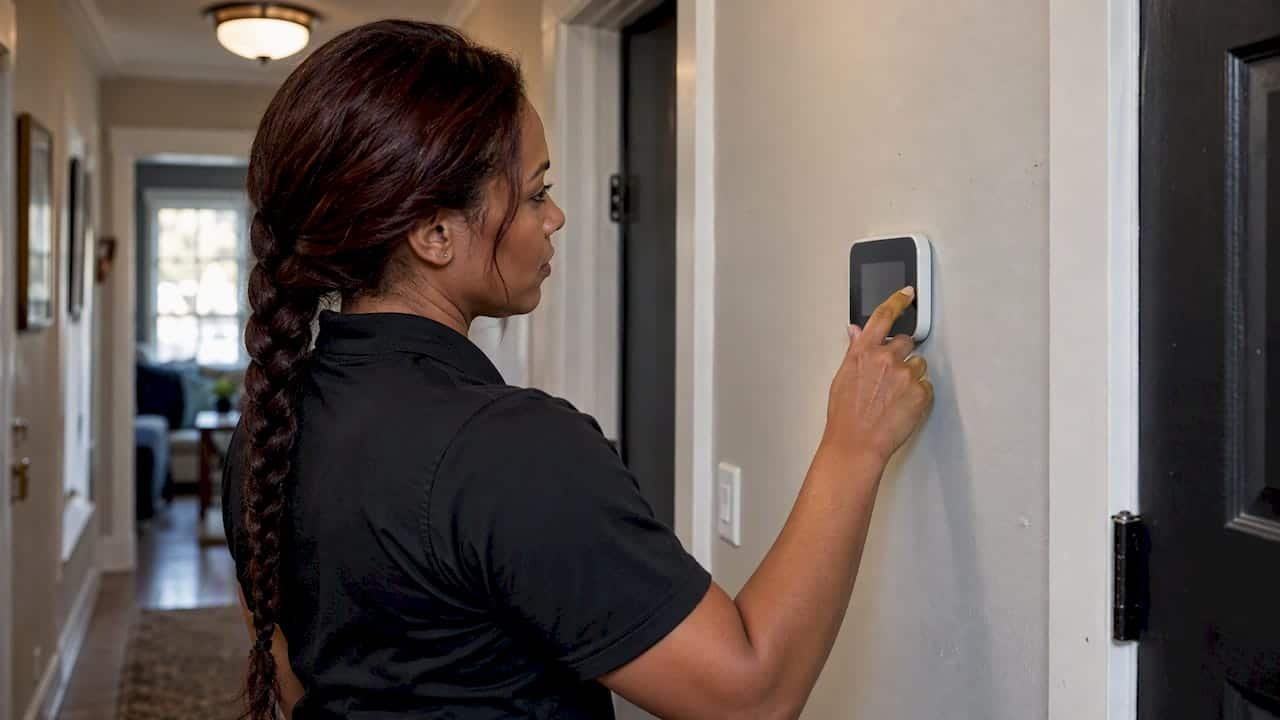
A two-stage furnace needs a control that can call for both stages, or a thermostat that manages staging by timing. The RFWEL guide notes that smart thermostats work with multi-stage systems, and most support up to two heating and cooling stages. Before buying one, check that it matches your furnace’s terminals. We can set up and test the thermostat as part of an installation so the staging works as intended.
Sizing matters more than the number of stages
People often ask what size gas furnace a 2,000-square-foot house needs. There is no honest answer from square footage alone. The U.S. Department of Energy warns against rules of thumb based only on square footage, because they ignore local climate and your home’s insulation and sealing, and can lead to inefficient performance.
The accepted method is the ACCA Manual J load calculation. The Department of Energy’s Building America guidance points to this procedure, which accounts for insulation, window values and local climate data. Goodman likewise states that sizing should be done by a contractor using Manual J.
Why this affects the single-stage vs two-stage decision:
- An oversized single-stage furnace short-cycles. It satisfies the thermostat quickly, shuts off and restarts, which makes the temperature swings larger.
- A correctly sized two-stage furnace can spend its time on low, which is the situation where its design pays off.
- Better insulation lowers your heating load and can change the size you need. Our guide on how insulation improves HVAC efficiency in OC and LA homes explains what to look at first.
If you are also replacing air conditioning, sizing applies there too. The Building America forced air guide says ENERGY STAR limits oversizing of heat pumps and air conditioners to 15 percent, or 25 percent in climate zones 5 to 8, and that cooling equipment should meet both sensible and latent loads.
Which one should you choose?
Use these questions to narrow it down.
A two-stage furnace is usually the better fit when:
- Your house has uneven rooms, a long duct run or a second story that runs warmer or cooler than the first.
- Temperature swings or noisy start-ups bother you.
- You plan to stay in the home long enough to enjoy the comfort and electricity benefits.
- You want a BPM blower motor and quieter low-speed operation.
A single-stage furnace is usually the better fit when:
- The home is small and well balanced, and your current system keeps it comfortable.
- You want the lowest upfront equipment price and the simplest system.
- The home is a rental or a property you manage, where a dependable, straightforward unit is the priority.
A note on multi-story homes
If the thermostat sits on the first floor and there is a large opening to the upstairs, the low stage can let heat rise and leave the second story warm. In that layout, a thermostat or control set up to time the second stage can help. This is a setup detail worth discussing with the installer, since the best arrangement depends on your floor plan and duct design.
Our perspective
At MDTech Services, we are asked about stages mostly after a furnace has already started causing trouble: uneven rooms, a noisy start-up, or a unit that cycles on and off all evening. In our experience, the answer starts with the house, not the brochure. We look at the ductwork, the return air, the venting and the load before we recommend equipment.
We lean toward two-stage equipment for homeowners who value steady temperatures and quiet operation and plan to stay put. We are equally comfortable installing a single-stage furnace where it fits the home and the budget, and we will explain what you get with each. Our licensed technicians handle the full job, from the load assessment to the thermostat setup, and we aim for long-term, warranty-safe work rather than a quick swap.
We also treat gas safety as part of every furnace visit. Because we handle gas appliance repairs and LP to natural gas conversions, we check venting, gas connections and ignition components with the same care as the furnace itself.
MDTECH
Furnace problems that are not about stages
Sometimes the question behind “which furnace” is really “why is mine not working?” A few common cases:
- Weak airflow. Consumer Reports suggests checking the furnace filter first, then looking for thermostat problems or loose wires, replacing thermostat batteries and checking for burned fuses or tripped breakers. If those steps do not help, call a heating contractor.
- Cold air from the vents. There are several possible causes, from ignition to airflow. Our article on why a furnace blows cold air walks through them.
- No ignition. Our guide to a furnace that will not ignite separates safe homeowner checks from work that needs a technician.
- A reset. If you want to try one, follow our steps to reset your furnace safely.
For gas smells, pilot or burner problems you cannot clear with a simple reset, or anything involving gas lines, stop and call a licensed professional. Do not attempt the repair yourself.
If you have a heat pump instead
Many of the searches around furnaces also ask about heat pumps that are not heating or are blowing cold air. Those symptoms can come from airflow restrictions, thermostat settings, defrost operation or refrigerant and electrical faults, so the safe homeowner step is limited to checking the filter, the thermostat mode and the breaker. Beyond that, have a technician diagnose it. For budgeting, Trane reports that heat pump repair costs depend on the issue, system type, local labor rates and system age, and that service-call fees, which often serve as diagnostic fees, typically run $75 to $250. Regular upkeep also helps: Consumer Reports cites Department of Energy guidance that a well-maintained heat pump can use up to 25 percent less fuel than a neglected one.
Get the system checked before cold weather
Timing helps. Consumer Reports quotes an expert who recommends scheduling a heating-system checkup in the swing season, before cold weather makes contractors too busy. Our step-by-step HVAC maintenance guide lists what a good checkup covers, and our article on the signs of a failing HVAC system can help you decide whether it is time to call.
Replace or repair your furnace with MDTech
We serve homeowners, landlords and property managers in Orange County and Los Angeles County. Our licensed technicians diagnose furnace and HVAC problems, repair them, and install replacement equipment, with 24/7 emergency availability and upfront pricing. We can also help with gas appliance repairs and LP to natural gas conversions.
If you are weighing a single-stage against a two-stage furnace, book an assessment and we will quote the options for your home. Start with our HVAC services or heating and cooling pages, or book online at mdtechservices.com.
FAQ
Is a two-stage furnace more expensive?
Generally, yes. Two-stage furnaces usually cost more upfront than single-stage models of the same size, because they have additional controls and often a more advanced blower. The final difference depends on your ductwork, venting and thermostat needs, so a quote based on your home is the reliable way to compare.
Does a two-stage furnace use less gas?
Not meaningfully, if the efficiency ratings match. Testing summarized by Lawrence Berkeley National Laboratory found almost no difference in total energy use between the two types at the same efficiency level. The savings come mainly from electricity when the furnace has a BPM blower motor, and from steadier comfort.
How do I know if my furnace is single-stage or two-stage?
Check the model number on the furnace label, and look up its specifications. You can also look at the thermostat wiring: two heating wires, W1 and W2, usually point to a two-stage system. If you are unsure, a technician can identify it during a visit.
Do I need a new thermostat for a two-stage furnace?
You need a thermostat that can control both stages, or one that can time the second stage. Most smart thermostats support up to two heating and cooling stages. Make sure the model matches your furnace’s terminals before you buy.
What size furnace do I need for a 2,000-square-foot house?
Square footage alone cannot answer that. The correct size comes from an ACCA Manual J load calculation that factors in insulation, windows and local climate. A contractor should perform it before any equipment is chosen.
Sources
- Features Comparison Guide, Gas Furnace, Goodman
- Residential Two-stage Gas Furnaces: Do They Save Energy? (Lawrence Berkeley National Laboratory)
- High-efficiency furnaces, CenterPoint Energy
- Identifying Single Stage and Multistage Heating and Cooling Systems, RFWEL
- Guide to Home Heating and Cooling, U.S. Department of Energy
- Right-Size Heating and Cooling Equipment, Building America, U.S. Department of Energy
- Forced Air HVAC Guide, Building America, U.S. Department of Energy
- A Guide to Energy-Efficient Heating and Cooling, ENERGY STAR
- Best Gas Furnace Buying Guide, Consumer Reports
- How to Cut Home Heating Costs This Winter, Consumer Reports
- Average Heat Pump Repair Cost, Trane