
A residential pipeline inspection workflow moves through six stages: pre-assessment, on-site safety check, camera sewer scope, pressure and leak testing, diagnosis with a repair plan, and a written report with video delivery. Here is the full checklist at a glance:
- Pre-assessment: Gather property info, confirm access, and prepare the site
- Safety check: Verify gas and electrical safety, confirm inspector credentials
- Camera scope: Insert the camera, record video, and document defects
- Pressure/smoke/gas tests: Run code-required tests with timed holds
- Diagnosis and repair plan: Prioritize findings and estimate repair paths
- Permits and AHJ inspections: Schedule required inspections per IRC P2503
- Written report: Deliver time-stamped defect list, video, and recommendations
Every qualified inspection ends with two deliverables: a full recorded video of the sewer lateral and a written defect report with locations, measurements, and urgency ratings.
Key Takeaways
A complete residential pipeline inspection workflow requires pre-site preparation, a camera sewer scope with video delivery, code-required pressure testing with 15-minute holds, and a written defect report before any repair work begins.
| Point | Details |
|---|---|
| Prepare before the inspector arrives | Clear all access points, gather permit history, and avoid water use during the sewer scope. |
| Demand video and a written report | InterNACHI standards require the inspector to deliver the recorded video and a time-stamped defect list. |
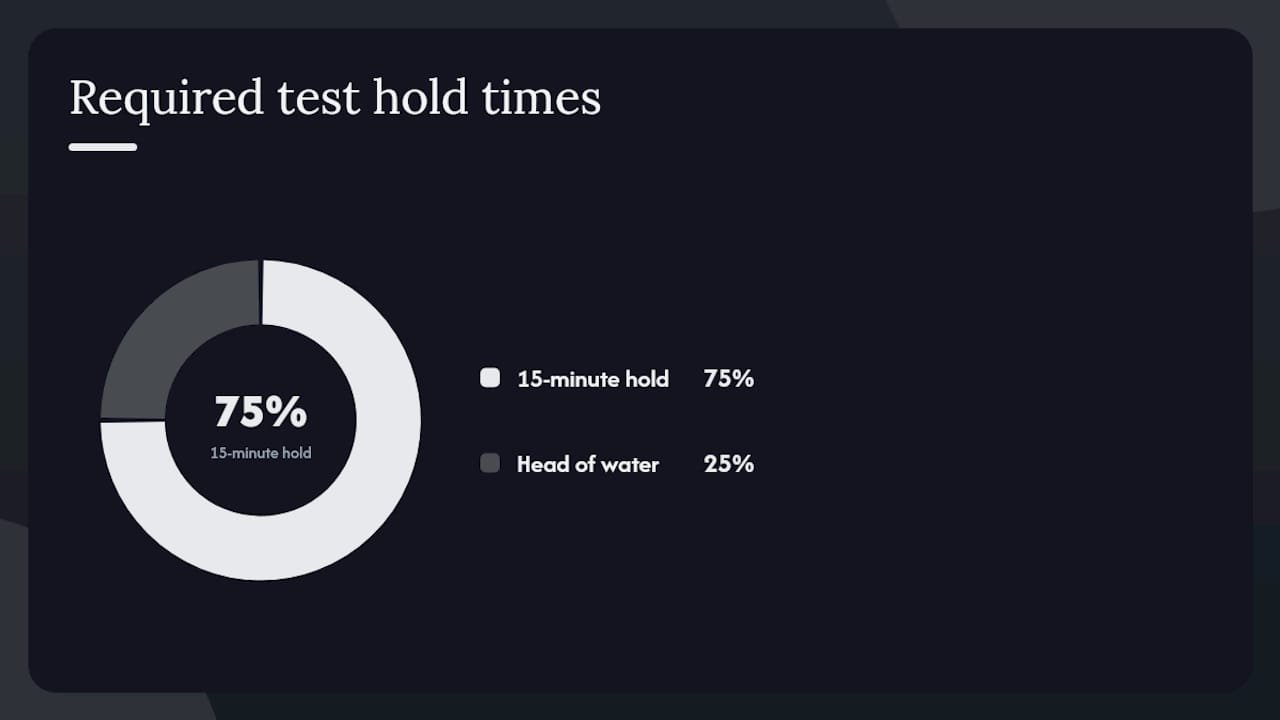
| Pressure tests have code-required hold times | IRC 2024 Chapter 25 specifies 15-minute holds for water, air, and vacuum tests on new or repaired systems. |
| Permits protect you legally | IRC P2503’s three-stage sequence means work covered before AHJ approval may require costly uncovering. |
| Mdtechservices covers OC and LA County | Licensed technicians, sewer-scope video delivery, written reports, and permit coordination in one booking. |
Table of Contents
- What should you do before the inspector arrives?
- On-site safety checks and the inspector’s initial assessment
- How does a sewer-scope camera inspection actually work?
- What pressure and leak tests does a plumber run?
- How do inspectors turn findings into a repair plan?
- What permits and AHJ inspections are required?
- What should a proper inspection report include?
- How long does an inspection take, and what drives the cost?
- When should you call a professional, and how do you choose one?
- What local experience tells us about residential pipe inspections
- Mdtechservices handles the full inspection workflow for OC and LA County homeowners
- Sources
What should you do before the inspector arrives?
Good preparation prevents delays and keeps everyone safe. Before the technician shows up, work through this checklist:
- Clear access to all cleanouts, the water heater, the main shutoff, crawlspace hatches, garage utility areas, and exterior vents
- Locate and label the main water shutoff and gas shutoff so the inspector can reach them quickly
- Avoid running water, flushing toilets, or running the dishwasher or washing machine during a sewer scope inspection, since flowing water obscures the camera view and can hide sags or structural defects
- Gather property details: year built, known pipe materials (cast iron, ABS, clay, galvanized), any recent plumbing work, and permit numbers if available
- Note HOA rules or public works contacts for Orange County or Los Angeles County if your lateral crosses shared property
- Request a sewer scope explicitly — it is an elective service that must be booked separately from a general home inspection and will not happen automatically
Pro Tip: Secure pets in a separate room and post a note on the front door. If the inspector requests a gas shutoff before testing, do it before they arrive — it saves time and reduces risk.
Review the plumbing checklist for homeowners to confirm you have covered every prep item before the appointment.
On-site safety checks and the inspector’s initial assessment
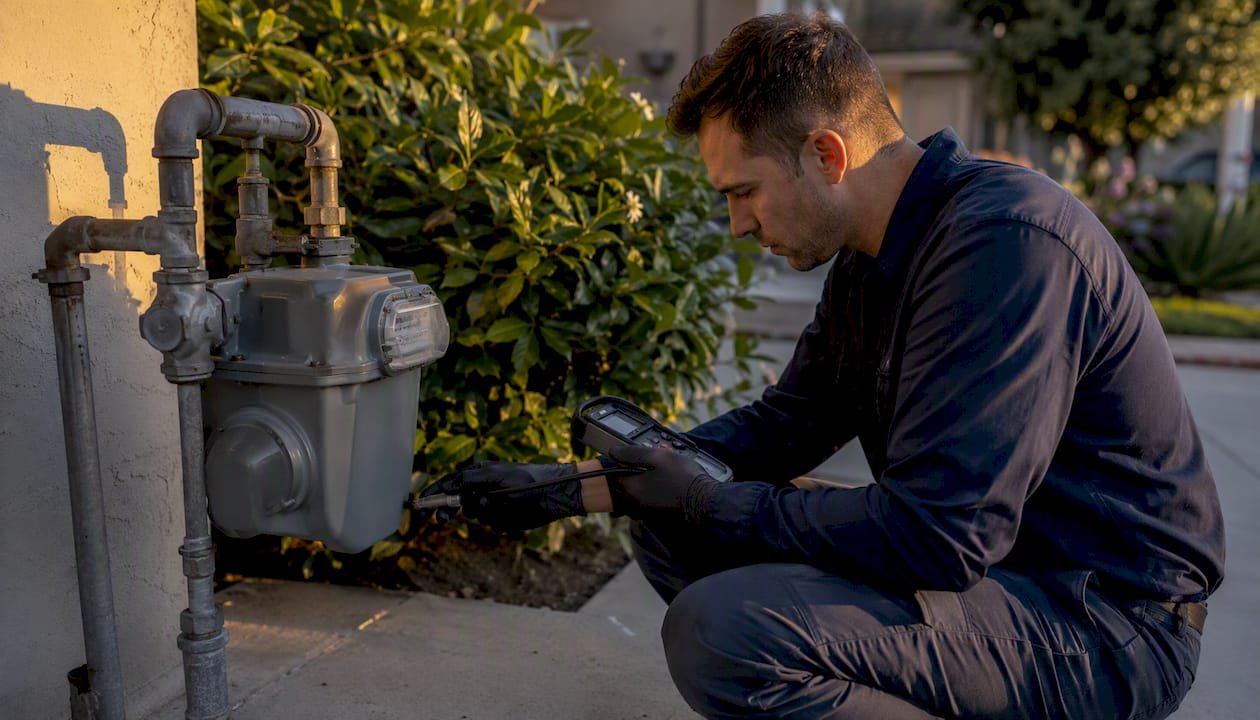
The first ten minutes on-site are about safety, not pipes. A licensed inspector will verify there are no active gas leaks using a combustible gas detector, check for electrical hazards near water lines, and identify trip hazards in crawlspaces or utility areas before any equipment is deployed.
Before work begins, confirm the inspector carries valid plumbing contractor licensing and liability insurance. In California, you can verify a contractor’s license through the Contractors State License Board (CSLB). An unlicensed technician cannot pull permits, and any work they perform may not pass AHJ inspection.
The initial walk-through covers the full plumbing system scope: water supply lines, drain-waste-vent (DWV) system, fixtures, and the water heater. The inspector notes visible leaks, wet spots, staining, gurgling drains, or slow drainage — each one is a clue that directs where the camera or pressure test goes next.
A critical step most homeowners miss: the inspector must document which areas were inspected and which were not, along with the reason for any exclusion (blocked access, sealed walls, no cleanout). That list belongs in the written report. If it is missing, ask for it before signing off.
If a sewer gas odor is present, the inspector should treat it as a potential hazard. Sewer gas can enter through drains or vents, and enclosed spaces should be aired out before the team works in them.
How does a sewer-scope camera inspection actually work?
A sewer scope is a video inspection of the building’s lateral sewer line from the house to the municipal connection or septic tank. Per InterNACHI’s Sewer Scope Inspection Standards of Practice, the inspector must video-record the entire inspection and deliver that recording to you.
The camera enters through one of three access points: an interior cleanout (typically under a sink or in a utility room), an exterior cleanout at the foundation, or a roof vent stack when no cleanout is accessible. The technician feeds the camera through the lateral in real time, watching a monitor for defects while the video records continuously.
Common defects the camera documents:
- Cracks and fractures in pipe walls
- Root intrusion from trees or shrubs
- Offsets greater than 1/4 inch where pipe sections have shifted
- Blockages from grease, debris, or foreign objects
- Standing water greater than 1 inch, which indicates a sag or belly
- Collapsed or crushed pipe sections
- Separated joints where pipe ends have pulled apart
- Corrosion, scale buildup, or heavy grease coating
The camera also identifies pipe material and records the length of lateral inspected. Limitations matter: a sewer scope records conditions on the inspection date only, and certain pipe types such as Orangeburg or asbestos cement may not be reliably identified by camera alone.
| Method | What it covers | Limitations |
|---|---|---|
| Basic visual inspection | Accessible fixtures, visible supply and drain lines | Cannot see inside pipes or underground sections |
| Camera sewer scope | Full lateral from cleanout to tap; records defects, material, length | Inspection-date snapshot; some pipe materials hard to ID |
| Robotic or AI-assisted analysis | Automated defect tagging, condition scoring | Higher cost; typically used for commercial or municipal lines |
What the video proves: the recorded footage is your documentation for insurance claims, seller disclosures, and contractor bids. Never accept a verbal summary in place of the actual video file.
What pressure and leak tests does a plumber run?
Pressure and leak testing confirms pipe integrity beyond what a camera can show. IRC 2024 Chapter 25 requires inspection and testing of new or repaired plumbing systems, with specific hold times and gauge specifications for each test type.
| Test type | Required pressure / hold | What it proves |
|---|---|---|
| Water test (drainage) | Fill section; hold 15 minutes | Confirms no leaks in DWV piping |
| Air test | hold 15 minutes | Detects leaks in supply or DWV without water |
| Vacuum test | hold 15 minutes | Confirms pipe integrity under negative pressure |
| Building sewer watertight test | head of water | Confirms sewer lateral is watertight |
Smoke testing locates vent or sewer gas entry points by forcing non-toxic smoke through the system and watching for it to appear at cracks, open joints, or improperly sealed penetrations. A gas detector is the right tool when a sewer gas odor is already present and the source is not obvious.
Some tests must be witnessed by the Authority Having Jurisdiction (AHJ) before piping is covered. When that is required, the permit holder is responsible for scheduling the witness inspection and providing all test equipment. Failing to schedule that inspection before covering the work can result in mandatory uncovering at the owner’s expense.
Pro Tip: Ask the inspector to note gauge readings and hold-time results directly in the written report. That documentation protects you if a contractor later disputes whether a test was performed.
How do inspectors turn findings into a repair plan?
A structured inspection divides findings into four priority levels. Professional inspectors use a prevention-focused methodology that combines visual assessment with pressure diagnostics to produce prioritized recommendations.
- Safety and health (immediate): Active gas leaks, sewage backup risk, collapsed lines
- Structural risk (urgent): Separated joints, severe offsets, root intrusion compromising pipe walls
- Operational failure (schedule soon): Partial blockages, standing water, significant scale buildup
- Maintenance items (monitor): Minor corrosion, light grease coating, small cracks with no active leak
Repair options for common defects range from root cutting and chemical sealing for minor intrusion, to pipe relining for cracked or offset sections, to spot repair or full lateral replacement for collapsed or severely damaged lines. The right choice depends on pipe material, depth, access, and the extent of damage.
Cost drivers include the access method (interior cleanout vs. exterior excavation vs. under-slab work), pipe length and material, whether traffic plates or driveway restoration are needed, permit fees, and AHJ witness requirements. See the plumbing repair workflow guide for a breakdown of how these factors interact.
Pro Tip: Ask for two quotes: one scoped to the confirmed defect only, and one for a full lateral replacement if the camera shows widespread deterioration. Also request video timestamps for each problem area so any contractor can locate the defect without re-scoping.
What permits and AHJ inspections are required?
Most plumbing repair and replacement work in Orange County and Los Angeles County requires a permit. IRC P2503 establishes a three-stage inspection sequence that most California jurisdictions adopt: underground rough-in (before backfill), above-ground rough-in (before walls are closed), and final inspection (after fixtures are installed). Work cannot be covered before each stage is approved.
- Schedule AHJ inspections with advance notice, as most building departments require
- Confirm whether the AHJ must witness pressure tests or accepts documented test records
- Keep copies of all test records, permit numbers, and inspection sign-offs
- For work near public mains or shared laterals, contact the local public works or sanitation district early — LA County Sanitation Districts and Orange County Public Works each have their own coordination requirements
Permit tip for OC and LA County: pulling a permit before work begins protects you legally and ensures the repair is on record for future sales or insurance claims. A contractor who discourages permits is a red flag.
What should a proper inspection report include?
A complete report is your record of the system’s condition on the inspection date. According to InterNACHI’s standards, the inspector must identify all material defects observed, list inspected and uninspected areas, and deliver the recorded video to the client.
Every report you receive should contain:
- Full recorded video of the sewer lateral (delivered as a link or physical copy)
- Time-stamped defect list with locations and measurements
- Pipe material identification and total length of lateral inspected
- Areas not inspected, with the reason for each exclusion
- Recommended repairs with urgency levels (immediate, urgent, monitor)
- Photos or screenshots from the video annotating key defects
- Permit recommendations and repair estimate attachments where applicable
For insurance claims or seller disclosures, the video and written report together constitute the documentation an adjuster or buyer’s agent will expect. A verbal summary or a single-page checklist is not sufficient.
How long does an inspection take, and what drives the cost?
Most professional plumbing inspections typically take from about one to two hours for a standard home. A sewer scope adds time depending on lateral length and access. Written reports are typically delivered within 24–48 hours of the inspection.
Cost drivers to understand before you book:
- Access method: Interior cleanout access costs less than exterior excavation or under-slab work
- Pipe length and material: Longer laterals and older materials (clay, cast iron) take more time
- Location: Under-slab or under-driveway work adds excavation and restoration costs
- Permits and AHJ witness fees: These vary by jurisdiction in OC and LA County
- Emergency vs. scheduled work: After-hours or same-day calls carry a premium
Robotic camera systems with AI-assisted defect tagging can reduce re-inspection time on complex laterals, though they are more common on commercial properties. Pipe relining, when appropriate, avoids excavation costs and can be completed faster than full replacement.
Pro Tip: Bundle the sewer scope with any planned repair work. Mobilizing a crew twice costs more than scheduling both in a single visit, and the camera footage from the inspection can serve as the pre-repair baseline.
See the scheduling and cost guide for more detail on how to time inspections around planned work.
When should you call a professional, and how do you choose one?
Call a licensed plumber for a full pipeline inspection process when you notice any of these:
- Recurring drain backups or slow drains throughout the house
- Gurgling sounds from toilets when other fixtures are used
- Persistent sewer gas smell indoors or near the foundation
- Wet spots on the lawn with no irrigation explanation
- Unexplained increases in your water bill
- Visible pipe corrosion, staining, or cracks at accessible connections
When hiring in Orange County or Los Angeles County, use this checklist:
- Licensed plumbing contractor: Verify through the CSLB before booking
- Liability insurance: Confirm coverage before work begins
- Sewer-scope video delivery: The inspector must provide the recorded video, not just a verbal summary
- Written defect report: Required; not optional
- Permit and AHJ experience: Ask specifically about their process for pulling permits in your city
- Warranty on work: Confirm what is covered and for how long
Mdtechservices serves homeowners, landlords, and property managers across Orange County and Los Angeles County with licensed technicians, sewer-scope video delivery, written defect reports, and permit coordination when required. You can review regular plumbing inspection benefits to understand why scheduling proactively costs less than responding to failures.
What local experience tells us about residential pipe inspections
Working across Orange County and Los Angeles County, we see the same issues repeat in older residential neighborhoods: root intrusion from mature trees into clay laterals, corroded cast iron in homes built before 1970, and slab conditions that make access difficult and repairs expensive. Licensed technicians who know these local patterns can read a camera feed faster and flag problems that a less experienced eye might miss.
When you work with Mdtechservices, you get a licensed technician, a full sewer-scope video delivered to you, and a written report that documents every defect with its location and our recommended action. We coordinate permits with the local AHJ when the scope of work requires it. Ask for the video and the written report before you sign off on any inspection — that is the standard, and we hold to it.
Mdtechservices handles the full inspection workflow for OC and LA County homeowners
Mdtechservices is the local alternative to a generic plumbing call for homeowners and property managers in Orange County and Los Angeles County who need a documented, code-backed inspection. When you book with us, a licensed technician arrives with camera equipment, performs the full sewer scope and pressure testing, and delivers both the recorded video and a written defect report with time-stamped locations and urgency ratings. Permit coordination is included when the repair scope requires it.
To book an inspection, visit the Mdtechservices service page or call us directly. Have your property address, approximate pipe age, and any known permit history ready so we can schedule the right technician for your situation.
Sources
The following authoritative sources back the testing requirements, sewer-scope standards, and inspection stages referenced throughout this guide. Use them to verify hold times, scope definitions, and code requirements before hiring or approving work.
- How to identify and remove sewer gas smell in your house (The Spruce)
- What Does a Plumbing Inspection Include: 7 Essential Tips
- Sewer scope inspection (Redfin blog)
- What To Expect During A Professional Plumbing Inspection (Greg Mitchell Plumbing)