
Yes, California requires a listed mechanical air gap for dishwasher drain connections on permitted work. A high loop will not pass inspection. If you’re remodeling a kitchen or replacing a dishwasher under permit, budget for the fitting and confirm its flood-level marking now, before your inspector shows up expecting to see it.
TL;DR:
- A listed mechanical air gap fitting is required on all dishwasher drain connections in California, not a high loop, for permitted work and passes inspection.
- The air gap must be installed above the flood-level rim of the sink or drainboard, with the FL marking clearly visible and properly secured.
- Proper routing of hoses and secure clamps are essential, and installing the fitting during other plumbing work saves time and avoids missed inspections.
- Inspections verify that the fitting is correctly marked, positioned above the rim, and that hoses are properly routed and secured, with common failures leading to re-inspections.
- Mdtechservices handles installation and repairs to meet code standards, ensuring the fitting is installed correctly the first time to avoid costly delays.
Table of Contents
- What Does California Code Actually Require for a Dishwasher Air Gap?
- Where Should the Air Gap Sit, and How Do You Install It Right?
- When Do You Need a Permit, and What Does It Cost?
- How Do You Maintain an Air Gap and Fix Common Problems?
- Does a High Loop Work Instead of an Air Gap?
- Field Notes From MDTech Services Technicians
- Get Your Dishwasher Air Gap Installed Right the First Time
- Sources
- FAQ
What Does California Code Actually Require for a Dishwasher Air Gap?
California’s plumbing rules do not leave room for interpretation here. The California Plumbing Code states plainly that no domestic dishwashing machine may connect directly to a drainage system or garbage disposer without an approved air gap fitting on the discharge side. That’s CPC Section 807.3, tucked inside Chapter 8’s rules on indirect wastes, and it’s the section every plumbing inspector in the state references when they check under your sink.
The logic behind the rule is straightforward. Dishwashers push wastewater out under pressure, and if a drain line clogs or backs up, that dirty water has nowhere to go but back into the machine, contaminating your dishes. The physical break created by a listed air gap fitting stops that from happening, which is why California treats it as a safety requirement rather than a suggestion.
The Health and Safety Code reinforces this from a different angle. HSC Section 114193.1 sets minimum distance and performance standards for air gaps in food-handling and plumbing contexts, and the CPC’s fitting requirements align with those minimums. In practice, that means:
- The fitting must be a listed dishwasher air gap, not an improvised loop or fitting.
- It has to sit on the discharge side of the dishwasher, between the appliance and the drain or disposer.
- Local building departments enforce this at the permit and inspection stage, and they generally will not sign off on a substitute.
A common misread: some installers assume any air gap style device passes muster. It doesn’t. The fitting has to carry a listing, and inspectors check for that marking specifically.
Where Should the Air Gap Sit, and How Do You Install It Right?
Placement is where most installs go wrong, not the fitting itself. The rule that trips up the most homeowners involves the flood-level, or FL, marking stamped on the fitting.
- Mount the fitting above the flood-level rim. The FL marking on the air gap must sit at or above the flood-level rim of the sink or drainboard, per code guidance summarized by UpCodes. If the fitting sits below that rim, even a listed device fails inspection.
- Choose a stable mounting point. Most installs go through the sink deck or the countertop next to the faucet, using a deck-mounted chrome or plastic cap that sits above the counter surface.
- Route the discharge hose correctly. The dishwasher’s drain hose connects to the smaller inlet on the air gap, and a separate hose runs from the larger outlet down to the disposer or the sink tailpiece.
- Secure every connection with a proper hose clamp. Loose clamps are one of the most common reasons a plumber gets called back to redo work that already passed a rough inspection.
- Check clearance before you cut or drill. On retrofit jobs, especially older Orange County and Los Angeles County homes with thick granite or tile counters, confirm you have room for the fitting to sit above the rim before committing to a mounting hole.
Pro Tip: Take a photo of the installed fitting with the FL marking clearly visible before you schedule your final inspection. It gives the inspector an easy reference point and can shave real time off a callback if something else needs a second look.
The mistakes that cause failed inspections are almost always the same three: an FL marking sitting below the rim, a clamp that was hand tightened instead of properly secured, or a hose routed straight to the disposer without passing through the air gap at all. Any one of those is enough for a red tag.
If you’re planning the fitting alongside a full appliance swap, it helps to line up the plumbing work with your dishwasher installation timeline so you’re not making two separate trips under the sink.
When Do You Need a Permit, and What Does It Cost?
Permits come into play more often than homeowners expect. A kitchen remodel almost always requires one, and many straight dishwasher replacements do too, depending on whether the plumbing connections are being altered. During the final plumbing inspection, the air gap is one of the first things an inspector looks for.
Missing or misinstalled air gaps are a frequent reason permitted jobs get held up at final inspection. Here’s what typically happens during that process:
- The inspector checks the fitting is listed and properly marked.
- They confirm the FL marking sits at or above the rim of the sink or drainboard.
- They inspect hose routing and clamp security under the sink.
- If something fails, you get a correction notice and a re-inspection date, which usually adds days or weeks depending on your local department’s schedule.
Cost wise, the air gap fitting itself is inexpensive, usually well under $50 for the part. Professional installation adds labor, and total project time is short when it’s the only task, though it stretches out when it’s bundled into a full remodel with cabinet and counter work already underway. If you want a clearer sense of what a full swap runs, this breakdown of dishwasher installation costs covers the related line items worth budgeting for.
How Do You Maintain an Air Gap and Fix Common Problems?
An air gap that’s never cleaned is an air gap that eventually clogs, and the symptoms show up fast: gurgling under the sink, standing water in the dishwasher tub after a cycle, or a sink that backs up right when the dishwasher drains.
- Pop the cap off the top of the fitting. Most air gap caps twist or lift off without tools.
- Check for debris inside the tube. Food particles and grease buildup are the usual culprits.
- Clear the tube with a small brush or a straightened wire. A bottle brush works well for the wider fittings.
- Run the dishwasher and check the connection for leaks. Watch the hose clamps under the sink while the cycle drains.
- Retest with the disposer running simultaneously. This catches backflow issues that only show up under combined load.
Pro Tip: If water is pooling around the base of the fitting on the counter, the problem is usually a cracked cap or a loose mounting nut underneath the deck, not the drain line itself. That’s a five minute fix if you catch it early.
Persistent leaks, an inspection that keeps failing for reasons you can’t pin down, or routing that doesn’t match what your permit plan shows are all good reasons to call a licensed technician rather than keep troubleshooting solo. Structure Tech’s installer guide covers similar maintenance patterns that hold true across most residential setups.
Does a High Loop Work Instead of an Air Gap?
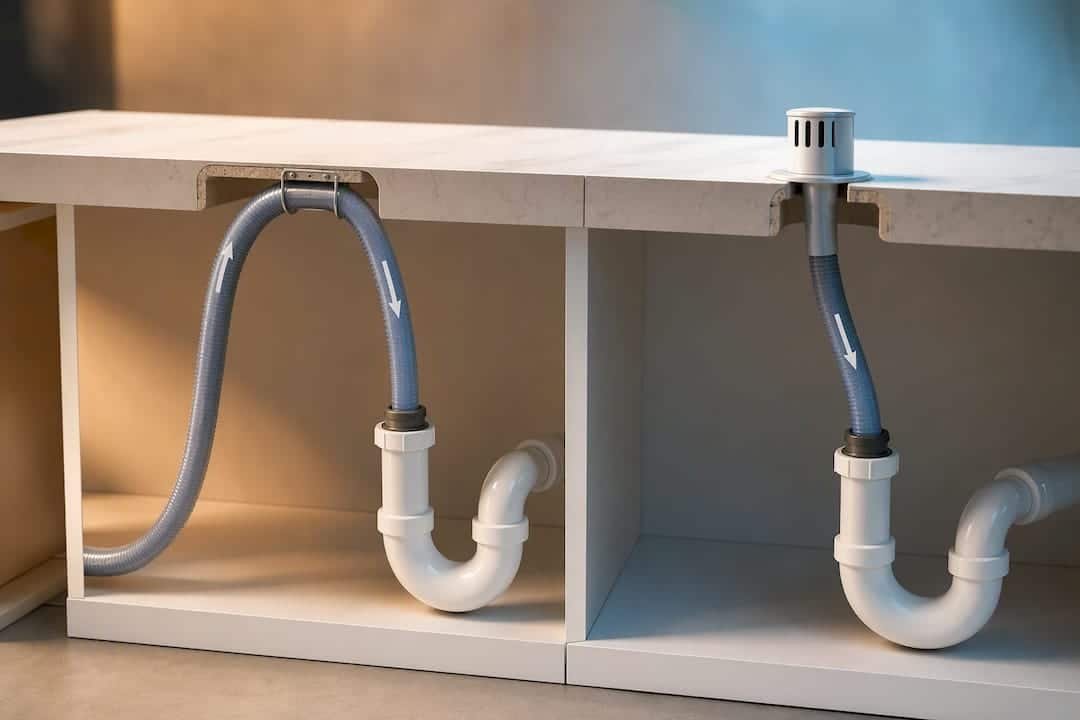
A high loop routes the dishwasher’s drain hose up high under the sink before it drops down to the disposer, using gravity and elevation instead of a mechanical fitting to resist backflow. Some states allow it as a standalone method, and it shows up often in DIY installation videos aimed at a national audience.
California does not follow that approach for permitted, inspected work. A high loop does not satisfy the CPC’s requirement for a listed mechanical air gap fitting and inspectors treat it as noncompliant.
- Treat the listed air gap as the default requirement for any permitted install in California.
- If a contractor or a local department suggests an exception applies to your job, get that confirmation in writing from the building department before you skip the fitting.
- Don’t rely on forum threads or out-of-state advice. Some jurisdictions have discussed relaxed enforcement over clogging complaints, but nothing overrides the CPC without documented local sign-off.
Field Notes From MDTech Services Technicians
Most callbacks we see on dishwasher jobs trace back to the air gap, not the appliance itself. Planning the fitting during the same visit as a replacement saves a second trip, and confirming the FL marking sits above the rim before the inspector arrives catches the single most common failure point.
Running the sink and disposer together while the dishwasher drains, before scheduling the official inspection, exposes backflow and clog issues you’d otherwise discover the hard way. It’s a two-minute check that prevents a rescheduled appointment.
— MDTECH
Get Your Dishwasher Air Gap Installed Right the First Time
Licensed technicians install and correct dishwasher air gaps to California Plumbing Code standards, helping avoid red tags on final inspections.
Whether you’re replacing an aging dishwasher, finishing a kitchen remodel, or fixing a fitting that already failed inspection, our team handles the plumbing hookup and the appliance side of the job together. That means one appointment instead of coordinating separate plumbers and appliance installers. Our appliance installation services cover the dishwasher itself, and we route and mount the air gap fitting to meet the FL marking requirement inspectors check for. If you already have a fitting that’s leaking, clogged, or was installed below the rim, our air gap repair service corrects it without tearing out work that’s otherwise fine.
Book an appointment through our site and we’ll get your installation permit-ready before your inspection date.
Sources
- Is a Dishwasher Air Gap Required in California? – LegalClarity
- Chapter 8 — INDIRECT WASTES (California Plumbing Code)
- Domestic Dishwashing Machine | UpCodes
FAQ
Is an Air Gap Required for Dishwashers in California?
Yes. The California Plumbing Code requires a listed mechanical air gap fitting on the discharge side of any domestic dishwasher installed under permit. A high loop does not satisfy this requirement for inspected work.
What States Require Air Gaps for Dishwashers?
Requirements vary by state and even by local jurisdiction, and California is among the states that mandate a listed air gap fitting rather than allowing a high loop as a substitute. Always check your specific state’s plumbing code, since some jurisdictions permit alternative methods that California does not.
Does Washington State Require an Air Gap for a Dishwasher?
Washington’s plumbing code differs from California’s, and requirements there are set by that state’s own adopted code, not the CPC. Homeowners in Washington should confirm current requirements with their local building department rather than assume California’s rules apply.
Where Does the Air Gap Fitting Need to Sit?
The flood-level, or FL, marking on the fitting must sit at or above the flood-level rim of the sink or drainboard. A fitting mounted below that rim fails inspection even if it’s a properly listed device.
Can Mdtechservices Install or Fix My Air Gap?
Yes. Mdtechservices installs and repairs dishwasher air gaps to California Plumbing Code standards as part of our appliance installation work across Orange County and Los Angeles County. Current pricing is available through our site when you book an appointment.