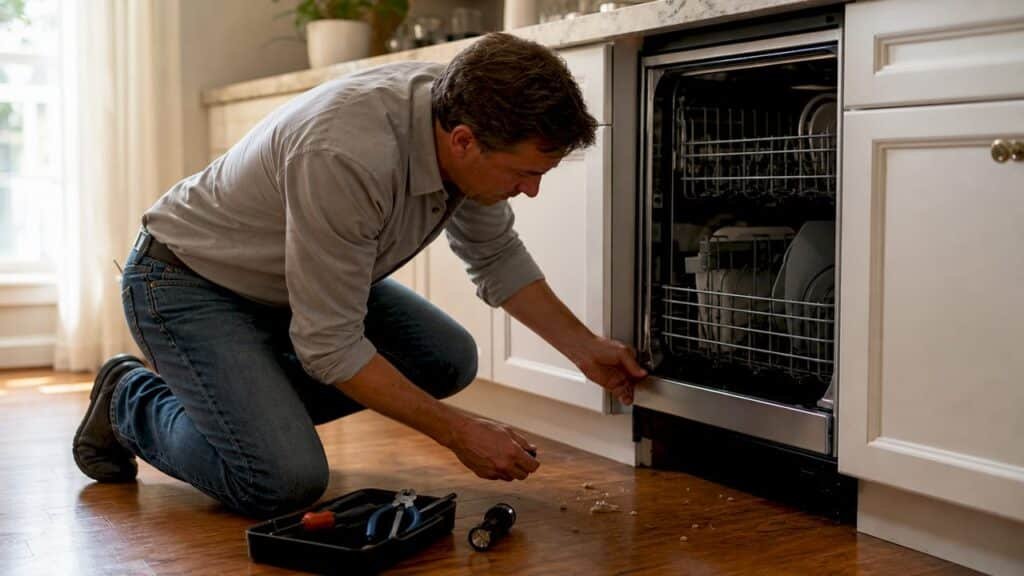
Forno Cooking Appliances: A Professional Repair and Maintenance Guide https://www.youtube.com/watch?v=32W4RAWapFU Technical Mastery of Forno Cooking Appliances: A Professional Repair and Maintenance Guide The rise of Forno in the North American market has introduced a unique blend of European aesthetics and robust, high-output performance. For homeowners in Lake Forest, CA, these appliances represent a significant investment in culinary precision. However, maintaining that precision requires an understanding of professional-grade components—from high-BTU burners to complex convection fans. This guide serves as an authoritative resource for understanding how these machines operate and what is required when they fail. Professional Engineering Standards for Forno Ranges Forno ranges are built with heavy-duty stainless steel and high-intensity components that differ significantly from standard residential units. A primary focus for any technician is the manifold system. In Forno gas ranges, the distribution of fuel to the burners is regulated by precise valves designed for longevity. When a burner fails to ignite or exhibits a weak flame, the issue often lies not just in the igniter, but in the micro-switch or the valve orifice itself. California residents must ensure that any technician working on gas lines or high-voltage electrical components is properly credentialed. You can verify professional standing through the DCA. Dealing with gas ranges requires a firm grasp of local safety codes to prevent leaks and ensure proper ventilation. While large-scale aggregators like HomeAdvisor or Thumbtack connect users with various contractors, a specialized Forno technician understands the specific BTU output and air-shutter settings unique to these Italian-engineered manifolds. The Science of Heat Distribution and Calibration One of the standout features of Forno ovens is the true convection system. Unlike traditional ovens that rely on stationary heating elements, Forno utilizes a dedicated heating element surrounding a fan. This creates a uniform temperature environment. General maintenance platforms such as Sears Home Services provide broad appliance support, but the specific calibration of a Forno thermal probe requires specialized equipment and an understanding of European resistance curves. Common Thermal Components and Failure Rates Component Function Failure Symptom Thermocouple Safety device that shuts off gas if flame is lost Burner won’t stay lit after releasing knob Convection Motor Circulates hot air Loud grinding noises or uneven baking Oven Igniter Glows to pull high amperage to open gas valve Oven takes more than 90 seconds to light Hi-Limit Thermostat Safety cutoff for overheating Oven completely dead after self-clean or high-heat use When a Forno oven fails to reach the set temperature, the first technical check is the resistance of the temperature sensor. Using a multimeter, a technician should find a specific Ohm reading—typically around 1080 Ohms at room temperature for many high-end sensors. If the reading is infinite, the sensor circuit is open and requires replacement. Diagnostic Procedures for High-Output Burners Forno cooktops often feature 20,000 BTU dual burners. These are complex assemblies. If you notice a clicking sound that won’t stop, or if one burner refuses to spark, the culprit is often the spark ignition module. In the salt-air environments or high-humidity areas near the coast, moisture can build up in the spark electrodes, leading to a “short” where the electricity jumps to the cooktop frame instead of the burner head. Cleaning these components requires more than a damp cloth. Professionals use a wire brush and vacuum to ensure the “jet holes” in the burner cap are perfectly clear. Any obstruction here disrupts the gas-to-oxygen ratio, causing “yellow tipping” or soot production. While brands like GE Appliances dominate the domestic market, Forno’s semi-professional burner configuration requires a different approach to gas-pressure regulation. Refrigeration and Preservation Systems Beyond the range, Forno’s French door refrigerators utilize dual evaporators. This prevents the dry air of the freezer from migrating to the fresh food section. From a repair perspective, this means there are two separate cooling loops to diagnose. If a Forno refrigerator stops cooling, the technician must look at the inverter compressor. Unlike standard compressors that are either “on” or “off,” inverter compressors vary their speed. Testing these requires specialized diagnostic tools that can communicate with the main control board. According to EPA regulations, all refrigerant handling must be performed by Section 608 Technician Certification holders. This is especially critical for modern units using R600a (Isobutane), which is highly efficient but flammable. Professional handling ensures that your home remains safe during a sealed system repair. California Compliance and Licensing Requirements In the state of California, appliance repair is a highly regulated field to protect consumers from substandard workmanship. At MDTECH SERVICES, we operate as a core professional developer in the service industry, maintaining all necessary bonds and insurance. Any major work performed on built-in appliances or gas lines falls under the jurisdiction of the CSLB. Working with an unlicensed “handyman” for a high-end brand like Forno can void your manufacturer warranty and create significant liability. We adhere to the Bureau of Household Goods and Services standards to ensure every repair in Lake Forest meets state law. Troubleshooting the Forno Dishwasher Series Forno dishwashers are designed for silent operation, often hovering around 45 decibels. This silence is achieved through heavy insulation and high-torque, low-speed motors. If your dishwasher isn’t draining, the first point of failure is usually the check valve or the drain pump impeller. Food debris, despite the filtration system, can sometimes bypass the screens and jam the pump. Franchise networks like Mr. Appliance offer nationwide service, but our approach focuses on deep mechanical restoration using precision-sourced components. Step 1: Disconnect power at the breaker.   Step 2: Remove the bottom spray arm and filter assembly. Step 3: Inspect the sump for glass shards or plastic ties. Step 4: Test the drain pump for continuity. For a deeper understanding of the history and engineering philosophy of Italian appliance design, the Wikipedia page on Professional Ranges provides excellent context on how commercial tech transitioned into the home. Component Sourcing and Part Integrity The longevity of a Forno repair depends heavily on the quality of the replacement parts used. While general retailers like The Home Depot,