
A vinegar-like AC smell most often points to microbial souring in wet parts of the system, such as the drip pan, coils, drain lines, or ducts, and the first move is to stop the moisture feeding it. If you instead notice a rotten-egg or chemical burning smell, treat that as an emergency: ventilate, shut off the system, and urgently contact your gas utility or emergency services. Otherwise, a sour AC odor is usually safe to investigate yourself before calling for help.
TL;DR:
- Most vinegar-like odors come from microbial growth caused by trapped moisture in coils, drain lines, or duct linings, which require cleaning or drying.
- An emergency gas smell like rotten eggs or chemical burning indicates a leak or electrical issue, necessitating immediate evacuation and professional help.
- DIY checks include replacing filters, clearing drain lines, and inspecting the drip pan, but persistent odors or hidden mold need professional diagnosis.
- Regular maintenance such as scheduled filter changes, drain flushing, and humidity control can significantly prevent microbial odors from returning.
- A technician’s inspection covers refrigerant levels, coil condition, mold behind drywall, and proper drain slope, ensuring proper diagnosis and safety.
Table of Contents
- What causes a vinegar-like or sour smell from your AC
- How to check and clean your AC system safely
- When the smell signals a safety or health concern
- Preventive maintenance to keep sour odors from coming back
- What a technician actually checks during a service visit
- If you’d rather have a pro handle it
- FAQ
- Sources
What causes a vinegar-like or sour smell from your AC
A sour or vinegar-like smell almost always traces back to moisture sitting somewhere it shouldn’t. Your air conditioner pulls humidity out of the air and that water has to go somewhere, and when it lingers, bacteria and mold move in fast. According to EPA guidance on mold growth, excess moisture in cooling systems is the central driver of the musty, acidic odors homeowners describe as vinegar-like.
Several specific sources tend to be behind it:
- Microbial growth on coils or in the drip pan: standing condensate creates the damp, dark environment mold and bacteria need to thrive.
- Clogged condensate drain lines: blocked lines trap water that sours and carries odor straight through your vents.
- Moldy duct liner or filters: a saturated filter or damp duct interior lets the smell spread through every room the system serves.
- Dead pests inside ducts or the vehicle plenum: decomposition can produce a sour, acidic smell that mimics microbial odor.
- Refrigerant issues: these are a separate problem entirely. A refrigerant leak usually smells faintly sweet or oily rather than sour, so if you’re certain the odor is acidic or vinegar-like, moisture is the more likely culprit.
Vehicle AC systems develop the same problem for the same reason: the evaporator stays wet after every drive, and without enough airflow to dry it, bacteria colonize the fins.
How to check and clean your AC system safely
Before touching anything, do a quick sniff test outside the home or vehicle. A rotten-egg smell means gas, not vinegar, and calls for an immediate evacuation and a call to your utility. An electrical burning smell means you should shut the system off at the breaker and avoid running it until a technician looks at it. If what you’re smelling is sour or musty rather than sharp or metallic, it’s safe to work through the checks below.
For a home system:
- Power off the unit at the thermostat and breaker before opening any panels.
- Inspect and replace the air filter if it’s damp, discolored, or overdue.
- Check the condensate pan for standing water or slime buildup.
- Clear the drain line using a wet/dry shop vacuum at the outdoor stub, or flush it with a mix of hot water and distilled vinegar if the clog is mild. Our guide to condensate drainage walks through the full process.
- Leave coil cleaning to a professional unless they’re easily accessible, since bent fins or damaged coils are expensive to replace.
For a vehicle:
- Replace the cabin air filter, which is often the fastest fix for a sour smell.
- Check for standing water in the plenum behind the glovebox, where debris commonly collects.
- Use a labeled evaporator-safe disinfectant or book a professional evaporator cleaning if the smell returns after a few drives.
Avoid undiluted bleach in ducts or vents, and skip flammable aerosol cleaners anywhere near electrical components. After cleaning, run the system on fan-only for 15 to 20 minutes to dry everything out before switching back to cooling.
Pro Tip: Run your AC’s fan for a few minutes after shutting off the compressor on hot days. It helps dry the coil and cuts down on the moisture that causes odors in the first place.
When the smell signals a safety or health concern
Not every odor is a cleaning job. Natural gas carries a distinct rotten-egg smell from the mercaptan added for detection, which is nothing like the sour or musty smell of microbial growth. If you catch that smell, or anything like scorched plastic or hot metal, leave the area, shut off the system if it’s safe to do so, and call your gas utility or emergency services right away.
Mold exposure is a separate but real concern, especially for occupants with asthma, allergies, or weakened immune systems. EPA guidance recommends bringing in professionals once visible mold growth covers more than 10 square feet, since cleaning larger areas safely requires containment and protective equipment most households don’t have on hand. If anyone in the home is experiencing unexplained respiratory symptoms alongside a persistent musty smell, ventilate the space, keep the HVAC system off until it’s inspected, and consider moving sensitive occupants elsewhere temporarily.
Preventive maintenance to keep sour odors from coming back
Most sour AC smells are preventable with a short list of recurring tasks that keep moisture from building up in the first place.
- Replace filters on schedule and consider a MERV 8 filter, which the EPA notes as a helpful baseline for capturing the particles that feed microbial growth.
- Keep condensate drains clear and confirm the line has proper slope and a working trap, flushing it at least once a year.
- Schedule annual professional maintenance so a technician can inspect coils, check airflow, and catch early clogs before they turn into standing water.
- Control indoor humidity, keeping it below roughly 60% where practical, since DOE ventilation guidance ties lower humidity directly to fewer odor complaints and better indoor air quality. Our breakdown of humidity’s role in home health covers this in more depth.
- Inspect ducts whenever you see visible mold, smell persistent odor despite cleaning, or find signs of pests.
Buildings in humid climates benefit from the same principles outlined in technical guidance on moisture control, which treats ventilation and condensation management as the foundation of long-term air quality.
What a technician actually checks during a service visit
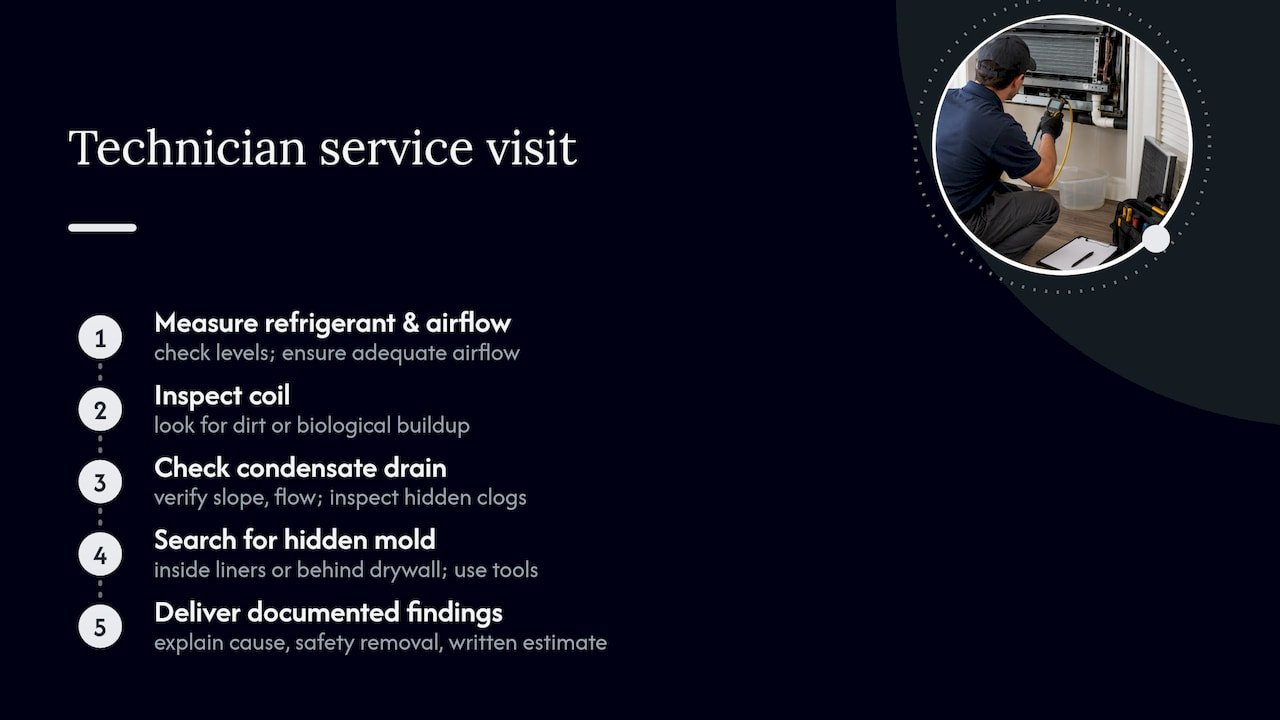
When we’re called out for a vinegar or musty AC smell, the visit follows a consistent pattern. We check refrigerant levels and airflow first, since low airflow lets moisture sit on the coil longer than it should. We inspect the coil itself for buildup, look at the condensate drain’s slope and flow, and check for clogs that aren’t visible from outside the unit. Hidden mold is the part DIY checks tend to miss: EPA’s remediation guidance notes that growth inside duct liners or behind drywall can produce a strong odor with no visible sign anywhere accessible.
A reputable visit should leave you with documented findings, not just a quick spray and an invoice. That means a clear explanation of what caused the smell, a safety-minded approach to removing any biological growth, and a written estimate before any repair work begins. Diagnosing the real source matters more than masking the smell, since the odor almost always comes back if the underlying moisture problem is never addressed.
— MDTECH
If you’d rather have a pro handle it
If the smell keeps coming back after you’ve cleared the filter and flushed the drain, it usually means the moisture source is somewhere you can’t easily reach, and that’s where a licensed technician earns their keep. We bring a safety-first approach to every visit: checking refrigerant, drains, and coil condition, then explaining what we find before any work starts.

Here’s what we focus on for AC odor problems specifically:
- Full diagnostic coverage, including condensate drain clearing, coil inspection, and airflow checks.
- Licensed technicians who document findings and provide upfront pricing before repairs begin.
- Local response across Orange County and Los Angeles County, with online appointment booking so you’re not stuck waiting on hold.
If a sour AC smell has become a recurring problem in your home, our air conditioning repair page has details on booking a visit, and our HVAC repair services cover deeper drain and coil issues when the problem goes beyond a simple cleaning.
FAQ
How do you get rid of a sour smell in your AC?
Start by replacing the filter and clearing the condensate drain with a shop vacuum or a vinegar and hot water flush, since trapped moisture is the usual cause. If the smell returns within a few days, the coil or ductwork likely needs a professional cleaning to remove hidden mold.
Does a gas leak smell like vinegar?
No. Natural gas carries a rotten-egg smell from the mercaptan added for safety, which is distinct from the sour, musty smell of microbial growth. If you smell rotten eggs rather than vinegar, leave the area and contact your gas utility immediately.
Is it bad if your AC smells like mildew?
A mildew smell usually means mold or bacteria have colonized a damp part of the system, and it’s worth addressing promptly rather than ignoring it. EPA guidance recommends professional help once visible growth covers more than 10 square feet or if occupants develop symptoms.
How long does it take for the vinegar smell to go away?
Once the moisture source is cleared, such as a flushed drain or a replaced filter, the smell typically fades within a day or two of normal system operation. If it lingers past that, the odor is likely coming from a spot you haven’t reached yet, like the coil or duct interior.
Should I have my ducts cleaned to fix the smell?
Only if your ducts show visible mold, pest debris, or heavy contamination, since EPA guidance notes that cleaning alone won’t fix odors caused by an unresolved moisture problem. Fix the underlying moisture source first, then consider duct cleaning if the smell persists.