
A musty AC smell almost always means mold, mildew, or bacteria have taken hold somewhere in the system, usually on the evaporator coil, in the condensate pan, or inside a damp filter. If the odor is strong, stop cooling for a moment, check the filter, and look for standing water near the unit. The fixes below walk you through DIY steps for both home and vehicle systems, plus the exact point where you should stop and call a technician.
TL;DR:
- Most musty odors in AC systems stem from moisture buildup on the evaporator coil, clogged drain lines, dirty filters, or duct leaks, not just dirty filters.
- Immediate professional attention is necessary if there is persistent mold, standing water that won’t drain, electrical odors, or evidence of refrigerant leaks.
- In vehicles, replacing the cabin filter, disinfecting the evaporator, and ensuring proper drain functioning typically resolve musty smells quickly.
- Routine maintenance, including coil cleaning and duct sealing, is critical for long-term odor prevention, especially in systems with duct leaks or ongoing humidity problems.
Table of Contents
- Why Does My AC Smell Musty in the First Place?
- How Do I Fix a Musty Smell From My Home AC?
- How Do You Get Rid of a Musty Smell in a Car’s AC?
- What’s the Best Maintenance Schedule to Prevent AC Odor?
- When Should You Call an HVAC Technician?
- How MDTech Services Diagnoses a Musty AC Smell
- What Actually Matters When Your AC Smells Musty
- Get a Professional Diagnosis Without the Guesswork
- Where This Information Comes From
- Sources
- FAQ
Why Does My AC Smell Musty in the First Place?
Moisture is the culprit almost every time. Your air conditioner cools air by passing it over a cold evaporator coil, and that process generates condensation. When that moisture lingers instead of draining away, it becomes a breeding ground for the bacteria and mold spores already floating through your ductwork.
Several specific trouble spots cause this repeatedly:
- Evaporator coil buildup. A biofilm layer forms on the coil surface, producing what technicians call “dirty sock syndrome.” It’s the reason the smell often hits hardest the moment the system kicks on, then seems to fade as air dilutes the concentration, according to Motor1’s reporting on car AC odor. That fade doesn’t mean the problem is solved. It just means the microbial volatile compounds got diluted, not eliminated.
- A clogged condensate drain line or damaged drain pan. Water backs up, sits, and grows mold instead of draining outside.
- A dirty or wet filter. A saturated filter traps moisture along with dust, turning into its own microbial reservoir.
- Ductwork contamination or leaks. Ducts running through attics or crawlspaces can draw in damp, musty air, especially where seals have failed.
- First-turn-on odor. After weeks of disuse, condensation sits stagnant inside the unit. The smell that greets you on the season’s first hot day often traces back to this simple buildup.
According to Bryant’s HVAC guidance, the majority of musty AC complaints trace back to one of these four sources. That’s good news. It means the fix is usually mechanical, not mysterious.
How Do I Fix a Musty Smell From My Home AC?
Work through these steps in order. Most homeowners solve the problem in the first two or three.
- Check and replace the filter. Pull it out and hold it up to a light. If you can’t see light through it, it’s overdue. A pleated filter with a moderate MERV rating balances filtration with airflow, and swapping it regularly during peak cooling season helps prevent it from becoming a moisture trap.
- Inspect the condensate drain pan and line. Look for standing water in the pan. If you find it, pour a cup of distilled vinegar down the drain line’s access point to break up algae and slime, then follow with warm water. A shop vacuum on the exterior drain outlet can pull out stubborn clogs.
- Run the blower fan alone for 15 to 20 minutes after the compressor shuts off. This dries out the coil and housing before moisture has a chance to settle in for the night.
- Wipe down accessible plenum surfaces and vent covers with a mild detergent solution. Skip bleach on metal ductwork unless the manufacturer specifically allows it, and always wear gloves and a mask when working near visible growth.
Pro Tip: Flush the condensate line once a month during cooling season, not just when you notice a smell. Prevention takes five minutes; a clogged line that backs up into your drain pan can take an afternoon to clean properly.
Stop immediately and call a technician if you find standing water that won’t clear, visible mold clinging to the cabinet interior, or any hint of an electrical or refrigerant odor. Those aren’t DIY situations. A closer look at how condensate drainage actually works can help you understand what you’re looking at before you decide whether to tackle it yourself.
How Do You Get Rid of a Musty Smell in a Car’s AC?
Vehicle AC systems trap moisture in a much smaller space, so the fixes are quicker but no less important.
- Find the cabin air filter, usually behind the glove box or under the hood near the windshield base, and replace it if it looks dark, damp, or dusty. Check the fresh-air intake housing at the same time.
- Apply a plenum or evaporator disinfectant spray. Consumer Reports recommends removing or replacing the cabin filter first so the disinfectant can reach the evaporator directly, then running the fan with doors open to ventilate the cabin afterward.
- Run the fan alone for a few minutes before shutting off the engine. This dries the evaporator surface the same way a fan-only cycle does at home.
- Look for a puddle under the car after driving with the AC on. That’s the evaporator draining correctly. No puddle can mean a blocked drain tube trapping moisture inside the housing.
Pro Tip: If the smell returns within a week of treating the plenum, the evaporator drain is likely still clogged. Spraying disinfectant treats the symptom, not a blocked drain.
If the odor persists after these steps, the evaporator core itself may need professional cleaning or the drain tube needs clearing from underneath the vehicle, work best left to an automotive AC specialist.
What’s the Best Maintenance Schedule to Prevent AC Odor?
A little consistency prevents almost every callback for musty smell complaints. Here’s the rhythm that keeps systems clean:
- Change filters every 30 to 90 days, tightening to monthly when the system runs constantly through summer.
- Flush the condensate line monthly during cooling season, and consider a condensate float switch that shuts the system down automatically if water backs up.
- Keep indoor relative humidity between 30% and 50%. The EPA’s mold guidance identifies humidity above roughly 60% as the threshold where mold growth accelerates inside HVAC systems. A standalone dehumidifier earns its cost quickly in humid climates or homes with poor attic ventilation.
- Schedule professional coil cleaning, UV-C light installation, or duct sealing if odors keep returning despite regular filter changes and drain flushing.
That last point matters more than most homeowners realize. Leaky ducts running through an attic or crawlspace can hold onto mold long after the indoor coil has been cleaned, which is why the smell sometimes comes right back within a season. Reviewing why filter inspection matters is a good starting point if you’re building your first real maintenance routine.
When Should You Call an HVAC Technician?
Some situations call for more than a filter change. Here’s where DIY stops being the right move:
- The smell persists after you’ve changed the filter and cleared the drain line.
- You see mold growing inside ducts, vents, or the air handler cabinet. The EPA sets roughly 10 square feet as the point where interior mold needs professional remediation rather than a homeowner cleanup.
- You notice any burning, electrical, or chemical smell, or something that resembles a refrigerant odor. Shut the system off and call immediately. Don’t wait for a scheduled tune up.
- Airflow feels weak, cooling has dropped off, or condensation keeps returning no matter how often you flush the line. That pattern usually points to a larger issue, like Trane’s guidance notes, such as an undersized unit or ducts that were never properly sealed.
Working through a structured troubleshooting process before you call can help you describe the problem accurately, which speeds up diagnosis considerably.
How MDTech Services Diagnoses a Musty AC Smell
On a first visit for odor complaints, our technicians work through the same checklist every time: filter condition, drain pan and condensate line, evaporator coil surface, duct returns, blower assembly, and any visible duct junctions showing gaps or moisture staining.
- Recommendations branch from what we find. Heavy coil biofilm points to a professional cleaning. Recurring humidity issues point toward a whole-home dehumidifier. Chronic recolonization after cleaning is often where UV-C lighting earns its cost.
- Safety comes first. If a technician spots exposed wiring near moisture, a refrigerant smell, or mold that exceeds a safe DIY scope, the system gets shut down on the spot and the homeowner gets a clear explanation of next steps.
- When you call, mention when the smell started, whether it’s stronger at startup, and whether you’ve seen any standing water. That detail alone often cuts diagnostic time in half.
What Actually Matters When Your AC Smells Musty
Most advice on this topic treats every musty smell as a filter problem. It isn’t. A dirty filter is the easiest fix and the least common root cause once a system has been running for more than a season or two. The bigger, more overlooked issue is drainage, a condensate line that’s partially clogged does more damage over three months than a dirty filter ever will, because it’s feeding standing water to mold colonies around the clock.
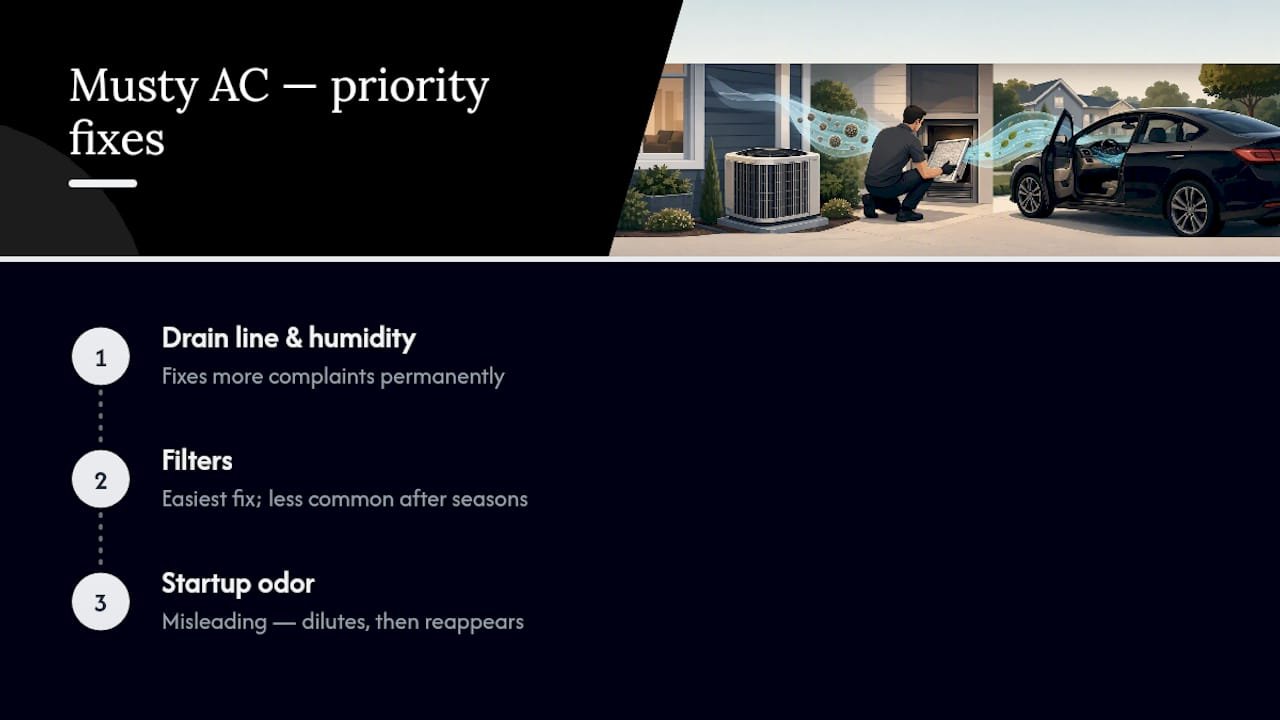
The conventional wisdom also undersells how much startup odor misleads people. That first blast of musty air when you turn the system on tricks homeowners into thinking the smell “goes away.” It doesn’t. It gets diluted by moving air, then concentrates again the next time the system sits idle. If you’re only troubleshooting when the smell is at its worst, you’re chasing a symptom that fluctuates by the hour.
Prioritize the drain line and humidity control first, filters second. That order fixes more musty AC complaints permanently than any spray, filter swap, or air freshener ever will.
— MDTECH
Get a Professional Diagnosis Without the Guesswork
Vinegar flushes and filter swaps solve plenty of musty smell cases, but not all of them. When the odor keeps coming back, or you’re not sure whether what you’re smelling is mold, a refrigerant leak, or something electrical, that’s a call for a licensed technician, not another trip to the hardware store. Mdtechservices handles air conditioning repair throughout Orange County and Los Angeles County, with technicians trained to inspect the coil, drain line, and duct connections in one visit rather than guessing at parts.

A typical service call covers a checklist including filter condition, condensate drainage, coil buildup, and duct integrity, with straightforward, upfront pricing before any work begins. If the diagnosis points to something bigger, like duct sealing or a full coil cleaning, you’ll know exactly what you’re paying for and why. Broader HVAC services cover everything from routine maintenance to full system repairs. Book an appointment online and get a technician out to trace the smell to its actual source, not just its symptom.
Where This Information Comes From

The guidance in this article draws on the EPA’s mold and humidity course, Consumer Reports’ testing on automotive AC disinfectant technique, and troubleshooting guidance published by Bryant and Trane, two of the more established manufacturer authorities on residential HVAC odor causes.
Sources
- EPA — Mold Course: Chapter 2
- How to get rid of the musty smell from your car’s air conditioner — Consumer Reports
- Your car’s AC stinks when you turn it on. Here’s why — Motor1
- Notice your air conditioner smells funny? Here’s what it means — Trane
FAQ
Should I Turn Off My AC If It Smells Musty?
Only if the smell is strong or paired with visible water, mold, or a burning or chemical odor. A mild musty smell during a filter change or drain flush is generally safe to work through with the system off temporarily, but electrical or refrigerant odors mean stop the system and call a technician right away.
How Do You Deodorize an Air Conditioner?
Replace the filter, flush the condensate drain line with vinegar and warm water, and run the blower fan alone for 15 to 20 minutes to dry out the coil. For vehicles, a plenum disinfectant spray applied after removing the cabin filter handles most cases.
How Do You Get Rid of a Musty Smell in the Air?
Start by keeping indoor relative humidity between 30% and 50%, since higher humidity is what feeds the mold and bacteria causing the odor. Pair that with regular filter changes and a working dehumidifier in humid climates.
Why Does My AC Smell Like Mold or Wet Dog?
That smell typically comes from biofilm on the evaporator coil or standing water in a clogged drain pan, both classic microbial growth sites inside the system. Cleaning the coil and clearing the drain line usually resolves it within a day.
When Should I Call MDTech Services Instead of Fixing It Myself?
Call when the smell returns after a filter change and drain flush, when you see mold larger than a small patch inside the cabinet, or when you notice any burning or refrigerant odor. Mdtechservices’ HVAC repair technicians can pinpoint whether the issue is the coil, ductwork, or something more serious in a single visit.