
Routine maintenance reduces downtime, lowers long-term repair costs, improves energy efficiency, and keeps your home or facility safe and insurable. The advantages of routine maintenance are not theoretical — preventive programs cut emergency maintenance calls by roughly 20–30% and reduce overall maintenance costs by 15–25%, according to Gatewise. For homeowners and property managers in Orange County and Los Angeles County, that translates directly into fewer surprise bills and more reliable equipment year-round.
The top six advantages at a glance:
- Reduced downtime: Scheduled checks catch problems before they shut equipment down.
- Lower repair and replacement costs: Small fixes cost far less than emergency replacements.
- Extended asset life: Consistent service can push HVAC systems to 15–20 years of reliable operation.
- Energy and efficiency gains: Well-maintained HVAC systems can save 10–20% on energy bills.
- Improved safety and compliance: Working smoke detectors, clean combustion systems, and controlled moisture protect occupants.
- Better resale value and insurability: Documented maintenance history supports property value and reduces insurance exposure.
Key Takeaways
Routine maintenance is the single most cost-effective way to reduce emergency repairs, extend equipment life, and protect your home’s value over time.
| Point | Details |
|---|---|
| Budget with the 1% rule | Set aside 1% of your home’s value annually for maintenance; increase to 3–4% for older properties. |
| Energy savings are real | Consistent HVAC service can cut energy bills by 10–20%, according to Temperature Control Services data. |
| Deferred costs multiply | Neglected maintenance can cost up to four times the price of timely upkeep, per Gallagher’s analysis. |
| Know when to call a pro | Gas appliances, refrigerant handling, and electrical panel work require a licensed, insured technician. |
| Mdtechservices covers both counties | Licensed HVAC, appliance, and plumbing service with written documentation across Orange and Los Angeles Counties. |
Table of Contents
- What are the advantages of routine maintenance, and how does it differ from repairs?
- How does a routine maintenance workflow actually run?
- Why does regular servicing deliver such strong returns?
- What routine maintenance tasks should you schedule, and how often?
- How much does routine maintenance cost, and what is the ROI?
- When does routine maintenance stop being worth it?
- How do you implement a maintenance plan and know when to call a pro?
- Mdtechservices keeps your home systems running year-round
- Sources
What are the advantages of routine maintenance, and how does it differ from repairs?
Routine maintenance is the practice of performing scheduled, recurring tasks on equipment or property to prevent failure before it occurs. Its core purpose is removing stressors — dirt, friction, minor leaks, worn seals — before they escalate into breakdowns. Most homeowners conflate maintenance with repair, but the distinction matters: maintenance removes the conditions that cause failure; repair addresses failure after it happens.
Three approaches define the field. Preventive maintenance is time-based: you change the HVAC filter every 30–90 days whether or not it looks dirty, because the schedule is the protection. Predictive maintenance is condition-based: a technician monitors refrigerant pressure or motor vibration and acts when readings drift outside normal range. Corrective maintenance is reactive: you call for service after the air conditioner stops cooling or the water heater starts leaking.
Routine maintenance sits firmly in the preventive category. It works best when applied consistently rather than perfectly. Industry analysis confirms that regular maintenance routines produce better outcomes than infrequent, comprehensive service windows — a simple monthly filter check beats a once-a-year deep inspection every time. For most homeowners and small-facility managers, that consistency is the whole game.
Stat to know: ENERGY STAR identifies dirt and neglect as the leading causes of HVAC inefficiency and failure — not age, not brand, not installation quality.
How does a routine maintenance workflow actually run?
A reliable maintenance program follows five stages: identify assets, schedule intervals, perform tasks, record results, and review to adjust. That loop, repeated consistently, is what converts reactive firefighting into predictable, manageable upkeep.
Step-by-step process:
- Build an asset inventory. List every system and appliance in your home or facility — HVAC units, water heater, refrigerator, washer/dryer, smoke detectors, gutters, and exterior components.
- Score by criticality and risk. Rank assets by what fails most expensively or dangerously. HVAC and gas appliances sit at the top; exterior paint sits lower.
- Set service intervals. Assign monthly, seasonal, or annual frequencies based on manufacturer guidance and local climate. Southern California’s heat and dust push HVAC filter changes toward the monthly end.
- Create task checklists. For each asset, write a short checklist. Example HVAC checklist: check/replace filter, inspect drain pan, clear condensate line, test thermostat, listen for unusual sounds.
- Assign responsibility. Decide which tasks you handle and which require a licensed technician. Gas combustion checks and refrigerant handling always go to a pro.
- Perform and document. Complete each task on schedule and note the date, condition found, and any parts replaced.
- Record results. Keep a maintenance log — a simple spreadsheet works. Documentation protects you during insurance claims and property sales.
- Review and adjust. Every six months, check whether any system is failing more often than expected and tighten its service interval accordingly.
Pro Tip: Tie maintenance tasks to existing calendar events. Schedule your HVAC filter check for the first day of each month alongside a bill payment, and it becomes automatic rather than optional.
Why does regular servicing deliver such strong returns?
Routine maintenance reduces emergency work orders, increases equipment efficiency, and lowers replacement frequency — making it a high-ROI operational practice for both homeowners and property managers. Each advantage compounds over time, and the cumulative effect is a home or facility that runs more reliably and costs less to operate.
Reduced downtime
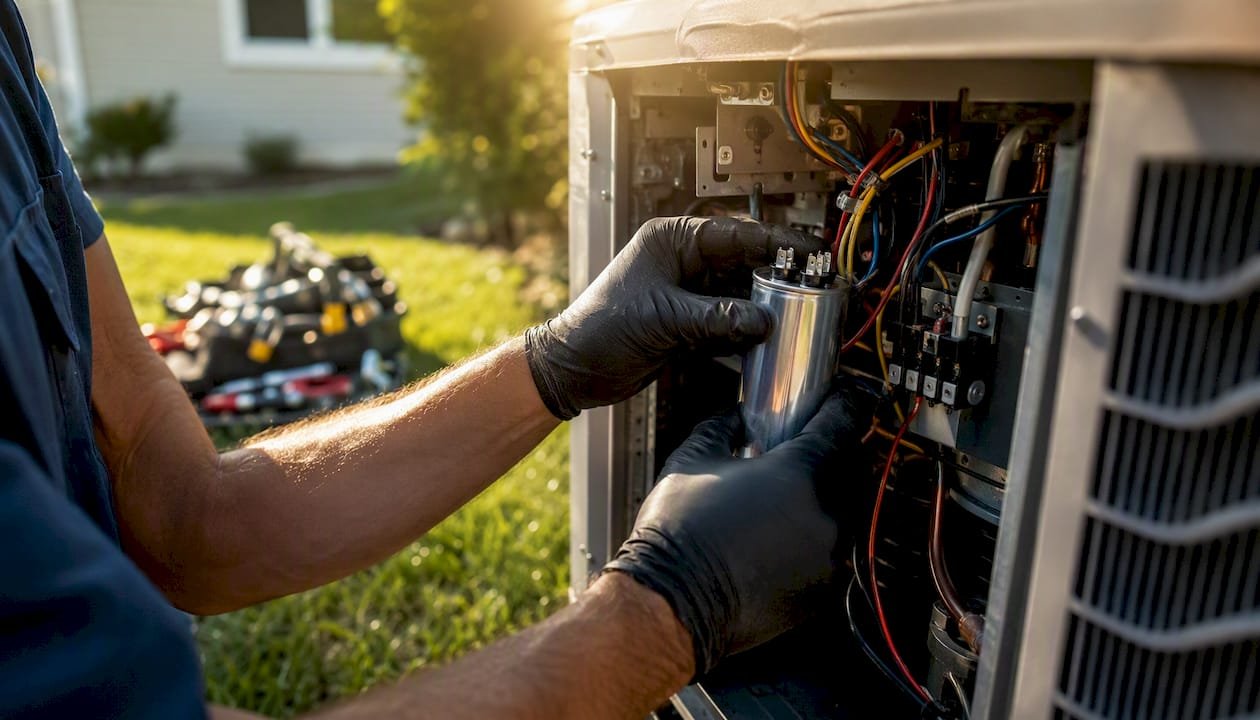
When you catch a failing capacitor during a pre-summer HVAC tune-up, you replace a $20–$50 part on your schedule. Skip that check and the capacitor fails on the hottest day in August, leaving you without cooling and facing a same-day emergency service call. Scheduled maintenance programs reduce breakdowns and urgent repairs by addressing wear before it reaches the failure threshold.
Lower repair and replacement costs
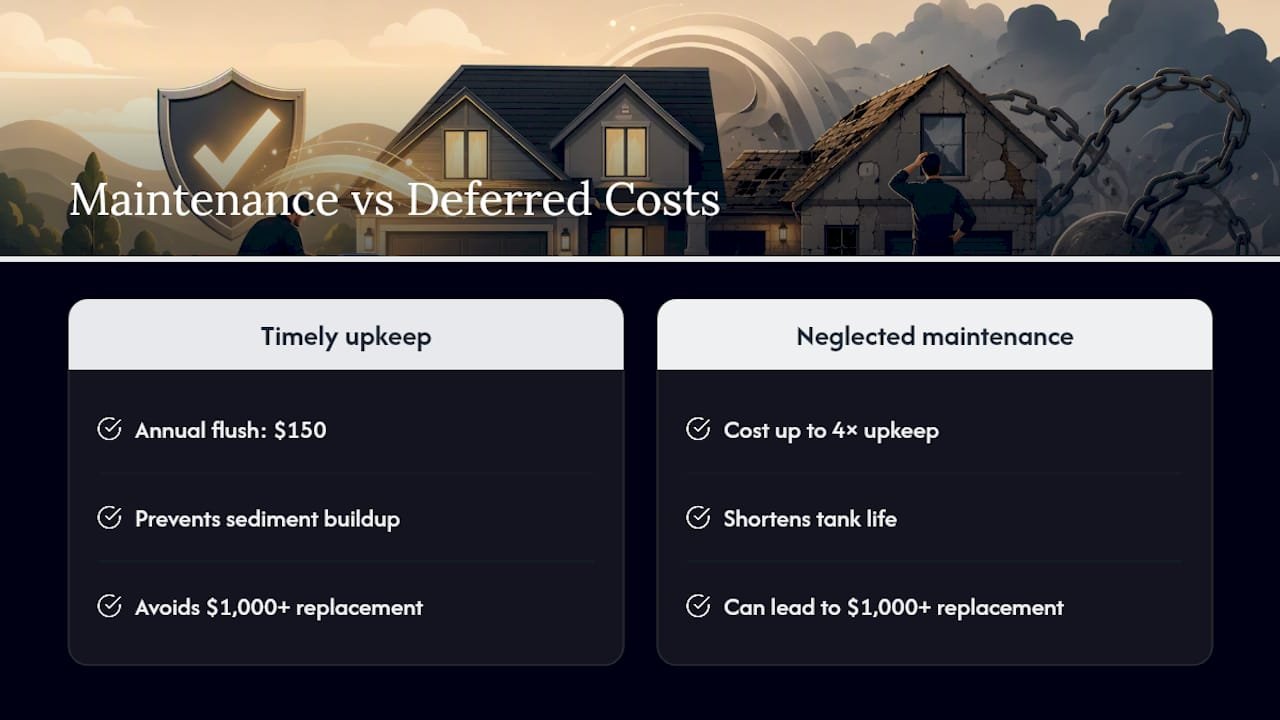
Deferred maintenance multiplies future costs. Industry guidance shows that neglected maintenance can cost up to four times the price of timely upkeep. A $150 annual water heater flush prevents sediment buildup that shortens tank life by years and can lead to a $1,000+ replacement. The math is straightforward.
Extended equipment life
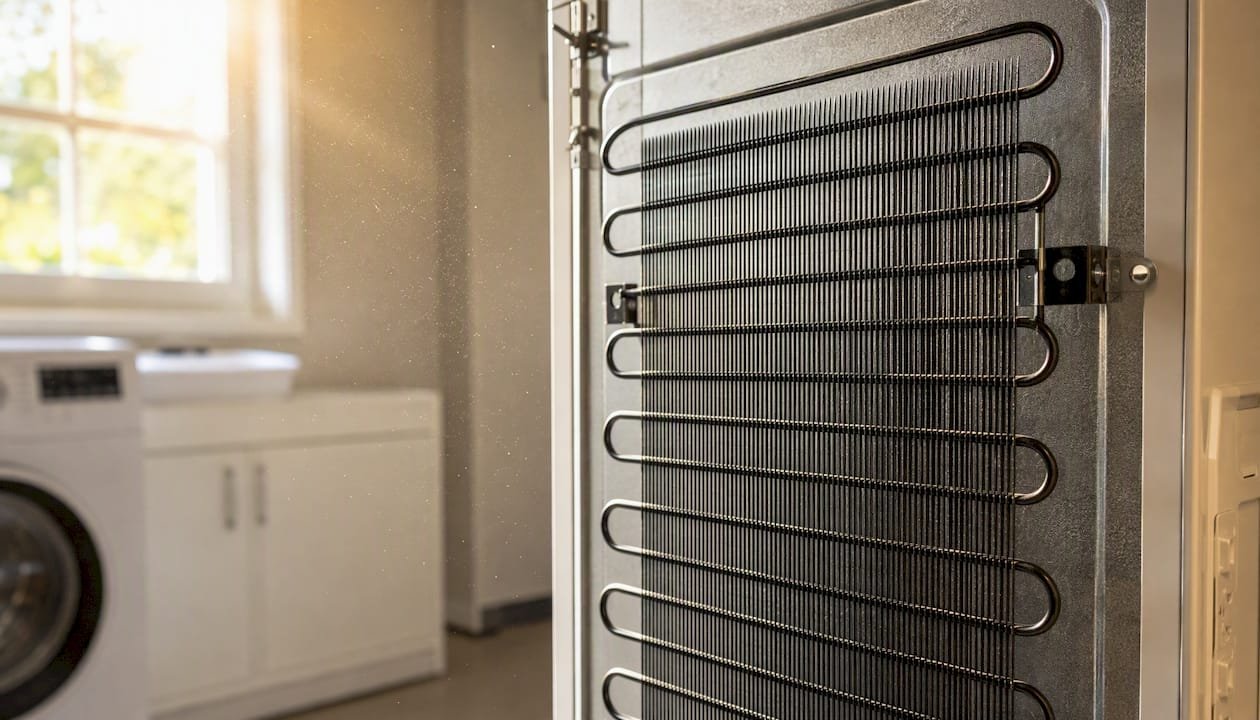
Consistent service extends the functional life of major systems. A well-maintained central air conditioner can reach 15–20 years of reliable operation; a neglected unit often fails in 10 or fewer. For appliance lifespan extension, the same principle applies — clean condenser coils on a refrigerator, and the compressor runs cooler and lasts longer.
Better energy efficiency
Dirty filters force HVAC systems to work harder, drawing more electricity for the same output. Regular HVAC maintenance commonly delivers 10–20% energy savings. In a California home running air conditioning eight months a year, that reduction is meaningful on every monthly utility bill. Smart maintenance habits like cleaning coils and checking refrigerant levels keep efficiency high without major investment.
Improved safety and liability reduction
Proactive maintenance prevents mold growth, keeps smoke and carbon monoxide detectors functioning, and improves indoor air quality — all of which directly protect occupant health. Gas appliances with poorly maintained combustion components present carbon monoxide risks that a licensed technician can identify and correct during a routine inspection. For landlords, documented safety maintenance also reduces liability exposure.
Easier insurance and resale
Documented preventive maintenance protects property value, reduces insurance exposure, and helps manage long-term costs. Insurers view well-maintained properties as lower risk. Buyers and their inspectors notice the difference between a home with a maintenance log and one with obvious deferred work.
Stat to know: Preventive maintenance programs report up to a 40% longer system life in some property programs, according to Gatewise’s analysis of multifamily property data.
Pro Tip: Start with your HVAC system and water heater. These two systems carry the highest replacement cost and the clearest ROI from routine service — getting them right first builds the habit and the savings that fund the rest of your program.
What routine maintenance tasks should you schedule, and how often?
Routine tasks vary by system, but the most impactful ones share a common trait: they are simple, inexpensive, and easy to skip until something breaks. Here are the highest-priority tasks by system, with frequencies you can drop directly into a calendar.
HVAC
- Replace or clean air filters: every 30–90 days (monthly in dusty or high-use conditions)
- Clean condenser and evaporator coils: annually, before cooling season
- Clear condensate drain line: seasonally
- Schedule a professional pre-season tune-up: annually (spring for AC, fall for heating)
Plumbing
- Inspect visible pipes and connections for leaks: monthly
- Flush water heater to remove sediment: annually
- Test pressure relief valve on water heater: annually
- Check plumbing safety basics and shut-off valve operation: semi-annually
Appliances
- Clean refrigerator condenser coils: every 6 months
- Test door seals on refrigerator and dishwasher: quarterly
- Clean dryer lint trap: after every load; clean duct annually
- Run cleaning cycle on dishwasher and washing machine: monthly
Roof, gutters, and exterior
- Clean gutters and downspouts: twice yearly (spring and fall)
- Inspect roof for missing or damaged shingles: annually
- Check caulking around windows and doors: annually
Safety devices
- Test smoke detectors and carbon monoxide detectors: monthly
- Replace batteries in detectors: annually (or when low-battery alert sounds)
- Replace smoke detector units: every 10 years
How much does routine maintenance cost, and what is the ROI?
Routine maintenance is an investment with predictable payback. On a $600,000 home — a reasonable baseline in Orange County — that is $6,000 per year. Gallagher’s guidance recommends scaling that figure to 3–4% for older properties or those in high-stress climates, because aging systems require more frequent attention.
The ROI case is concrete. A professional HVAC tune-up typically runs $80–$150. Skipping it and facing a compressor replacement costs $1,500–$2,500 or more. That single avoided repair pays for roughly 10–15 years of annual tune-ups. Deferred maintenance can cost up to four times the price of timely upkeep — a ratio that holds across HVAC, plumbing, and roofing.
Stat to know: Preventive maintenance programs reduce overall maintenance costs by 15–25% compared to reactive approaches, based on Gatewise’s property management data.
For written estimates on HVAC and appliance service in Orange County or Los Angeles County, contact a licensed local technician who can assess your specific systems and provide itemized quotes.
When does routine maintenance stop being worth it?
Routine maintenance has real limits, and recognizing them prevents wasted effort and money. Over-maintenance — servicing equipment more frequently than its design or condition warrants — adds cost without adding protection. A brand-new HVAC unit does not need the same inspection frequency as a 12-year-old system running in a dusty environment.
Upfront scheduling burden is a genuine disadvantage for busy homeowners. Building and sticking to a maintenance calendar takes time, and the benefits are invisible — you never see the emergency that did not happen. That invisibility makes it easy to deprioritize maintenance when budgets tighten, which is precisely when deferred costs start accumulating.
Poor execution is another risk. Maintenance performed incorrectly — a filter installed backward, a drain line cleared incompletely, a gas connection checked by someone without the proper license — can create the false confidence that a system is safe when it is not. Records that are incomplete or inaccurate undermine the whole program, because you cannot adjust intervals or spot patterns without reliable data.
Red flags that your maintenance program is not working:
- The same system fails repeatedly despite scheduled service
- Maintenance costs are rising year over year without clear cause
- You cannot produce a service record when an insurer or buyer asks for one
- A technician consistently finds the same deferred problem on every visit
Pro Tip: Audit your program once a year. Pull your maintenance log, count how many tasks were completed on schedule, and check whether any system generated an unplanned repair. If one system accounts for most of your reactive costs, its service interval needs to tighten — or it needs replacement evaluation.
How do you implement a maintenance plan and know when to call a pro?
Start with a simple checklist and escalate to licensed professionals for any task that involves gas, refrigerant, major electrical work, or warranty-critical components. That division of labor keeps costs manageable while protecting safety.
Seasonal maintenance checklist:
Pre-summer (April/May):
- Replace HVAC filter and schedule a professional AC tune-up.
- Clear condensate drain line and inspect drain pan for standing water.
- Test all smoke and CO detectors; replace batteries if needed.
- Inspect plumbing under sinks and around the water heater for leaks.
- Clean refrigerator condenser coils and test door seals.
- Clear gutters of spring debris.
Pre-winter (October/November):
- Schedule a heating system inspection with a licensed HVAC technician.
- Flush water heater and test pressure relief valve.
- Check caulking and weatherstripping on windows and doors.
- Inspect roof and gutters after fall leaf drop.
- Test smoke and CO detectors again.
- Verify dryer duct is clear before increased indoor use.
When to hire a licensed professional:
Gas appliance combustion checks, refrigerant handling, and any work involving your electrical panel require a licensed technician. These are not tasks where DIY saves money — they are tasks where an error creates a safety hazard. When hiring, verify the technician holds a current state license, carries liability insurance, and provides written documentation of work performed. Ask specifically whether the service includes a written report and whether parts are under warranty.
For step-by-step HVAC maintenance guidance that clarifies what homeowners can handle versus what requires a pro, a detailed task breakdown helps you prepare before the technician arrives.
Pro Tip: Keep a dedicated folder — physical or digital — for every service receipt, technician report, and parts invoice. When you sell the property or file an insurance claim, that folder is worth far more than its weight in paper.
What Mdtechservices sees most often in Orange and Los Angeles Counties
The most common pattern we encounter is deferred HVAC maintenance that compounds quietly over two or three seasons. A homeowner skips one pre-summer tune-up, then another, and by the time the system fails it needs a blower motor, a capacitor, and a coil cleaning — a bill that dwarfs several years of annual service visits. The fix is straightforward: schedule your tune-up in April before the heat arrives, change your filter monthly during peak cooling season, and call a licensed technician the moment you notice reduced airflow or unusual sounds. Mdtechservices serves homeowners across Orange County and Los Angeles County with licensed HVAC, appliance, and plumbing technicians who document every service visit so your records stay current.
Mdtechservices keeps your home systems running year-round
When your HVAC, appliances, or plumbing need professional attention, Mdtechservices provides licensed, responsive service across Orange County and Los Angeles County. Skipping seasonal tune-ups is where most homeowners lose money — a pattern we see repeatedly, and one that a single annual service visit prevents.
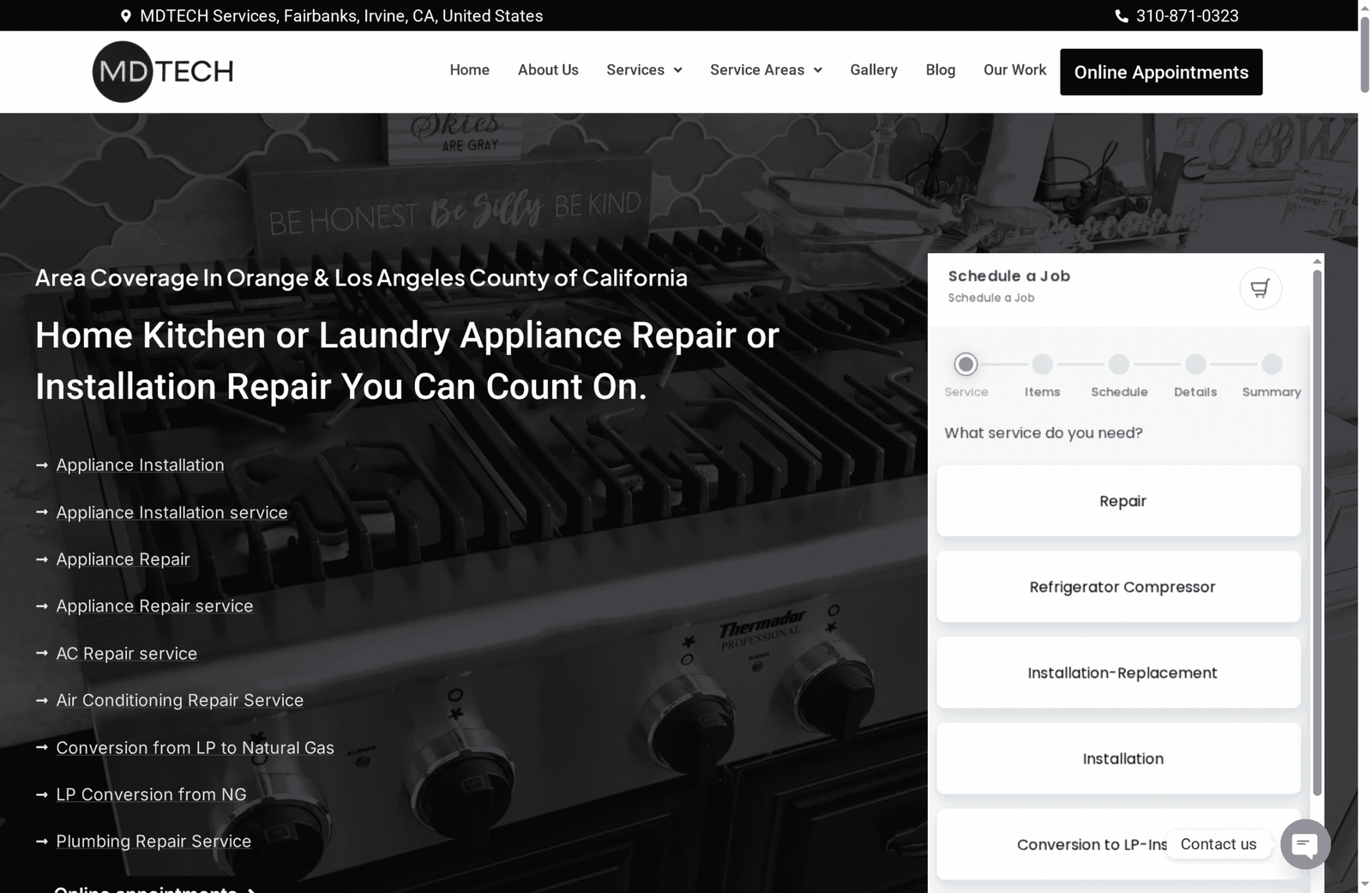
Mdtechservices offers seasonal HVAC tune-ups, appliance maintenance checks, and plumbing inspections that give you documented proof of service for insurance and resale purposes. Every visit includes a written report, and our technicians handle warranty documentation so you stay covered.
- HVAC tune-ups: Filter check, coil cleaning, drain line clearing, thermostat test, and written condition report.
- Appliance maintenance: Coil cleaning, seal testing, and performance checks for refrigerators, washers, dryers, and more.
- Plumbing inspections: Leak checks, water heater flush, and pressure relief valve testing.
- Priority scheduling: Book online and choose a time that works for your calendar.
Ready to protect your home investment? Schedule your appliance or HVAC service with Mdtechservices online today, or call us directly to speak with a licensed technician about your specific systems.
Sources
- How to Keep Your HVAC System Working Efficiently | ENERGY STAR
- The ROI of Preventive Maintenance in Property Management (Gatewise)
- The Complete Guide to Benefits of Regular HVAC Maintenance | Temperature Control Services
- Proactive home maintenance is more cost-effective than repairs (Gallagher, AJG)
- Scheduled Maintenance Explained: Definition, Benefits & How to (MaintainX)
- Real estate and housing maintenance and occupant health coverage (AP News)