
TL;DR:
- Heating, cooling, and water heating cause the majority of high energy bills in American homes.
- Improving HVAC maintenance, sealing leaks, and adjusting thermostat settings can significantly lower costs, while upgrading appliances and understanding rate structures also help reduce expenses.
Heating, cooling, and water heating are the leading reasons for high energy bills in American homes. HVAC systems alone consume about 46% of average household electricity, and water heaters add another 18%. That means nearly two-thirds of your electricity bill comes from just two systems before you turn on a single light. Utility rate hikes, phantom power loads, and aging appliances compound the problem further. Understanding where your money actually goes is the first step toward doing something about it.
How do HVAC systems drive up energy bills?
HVAC is the single largest energy consumption factor in most homes. Heating and cooling account for roughly 46% of average U.S. home electricity use. That share grows fast when the system is not running at full efficiency.
Dirty filters and refrigerant problems
A clogged air filter forces your system to work harder to move the same amount of air. Dirty HVAC filters reduce efficiency by about 15%, and low refrigerant levels cause the compressor to run longer cycles. Longer cycles mean more electricity consumed per hour of cooling or heating. Many homeowners only notice the problem when the bill arrives, not when the system first starts struggling.
Duct leaks and air sealing gaps
Duct leakage is one of the most expensive and least visible problems in a home. Leaky ducts can waste 20%–30% of all conditioned air before it reaches the rooms you are trying to heat or cool. That air is paid for and then lost inside walls, attics, or crawl spaces. Sealing ducts delivers one of the highest returns on investment of any home efficiency upgrade.
Thermostat settings and peak pricing
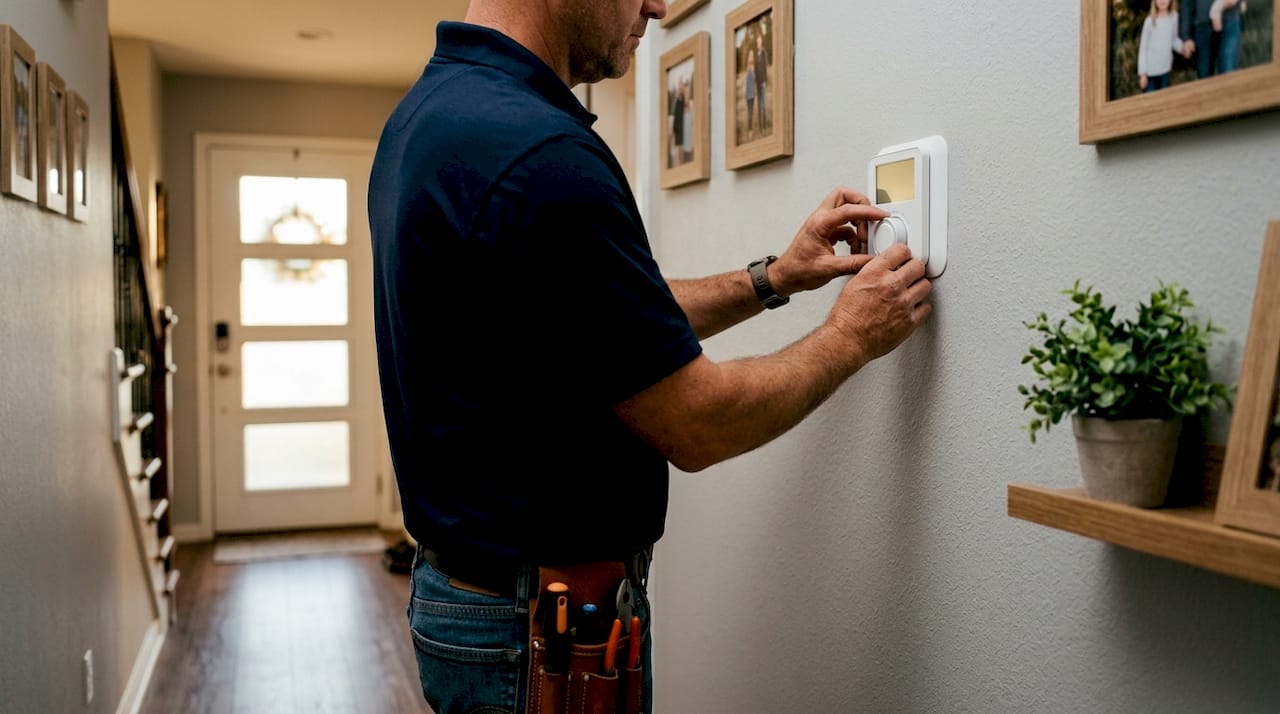
Thermostat behavior directly affects your monthly total. Setting the temperature too low in summer or too high in winter adds unnecessary runtime hours. Time-of-Use rates in some regions make peak-hour electricity 3–5 times more expensive than off-peak. Running your HVAC at full capacity during those peak windows multiplies the cost of every hour of operation.
Here are the most common HVAC-related causes of high bills:
- Filters not replaced every 1–3 months
- Refrigerant leaks causing extended compressor runtime
- Duct leaks losing conditioned air before delivery
- Thermostat set too aggressively during peak rate hours
- Aging systems running 20%–40% less efficiently than modern units
- Air leaks around windows, doors, and electrical outlets
Pro Tip: Set your thermostat to shift temperatures by 7–10 degrees during the hours you are away or asleep. This single habit can meaningfully reduce HVAC runtime without sacrificing comfort.
For more guidance on keeping your system running efficiently, the HVAC efficiency tips from Mdtechservices cover the most common performance issues homeowners face.
What role do appliances and home inefficiencies play?
Appliances and home construction gaps are the second major category of high energy costs causes. Electric water heaters alone use about 18% of household electricity. That is more than refrigerators and dryers combined.
Water heater inefficiencies
Most water heaters are set to 140°F at the factory. Dropping the temperature to 120°F reduces standby heat loss without affecting daily use. Sediment buildup at the bottom of the tank also forces the heating element to work harder, raising costs over time. Flushing the tank once a year removes that buildup and restores efficiency.
Phantom loads and standby power
Phantom power is the electricity devices draw while plugged in but not actively in use. Phantom loads contribute about 8% of residential electricity use, costing the average household roughly $156 per year. That is a meaningful annual expense for doing nothing at all. Plugging electronics into power strips and switching them off when not in use eliminates most of this waste.
Outdated appliances and poor insulation
Older appliances consume significantly more electricity than ENERGY STAR certified models. A refrigerator from 2005 can use twice the electricity of a current model the same size. Air leaks through outlets, windows, and door frames let conditioned air escape constantly. A DIY home energy audit can identify these inefficiencies and lead to a 5%–30% reduction in energy use without major investment.
Common appliance and home inefficiency issues to check:
- Water heater set above 120°F
- Sediment buildup in the water heater tank
- Electronics and chargers left plugged in when not in use
- Refrigerators, dryers, or dishwashers more than 10–15 years old
- Gaps around electrical outlets on exterior walls
- Missing or thin attic insulation
Pro Tip: Walk your home with a stick of incense near windows, outlets, and door frames on a windy day. Smoke movement reveals air leaks you can seal with caulk or weatherstripping for a few dollars.
Upgrading older equipment is one of the most reliable ways to lower energy costs. The benefits of energy efficient appliances page from Mdtechservices explains what to look for when replacing older units.
How do utility rate structures cause unexpectedly high bills?
Your bill can rise sharply even when your usage stays flat. Rate increases are a separate driver of high energy costs, and they are often invisible until the bill arrives.
Residential electricity prices rose 31% nationally between 2020 and 2025. That increase happened regardless of how much electricity any individual household used. A home with identical consumption in 2020 and 2025 would still see a dramatically higher bill.
Many utilities automatically enroll customers in Time-of-Use plans. Under these plans, electricity during peak hours costs significantly more than during off-peak periods. If you run the dishwasher, dryer, or air conditioner between 4:00 PM and 9:00 PM, you pay the highest rate available. Shifting those tasks to mornings or late evenings can reduce costs without reducing comfort.
Billing errors also cause unexpected spikes. Estimated meter readings, billing cycle changes, and rate tier resets can all produce a bill that does not reflect actual usage. Checking your kilowatt-hour (kWh) consumption rather than just the dollar total tells you whether the spike is from usage or from rate changes.
Key rate-related factors to review on your bill:
- Current rate per kWh compared to prior months
- Whether you are enrolled in a Time-of-Use plan
- Whether the meter reading is actual or estimated
- Any new fixed charges, delivery fees, or fuel adjustments
- Local Public Utility Commission notices about rate changes
What practical steps can reduce high energy bills effectively?
Reducing your electricity bill requires addressing both usage and rate exposure. The most effective steps combine physical improvements with behavioral changes.
- Seal air leaks and add insulation. Proper air sealing and insulation can reduce heating and cooling costs by 15% or more. Focus on attic hatches, rim joists, and gaps around pipes and wires first.
- Switch to ENERGY STAR LEDs. Replacing incandescent bulbs with LEDs uses 75% less energy and the bulbs last 25 times longer. The payback period is typically under one year.
- Lower your water heater temperature. Set it to 120°F to cut standby heat loss. This one adjustment costs nothing and reduces water heating energy use immediately.
- Shift major appliance use off-peak. Run the dishwasher, washing machine, and dryer before noon or after 9:00 PM if you are on a Time-of-Use plan.
- Conduct a DIY energy audit. Check insulation levels, test doors and windows for drafts, and review appliance ages. A thorough audit can identify savings of 5%–30% without professional help.
- Schedule HVAC maintenance annually. Clean filters, check refrigerant levels, and inspect ducts every year. A well-maintained system runs more efficiently and lasts longer.
- Explore rebates for upgrades. Federal and state incentives can make upgrading to efficient heat pumps or ENERGY STAR appliances more affordable than the sticker price suggests.
| Action | Estimated impact |
|---|---|
| Air sealing and insulation | 15% or more reduction in heating/cooling costs |
| LED bulb replacement | 75% less energy per bulb vs. incandescent |
| Water heater set to 120°F | Measurable reduction in standby heat loss |
| Off-peak appliance scheduling | Lower cost per kWh on Time-of-Use plans |
| Annual HVAC maintenance | Restores up to 15% lost efficiency from dirty filters |
Pro Tip: Before spending money on upgrades, call your utility and ask for a free or low-cost home energy audit. Many utilities in California and across the U.S. offer them, and they often include rebate information specific to your rate plan.
Key Takeaways
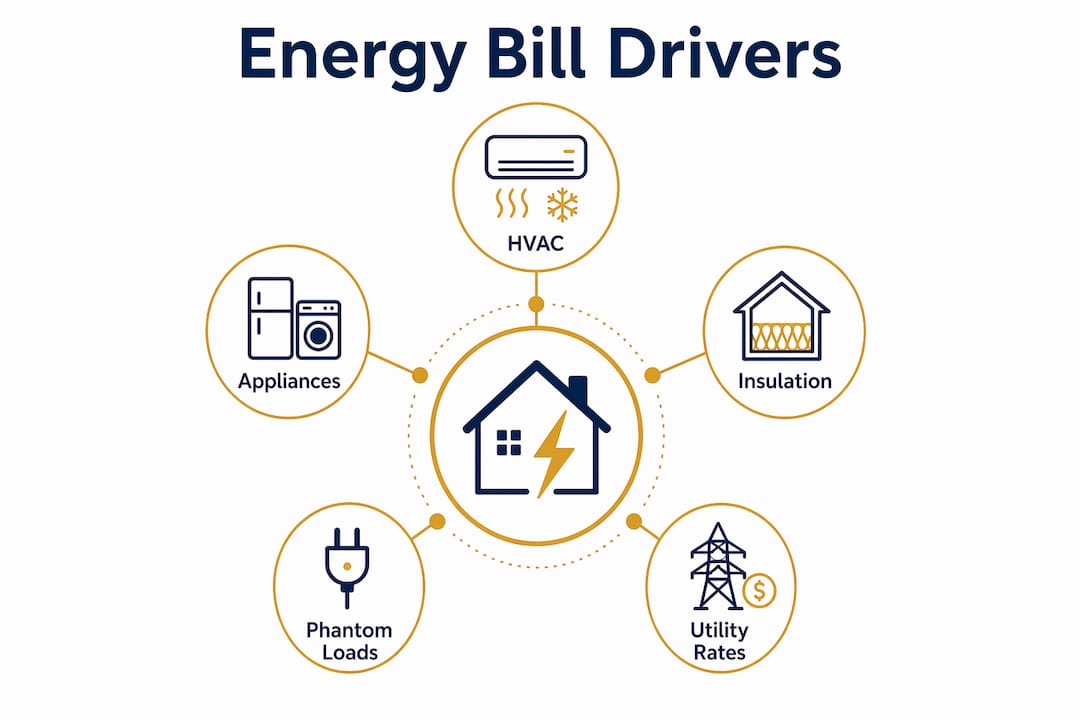
HVAC systems, inefficient appliances, and utility rate increases are the three primary drivers of high home energy bills, and each one has a direct, practical fix.
| Point | Details |
|---|---|
| HVAC dominates consumption | Heating and cooling account for about 46% of home electricity use. |
| Phantom loads cost real money | Standby power costs the average household roughly $156 per year. |
| Rate hikes hit independent of usage | Electricity prices rose 31% nationally from 2020 to 2025. |
| Air sealing pays off fast | Sealing leaks and adding insulation can cut heating/cooling costs by 15% or more. |
| Maintenance prevents silent losses | Dirty filters alone reduce HVAC efficiency by about 15%. |
What we have learned from years of home service calls
High energy bills are rarely caused by one thing. In our experience at Mdtechservices, the most common scenario is a combination of an aging HVAC system, a water heater running hotter than necessary, and a handful of phantom loads that nobody has thought about in years. Each one alone is manageable. Together, they produce a bill that feels impossible to explain.
The biggest misconception we see is homeowners blaming their appliances prematurely. A refrigerator or dryer gets replaced when the real culprit is a refrigerant leak in the HVAC or a duct system losing a quarter of its conditioned air. Replacing the appliance does not fix the bill. Diagnosing the actual source does.
Rate plan awareness is also underestimated. Many households in California are on Time-of-Use plans without fully realizing it. Running the air conditioner at 6:00 PM in july costs dramatically more than running it at 10:00 AM. That behavioral shift alone can reduce a bill without touching a single piece of equipment.
The most durable approach combines routine maintenance, targeted upgrades, and rate-aware habits. None of those require a large upfront investment. They require attention and consistency.
— MDTECH
Mdtechservices can help you lower your home energy costs
If your energy bill keeps climbing and you are not sure why, the problem is often a system that needs professional attention, not just a behavioral fix.

Mdtechservices serves homeowners and renters across Orange County and Los Angeles County with licensed appliance repair, HVAC repair, and installation services. Our technicians identify the equipment issues that drive up bills, from refrigerant leaks and dirty coils to failing water heaters and outdated appliances. If your HVAC system is the source of the problem, our HVAC repair guide explains what the repair process looks like and what to expect. For appliance-related energy waste, our appliance repair services cover diagnosis, repair, and replacement guidance. Call us or book online to schedule a service visit.
FAQ
What uses the most electricity in a home?
Heating and cooling systems consume about 46% of average U.S. home electricity, making HVAC the largest single energy expense for most households.
Why did my electric bill spike with no change in usage?
Utility rate increases, Time-of-Use plan enrollment, or estimated meter readings can raise your bill even when your kilowatt-hour consumption stays the same. Residential electricity prices rose 31% nationally between 2020 and 2025.
What is phantom power and how much does it cost?
Phantom power is the electricity devices draw while plugged in but switched off. It accounts for about 8% of residential electricity use and costs the average household roughly $156 per year.
How much can air sealing and insulation reduce my bill?
Proper air sealing and insulation can reduce heating and cooling costs by 15% or more, making it one of the highest-return improvements a homeowner can make.
How often should I replace my HVAC filter?
Replace your HVAC filter every 1–3 months depending on usage and household conditions. A dirty filter reduces system efficiency by about 15% and forces longer, more expensive run cycles.