
TL;DR:
- Gas safety involves proper installation, maintenance, and monitoring of appliances to prevent hazards like carbon monoxide poisoning and explosions. Regular inspections, functioning CO detectors, and prompt responses to faults are essential for safeguarding households. Both landlords and tenants have legal responsibilities to ensure ongoing gas safety compliance.
Gas safety is defined as the practice of ensuring all gas appliances, pipework, and ventilation systems are properly installed, maintained, and monitored to prevent deadly hazards like carbon monoxide poisoning and gas explosions. The importance of gas safety cannot be overstated. Carbon monoxide (CO) is colorless and odorless, meaning you cannot detect it without a dedicated alarm. Faulty appliances, blocked flues, and poor ventilation are the leading causes of preventable gas incidents in residential homes. Whether you own or rent, understanding your responsibilities and taking proactive steps protects everyone in your household.
What are the main risks of neglecting gas safety at home?
Gas appliance problems can cause carbon monoxide poisoning and fires or explosions, and CO is completely undetectable without alarms. That single fact makes neglecting gas safety one of the most dangerous choices a homeowner or renter can make.
The most common causes of gas safety failures include:
- Improper installation: Gas appliances installed without a licensed professional create immediate risks. Connections may leak, and combustion may be incomplete.
- Poor maintenance: Appliances that go years without servicing develop faults that allow CO to build up inside living spaces.
- Blocked flues: A blocked or damaged flue traps combustion gases inside your home instead of venting them outside. Poor ventilation and blocked flues contribute significantly to CO poisoning risks beyond appliance malfunction alone.
- Worn pipework: Corroded or damaged gas lines can leak natural gas, which is flammable and explosive.
Carbon monoxide poisoning symptoms include headaches, dizziness, nausea, confusion, and shortness of breath. These symptoms are easy to dismiss as a cold or fatigue, which makes CO especially dangerous. Severe exposure causes loss of consciousness and death.
Smoke alarms do not detect carbon monoxide. CO detectors must be installed near sleeping areas and in every room with a combustion appliance. Symptoms may not wake people from sleep, which leads to fatal outcomes.
Natural gas does have an added odorant that gives it a rotten egg smell, making leaks easier to notice. CO has no such warning signal. That difference is why knowing proper emergency sequence is critical to safety in any gas-related incident.
How can you ensure gas appliance safety and prevent incidents?
Preventing gas incidents comes down to consistent habits and professional support. The following steps represent the best practices for gas safety that every homeowner and renter should follow.
- Schedule annual professional inspections. Using a Gas Safe registered professional for gas work and scheduling annual inspections are among the best ways to prevent domestic gas appliance incidents. A typical inspection covers appliances, pipework, flues, and CO alarm testing, and takes around 45 minutes.
- Install CO detectors in every room with a gas appliance. Place them near sleeping areas as a priority. Test them monthly and replace batteries at least once a year.
- Check ventilation regularly. Vents and air bricks around gas appliances must stay clear. Furniture, storage, or building modifications can accidentally block airflow and raise CO risk. Learn more about venting gas appliances and why it matters for your home’s safety.
- Never attempt DIY gas repairs. Gas work requires a licensed professional. Attempting repairs yourself creates leak risks and voids appliance warranties.
- Report faults immediately. If an appliance behaves unusually, such as producing yellow or orange flames instead of blue, producing soot marks, or making unfamiliar sounds, stop using it and call a professional.
- Know what to do when an alarm sounds. Turn off gas appliances if it is safe to do so, open windows, evacuate the building, and call emergency services from outside.
For renters, gas appliance safety is a shared responsibility. Landlords must arrange annual inspections and provide safety certificates. Tenants are responsible for not blocking vents, reporting faults promptly, and maintaining CO alarms between inspections.
Pro Tip: Schedule your annual gas safety check at the same time each year, such as before winter heating season begins. Consistent scheduling prevents gaps in coverage and keeps your appliances running safely through the months of heaviest use.
What are the legal requirements for gas safety compliance?
Gas safety regulations set clear obligations for both landlords and tenants. Understanding these rules protects you legally and physically.
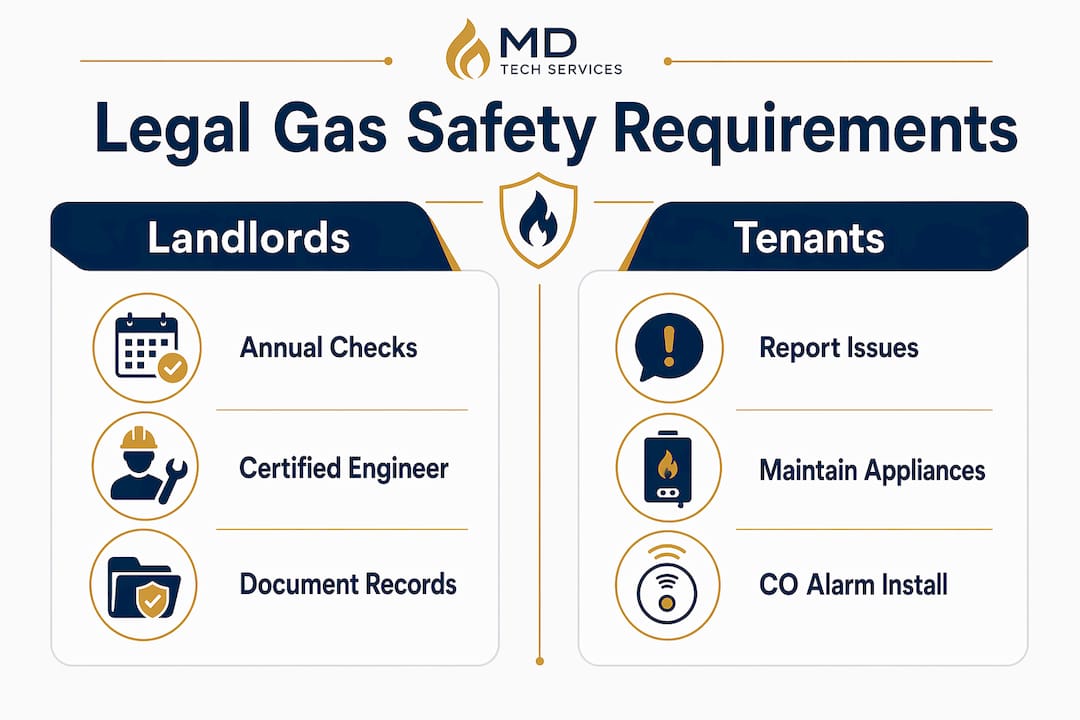
| Party | Obligation | Frequency / Deadline |
|---|---|---|
| Landlord | Arrange gas safety check by a registered engineer | Every 12 months |
| Landlord | Provide safety certificate to tenants | Within prescribed timeframe after check |
| Landlord | Keep safety records | Minimum 2 years |
| Landlord | Install CO alarms in rooms with fixed combustion appliances | Before tenancy begins |
| Tenant | Test CO alarms and report faults | At tenancy start and ongoing |
Annual gas safety checks are legally required for landlords in Great Britain, performed by Gas Safe registered engineers, with records provided to tenants. Non-compliance carries serious consequences, including fines and criminal charges. That legal exposure reflects how seriously regulators treat gas safety failures.
One distinction worth understanding: a gas safety check and a routine service are not the same thing. Gas safety checks focus on whether appliances operate safely, while maintenance checks focus on performance and efficiency. You need both, but they serve different purposes.
Regulations effective from 2022 require that CO alarms be installed in every room containing a fixed combustion appliance. Landlords must test alarms at the start of each tenancy. Tenants must maintain those alarms throughout the tenancy. This shared responsibility model means neither party can ignore the obligation.
Record keeping is not just a legal formality. Documented inspection history helps identify recurring issues, supports insurance claims, and demonstrates due diligence if an incident ever occurs. Scheduling inspections and storing certificates in a consistent location removes the risk of missed deadlines. You can also review gas line inspection practices to understand what a thorough compliance check should cover.
How should you respond to a gas leak or CO alarm?
A gas emergency requires a specific sequence of actions. Doing the wrong thing, such as flipping a light switch or using your phone indoors, can trigger an explosion or delay evacuation.
Follow these steps immediately:
- Do not operate any electrical switches, lighters, or ignition sources. A single spark can ignite leaked gas.
- Do not investigate the source yourself. Many accidents result from improper home responses to gas emergencies. Leave that work to professionals.
- Open windows and doors if you can do so quickly without operating electrical controls.
- Evacuate everyone from the building immediately. Do not stop to collect belongings.
- Call emergency services from outside the building. In the U.S., contact your gas utility provider and 911 if you suspect a leak or CO exposure.
- Do not re-enter the building until emergency services or a qualified engineer confirms it is safe.
If a CO alarm activates, turn off gas appliances if it is safe to do so, report the issue to your landlord if you rent, and request a registered engineer inspection rather than attempting to investigate yourself. Renters should document the alarm event and their report to the landlord in writing.
Pro Tip: Save your gas utility’s emergency number in your phone right now. In a real emergency, you will not have time to search for it. Colorado Springs Utilities, Southern California Gas Company, and most regional providers publish 24-hour emergency lines on their websites.
Detection technology is your first line of defense. CO is undetectable by human senses, which means alarms and proper appliance venting are the only reliable safeguards against poisoning. A working CO detector gives you the warning time that your senses cannot.
Key takeaways
Gas safety at home depends on working CO detectors, annual professional inspections, proper ventilation, and knowing exactly how to respond when something goes wrong.
| Point | Details |
|---|---|
| CO is undetectable without alarms | Install CO detectors in every room with a gas appliance, especially near sleeping areas. |
| Annual inspections are non-negotiable | A licensed professional should inspect appliances, pipework, and flues every 12 months. |
| Regulations protect renters and owners | Landlords must provide safety certificates; tenants must maintain alarms and report faults. |
| Emergency response follows a strict sequence | Evacuate first, avoid ignition sources, and call professionals before re-entering. |
| Safety checks and servicing are different | A safety check confirms safe operation; a service improves performance. You need both. |
What we see most often gets overlooked in gas safety
After working with homeowners and renters across Orange County and Los Angeles County, the pattern we see most often is not dramatic negligence. It is quiet drift. People install a CO detector when they move in, and then never think about it again. Batteries die. Alarms age past their rated lifespan, typically 5–7 years, and nobody replaces them. The appliance keeps running, and the false sense of security grows.
The second most common gap is ventilation. Homeowners focus on the appliance itself, scheduling a service when the furnace sounds rough or the water heater runs slow. What they miss is the flue and the airflow around the unit. A perfectly functioning burner can still produce dangerous CO levels if the exhaust path is partially blocked. Professional checks must include flue and ventilation inspections, not just burner adjustments.
Renters often assume gas safety is entirely the landlord’s problem. That assumption is understandable but wrong. Proactive tenant actions to respond and report problems are equally important. If you notice a yellow flame, a persistent headache that clears when you leave the house, or an alarm that keeps triggering, report it in writing and follow up. Do not wait for the landlord to notice.
The most reliable approach we have seen is simple: schedule your annual check, test your alarms monthly, keep your vents clear, and never touch gas connections yourself. That routine covers the vast majority of risks. The benefits of regular maintenance go beyond safety alone, but safety is always the first reason to do it.
— MDTECH
Professional gas appliance services you can count on
Keeping your gas appliances safe requires more than good intentions. It requires licensed professionals who know what to look for and how to fix it correctly the first time.

Mdtechservices provides certified appliance repair, installation, and inspection services for homeowners and renters throughout Orange County and Los Angeles County. Our licensed technicians inspect gas appliances, check ventilation systems, and handle repairs that keep your home safe and your appliances running reliably. We also specialize in LP to Natural Gas conversions, so every connection meets current safety standards. If your appliances need attention, do not wait for a problem to escalate. Schedule a professional appliance repair with Mdtechservices today and get the peace of mind that comes with a properly serviced home.
FAQ
What is gas safety and why does it matter at home?
Gas safety refers to the proper installation, maintenance, and monitoring of gas appliances and systems to prevent hazards like carbon monoxide poisoning, fires, and explosions. It matters because CO is odorless and colorless, making it impossible to detect without a dedicated alarm.
How often should gas appliances be inspected?
Gas appliances should be inspected by a licensed professional every 12 months. A typical inspection covers appliances, pipework, flues, and CO alarm testing, and takes approximately 45 minutes.
Do smoke alarms protect against carbon monoxide?
No. Smoke alarms do not detect carbon monoxide. You need a separate CO detector installed in every room with a gas appliance, particularly near sleeping areas.
What should i do if i smell gas or a CO alarm goes off?
Do not operate any electrical switches or ignition sources. Evacuate the building immediately, call emergency services from outside, and do not re-enter until a qualified engineer confirms the space is safe.
Are landlords or tenants responsible for gas safety?
Both parties share responsibility. Landlords must arrange annual inspections and install CO alarms before a tenancy begins. Tenants must maintain those alarms, keep vents clear, and report any faults or alarm activations promptly.