
TL;DR:
- Many kitchen accidents stem from overconfidence and neglecting basic safety practices.
- Using a food thermometer and following seasonal safety checks significantly reduce foodborne illness risks and fire hazards.
Every year, thousands of home cooks get sick or injured in a space they consider completely familiar. The kitchen feels safe because you use it every day, but that comfort is exactly what makes it risky. A practical kitchen safety checklist changes how you think about your cooking environment. It moves you from reactive to proactive, catching invisible hazards like bacteria, faulty appliances, and cross-contamination risks before they cause real harm. This guide covers every layer of home kitchen safety, from food handling and cooking temperatures to appliance maintenance and childproofing.
Table of Contents
- Key takeaways
- 1. Your kitchen safety checklist starts with these core criteria
- 2. The complete kitchen hazard checklist for home cooks
- 3. Side-by-side look at essential kitchen safety checklist items
- 4. Situational tips to maintain home kitchen safety long-term
- My honest take on where most home cooks go wrong
- How Mdtechservices supports your kitchen safety plan
- FAQ
Key takeaways
| Point | Details |
|---|---|
| Temperature control matters | Keep perishables out of the 40°F to 140°F danger zone and refrigerate leftovers within two hours. |
| Handwashing is your first defense | Wash hands with soap for 20 seconds, especially after handling raw meat or touching surfaces. |
| Use a thermometer, not intuition | Color and smell are unreliable indicators. Only a calibrated food thermometer confirms food safety. |
| Appliance maintenance prevents accidents | Regular checks on stoves, ovens, and refrigerators reduce fire risk and electrical hazards. |
| Update your checklist regularly | Your household habits and appliance conditions change over time. Review your safety routine every season. |
1. Your kitchen safety checklist starts with these core criteria
Before you work through individual checklist items, you need to understand what makes a safety framework actually reliable. A solid kitchen safety checklist covers five foundational areas.
Cleanliness and hand hygiene. Handwashing with soap for 20 seconds is the single most effective action you can take against cross-contamination. This means scrubbing all areas of your hands, not just your palms, after handling raw meat, after using your phone, after cleaning, and after touching animals.
Separation of raw and cooked foods. Raw proteins carry bacteria that transfer easily to surfaces, utensils, and other foods. Using separate cutting boards and storage containers for raw meats is not optional. It is a foundational food safety guideline.
Proper cooking temperatures. Appearance is not a reliable safety indicator. Poultry requires 165°F, ground beef requires 160°F, and eggs require a minimum internal temperature of 160°F. A calibrated food thermometer is the only way to verify this.
Safe food storage. The refrigerator must stay at or below 40°F. Leftovers need to go in within two hours of cooking, or within one hour if your kitchen is above 90°F, such as during summer.
Appliance and layout safety. Ergonomic kitchen design with proper spacing between your stove, sink, and refrigerator reduces spills, falls, and reaching accidents. Appliances that malfunction or run on overloaded circuits are a leading cause of home kitchen fires.
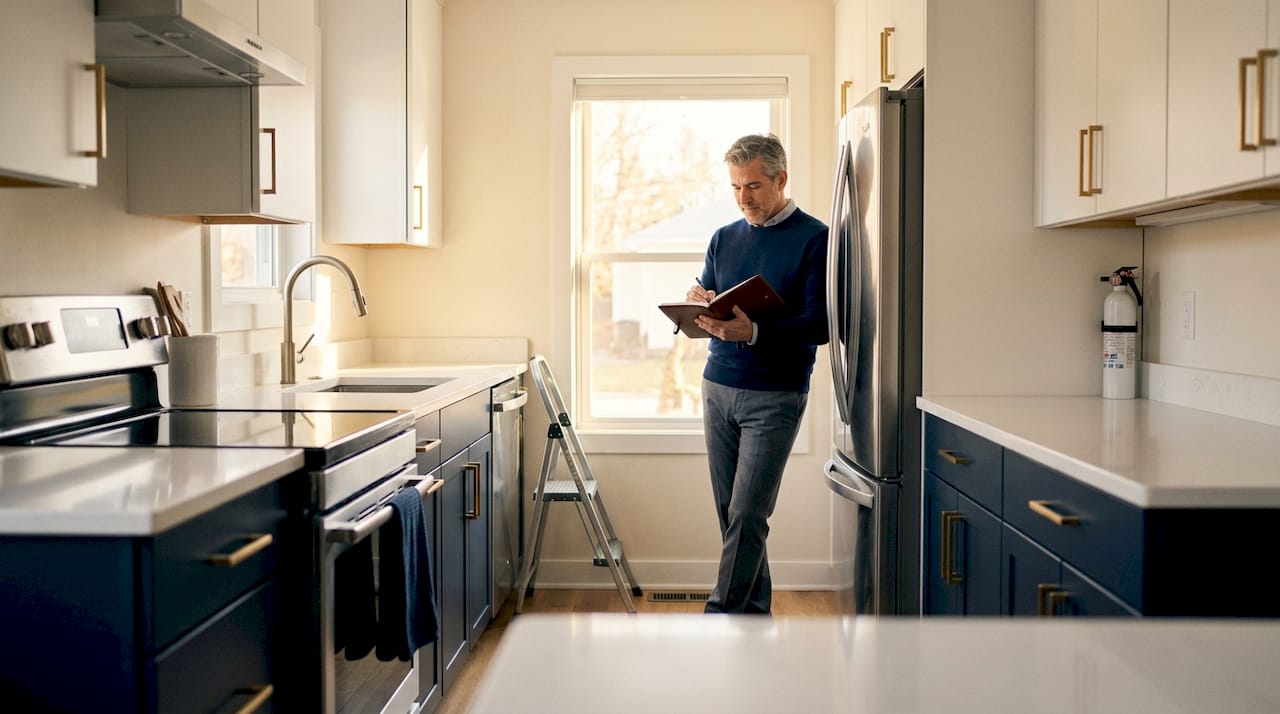
Pro Tip: Before you build your full checklist, walk through your kitchen with a notebook and look at each of these five areas separately. You will almost always find at least one gap you had not noticed before.
2. The complete kitchen hazard checklist for home cooks
Here is a practical, numbered kitchen safety checklist you can work through before and after cooking sessions.
-
Wash hands thoroughly before starting. Wash for 20 seconds, covering all areas including between fingers and under nails. Repeat after handling raw meat, cracking eggs, or touching your phone or face.
-
Use separate cutting boards. Keep one board designated for raw meats and a separate one for produce and ready-to-eat foods. Color-coded boards make this easy and consistent for every family member.
-
Verify cooking temperatures with a thermometer. Do not guess based on color or texture. Insert the thermometer into the thickest part of the food, away from bones, and confirm that poultry reaches 165°F, ground beef reaches 160°F, and pork reaches 145°F.
-
Thaw frozen foods safely. Thaw meat in the refrigerator, in cold water changed every 30 minutes, or in the microwave and cook immediately. Never leave frozen food on the countertop to thaw at room temperature.
-
Refrigerate leftovers promptly. Store leftovers in shallow containers so they cool faster and divide large batches before refrigerating. Consume or discard within three to four days.
-
Skip washing raw poultry. This surprises many home cooks, but washing raw chicken spreads bacteria to your sink, faucet, and surrounding surfaces. Cooking to the correct temperature kills bacteria far more effectively.
-
Sanitize cutting boards and surfaces. After raw meat contact, clean surfaces with hot soapy water and then sanitize with a diluted bleach solution. This step eliminates bacteria that soap alone may not remove.
-
Keep flammable materials away from heat sources. Dish towels, paper towels, and oven mitts left near a burner are common fire starters. Store them at least 12 inches away from the stove.
-
Check appliance cords and outlets regularly. Frayed cords and overloaded circuits are significant fire hazards. Do not plug multiple high-wattage appliances into one outlet and replace any damaged cords immediately.
-
Keep a fire extinguisher accessible. Mount one near the kitchen exit so you can reach it without crossing a potential fire. Check the pressure gauge monthly and replace or recharge it according to the manufacturer’s instructions.
-
Store knives safely. Use a knife block, magnetic strip, or blade guards rather than loose storage in a drawer. Loose knives cause cuts when reaching into drawers and create hazards for children.
Pro Tip: Print this checklist and post it inside a cabinet door in your kitchen. When the same safety steps are visible every day, they become automatic habits rather than things you have to consciously remember.
3. Side-by-side look at essential kitchen safety checklist items
Use this table to quickly review each checklist category, what it protects against, and how often you should address it.
| Checklist category | Primary risk addressed | Recommended frequency |
|---|---|---|
| Handwashing | Cross-contamination, foodborne illness | Before and during every cooking session |
| Separate cutting boards | Cross-contamination from raw proteins | Every cooking session |
| Food thermometer use | Undercooking, bacterial survival | Every time you cook meat, poultry, or eggs |
| Safe thawing methods | Bacterial growth in the danger zone | Every time frozen food is thawed |
| Refrigeration timing | Bacterial growth in stored leftovers | Within 2 hours of every meal |
| Appliance cord checks | Fire, electrical hazard | Monthly |
| Surface sanitizing | Bacterial cross-contamination | After every raw protein contact |
| Fire extinguisher check | Kitchen fires | Monthly |
| Knife storage review | Cuts, injuries | Ongoing, check when reorganizing |
| Flammable material clearance | Stovetop fires | Before every cooking session |
This cooking safety measures comparison gives you a clear priority map. Food thermometer use and refrigeration timing have the highest daily impact on food safety. Appliance and fire safety items matter just as much but operate on a maintenance cycle rather than a per-meal basis.
4. Situational tips to maintain home kitchen safety long-term
A kitchen safety checklist is only useful if you actually stick to it over time. Here is how to build lasting habits and adapt your checklist to your specific household.
Adjust for summer heat. The two-hour rule for refrigerating leftovers shortens to one hour when your kitchen temperature exceeds 90°F. Outdoor barbecues and summer gatherings are high-risk settings because food often sits out longer than it should.
- Place a small thermometer on your counter during summer months so you know when to apply the one-hour rule.
- Move buffet-style food into coolers or back into refrigeration more frequently during hot weather.
Childproof your kitchen properly. Cabinet locks on cleaning supplies and sharp tool drawers are a starting point, not the finish line. You can find guidance on kitchen cabinet childproofing to cover blind spots many parents miss. Keep pot handles turned inward on the stovetop and establish clear no-go zones around the oven.
Adapt the checklist for your family size. A household with four or more people cooks larger batches, which means longer cooling times and more surface contact. Larger families benefit from a second set of cutting boards and more frequent appliance checks due to higher usage volume.
Schedule appliance safety inspections. Appliance maintenance catches issues that a basic home checklist will not find, including latent electrical problems, gas connection issues, and thermostat failures in refrigerators. Plan a professional inspection at least once a year. You can also read through a home appliance safety guide to understand what inspectors look for.
Build clean-as-you-go habits. Wipe spills from the floor immediately to prevent slipping. Clean countertops between prep stages so you are not transferring bacteria from one food to the next. Put away sharp tools as soon as you finish using them.
Reviewing your kitchen safety routine at the start of each season takes about 15 minutes and dramatically reduces the chance of an accident or foodborne illness during that period. Add it to your calendar the same way you would schedule a smoke detector battery check.
My honest take on where most home cooks go wrong
I have seen the same patterns repeat across hundreds of kitchens, and the most common mistake is not laziness. It is overconfidence. Home cooks who have been preparing meals for years tend to rely on experience alone, using smell or color to judge whether food is cooked safely. The honest truth is that smell and appearance are unreliable indicators of food safety. Dangerous bacteria leave no visible trace. A food thermometer is a three-dollar fix that solves a real problem.
The second issue I see regularly is appliance neglect. A stove that sparks slightly, a refrigerator that runs warm, or an oven that takes twice as long to preheat are all signs that something is wrong. These are not minor inconveniences. Overloaded circuits and malfunctioning appliances are documented causes of kitchen fires. I know families who pushed through those warning signs for months before something went seriously wrong.
Building lasting safety habits means putting systems in place, not just good intentions. A printed checklist, a dedicated set of color-coded boards, a thermometer on the counter. These small changes make safe behavior the default rather than the effort.
— MDTECH
How Mdtechservices supports your kitchen safety plan

A thorough kitchen safety checklist covers what you can see and address yourself. But some hazards require a licensed technician to identify and fix properly. At Mdtechservices, we provide residential appliance repair and installation services across Orange County and Los Angeles County, and our licensed technicians regularly catch issues that home inspections miss entirely. This includes faulty refrigerator thermostats, stove ignition problems, and wiring concerns that create real fire risk.
If you want to understand the full scope of appliance repair services available for your home kitchen, we have clear guidance on what to expect and when repair is the right call versus full replacement. For homeowners deciding between fixing and replacing an aging appliance, our repair versus replacement guide walks you through the decision clearly. A well-maintained kitchen is the foundation of every safe meal your family cooks. Contact Mdtechservices to schedule your appliance inspection today.
FAQ
What is a kitchen safety checklist?
A kitchen safety checklist is a structured list of food handling, hygiene, appliance, and hazard prevention steps that home cooks follow to reduce the risk of accidents and foodborne illness in the kitchen.
How often should leftovers be refrigerated?
Refrigerate leftovers within two hours of cooking, or within one hour if your kitchen temperature is above 90°F. Consume or discard them within three to four days.
What temperature should poultry be cooked to?
Poultry must reach an internal temperature of 165°F as measured by a calibrated food thermometer inserted into the thickest part of the meat.
Is it safe to thaw meat on the counter?
No. Thawing meat at room temperature allows the outer surface to enter the bacterial danger zone (40°F to 140°F) while the center is still frozen. Use the refrigerator, cold water, or a microwave instead.
How can families childproof a kitchen effectively?
Install cabinet locks on drawers containing knives and cleaning products, turn pot handles inward on the stovetop, and create clear boundaries around the oven and stove area to keep young children at a safe distance.