
High energy bills from an inefficient HVAC system are a frustration many homeowners in Orange and Los Angeles County know all too well. Your heating and cooling system is likely the biggest energy consumer in your home, and when it’s not running optimally, those costs add up fast. The good news is that improving HVAC efficiency doesn’t require a complete system overhaul. Small, consistent changes can deliver noticeable savings on your monthly utility bills while extending your equipment’s lifespan. This article shares expert-backed HVAC efficiency tips you can start implementing today to reduce energy waste and keep more money in your pocket.
Table of Contents
- Key takeaways
- How to improve HVAC efficiency: top practical tips for homeowners
- Maintain clean vents and seal duct leaks to maximize airflow and savings
- Schedule professional HVAC maintenance and consider heat pump options
- Get expert HVAC service and appliance repair support
- Frequently asked questions about HVAC efficiency
Key Takeaways
| Point | Details |
|---|---|
| Filter replacement saves energy | Replacing HVAC filters every 1 to 3 months improves airflow and reduces energy use by 5 to 15%. |
| Vent cleaning boosts efficiency | Biannual cleaning of supply and return vents can cut energy use by up to 25%. |
| Seal duct leaks | Sealing leaks in ducts reduces energy loss by 20 to 30% and saves $180 to $400 annually. |
| MERV 8 to 13 filtration | MERV ratings between 8 and 13 offer excellent filtration without restricting airflow in most residential systems. |
How to improve HVAC efficiency: top practical tips for homeowners
The simplest and most cost-effective way to boost your HVAC system’s performance starts with something you can do yourself: changing your air filters. Replacing air filters every 1 to 3 months improves airflow and reduces energy use by 5 to 15%. When filters get clogged with dust, pet dander, and debris, your system has to work significantly harder to push air through your home. This extra strain translates directly into higher energy consumption and accelerated wear on your equipment.
Most homeowners can replace their HVAC filters in under five minutes with no special tools required. The frequency depends on several factors. If you have pets, live in a dusty area, or run your system constantly, monthly replacement is ideal. Homes without pets and with moderate HVAC use can typically extend this to every three months. Check your filter monthly during peak heating or cooling seasons to assess its condition.
Pro Tip: Set a recurring reminder on your phone for the first day of each month to check your HVAC filter. Buy filters in bulk to save money and ensure you always have a replacement ready when needed.
Beyond filters, consider upgrading to higher efficiency options if your system allows. MERV ratings between 8 and 13 offer excellent filtration without restricting airflow in most residential systems. Understanding HVAC filtration for cleaner air and energy savings helps you choose the right balance between air quality and system performance.
Maintain clean vents and seal duct leaks to maximize airflow and savings
Your HVAC filter isn’t the only place where restricted airflow costs you money. Supply and return vents throughout your home can accumulate significant debris that blocks air circulation and forces your system to run longer cycles. Cleaning vents biannually maintains proper airflow, reducing energy use by up to 25%. This dramatic efficiency loss happens gradually, so many homeowners don’t realize how much their blocked vents are costing them until they address the problem.
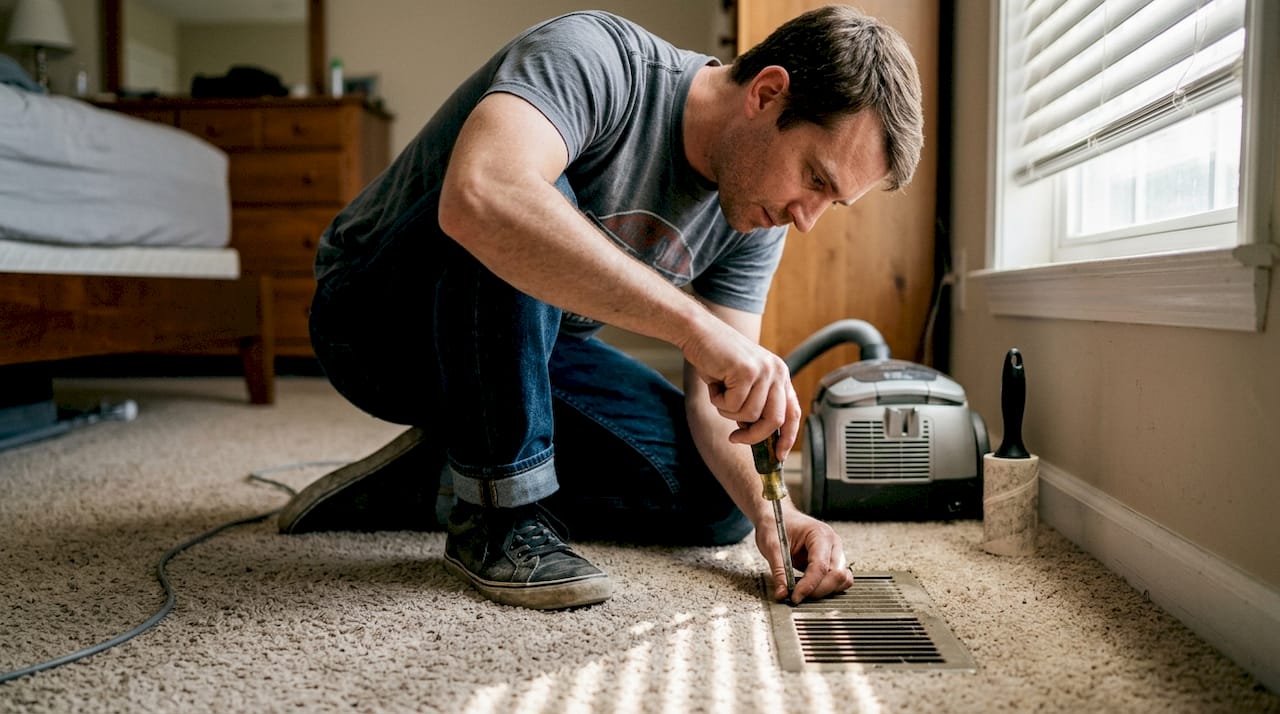
Common culprits that block vents include dust buildup, pet hair, lint, pollen, and even small objects that fall through floor registers. In homes with carpet, fibers can work their way into vent openings over time. Here’s how to clean your vents safely and effectively:
- Turn off your HVAC system completely at the thermostat
- Remove vent covers using a screwdriver if needed
- Vacuum inside the duct opening as far as your vacuum hose reaches
- Wash vent covers with warm soapy water and dry thoroughly
- Wipe down the visible duct interior with a damp cloth
- Reinstall covers and restore power to your system
While surface vent cleaning helps, the real energy waste often happens where you can’t see it. Ductwork running through attics, crawl spaces, and walls develops leaks and disconnections over time. Sealing duct leaks prevents 20 to 30% energy loss, which is especially common in California homes and can save $180 to $400 annually on utility bills.
Pro Tip: Walk through your home while your HVAC system runs and place your hand near each vent. Weak airflow from some vents while others blast strongly often indicates ductwork problems that need professional attention.
“Leaky ducts are one of the biggest sources of energy waste in homes. Air that’s already been heated or cooled escapes before reaching living spaces, forcing your system to work overtime to maintain comfort.”
While DIY duct sealing with mastic or metal tape can address visible accessible leaks, professional duct sealing ensures comprehensive coverage. Technicians use specialized equipment to pressurize your duct system, identify all leak points, and seal them from the inside. This thorough approach delivers the full 20 to 30% efficiency gain that partial DIY efforts often miss.
Schedule professional HVAC maintenance and consider heat pump options
Even with diligent filter changes and vent cleaning, your HVAC system needs expert attention to maintain peak efficiency. Professional maintenance twice annually detects issues early, reducing energy use by up to 15%. These biannual tune-ups, ideally scheduled before cooling season starts in spring and before heating season begins in fall, keep your system running smoothly year round.
During a professional maintenance visit, technicians perform critical tasks that go far beyond what homeowners can do themselves:
- Check and adjust refrigerant levels to manufacturer specifications
- Inspect electrical connections and tighten any loose terminals
- Lubricate moving parts to reduce friction and wear
- Test thermostat calibration and system cycling
- Clean condenser and evaporator coils for optimal heat transfer
- Examine the heat exchanger for cracks or corrosion
- Measure airflow and adjust blower components as needed
This comprehensive service catches small problems before they become expensive failures. A refrigerant leak detected early costs far less to repair than waiting until your system stops cooling entirely on the hottest day of summer. Regular professional care through regular HVAC maintenance in California also preserves your manufacturer’s warranty, which often requires documented professional service.
Pro Tip: Many HVAC companies offer maintenance plans that bundle two annual visits at a discounted rate and include perks like priority scheduling and repair discounts. These plans typically pay for themselves if you need even one service call during the year.
For homeowners considering equipment upgrades, variable capacity heat pumps represent a significant efficiency advancement over traditional single-stage systems. Ductless variable capacity heat pumps save 5 to 6% cooling energy compared to ducted systems, making them particularly attractive for Southern California’s climate where cooling dominates energy use. However, ducted variable capacity systems perform better for heating applications.
| Heat Pump Type | Cooling Efficiency | Heating Efficiency | Best Application | Key Consideration |
|---|---|---|---|---|
| Ductless Variable Capacity | 5-6% better than ducted | Lower than ducted | Cooling-dominant climates, room additions | Requires wall-mounted indoor units |
| Ducted Variable Capacity | Standard efficiency | Superior heating performance | Whole-home comfort, heating needs | Works with existing ductwork |
| Traditional Single-Stage | Baseline | Baseline | Budget-conscious replacements | Less efficient, more temperature swings |
The efficiency gains from variable capacity technology come from the system’s ability to modulate output to match your home’s precise heating or cooling needs at any moment. Traditional systems run at full capacity then shut off, creating temperature swings and wasting energy. Variable capacity systems run longer at lower speeds, maintaining consistent comfort while using less power.
One critical factor often overlooked is proper sizing. Oversized heat pumps, whether ductless or ducted, short-cycle by reaching temperature setpoints too quickly and shutting off before completing a full cycle. This prevents the system from running efficiently and causes excessive wear. Professional load calculations ensure your new equipment matches your home’s actual heating and cooling requirements. Understanding why upgrading HVAC systems requires proper planning helps you avoid costly mistakes.
Get expert HVAC service and appliance repair support
Implementing these efficiency tips delivers real savings, but some tasks require professional expertise to get right. MDTech Services offers expert HVAC maintenance and repair throughout Orange County and Los Angeles County to help you maximize your system’s efficiency and lifespan. Our licensed technicians understand the unique demands Southern California’s climate places on HVAC equipment and can identify efficiency problems before they escalate into expensive emergencies.

Whether you need routine maintenance, duct sealing, or troubleshooting an underperforming system, professional help ensures problems get addressed correctly the first time. Our comprehensive HVAC repair guide explains common issues and solutions, while our detailed HVAC troubleshooting process for homeowners helps you understand what to expect during service calls. Learn more about why timely HVAC repair matters for both efficiency and equipment longevity.
Frequently asked questions about HVAC efficiency
What is the best frequency to replace HVAC air filters?
Replace standard 1-inch filters every 1 to 3 months depending on usage, pets, and air quality. Homes with multiple pets or high dust levels need monthly changes, while homes without pets can extend to every three months. Thicker 4-inch or 5-inch pleated filters last 6 to 12 months but check manufacturer recommendations.
How often should I have my HVAC system professionally serviced?
Schedule professional HVAC maintenance twice yearly, ideally in spring before cooling season and fall before heating season. This biannual service schedule catches problems early and can reduce energy consumption by up to 15%. Annual service is the minimum to maintain efficiency and warranty coverage.
Can sealing duct leaks really save that much on energy bills?
Yes, duct leaks commonly waste 20 to 30% of heated or cooled air before it reaches living spaces. Professional duct sealing recovers this lost energy, saving $180 to $400 annually for typical California homes. The savings are highest in homes with ductwork running through unconditioned attics or crawl spaces.
What are the benefits of upgrading to a variable capacity heat pump?
Variable capacity heat pumps modulate output to match your home’s exact needs, eliminating the temperature swings and energy waste of traditional on/off systems. They run longer at lower speeds for better humidity control and quieter operation. Ductless versions excel at cooling efficiency in Southern California’s climate, while ducted models perform better for heating.
Are DIY vent cleaning methods effective and safe?
Basic DIY vent cleaning, removing covers and vacuuming accessible areas, is safe and helps maintain airflow between professional cleanings. However, it only addresses surface debris. Deep duct cleaning requires professional equipment to remove buildup throughout the entire system without damaging ductwork or spreading contaminants into living spaces.