
Household appliances represent one of your biggest home investments, yet most fail prematurely due to simple neglect. The average American household spends over $400 annually on appliance repairs, with many issues entirely preventable through basic maintenance. Whether you own a refrigerator, washer, dryer, or dishwasher, understanding how to care for these workhorses can add years to their service life and keep more money in your pocket. This guide shares expert-backed strategies tailored for Orange County and Los Angeles homeowners looking to maximize appliance longevity while minimizing repair costs.
Table of Contents
- Key takeaways
- Regular cleaning and proper load management
- Maintaining optimal appliance conditions and safe operation
- Reducing mechanical strain with leveling and usage habits
- When to repair vs. replace appliances: a cost-effective approach
- Extend your appliance lifespan with professional help
- Frequently asked questions
Key Takeaways
| Point | Details |
|---|---|
| Regular cleaning and load management | Establish a monthly routine for coil cleaning, lint removal, and avoiding overloading to prevent overheating and premature wear. |
| Optimal temperatures and airflow | Keep refrigerators at 37F and freezers at 0F, and maintain about three quarters full to stabilize temperatures and reduce compressor wear. |
| Protective measures | Use surge protectors and anti vibration pads to guard against power spikes and minimize vibration related wear. |
| Repair versus replacement | Evaluate whether to repair or replace based on the appliance’s age and the cost of repair versus replacement. |
Regular cleaning and proper load management
Dirt and debris are silent killers for household appliances. Clean refrigerator condenser coils regularly to prevent overheating and compressor strain, which accounts for half of all refrigerator service calls. When dust accumulates on these coils, your fridge works harder to maintain temperature, generating excess heat that slowly damages the compressor. This single component often costs $300 to $600 to replace, making prevention far more economical than repair.
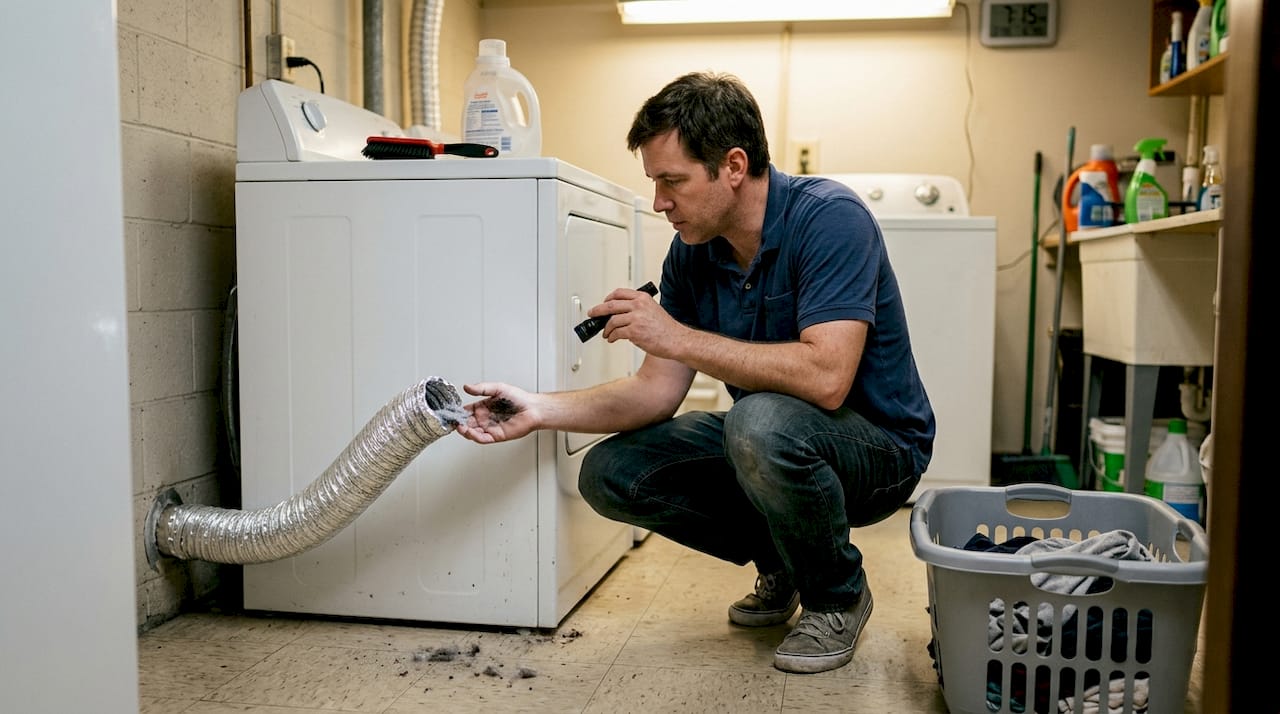
Dryer vents present an even more urgent concern. Lint buildup blocks airflow, forcing your dryer to run longer cycles at higher temperatures. This not only damages heating elements and thermostats but creates a genuine fire hazard. The U.S. Fire Administration reports thousands of dryer fires annually, with lint accumulation as the primary cause. Clean your lint trap after every load and schedule professional vent cleaning annually to maintain safe, efficient operation.
Avoid overloading washers, dryers, and dishwashers to prevent motor overheating and bearing wear. When you stuff too many clothes in your washer, the drum struggles to rotate smoothly. This constant strain on bearings and belts can reduce lifespan by four to six years. The same principle applies to dishwashers, where overloading prevents proper water circulation and forces pumps to work harder.
Establish a monthly maintenance routine for your appliances:
- Run empty hot water cycles with vinegar in washers to dissolve detergent residue
- Clean dishwasher filters and spray arms to prevent clogs
- Wipe down dryer drums and door seals to remove fabric softener buildup
- Vacuum refrigerator coils and check drain pans for standing water
Pro Tip: Set quarterly reminders on your phone for coil cleaning and lint removal. This 15-minute task every three months can prevent repair bills that exceed $500 and extend appliance life by years. Many homeowners skip this simple step until problems emerge, by which point damage has already occurred.
For comprehensive guidance on maintaining your appliances, explore our resource on how to improve appliance lifespan with detailed maintenance schedules for every major household appliance.
Maintaining optimal appliance conditions and safe operation
Temperature stability directly impacts refrigerator longevity. Maintain proper temperatures in refrigerators at 37°F and freezers at 0°F, keeping them three-quarters full for thermal stability. When your fridge runs too cold, the compressor cycles more frequently, wearing out faster. Too warm, and food spoils while the unit struggles to compensate. A simple refrigerator thermometer costs under $10 and provides peace of mind that your unit operates in the optimal range.
The three-quarters full rule works because food mass helps maintain stable temperatures. When you open the door, warm air rushes in. A well-stocked fridge has thermal mass that resists temperature swings, reducing compressor workload. Empty fridges lose cold air quickly, forcing more frequent cooling cycles. If your fridge runs empty, fill extra space with water jugs to maintain efficiency.
Door gaskets deserve more attention than most homeowners give them. Wipe door gaskets monthly and leave washer doors open to prevent mold and seal degradation. A failing gasket on your refrigerator allows cold air to escape continuously, making your compressor run almost nonstop. This not only spikes energy bills but dramatically shortens compressor life. Test gasket integrity by closing the door on a dollar bill. If you can pull it out easily, the seal needs replacement.
Washing machine gaskets face different challenges. Front-loading washers particularly struggle with mold growth in the rubber boot around the door. This happens when moisture remains trapped after cycles. Always leave your washer door open for several hours after use to allow complete drying. Wipe down gaskets weekly with a vinegar solution to prevent mold establishment. Once mold penetrates the gasket material, replacement becomes necessary, typically costing $150 to $250.
Electrical protection often gets overlooked:
- Use surge protectors rated for appliance amperage to shield sensitive electronics
- Install dedicated 20-amp circuits for major appliances to prevent voltage drops
- Avoid power strips for refrigerators and other high-draw appliances
- Check outlet connections annually for loose wires or burn marks
Pro Tip: Power surges from lightning strikes or grid fluctuations destroy control boards in modern appliances. A quality surge protector costs $30 to $50 but can save you from $200 to $400 control board replacements. Make sure the protector has indicator lights showing it still provides protection, as surge protectors sacrifice themselves during events and need replacement.
Learn more about preventive care strategies in our guide on why maintaining appliances matters for long-term home value and reduced repair expenses.
Reducing mechanical strain with leveling and usage habits
Vibration damages appliances faster than most mechanical stresses. Level appliances and use anti-vibration pads to reduce noise and bearing wear. An unlevel washing machine creates unbalanced loads that cause the drum to bang against the cabinet during spin cycles. This violent motion wears out bearings, shocks, and suspension springs prematurely. Check appliance level every six months, as floor settling and vibration can gradually shift units out of alignment.
Anti-vibration pads serve double duty. They absorb vibration that would otherwise transmit through your floor, protecting both the appliance and your home’s structure. These inexpensive pads also raise appliances slightly, improving airflow underneath and preventing moisture damage to flooring. Installation takes minutes but extends bearing life significantly, particularly in washers and dryers where rotational forces create constant vibration.
Usage patterns profoundly affect longevity. Frequent door openings and back-to-back cycles accelerate wear on compressors and pumps. Every time you open your refrigerator door, warm humid air enters and must be cooled. Doing this 50 times daily versus 20 times creates dramatically different compressor workloads. The same principle applies to running your dishwasher twice daily instead of once, or doing laundry in marathon weekend sessions rather than spacing loads throughout the week.
| Usage habit | Impact on lifespan | Recommended practice |
|---|---|---|
| Refrigerator door openings | Reduces life 2-3 years | Limit to 15-20 daily, retrieve multiple items per opening |
| Back-to-back wash cycles | Shortens life 3-5 years | Allow 30-minute cool-down between loads |
| Dishwasher frequency | Minimal impact | Run only with full loads for efficiency |
| Dryer overloading | Reduces life 4-6 years | Fill to 75% capacity maximum |
Spacing out appliance use gives components time to cool between cycles. This matters most for washers and dryers, where motors and heating elements generate significant heat. Running five loads back to back keeps these components at elevated temperatures for hours, accelerating insulation breakdown and bearing lubricant degradation. A simple 30-minute break between loads allows temperatures to normalize, substantially extending component life.
Consider these operational best practices:
- Group refrigerator trips to minimize door openings throughout the day
- Space laundry loads by at least 30 minutes to allow motor and bearing cool-down
- Run dishwashers during off-peak hours when voltage is more stable
- Avoid using appliances during extreme heat when ambient temperatures stress cooling systems
- Clean dryer vents before heavy-use periods to maintain optimal airflow
Pro Tip: Your dryer vent system impacts efficiency more than any other single factor. A clogged vent can double drying times and overheat components. Professional vent cleaning costs $100 to $150 but immediately improves performance and prevents fires. Schedule this service annually, or more frequently if you dry heavy loads regularly.
For detailed guidance on this critical safety issue, read our article on why cleaning dryer vents prevents fires and extends appliance life substantially.
When to repair vs. replace appliances: a cost-effective approach
Knowing when to invest in repairs versus replacement saves thousands over your homeownership journey. If repair costs exceed 50% of a new unit or the appliance age is beyond two-thirds of typical lifespan, replacement makes financial sense. This rule prevents throwing good money after bad on appliances approaching inevitable failure.
Most major appliances begin requiring significant repairs around year eight of service. A refrigerator typically lasts 13 to 17 years, so once it reaches 10 years old, expensive repairs become questionable investments. The same refrigerator that needs a $450 compressor replacement at age 12 will likely require additional repairs within two years, making a new energy-efficient model the smarter choice.
Energy efficiency considerations complicate this calculation. Modern appliances use 30% to 50% less energy than models from 15 years ago. A new Energy Star refrigerator saves $50 to $100 annually on electricity compared to an older unit. Over a 15-year lifespan, that represents $750 to $1,500 in savings, partially offsetting the replacement cost. Factor these savings into your repair versus replace decision.
Follow this three-step evaluation process:
- Calculate the appliance age as a percentage of its expected lifespan (if a 10-year-old refrigerator has a 15-year expected life, it’s at 67%)
- Compare the repair estimate to 50% of a comparable new appliance’s cost
- Consider annual energy savings if replacing with an efficient model
Weigh these repair versus replacement factors:
- Repair makes sense when the appliance is under five years old and repair costs less than 30% of replacement
- Replace when multiple components fail simultaneously, indicating systemic deterioration
- Consider replacement if the appliance has required two or more repairs in the past year
- Factor in warranty coverage, as some repairs may be partially or fully covered
- Evaluate whether discontinued parts or unavailable technicians make repair impractical
Some repairs never make sense economically. Replacing a compressor in a 12-year-old refrigerator, fixing a cracked drum in an aging washer, or rebuilding a transmission in an old dishwasher typically costs more than the appliance’s remaining value. These major component failures signal that other parts will soon follow, making replacement the prudent choice.
For help navigating this decision with your specific appliances, consult our comprehensive guide on appliance repair versus replacement that includes cost calculators and decision trees for common scenarios.
Extend your appliance lifespan with professional help
While DIY maintenance handles many longevity tasks, professional expertise catches problems before they become expensive failures. Annual inspections by experienced technicians identify worn belts, failing bearings, and deteriorating seals while they’re still inexpensive to address. What costs $75 to replace during routine maintenance might require $400 in emergency repairs if left until failure.

MDTech Services specializes in helping Orange County and Los Angeles homeowners maximize appliance investments through preventive maintenance and expert repairs. Our licensed technicians understand the unique demands California’s climate places on appliances, from hard water issues to coastal humidity concerns. We offer comprehensive appliance repair services covering everything from refrigerators to HVAC systems, with same-day service available throughout our coverage areas. Whether you need guidance on maintenance schedules or face an unexpected breakdown, our team provides the expertise to keep your appliances running efficiently. Check out our detailed homeowner repair guide for troubleshooting tips, or schedule annual appliance checkups to prevent problems before they start. Combining smart DIY care with professional support gives you the best of both worlds: lower costs and maximum appliance lifespan.
Frequently asked questions
How often should I clean my refrigerator coils?
Clean refrigerator condenser coils at least twice yearly to prevent overheating and compressor strain. This simple maintenance task takes 15 minutes but prevents half of all refrigerator service calls. Use a coil brush or vacuum attachment to remove dust buildup, focusing on the coils located either behind the kickplate or on the back panel.
What’s the best way to prevent mold and leaks in washers?
Wipe door gaskets monthly and leave washer doors open after each use to allow moisture evaporation. This prevents mold establishment in the rubber seals and extends gasket life by years. Front-loading washers particularly need this care, as their horizontal drum design traps water in the door boot. Run a monthly cleaning cycle with vinegar to remove detergent residue that feeds mold growth.
How do I know when it’s better to replace rather than repair an appliance?
Replace when repair costs exceed 50% of a new unit’s price or the appliance has reached two-thirds of its expected lifespan. Also consider energy savings from modern efficient models, which can offset replacement costs over time. Multiple repairs within a year signal systemic deterioration, making replacement the smarter financial choice regardless of individual repair costs.