
TL;DR:
- A tankless water heater heats water on demand without a storage tank, reducing energy waste and saving space. Proper sizing, permits, and annual maintenance are essential to ensure long-lasting, efficient operation. It delivers continuous hot water and offers significant energy savings over traditional storage units.
A tankless water heater is defined as an on-demand water heating system that heats water only when you turn on a faucet, with no storage tank required. Unlike a conventional storage tank heater that keeps 40–80 gallons hot around the clock, a tankless unit fires up instantly and shuts off the moment you stop using hot water. This design eliminates standby heat loss, which is the single biggest source of wasted energy in traditional water heating. For homeowners in Orange County and Los Angeles County weighing an upgrade, understanding how these units work, what installation really involves, and what maintenance they need is the difference between a smart investment and a costly surprise.
How does a tankless water heater work?
A tankless water heater uses a flow sensor and a heat exchanger to deliver hot water on demand. When you open a hot water tap, cold water enters the unit, triggers the flow sensor, and the heat exchanger activates within seconds. The moment you close the tap, the unit shuts off completely.
The heating source determines the unit’s performance profile:
- Gas-fired units use a burner that can draw 120,000–199,000 BTU/h to heat water rapidly, making them well suited for high-demand households.
- Electric units use resistance heating elements and typically require up to four 40-amp, 240V dedicated circuits, which is a significant electrical load.
- Condensing gas units capture exhaust heat for extra efficiency and require Category IV venting with condensate management.
- Non-condensing gas units vent at higher temperatures and use simpler stainless steel flue pipes.
Flow rate is the key performance limit you need to understand. A tankless unit is rated in gallons per minute (GPM). If your household runs a shower, a dishwasher, and a washing machine at the same time, the combined GPM demand may exceed what a single unit can deliver. Sizing the unit correctly for your household’s peak demand is the most important decision in the buying process.
Pro Tip: Measure your peak hot water demand in GPM before shopping. Add up the flow rates of every fixture you might run at the same time, then choose a unit rated at least 10% above that total.
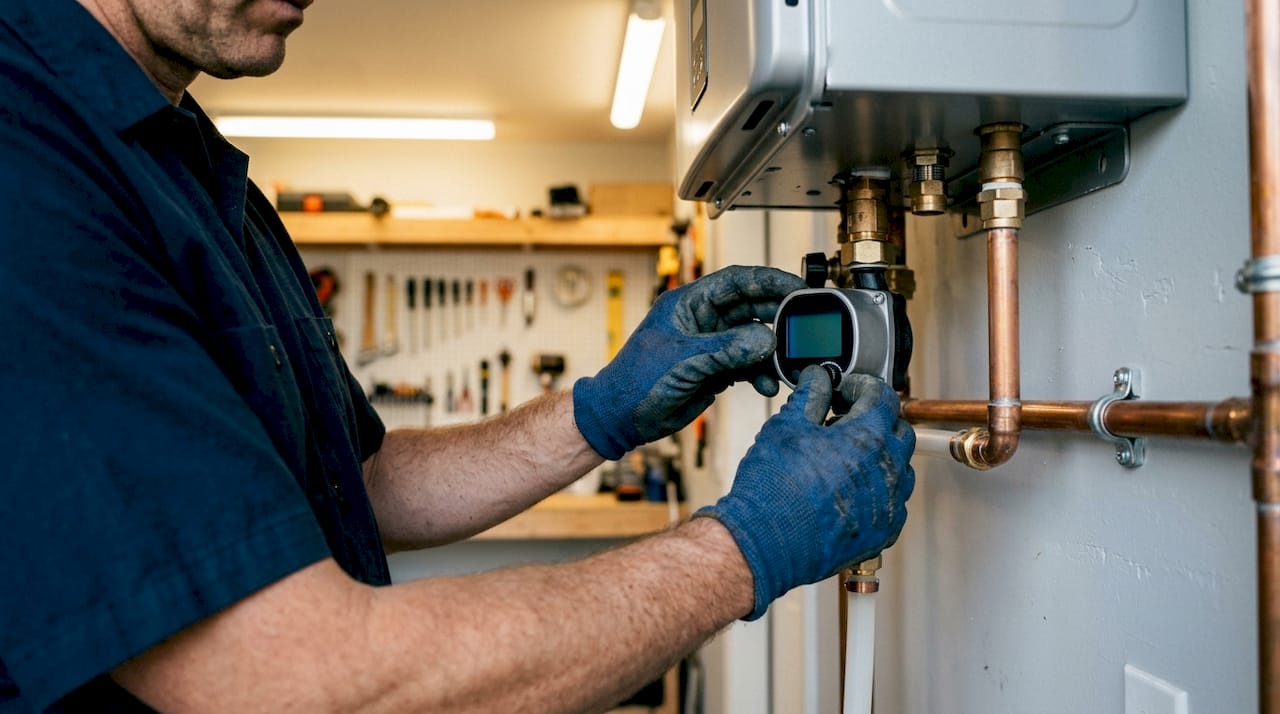
What are the benefits of choosing a tankless water heater for your home?
The benefits of tankless water heaters go well beyond the obvious convenience of never running out of hot water. The financial and practical advantages stack up over the life of the unit in ways that make the higher upfront cost worthwhile for most homeowners.
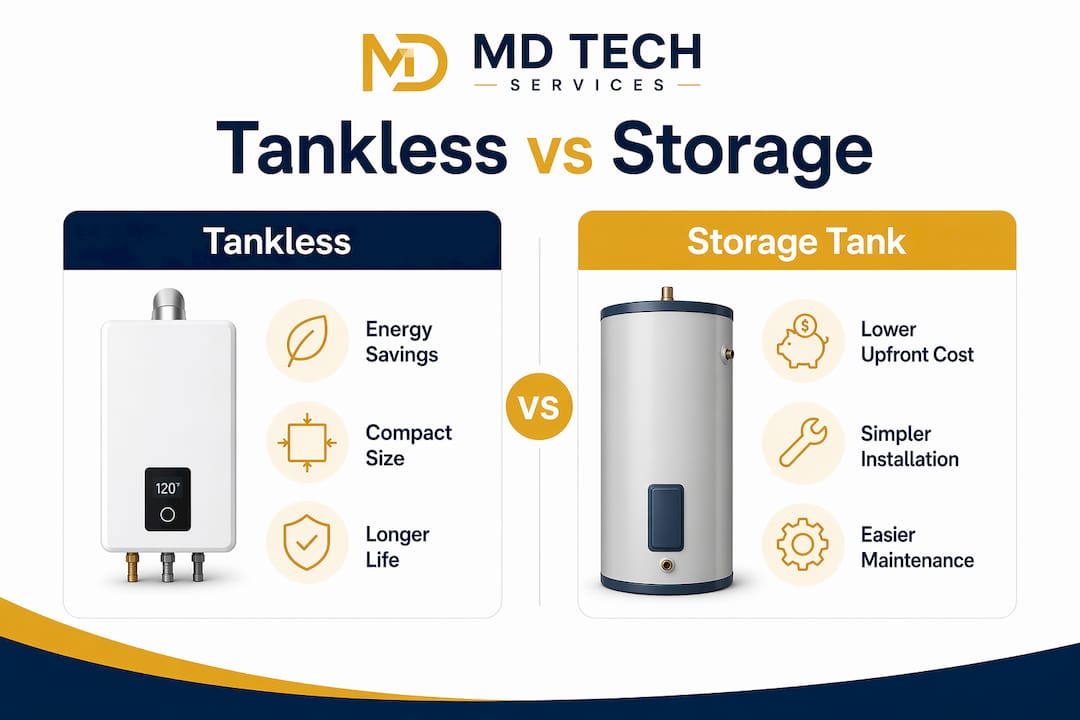
Energy savings you can measure
Tankless water heaters save 20%–34% energy compared to conventional storage tanks by eliminating standby heat loss. That savings figure is meaningful because standby loss runs 24 hours a day, 365 days a year in a tank-based system. Energy Star-certified tankless units can reach up to 34% efficiency gains in homes using less than 41 gallons per day, according to the U.S. Department of Energy. Homes with higher usage still see meaningful savings, just at the lower end of that range.
Practical advantages for daily life
- Endless hot water supply. A tankless unit never runs out of hot water because it heats on demand rather than depleting a stored reserve. Large families and households with back-to-back showers benefit most from this.
- Space savings. A tankless unit mounts on a wall and takes up a fraction of the floor space a 50-gallon tank requires. That recovered space matters in smaller California homes and condos.
- Longer service life. Tankless units are rated for up to 20 years with proper maintenance, compared to 10–12 years for a conventional tank. That longer lifespan lowers your cost per year of ownership.
- Lower operational costs. Because the unit only runs when you need hot water, your gas or electricity bill reflects actual use rather than constant standby heating.
- Environmental impact. Energy Star certification means the unit meets federal efficiency standards, reducing your home’s carbon footprint alongside your utility bill.
The combination of energy savings, space recovery, and a longer service life makes the return on investment clear for most homeowners who plan to stay in their home for five or more years.
Installation requirements and permits for tankless water heaters in 2026
Tankless water heater installation is more complex than swapping out a conventional tank. Getting it right requires permits, inspections, and often upgrades to your existing gas line or electrical panel.
Permits and inspections
Permits are mandatory for all tankless water heater installations in the U.S. as of 2026, covering plumbing, mechanical or fuel gas, and electrical trades. Each trade requires a separate inspection. Skipping permits is not a shortcut. It creates liability, voids manufacturer warranties, and can block a home sale when the unpermitted work surfaces during escrow.
Key installation requirements
- Gas line sizing. The most common installation failure is an undersized gas supply line. Residential gas lines often need upgrading to 1-inch or larger pipe to meet the high BTU demand of a tankless unit. A 3/4-inch line that worked fine for your old tank may cause cold water bursts under combined household demand.
- Venting. High-efficiency condensing units require Category IV venting with approved materials and a condensate neutralizer where local codes require it. Non-condensing units use different approved flue materials at higher exhaust temperatures.
- Electrical supply. Gas units need a standard 120V circuit for ignition and controls. Electric tankless units can require up to four 40-amp, 240V dedicated circuits, which may require a panel upgrade.
- Clearances and listing compliance. The IRC and manufacturer instructions enforce specific clearance rules around the unit. Manufacturer instructions are incorporated by model code and carry the same legal weight as the code itself.
| Requirement | Gas unit | Electric unit |
|---|---|---|
| Permits needed | Plumbing, mechanical/gas | Plumbing, electrical |
| Venting | Category III or IV flue | None required |
| Electrical | 120V for controls | Up to four 40-amp, 240V circuits |
| Gas line upgrade | Often required (1-inch+) | Not applicable |
Pro Tip: Budget for a gas line upgrade and panel evaluation before you finalize your unit choice. These upgrades are the most common source of cost overruns in tankless installations.
You can also review the plumbing safety requirements that apply to water heater work in California to understand what inspectors look for.
How to maintain a tankless water heater
Annual maintenance is not optional. Skipping it shortens the unit’s life and can void the warranty, turning a 20-year appliance into a 5-to-7-year expense.
The core maintenance tasks
- Annual flushing. Calcium carbonate buildup from hard water is the leading cause of tankless water heater failure. Flushing the heat exchanger with a descaling solution once a year removes mineral deposits before they restrict flow and reduce efficiency.
- Filter cleaning. Most units have an inlet filter screen that catches sediment. Cleaning it every six months prevents flow restriction and protects the heat exchanger.
- Venting inspection. Check the flue and vent termination annually for blockages, corrosion, or bird nests. A blocked vent can trigger a safety shutoff or, in a worst case, create a carbon monoxide risk.
- Gas pressure check. Low or fluctuating gas pressure causes the unit to underperform or cycle off mid-use. A licensed technician can verify pressure at the unit during an annual service visit.
- Error code log review. Modern tankless units store error codes. Reviewing them during maintenance reveals patterns that predict failures before they happen.
Skipping yearly heat exchanger descaling leads to warranty voids and a much shorter effective lifespan, despite manufacturer ratings of 20 years. That is a significant financial consequence for a task that costs under $100 in parts and an hour of time.
Pro Tip: If your home has hard water, consider installing a whole-house water softener or an inline scale inhibitor upstream of the tankless unit. It reduces descaling frequency and extends heat exchanger life noticeably.
For a full maintenance schedule, the water heater maintenance guide from Mdtechservices covers both tankless and conventional systems.
How do tankless water heaters compare to traditional storage tank models?
The core difference between tankless and storage tank water heaters is when and how they heat water. A storage tank heats and holds a fixed volume continuously. A tankless unit heats water only when demand triggers the flow sensor.
| Category | Tankless unit | Storage tank unit |
|---|---|---|
| Energy use | 20%–34% less than storage tanks | Higher due to constant standby heating |
| Hot water supply | Continuous, no depletion | Limited to tank capacity (40–80 gallons) |
| Upfront cost | Higher purchase and installation cost | Lower upfront cost |
| Lifespan | Up to 20 years with maintenance | 10–12 years typical |
| Space required | Wall-mounted, minimal footprint | Large floor footprint |
| Installation complexity | High: permits, gas/electrical upgrades | Moderate: standard replacement |
Tankless units cost more upfront and require more complex installation. They pay back that premium through lower energy bills and a longer service life. For a household of four or more people with high simultaneous hot water demand, proper sizing is critical. A single undersized tankless unit will disappoint. Two smaller units or one large-capacity unit sized for peak demand will not.
Storage tank units remain a practical choice for households with very low hot water use, tight installation budgets, or older homes where gas line and electrical upgrades would be prohibitively expensive.
Key Takeaways
A tankless water heater delivers continuous hot water, saves 20%–34% on energy costs, and lasts up to 20 years, but only when properly sized, permitted, and maintained annually.
| Point | Details |
|---|---|
| On-demand heating | Tankless units heat water only when needed, eliminating standby energy loss entirely. |
| Energy savings | Energy Star-certified units save up to 34% compared to conventional storage tanks. |
| Permits are mandatory | All 2026 installations require plumbing, gas, and electrical permits with separate inspections. |
| Gas line upgrades are common | Most homes need a 1-inch or larger gas supply line to meet high BTU demand. |
| Annual maintenance protects your investment | Skipping yearly descaling voids warranties and cuts lifespan from 20 years to 5–7 years. |
What I’ve learned from years of tankless water heater installations
The homeowners who get the most out of a tankless water heater are the ones who treat the installation as a system upgrade, not a simple appliance swap. The unit itself is only part of the equation. The gas line, the venting, the electrical supply, and the water quality all determine whether the unit performs as advertised.
The most common mistake I see is homeowners who choose a unit based on price alone, then discover mid-installation that their gas line needs replacing and their panel needs a new circuit. Those upgrades can add several hundred to several thousand dollars to the project. Getting a full site evaluation before purchasing the unit avoids that problem entirely.
I also see a lot of homeowners skip annual maintenance because the unit “seems fine.” Tankless heaters are quiet and give no visible warning before mineral buildup causes a failure. By the time efficiency drops noticeably, the heat exchanger may already be damaged. A $75 annual flush is the cheapest insurance you can buy on a $1,000-plus appliance.
My recommendation on gas versus electric comes down to your existing infrastructure. If you have a natural gas line with capacity to spare, a gas unit delivers higher flow rates and lower operating costs. If your home runs on electricity and a gas line upgrade is not feasible, a properly sized electric unit is a solid choice. Just plan for the electrical panel capacity before you commit.
— MDTECH
Mdtechservices can handle your tankless water heater installation
Tankless water heater installation involves permits, gas line sizing, venting, and electrical work that all need to be done correctly the first time. Mdtechservices serves homeowners across Orange County and Los Angeles County with licensed technicians who handle every step of the process, from the initial site evaluation through final inspection.

Whether you are replacing an aging storage tank or installing a tankless unit in a new space, Mdtechservices provides code-compliant appliance installation services that protect your investment and your warranty. Our team also handles gas line sizing, LP to natural gas conversions, and annual maintenance visits. Schedule your evaluation today and get the installation done right.
FAQ
What is a tankless water heater in simple terms?
A tankless water heater heats water on demand as it flows through the unit, with no storage tank. It activates when you open a hot water tap and shuts off when you close it.
Are tankless water heaters worth it for most homeowners?
Yes, for most homeowners who plan to stay in their home for five or more years. The energy savings of 20%–34% and a lifespan of up to 20 years offset the higher upfront cost over time.
Do I need a permit to install a tankless water heater?
Yes. As of 2026, all tankless water heater installations in the U.S. require permits covering plumbing, mechanical or gas, and electrical trades, each with a separate inspection.
How often does a tankless water heater need maintenance?
Annual maintenance is required to maintain performance and keep the warranty valid. The core task is flushing the heat exchanger with a descaling solution to remove mineral buildup.
Can a tankless water heater run out of hot water?
No. A tankless unit heats water continuously as long as demand exists, so it does not deplete a stored reserve. The limit is flow rate capacity, not a finite supply of stored hot water.