
If your Samsung ice maker keeps freezing up, warm moist air is almost always getting into the ice compartment, and clumped ice or a misaligned bucket is blocking the moving parts. Start by checking the bucket seal and dispenser flap, clearing any ice clumps, and running the Test/Reset button or a quick power cycle. If the freeze returns right away, it’s time to bring in a professional before you risk damaging the unit.
TL;DR:
- Unplug the refrigerator, remove the bucket, catch meltwater with towels, and let the ice thaw at room temperature; never pry parts loose or apply direct heat.
- Hold Test for about six minutes on refrigerator compartment models, then rotate the bucket helix about 90 degrees to align it with the drive motor.
- Replace the water filter on schedule, maintain household pressure near 20 psi or higher, and empty and dry the bin every week or two.
- Call a technician when freezing returns within two days, water pools under the crispers, the fan grows loud, or the reset fails.
Table of Contents
- Quick troubleshooting checklist: what to try first
- Step-by-step: how to unfreeze a Samsung ice maker safely
- Root causes and diagnostics: why the ice maker freezes or forms slush
- Prevention: habits that stop ice-bucket frost from coming back
- When to call a professional and what a repair visit covers
- Why recurring ice-room frost keeps coming back
- Book an on-site Samsung ice maker diagnosis with us
- FAQ
- Sources
Quick troubleshooting checklist: what to try first
Before you touch anything mechanical, rule out the simple causes. A door that doesn’t fully close, an unlevel refrigerator, or a dirty door gasket lets warm air reach the ice maker and triggers the frost and slush cycle that Samsung identifies as the leading cause of freezing problems.
Work through these steps in order:
- Confirm the fridge and freezer doors close fully and the unit sits level on the floor.
- Pull the ice bucket and check the rubber seal and the gap where it meets the chute.
- Inspect the dispenser flap for ice chunks or debris, and clear anything blocking it.
- Dump clumped or fused ice rather than trying to chip it loose.
- Press the Test/Reset button; if nothing moves, unplug the refrigerator for about two minutes and plug it back in.
Most freezing issues clear up somewhere in this sequence, since Samsung’s troubleshooting guidance treats seals, bucket seating, and freezer temperature as the first things to check. If frost or slush comes back within a day or two of completing this checklist, something mechanical is likely at play, and that’s worth noting before you call for service.
Pro Tip: Keep a quick log with dates and photos each time the ice maker freezes. It helps a technician spot a pattern instead of starting from scratch.
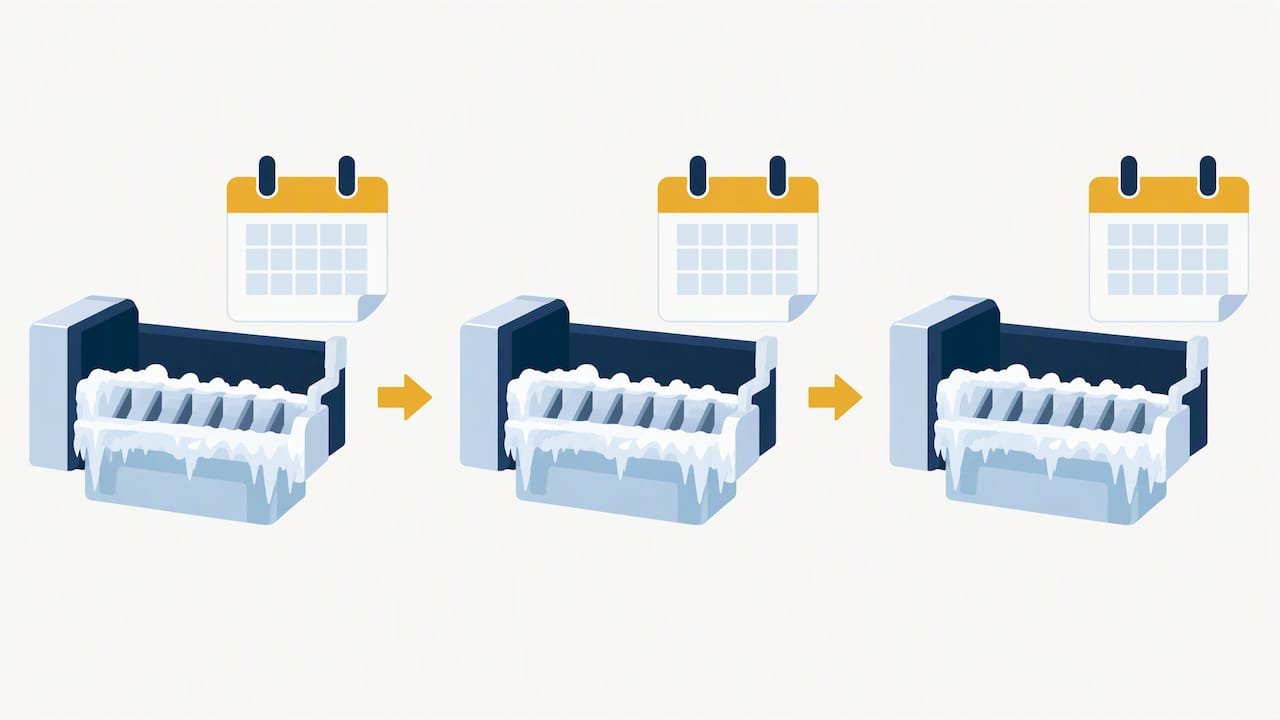
Step-by-step: how to unfreeze a Samsung ice maker safely
A frozen ice bucket or jammed auger needs a careful thaw, not force. Prying at a stuck bucket or blasting it with a hair dryer can crack plastic housings or damage the auger motor, which is why Samsung support specifically discourages forcing parts loose or using improvised heat sources.
- Unplug the refrigerator or switch off its breaker before doing any hands-on work inside the ice compartment.
- Remove the ice bucket and lay towels underneath to catch meltwater as the ice softens.
- Let the ice thaw gradually at room temperature rather than applying direct heat.
- If Samsung support guidance for your model allows it, run lukewarm water through the chute to help loosen stubborn buildup.
- Plug the unit back in, then press and hold the Test button, about six minutes on fridge-compartment models, and listen for a chime or watch for movement.
- If the test shows no response, unplug the refrigerator for two minutes as a fallback power cycle before trying again.
- When reinserting the bucket, rotate the helix about 90 degrees so it lines up with the drive motor and clicks into place without forcing it.
Ice makers generally need a freezer temperature at or below the freezing point to form ice reliably, according to Samsung’s troubleshooting page. If your freezer can’t hold that temperature, the cooling system needs attention before the ice maker will work correctly again.
Root causes and diagnostics: why the ice maker freezes or forms slush
Freezing and slush problems usually trace back to one of four sources, and figuring out which one you’re dealing with tells you whether a DIY fix will hold or whether you’re looking at a repair.
- Warm, moist air entering through a misaligned bucket, gapped chute, or loose dispenser flap condenses and refreezes into frost or slush, which Samsung’s frost guidance points to as the most common trigger.
- Ice that sits too long between uses tends to clump, since the automatic defrost cycle partially melts and refreezes cubes into a solid mass over time.
- Low water pressure or an old, clogged filter can produce small, irregular cubes that jam together instead of dropping cleanly.
- A failing defrost heater, a blocked drain, or a struggling fan or auger motor shows up as repeated buildup, water pooling under the crisper drawers, or an unusually loud fan.
A class-action filing and related technical service bulletin describe recurring ice-room defects in many French-door models, including slush, fan noise, water under the crispers, and repeated freezing. When your symptoms match that pattern, documenting dates and photos before you call for service speeds up an accurate diagnosis.
Prevention: habits that stop ice-bucket frost from coming back
Most repeat freezing problems come down to a handful of habits rather than a single big fix. Small, consistent maintenance keeps warm air out of the ice compartment and keeps cubes forming the way they should.
- Keep both doors closed as much as possible and avoid setting warm leftovers near the ice maker.
- Level the refrigerator so the door seals make full contact all the way around.
- Replace the water filter on schedule and confirm household water pressure meets roughly 20 psi minimum, since low pressure leads to small, clumping cubes.
- Harvest or empty the ice bin every one to two weeks and dry it before reinserting, which Samsung notes helps prevent fused clumps.
- Wipe down the dispenser flap and bucket seal monthly, and check for ice buildup while you’re at it.
Pro Tip: A dry ice bucket is a cold ice bucket’s best friend. Moisture left inside after cleaning is one of the quickest ways to end up with a solid block again within days.
When to call a professional and what a repair visit covers
Some symptoms call for a technician rather than another round of defrosting. If ice builds back within a day or two of a controlled thaw, if you notice water under the crisper drawers, if the ice-room fan sounds loud or seems blocked, or if the Test/Reset button and power cycle produce no response at all, further DIY attempts risk making things worse.
A visit typically covers:
- Checking the defrost heater, thermistor, and drain routing for blockages or failures.
- Inspecting the auger motor, fan, and door and bucket seals for wear or misalignment.
- Safely removing any frozen components without cracking plastic housings.
- Repairing or replacing the specific part causing the recurring freeze.
We have technicians with experience diagnosing Samsung refrigerator and freezer issues, with online booking available to schedule a diagnostic visit. That diagnostic step identifies the actual root cause instead of treating the symptom over and over.
Why recurring ice-room frost keeps coming back
Recurring frost after a manual defrost usually means the underlying cause never got fixed. A failing defrost heater, a drain that’s too short or kinked, or a bucket seal that never quite seats right will keep producing the same slush and freeze pattern no matter how many times you thaw it out.
Technicians rely on electrical checks and drain diagnostics rather than repeated manual defrosts to find that root cause. Documenting when and how the freezing recurs also helps confirm whether a unit matches a known technical service bulletin pattern, which speeds up getting the right parts and the right fix the first time.
— MDTECH
Book an on-site Samsung ice maker diagnosis with us
When a Samsung ice maker keeps freezing despite a careful thaw and reset, we bring the diagnostic tools and hands-on experience to find the actual cause instead of guessing again. Our technicians handle Samsung refrigerator repairs, and online booking lets you schedule a visit easily.

A typical visit includes a full diagnosis, an upfront estimate before any work begins, and a clear recommendation on whether a repair or a part replacement makes the most sense. If you’re ready to stop the freeze and frost cycle for good, schedule an appliance repair visit and we’ll take it from there.
- Technicians with experience in Samsung refrigerator and ice maker repairs.
- Estimates provided before repair work begins.
- Online booking available for scheduling.
For readers in our service area, our Samsung refrigerator repair page has more detail on coverage and scheduling.
FAQ
Is there a recall on Samsung ice makers for freezing issues?
There is no public recall tied specifically to ice makers freezing up, but a technical service bulletin documents recurring ice-room defects in many French-door models. If your symptoms match that pattern, it’s worth raising it directly with Samsung support or a repair technician.
Has there been legal action over Samsung ice maker defects?
A class-action filing describes recurring ice-room problems, including slush, fan noise, and freezing, across multiple French-door refrigerator models. The filing and the related technical service bulletin recommend specific consumer checks and repairs for affected units.
How do I unfreeze my Samsung ice maker?
Unplug the refrigerator, remove the ice bucket, and let it thaw gradually with towels underneath to catch the meltwater, since Samsung support discourages forcing parts or using a hair dryer. Once thawed, plug the unit back in and press the Test/Reset button, or do a short power cycle if nothing responds.
What causes my ice maker to keep freezing up?
Warm, moist air getting past the bucket seal, chute gap, or dispenser flap is the most common cause, according to Samsung’s frost guidance. Clumped ice from infrequent use, low water pressure, and failing components like the defrost heater or drain can all contribute as well.
Do I need a technician if resetting doesn’t fix it?
Yes, if the Test/Reset button and a power cycle don’t resolve the freeze, or if it returns within a day or two, a mechanical issue is likely involved. A technician can check the defrost heater, drain, and motor components that a reset alone cannot fix.
Sources
- Samsung | Frost forms in the Samsung freezer, refrigerator, or ice bucket
- Bianchi v. Samsung (class action filing, excerpts)