
TL;DR:
- Proactive plumbing maintenance, including regular inspections and simple tests, prevents costly emergencies and extends system lifespan.
- Identifying early signs like slow drains or silent leaks allows timely repairs, avoiding structural damage and water waste.
- Seasonal routines and annual professional checkups safeguard against weather-related damage and ensure plumbing efficiency year-round.
Plumbing maintenance is defined as the set of routine practices that prevent leaks, clogs, and system failures before they become expensive emergencies. Every homeowner benefits from knowing the core plumbing tips for homeowners that reduce repair costs and extend system life. Routine inspections prevent 80% of common plumbing problems and help you avoid emergency repair bills averaging $330 or more. The food coloring test, pipe insulation, and annual water heater flushing are three practices most homeowners skip entirely. This guide covers what actually works, in plain terms.
1. The most crucial plumbing maintenance tips every homeowner should know
Proactive plumbing care is the single most effective way to protect your home from water damage and high utility bills. Most plumbing failures do not happen suddenly. They develop over weeks or months from ignored drips, slow drains, and minor pressure changes that compound into major repairs.
Monthly inspection habits to build:
- Walk every visible pipe, faucet, and fixture once a month and look for moisture, rust stains, or soft drywall.
- Check under kitchen and bathroom sinks for drips or mineral buildup around supply lines.
- Inspect washing machine hoses for cracks or bulging, and replace rubber hoses with braided stainless steel every three to five years.
- Test all shutoff valves twice a year to confirm they turn freely. A valve that seizes during an emergency wastes critical response time.
- Use drain strainers in every sink and shower to catch hair, food particles, and debris before they reach the trap.
Proper disposal practices:
Pouring grease down the sink creates thick, hardened clogs that require professional removal. Dispose of cooking grease in a sealed container and place it in the trash. Limit garbage disposal use to soft food scraps and always run cold water for 30 seconds after each use.
Testing for silent toilet leaks:
The food coloring test detects silent toilet leaks by placing a few drops of dye in the tank and waiting 15 to 20 minutes without flushing. If color appears in the bowl, the flapper valve is failing. A replacement flapper costs roughly $10 and can save hundreds of gallons of water monthly.
Pro Tip: Flush your water heater annually by connecting a garden hose to the drain valve and releasing two to three gallons until the water runs clear. This removes sediment buildup that reduces heating efficiency and shortens the unit’s lifespan.
2. How to identify and fix common plumbing problems early
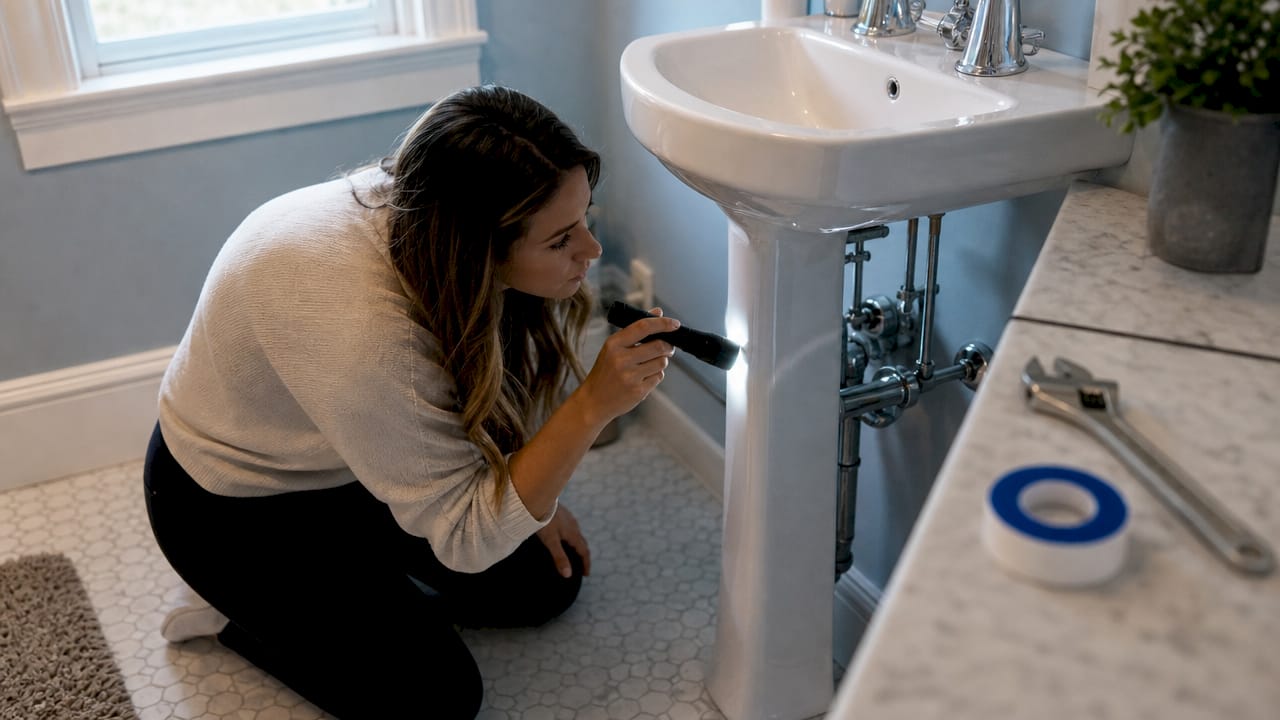
Ignoring early signs like slow drains or running toilets escalates minor issues into emergency repairs and structural water damage. Recognizing the warning signs early gives you time to act before costs multiply.
1. Slow drains
A slow drain signals a partial clog forming in the trap or drain line. Start with a drain snake or a cup plunger before reaching for any chemical product. Avoid caustic chemical drain cleaners entirely on older pipes. Chemical cleaners corrode older pipes and cause pinhole leaks that are far more expensive to fix than the original clog. Enzymatic drain cleaners from brands like Bio-Clean or Green Gobbler are safer long-term options that break down organic matter without damaging pipe walls.
2. Running toilets
A toilet that runs continuously wastes up to 200 gallons of water daily, which adds significantly to your monthly water bill. The most common cause is a worn flapper, a faulty fill valve, or a float set too high. Remove the tank lid, flush once, and watch the fill cycle. If water continues running after the tank fills, replace the flapper first. Flapper kits from Fluidmaster or Korky fit most standard toilets and cost under $15.
3. Dripping faucets
A single leaking faucet wastes over 3,000 gallons of water per year. Most dripping faucets result from a worn washer or O-ring inside the valve. Turn off the supply valve under the sink, disassemble the handle, and replace the worn part. Moen, Delta, and Kohler all sell brand-specific repair kits that include every component you need.
4. Using your water meter to detect hidden leaks
Turn off every water fixture in your home and check your water meter. Record the reading, wait two hours without using any water, and check again. If the meter moved, you have a hidden leak somewhere in the supply lines. This test costs nothing and takes minutes.
5. When to stop DIY and call a professional
Stop DIY work when you encounter corroded galvanized pipe, low water pressure throughout the entire house, or any leak behind a wall. These situations require a licensed plumber with diagnostic tools. Attempting repairs on pressurized supply lines without experience risks flooding and mold growth.
Pro Tip: Label every shutoff valve in your home with a piece of tape and a marker. During a leak emergency, knowing exactly which valve controls which fixture saves time and limits water damage.
3. Best practices to maintain plumbing efficiency and lower water bills
Plumbing efficiency directly controls your monthly utility costs, and small habits compound into meaningful savings over a year. The goal is to eliminate waste at the source rather than react to high bills after the fact.
- Check appliance connections quarterly. Washing machines, dishwashers, and water heaters all have supply line connections that loosen over time. A slow drip behind a washing machine can go unnoticed for months and cause floor damage.
- Monitor water pressure with a gauge. Normal residential water pressure runs between 40 and 60 PSI. Pressure above 80 PSI stresses pipe joints, valve seats, and appliance inlets. A pressure regulator, available at Home Depot or Lowe’s for under $50, protects the entire system and extends fixture life.
- Insulate hot water pipes. Foam pipe insulation on hot water supply lines reduces heat loss between the water heater and the fixture. You get hot water faster, run less water down the drain while waiting, and reduce the load on your water heater.
- Fix leaks within 48 hours. Every day a leak runs unchecked adds to your water bill and increases the risk of mold. Treat any confirmed leak as a same-week repair, not a someday project.
Experts advocate shifting from reactive repairs to scheduled annual maintenance as the most reliable path to long-term plumbing health and lower costs. This shift in mindset is what separates homeowners who spend $100 per year on maintenance from those who spend $1,000 on emergency repairs.
4. How seasonal and annual maintenance routines protect your home
Timing your plumbing care around the seasons prevents the most expensive category of plumbing failures: weather-related damage. A calendar-based routine removes guesswork and keeps your system performing reliably year-round.
| Season | Key maintenance task | Why it matters |
|---|---|---|
| Fall | Insulate exposed pipes and disconnect garden hoses | Prevents freezing and pipe bursts in winter |
| Winter | Drip faucets during freezes, keep cabinet doors open under sinks | Keeps water moving and prevents ice blockages |
| Spring | Inspect for freeze damage, test sump pump, check outdoor faucets | Catches winter damage before it worsens |
| Summer | Flush water heater, inspect washing machine hoses, check irrigation lines | Prepares high-use systems for peak demand |
| Annual | Schedule professional inspection and drain cleaning | Catches hidden issues and extends system lifespan |
Winterizing plumbing by insulating pipes and dripping faucets prevents frozen pipes, which cause water damage and emergency service calls that are almost entirely avoidable. In Orange County and Los Angeles County, hard freezes are rare but not impossible, and uninsulated pipes in garages or crawl spaces remain vulnerable.
Annual professional inspections including water heater flushing extend water heater lifespan by three to five years and save $1,000 to $2,000 in premature replacement costs. That single annual service call pays for itself many times over. Building a plumbing maintenance schedule into your home calendar is the most reliable way to stay consistent without relying on memory.
Key takeaways
Proactive plumbing maintenance prevents the majority of costly repairs, conserves water, and extends the life of every fixture and appliance in your home.
| Point | Details |
|---|---|
| Monthly inspections prevent failures | Check all visible pipes, fixtures, and appliance connections every month to catch issues early. |
| Silent leaks waste thousands of gallons | Use the food coloring test for toilets and your water meter for hidden supply line leaks. |
| Avoid chemical drain cleaners | Enzymatic cleaners like Bio-Clean protect older pipes while clearing organic clogs safely. |
| Annual water heater flushing saves money | Flushing sediment annually extends heater life by three to five years and avoids costly replacement. |
| Seasonal routines prevent weather damage | Insulate pipes in fall and drip faucets during freezes to prevent burst pipes and water damage. |
What years of plumbing calls have taught us about homeowner habits
Most homeowners treat plumbing the same way they treat smoke detector batteries: they think about it only when something goes wrong. After years of responding to plumbing service calls across Orange County and Los Angeles County, the pattern at Mdtechservices is consistent. The homeowners who spend the least on repairs are not the ones with the newest fixtures. They are the ones who check under their sinks once a month and replace a $10 flapper before it becomes a $300 water bill.
The uncomfortable truth is that most plumbing emergencies are not bad luck. They are deferred maintenance. A running toilet that gets ignored for six months, a slow drain that gets a chemical cleaner poured down it instead of a snake, a washing machine hose that has been bulging for two years. These are not surprises. They are predictable outcomes.
One thing worth saying directly: homeowners often underestimate their plumbing system. It is not a static utility. It is a pressurized network of pipes, valves, and mechanical components that wear down under daily use. Treating it like a dynamic system that needs consistent attention changes how you respond to small warning signs. You stop dismissing a dripping faucet as minor and start seeing it as a signal.
The shift from reactive to scheduled maintenance is not complicated. It takes about 20 minutes a month and one professional inspection per year. That investment reliably separates the homeowners who call us for a $15 flapper replacement from the ones who call us after a pipe has been leaking inside a wall for three months.
— MDTECH
How Mdtechservices helps you stay ahead of plumbing problems
When a plumbing issue goes beyond a DIY fix, having a licensed, responsive team ready makes all the difference. Mdtechservices provides professional plumbing inspections, repairs, and preventive maintenance for homeowners across Orange County and Los Angeles County.

Whether you need a water heater flushed, a leak diagnosed, or a full plumbing maintenance plan built around your home’s specific needs, Mdtechservices delivers reliable service from licensed technicians who know residential systems inside and out. For appliance-related plumbing issues, including washing machine connections and water heater installations, explore our appliance repair services to see how we support every system in your home. Book your inspection online or call us directly to get started.
FAQ
How often should homeowners inspect their plumbing?
Monthly visual inspections of visible pipes, fixtures, and appliance connections are recommended, combined with one professional inspection per year. Routine inspections prevent 80% of common plumbing problems and help avoid emergency repair costs averaging $330 or more.
What is the food coloring test for toilets?
The food coloring test detects silent toilet leaks by placing dye in the tank and waiting 15 to 20 minutes without flushing. If color appears in the bowl, the flapper valve is leaking and needs replacement.
Are chemical drain cleaners safe to use?
Chemical drain cleaners are not safe for older pipes. Caustic cleaners accelerate pipe corrosion and increase the risk of pinhole leaks. Enzymatic cleaners from brands like Bio-Clean are the safer long-term alternative.
How do I know if I have a hidden water leak?
Turn off all water fixtures, record your water meter reading, and check again after two hours. If the meter reading changed, a hidden leak exists somewhere in your supply lines and warrants a professional inspection.
When should I call a plumber instead of fixing it myself?
Call a licensed plumber when you encounter corroded galvanized pipes, whole-house low water pressure, or any leak behind a wall or under a slab. These repairs require diagnostic tools and experience that go beyond standard DIY plumbing work.