
When your shower runs cold, the problem is in one of two places: the water heater that makes the hot water, or the shower valve that mixes it. A quick test at other faucets in your home tells you which one, and that decides what you check next. This guide walks you through the test, the most common causes on gas, electric and tankless systems, the checks that are safe to do yourself, and the point where a licensed technician should take over.
TL;DR
- Turn on the hot tap at a sink. If it is also cold, the water heater is the likely cause. If the sink is hot and only the shower is cold, look at the shower valve or cartridge.
- On a gas tank heater, check whether the pilot flame is lit. On an electric heater, check the breaker or fuse. Follow the manual for your exact model.
- If you smell gas, stop. Turn off the gas supply, leave the area and do no further troubleshooting.
- A worn or clogged shower cartridge, debris in the valve, or reversed hot and cold lines can all cause a cold-only shower even when the heater is fine.
- Heating elements, thermostats, thermocouples and burner parts are repair jobs for a licensed professional.
Table of Contents
- Start with a two-minute test: shower or water heater?
- If every hot tap is cold: check the water heater
- If the sinks are hot but the shower is cold: check the valve
- Hot water that runs out fast or never gets fully hot
- What the repair may cost
- When to stop and call a licensed professional
- Get help in Orange County and Los Angeles County
- Our perspective: what we see in no-hot-water calls
- FAQ
- Sources
Start with a two-minute test: shower or water heater?
Before you open anything, compare hot water at different places in the house. Run the hot tap at a bathroom sink, then the kitchen sink, then the shower. The pattern points to the source.
| What you find | Most likely cause | Where to look first |
|---|---|---|
| Hot is cold at every faucet | Water heater problem | Pilot light, breaker, thermostat, heating element |
| Sinks run hot, shower runs cold | Shower valve or cartridge | Cartridge, temperature limit stop, valve screens |
| Hot flow is weak everywhere, cold flow is normal | Water heater or hot-side restriction | Heater for leaks or failure, clogged screens |
| Only one fixture has weak flow | Localized plumbing | That fixture’s screen, showerhead or supply line |
This comparison approach matches what a municipal water utility recommends. The Portland Water Bureau says that when only hot-water flow is reduced while cold flow is normal, you should inspect the water heater for leaks or other failures and clean the hot-water faucet screens and showerheads. If only particular faucets have reduced flow, the issue is more likely localized plumbing.
Also note how the problem behaves. A shower that was hot yesterday and cold today points to a sudden failure such as a tripped breaker or an extinguished pilot. A shower that slowly stopped getting as hot as it used to points to wear in a valve, cartridge or heating component.
If every hot tap is cold: check the water heater
Start with the basics. A.O. Smith, a major water heater manufacturer, says the first step is to check the product manual, then see whether an electric heater’s breaker or fuse has tripped, or whether a gas heater’s pilot light is lit. Manuals differ by model, so what follows is a general guide, not a replacement for yours.
Gas tank heater: is the pilot light on?
A pilot flame that has gone out is one of the usual reasons a gas tank heater stops making hot water. Many units have a small viewing window near the bottom. A.O. Smith advises a visual check of whether the pilot flame is present, and if relighting is needed, to follow the instructions printed for your specific unit.
Two safety points matter here:
- If you smell gas, do not continue. A.O. Smith’s relighting guidance says to stop if you smell gas. Otherwise, turn the gas control off and wait at least 10 minutes before relighting.
- If the pilot goes out again after relighting, something is causing it. That is no longer a reset, it is a repair. Our article on pilot light failure, its causes and safe fixes explains what typically sits behind a pilot that will not stay lit.
If you notice a gas smell at any point, turn off the gas supply valve and call your gas utility or emergency services from outside the home. Do not run diagnostics. We cover warning signs in our homeowner’s guide to detecting gas leaks.
Electric tank heater: breaker, fuse and power
On an electric unit, the first suspect is the power supply. A.O. Smith notes that a tripped circuit breaker is a very common reason an electric water heater stops working, and recommends resetting the breaker and checking for electrical shorts, loose wires and grounded heating elements.
The breaker is the part you can safely look at. The rest is not. Water heater components can remain live even when the unit is not actively heating, so opening access panels and testing wires is work for a licensed professional. Whirlpool’s troubleshooting guidance also warns that residential electric units commonly use 220/240 volts, which is enough to cause serious injury.
If a breaker trips once and stays on, you probably had a one-time overload. If it trips again soon after, stop resetting it. Repeated tripping signals a short or a failing element, and the heater needs to be looked at.
One more case: a newly installed electric heater. Whirlpool says that if the water is still not warm after the unit has had up to two hours, check whether the heater is receiving electrical power.
Thermostat, heating element or thermocouple
If power and pilot are fine, the usual culprits on a traditional tank are a faulty thermostat, a failed heating element on an electric unit, or a faulty thermocouple on a gas unit. Forbes lists a tripped breaker, an extinguished pilot, or a faulty heating element or thermostat as the common causes for tank heaters.
These are not do-it-yourself checks. They involve live electrical parts or the gas burner assembly. We explain what to expect on the cost side further down.
Tankless heaters: flow, scale and the “cold sandwich”
Tankless units heat water on demand, so they fail differently. A few patterns to know:
- A brief burst of cold between hot water. The U.S. Department of Energy’s Building America program describes a “cold water sandwich” effect during frequent on and off use, which causes a sudden temperature drop for a few seconds. Running the shower steadily, rather than turning it on and off, avoids it.
- Cold or lukewarm water when flow is low. Signature Hardware’s help center lists inadequate flow from a tankless water heater among the causes of only-hot or only-cold output at a thermostatic shower valve.
- Hard water damage. The same federal guideline notes that the cold water supply to a tankless unit must be evaluated because hard water can damage the unit. Much of Southern California has hard water, so scale is a reasonable thing to suspect in a tankless heater that has lost performance over time.
Tankless internals, including flow sensors and heating components, should be serviced by a technician familiar with that type of unit.
If the sinks are hot but the shower is cold: check the valve
When other faucets run hot, the water heater is doing its job. The trouble is between the supply pipes and your showerhead.
Worn or clogged cartridge
Most modern shower valves use a cartridge that blends hot and cold and often includes pressure or temperature controls. The Spruce notes that modern shower controls are designed to prevent temperature fluctuations, and that a worn cartridge can cause inconsistent water temperatures. For mixer showers, it also points to a worn or scaled-up thermostatic cartridge, or a slipped maximum temperature stop, as causes of not enough hot water.
The maximum temperature stop is the simplest thing to check. It is a limiter behind the handle that caps how far you can turn toward hot. If it has shifted, the handle may reach its end of travel before the water gets hot. Adjusting it usually means removing the handle, so shut off the water to the shower first if your valve has stops, and follow the manufacturer’s instructions for your brand.
Debris in the cartridge or check valves
Signature Hardware’s U.S. guidance says a thermostatic valve can deliver temperature swings or only-hot or only-cold output because of debris in the cartridge or check valves. Small mineral flakes or pipe debris, often stirred up after plumbing work or a water shutoff, can lodge in the valve and block the hot side.
Hot and cold lines reversed
The same guidance lists reversed hot and cold lines after installation as a cause. If the shower never ran hot since it was installed or remodeled, this is a prime suspect. It is a plumbing correction, not a cartridge swap.
Blocked screens and showerheads
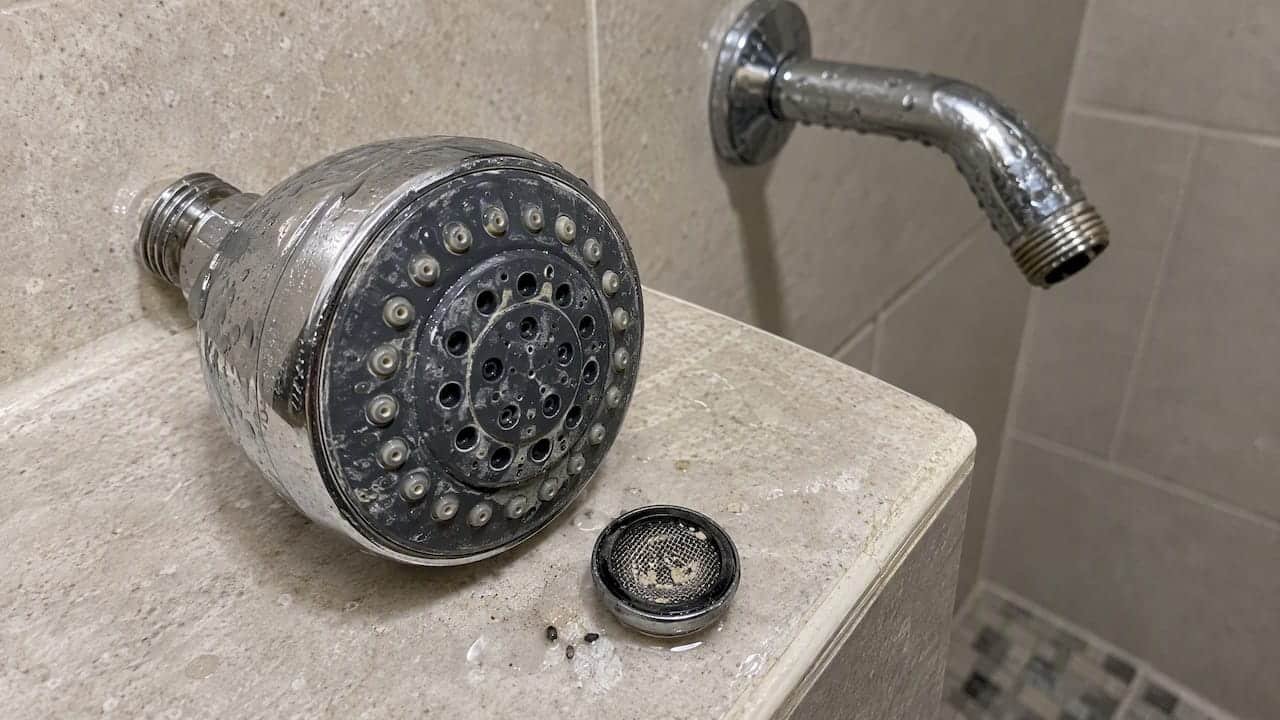
A clogged showerhead or inlet screen can cut flow on the hot side. The Portland Water Bureau recommends cleaning hot-water faucet screens and showerheads when hot flow is reduced. It is a low-risk step: unscrew the showerhead, rinse out any grit, and soak scale deposits according to the product’s care instructions.
Manual mixer showers
If you have an older manual mixer, remember that it blends the two supplies but cannot control the temperature itself. A cold shower may mean a supply blockage or blocked filters upstream of the mixer. If the supply to the mixer is compromised, adjusting the handle will not help.
Hot water that runs out fast or never gets fully hot
Some homes do not lose hot water entirely. The shower starts warm, then fades, or never gets as hot as you like. The common explanations are a thermostat that is set too low or failing, an element that has partly failed on an electric unit, sediment inside an older tank, or a heater that is too small for your household’s demand. A tankless unit may lose capacity when scale builds up.

You can check two things without tools. First, count how many hot-water uses overlap when it fades: a dishwasher, a washing machine and a shower at once will drain a tank faster than a single shower. Second, note how long the heater has been in service. An aging unit that has lost capacity is often a replacement conversation, not a repair.
Our water heater maintenance checklist for homeowners covers the routine care that helps a heater keep up with demand.
What the repair may cost
We do not publish flat prices for diagnostics or repairs, because the final cost depends on the unit, the part and access. For a general benchmark, Forbes reported figures as of 2022 for the repairs behind many no-hot-water calls:
| Repair | Typical cost including labor (2022) |
|---|---|
| Water heater thermostat replacement | $75 to $150 |
| Heating element replacement | $200 to $750 |
| Gas water heater thermocouple replacement | $150 to $325 |
These are national averages from a few years ago. Local rates, the model of your heater and the condition of the surrounding plumbing change the number, so treat them as a rough range for judging whether a quote is reasonable.
When to stop and call a licensed professional
Troubleshooting has a limit. Forbes advises calling a professional if you cannot safely identify the problem, if you smell gas, or if the issue involves complex electrical or internal burner components. For leaks or internal component failure, it recommends a licensed plumber with experience in your type of heater, tankless or traditional.
Call right away if:
- You smell gas. Turn off the gas supply valve, leave the area and do not keep troubleshooting.
- A breaker keeps tripping when you reset it.
- The pilot light will not stay lit after relighting following the manual.
- You see water pooling around the heater or a leak at the tank.
- The heater or its controls were under water in a flood. The Consumer Product Safety Commission warns that gas control valves, circuit breakers, GFCIs and fuses that have been under water must be replaced, even if they appear to work.
- The shower valve needs to be opened up and you are not comfortable shutting off water and removing trim.
Annual inspection is worth building into your routine. The CPSC says fuel-burning appliances, including water heaters, should be professionally inspected every year for proper operation and carbon monoxide leaks. A working carbon monoxide alarm belongs near any gas appliance, and our guide to carbon monoxide detectors explains how to place and maintain one. Our piece on why annual appliance checkups matter lays out what a checkup includes.
Get help in Orange County and Los Angeles County
If your testing points to a gas appliance problem or a plumbing problem, our licensed technicians can diagnose it on site. We serve homeowners, landlords and property managers across Orange County and Los Angeles County, and we offer 24/7 emergency availability, upfront pricing and online booking.
For a heater that will not stay lit, a gas line concern or a valve problem behind the wall, start with our gas appliance repairs or our plumbing repair services.
Book an appointment online, or call us, and tell us what you found in the two-minute test. Knowing whether the sinks ran hot helps us arrive prepared. If you manage rental property, note that we can work with you as the property owner or manager to authorize the repair.
Our perspective: what we see in no-hot-water calls
Most no-hot-water calls we hear about start with a guess. Homeowners assume the water heater has failed and begin thinking about replacement, when the actual problem is a pilot, a tripped breaker or a worn cartridge. Others assume the shower is fine and keep resetting a breaker that is tripping for a reason.
Our advice is to diagnose before you spend. Run the hot tap at a sink first. Check the simple, safe things: the breaker, the visible pilot flame, the showerhead screen. Then stop where the manual or your own comfort level says to stop.
We treat gas as a hard line. A water heater that will not stay lit, a pilot that keeps going out, or any smell of gas is a safety question first and a hot water question second. Our work includes gas appliance repair and conversions between LP and natural gas, and that experience is why we ask you not to improvise around a gas burner. Our gas safety guide for homeowners and our article on why safety checks matter cover the habits we want every household to have.
A repair that fixes the symptom but not the cause brings the cold shower back in a few weeks. We aim for long-term, warranty-safe solutions, which starts with finding the part that actually failed.
— MDTECH
FAQ
Why is my shower cold when the sink has hot water?
The water heater is working, so the problem is at the shower. The usual causes are a worn or scaled cartridge, debris in the valve or check valves, a maximum temperature stop that has slipped, or hot and cold lines reversed after installation. A clogged showerhead or inlet screen can also restrict the hot side. If cleaning the showerhead does not help, the valve needs a closer look.
What is the first thing to check when there is no hot water?
Read the manual for your water heater, then check the power or fuel. On an electric unit, look at the breaker or fuse. On a gas unit, look at whether the pilot flame is lit, and follow the manual’s relighting steps only if you do not smell gas. If neither explains it, stop and call a licensed professional.
Why does my shower run out of hot water so quickly?
Common reasons include a thermostat set too low or failing, a failed element, sediment in an older tank, or a heater that is too small for how much hot water the household uses at once. On a tankless unit, scale or low flow can limit output. A technician can test the heater and tell you whether it needs a repair or has reached the end of its useful life.
Is it safe to relight a water heater pilot light myself?
Only if you do not smell gas and you follow the instructions for your specific unit. A.O. Smith says to turn the gas control off and wait at least 10 minutes before relighting. If the pilot will not stay lit, or you smell gas at any point, turn off the gas supply and call a professional.
Should I repair or replace my water heater?
A single failed part, such as a thermostat, element or thermocouple, is usually a repair. Repeated failures, leaks from the tank, or a unit that can no longer keep up with your household often point toward replacement. A technician can inspect the unit and give you both options with upfront pricing.
Sources
- Troubleshooting water pressure and flow, Portland Water Bureau
- Water Heater Repair: Things to Consider, A.O. Smith
- How To Relight A Water Heater’s Pilot Light, A.O. Smith
- Is Your Hot Water Not Getting Hot? Common Causes, A.O. Smith
- Electric Water Heater Repair and Troubleshooting, Whirlpool
- Measure Guideline: Transitioning to a Tankless Water Heater, U.S. Department of Energy
- Thermostatic Valve Troubleshooting, Signature Hardware
- How to Fix Inconsistent Water Temperature, The Spruce
- Shower Fault Finder, National Shower Spares Knowledge Base
- No Hot Water? Here’s What To Do, Forbes
- Warning to Flood Victims: Replace All Gas Control Valves, CPSC
- Install a carbon monoxide alarm in your home, CPSC