
Replacing a garbage disposal typically costs $200 to $625, with most homeowners landing near $550 for a professional job, according to Angi’s cost data. The unit itself usually makes up $50 to $400 of that total, while labor runs $50 to $100 per hour for a straightforward swap.
- DIY makes sense when you’re swapping a like-for-like unit with no new wiring or plumbing changes.
- Hire a licensed pro if the job involves hardwiring, corroded mounting hardware, or a damaged sink flange.
Quick reference: A basic DIY swap can cost around eighty to one hundred fifty dollars in parts. A full professional replacement, including labor, averages $550, per Angi.
Key Takeaways
Professional garbage disposal replacement averages around $550, while a straightforward DIY swap can cost as little as $155 in parts.
| Point | Details |
|---|---|
| Total cost range | Professional replacement typically runs $200 to $625, averaging near $550. |
| Unit price by power | 1/3 to 1/2 HP units cost $50 to $225; 1 to 1¼ HP units cost $200 to $400. |
| DIY threshold | DIY works for like-for-like swaps with no wiring or plumbing changes needed. |
| Lifespan benchmark | Most units last 8 to 15 years, with 12 years as the typical average. |
| Where to book locally | Mdtechservices offers licensed installation and repair booking across Orange County and Los Angeles County. |
Table of Contents
- What Does a Garbage Disposal Replacement Cost Break Down To?
- How Does Motor Size Affect Disposal Cost and Performance?
- Should You DIY or Hire a Professional Installer?
- What Happens During a Professional Installation?
- What Drives the Price Higher Than the Base Estimate?
- How Long Does a Garbage Disposal Last Before Replacement?
- What Should Your Disposal Replacement Budget Include?
- Who Installs Garbage Disposals Safely in Your Area?
- Why Most Cost Guides Undersell the DIY Risk
- Book a Licensed Disposal Replacement in Orange County or LA
- Sources
What Does a Garbage Disposal Replacement Cost Break Down To?
A realistic budget has four parts: the unit, labor, small parts, and add-ons that only show up once the old disposal comes out. Understanding each piece helps you spot where a quote is fair and where it might be padded.
- Unit price. Budget models run $50 to $225, mid-range units $120 to $310, and premium 1 horsepower models $200 to $400, based on HomeAdvisor’s pricing data.
- Labor. Expect an hourly labor rate generally ranging from fifty to one hundred dollars, with most standard jobs wrapping up in about an hour, according to Angi. That hourly rate covers removing the old unit, mounting the new one, reconnecting plumbing and electrical, and testing for leaks.
- Small parts. Small parts like a new power cord, mounting flange, or P-trap fittings can add to the cost, typically ranging in modest amounts.
- Add-ons. An air gap for dishwasher drainage or a dedicated electrical outlet pushes costs higher, sometimes by $75 or more.
Here’s how those pieces stack up in practice. A simple swap involving the same brand and mounting, with no rewiring, might total roughly between two hundred fifty and three hundred fifty dollars all in. A more involved installation including a new flange, fresh P-trap, and about an hour and a half of labor can bring costs up to roughly four hundred fifty to six hundred dollars. Homewyse’s national calculator estimates the starting average replacement cost somewhat above five hundred dollars, highlighting that site conditions and optional upgrades can significantly influence the final price.
How Does Motor Size Affect Disposal Cost and Performance?
Horsepower drives both price and how well a disposal handles daily kitchen abuse. A bigger motor grinds tougher scraps faster and jams less often, but you’re paying for capacity most households only occasionally need.
- 1/3 to 1/2 HP units ($50 to $225): Fine for light use, small households, or rental properties where cost matters more than power, per HomeAdvisor.
- 5/8 to 3/4 HP units ($120 to $310): The sweet spot for most families. Enough torque for fibrous vegetables and bones without a big price jump.
- 1 to 1¼ HP units ($200 to $400): Best for large households or anyone who cooks heavily from scratch.
- Continuous feed units run while you add waste, faster for daily cooking cleanup. Batch feed models require a cover to activate, a safety feature some households value with kids in the house, though they cost slightly more for the same power tier.
- Aluminum bodies cost less upfront but corrode faster. Stainless steel costs more but tends to outlast aluminum by years, a trade-off Consumer Reports flags as the real differentiator between budget and premium units.
Should You DIY or Hire a Professional Installer?
The honest answer depends on what’s already under your sink, not just your comfort with a wrench; for insights into risks and when to hire a pro, see Avoiding Common Pitfalls: The Challenges of DIY Door Replacement.
- DIY works when you’re replacing an existing unit with a comparable model, the mounting ring is intact, and no new wiring is required. You’ll need a basin wrench, screwdriver, plumber’s putty, and about an hour.
- Call a pro if the disposal needs to be hardwired, the mounting bracket is rusted or seized, the sink flange is cracked, or local code requires a dedicated circuit. DIY guidance from major retailers consistently flags electrical and plumbing modifications as the line where amateur work turns risky, sometimes creating slow leaks that surface months later.
- Time and cost comparison: DIY saves the $50 to $100 hourly labor fee but takes most first timers two to three hours, including trips for missing parts. A professional typically finishes in about an hour and often quotes a flat rate for standard swaps.
Pro Tip: Take a photo of your current setup before you disconnect anything. If you end up calling a technician mid-project, that photo speeds up diagnosis and can shave time (and cost) off the visit.
If your project involves recurring leaks or you’re unsure whether it’s a repair or full swap, our DIY garbage disposal repair tips walk through safe troubleshooting steps first.
What Happens During a Professional Installation?
A standard replacement follows a predictable sequence, and knowing it helps you judge whether a technician is thorough or rushing.
- Power shutoff at the breaker, confirmed with a tester before any wiring is touched.
- Old unit removal, disconnecting the drain, discharge tube, and electrical connection.
- Flange and plumbing inspection to check for corrosion, cracks, or a mismatched mount.
- New unit mounting, using the existing ring when compatible or installing a new one.
- Reconnection of electrical and plumbing lines, followed by a leak and function test.
Because most brands use standardized mounting systems, many swaps reuse the existing ring and finish in about an hour. Corroded hardware or a hidden leak can stretch that to two hours or more. Before paying, ask the technician to run the disposal with water for a full minute and check under the sink for drips.
What Drives the Price Higher Than the Base Estimate?
Quotes rarely match the base estimate once a technician gets under the sink. A few common issues explain most of the gap.
- Electrical upgrades: A dedicated outlet or hardwiring for a higher-amperage motor can add $75 to $200 in electrician fees, per Angi’s cost breakdown.
- Corroded mounting hardware: Cutting or prying a seized mount can turn a one-hour job into two-plus hours, adding $75 to $200, according to HomeAdvisor.
- Damaged sink flange: Replacing it adds parts and labor, typically $50 to $100.
- New drain lines or air gap: Needed when the old configuration doesn’t match dishwasher drainage requirements.
Ask any contractor for an itemized quote that separates the unit, labor, and each potential add-on. That single request usually reveals whether a low bid is realistic or missing pieces you’ll pay for later.
How Long Does a Garbage Disposal Last Before Replacement?
Most disposals last between eight and fifteen years, with around twelve years often cited as the typical benchmark lifespan, per Bob Vila. Avoiding grease, fibrous scraps, and running cold water during use pushes units toward the higher end of that range.
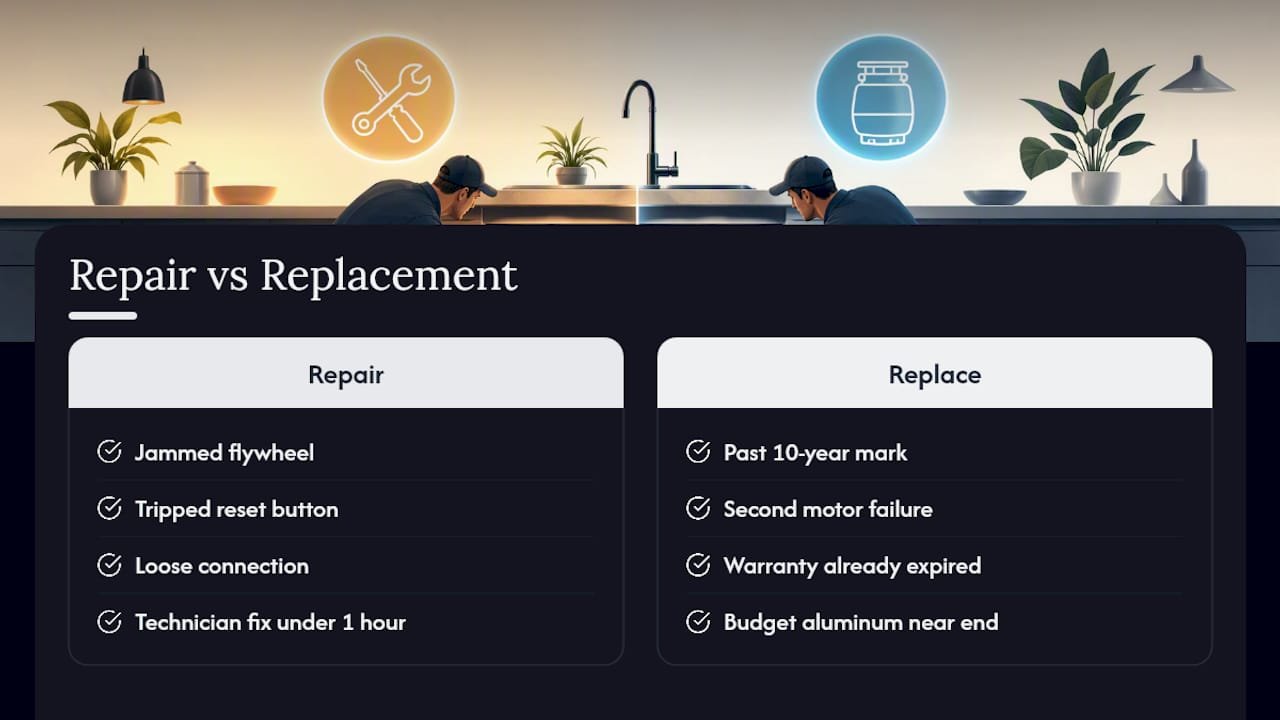
Repair makes sense for a jammed flywheel, a tripped reset button, or a loose connection, all of which a technician can often fix in under an hour. Replacement becomes the smarter move once you’re past the 10 year mark, facing a second motor failure, or the warranty has already expired. Stainless steel units with longer warranties tend to justify a repair attempt more often than budget aluminum models nearing the end of their expected life.
What Should Your Disposal Replacement Budget Include?
A workable budget captures every line item before you commit to a quote.
- Unit cost by horsepower and material
- Labor rate and estimated hours
- Small parts: power cord, flange, P-trap fittings
- Electrical or plumbing add-ons if applicable
- Haul-away or disposal fee for the old unit
Sample DIY budget: $130 unit + $25 in parts = $155 total.
Sample professional quote: $180 unit + $75 labor + $40 flange replacement = $295 to $400 depending on region and complications.
Always request an itemized estimate in writing. Our plumbing checklist for homeowners covers what to confirm before and after the swap.
Who Installs Garbage Disposals Safely in Your Area?
Mdtechservices employs licensed technicians serving Orange County and Los Angeles County, covering appliance installation, plumbing, and the electrical work a disposal swap sometimes requires.
- Online appointment booking for faster scheduling
- Licensed, insured technicians for code-sensitive electrical work
- Service descriptions covering garbage disposal installation and repair options
Pro Tip: If your disposal is leaking rather than dead, our garbage disposal repair page may save you the cost of a full replacement.
Why Most Cost Guides Undersell the DIY Risk
The conventional advice treats DIY versus professional installation as a simple money question. It isn’t. The real dividing line is what’s hiding under your sink, not how handy you feel that weekend.
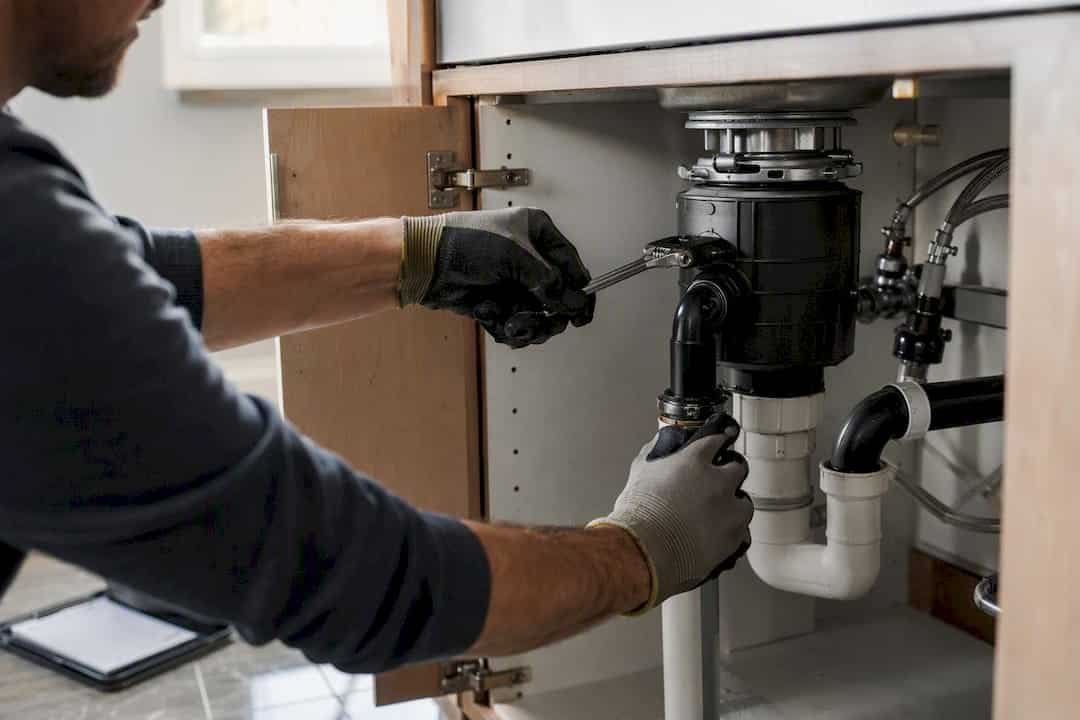
Most cost guides quote a clean labor rate and move on, but the jobs that actually blow past budget are the ones involving corroded mounts or a flange nobody checked first. That’s where an hour turns into three, and a $250 job turns into $500. Homeowners who skip the inspection step, DIY or professional, are the ones who end up frustrated.
What matters most isn’t finding the cheapest unit. It’s getting an honest look at your existing plumbing and electrical before committing to a number. A technician who inspects first and quotes second is worth more than one who quotes a flat rate sight unseen. If you’re on the fence, that inspection alone is worth the service call, even if you end up finishing the job yourself.
— MDTECH
Book a Licensed Disposal Replacement in Orange County or LA
Mdtechservices gives you a faster, more predictable path than piecing together a DIY project or gambling on an unlicensed handyman: a licensed technician who inspects your setup, quotes it honestly, and handles the electrical or plumbing work that trips up most DIY attempts.
If you’re weighing repair against full replacement, our guide on appliance repair versus replacement breaks down the decision further. When you’re ready to move forward, book your garbage disposal installation online and get a technician out to your Orange County or Los Angeles County home with an itemized quote before any work begins.
Sources
- How Much Does It Cost to Replace a Garbage Disposal? | Angi
- Garbage disposal replacement cost | HomeAdvisor
- Garbage disposals buying guide | Consumer Reports
- Cost to Replace Garbage Disposal | Homewyse