
Replacing a refrigerator compressor typically costs several hundred to a bit over one thousand dollars all-in, with many homeowners paying in the mid-hundreds to mid-seven-hundreds range for a standard residential unit. Repair usually makes sense when the quote is reasonably below half the price of a comparable new fridge and the unit is under around eight years old. Above that threshold, replacement often wins. Any sealed-system work requires an EPA-certified technician, and you should check your compressor’s part warranty before agreeing to any repair.
TL;DR:
- Repair costs typically range from around $430 to over $1,000, with OEM parts costing 20% to 40% more than aftermarket options.
- The average repair price is about $562, but sealed-system work requires EPA-certified technicians, adding to labor costs.
- Replacement is usually more cost-effective if the quote exceeds half the price of a new refrigerator, especially for units over eight years old.
- Access difficulty and refrigerant type significantly influence the cost, with built-in and high-efficiency models tending to be more expensive to repair.
- Many apparent compressor failures are caused by simpler issues like relays, condenser coils, or fan problems that can be checked before costly repairs.
Table of Contents
- What Does It Cost to Replace a Fridge Compressor?
- What Drives Fridge Compressor Replacement Cost So Much?
- Should You Repair or Replace Your Fridge’s Compressor?
- Is It Really the Compressor, or Something Cheaper?
- What Happens During a Professional Compressor Replacement?
- How Long Does It Take, and How Do You Lock In a Fair Price?
- The MDTech Perspective: How We Diagnose a Compressor Complaint
- Get a Written Compressor Quote Before You Decide
- Sources
What Does It Cost to Replace a Fridge Compressor?
The price you pay breaks down into several distinct line items, and understanding each one helps you spot a fair quote from an inflated one. A compressor kit alone can cost a few hundred dollars depending on the brand and whether it’s an OEM or aftermarket part. Labor typically adds several hundred dollars more, since sealed-system work takes specialized tools and training that most general handymen simply don’t have.
Consumer Reports found the median compressor-related repair cost lands around $562, a figure that fits comfortably inside the broader range reported by Angi. Component-level cost trackers show a similar pattern using a labor-hour formula, producing typical totals of roughly $430 to $1,000 for standard residential fridges.
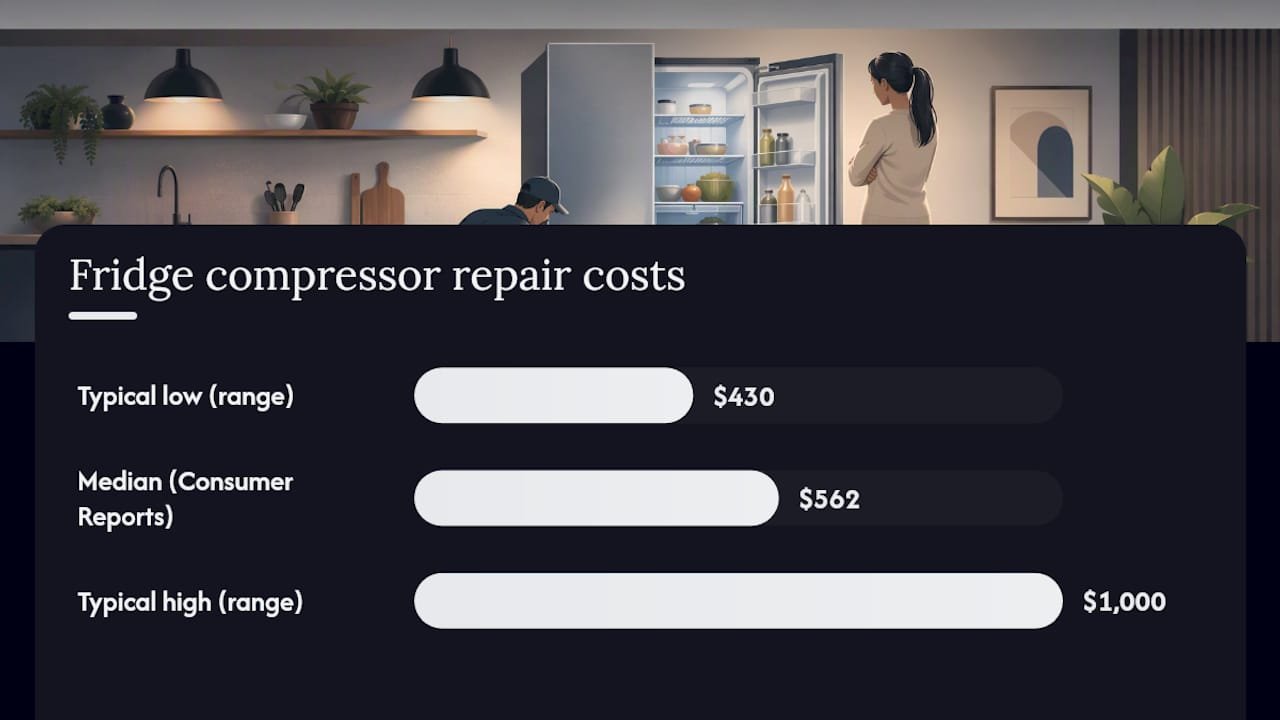
Here’s how those costs typically break down by component:
A few things push individual line items higher than the averages above:
- OEM parts cost more but fit better. Original manufacturer compressors typically run 20% to 40% above generic aftermarket units, but they usually match your fridge’s original specs exactly, which matters for warranty compliance.
- Labor rates vary by region and demand. Urban service markets often carry higher hourly rates than rural ones, so the same job can cost noticeably more depending on where you live.
- Tight installations add time. Built-in refrigerators, counter-depth units, and fridges wedged into custom cabinetry all take longer to service, and that extra time shows up directly on your labor line.
- Emergency and same-day service carries a premium. Calling for weekend or after-hours help typically adds a rush fee on top of standard rates.
- High-efficiency compressors need special handling. Inverter-driven units often require diagnostic software and calibration steps that standard reciprocating compressors don’t, which can stretch labor hours.
Ask any technician for a written, itemized quote before work begins. A vague number like “around $600” tells you nothing about which of these components you’re actually paying for, and it makes comparing quotes from different providers nearly impossible.
What Drives Fridge Compressor Replacement Cost So Much?
Four variables explain almost all the price spread you’ll see between quotes: compressor type, unit size and configuration, refrigerant type, and how hard the compressor is to reach.
Reciprocating compressors, the older piston-style design, are cheaper to source and simpler to install. Inverter or linear compressors, common in newer energy-efficient models from major brands, run quieter and last longer, but the parts cost more and the electronics that control them need specialized diagnostic tools. If your fridge is a French-door model with a variable-speed compressor, expect to pay toward the higher end of any range you’re quoted.
Unit class matters just as much as compressor type. A standard top-freezer or side-by-side fridge gives a technician easy access to the compressor compartment. Built-in, panel-ready, and premium counter-depth models often bury the compressor behind tighter clearances, custom paneling, or awkward cabinet installations, and that added complexity shows up as extra labor hours.
Refrigerant type affects both material cost and legal handling requirements. Older units running R-134a are generally straightforward for a certified technician to service. Newer refrigerants used in energy-efficient models can carry different handling rules and sometimes higher recovery costs, since EPA regulations govern how refrigerant is captured, stored, and disposed of regardless of which type your fridge uses.
Access issues round out the list. A compressor tucked behind a built-in island fridge, wedged against a wall, or buried under a cabinet takes longer to remove and reinstall than one sitting in an open utility closet. That extra time gets billed as labor, not as a separate fee, so it’s easy to miss on a quote unless you ask directly.
Pro Tip: Before you approve any repair, ask the technician to identify the exact compressor part number from your fridge’s model plate and confirm it in writing. This one step prevents the common surprise of a quote changing after the “wrong part” gets ordered.
Should You Repair or Replace Your Fridge’s Compressor?
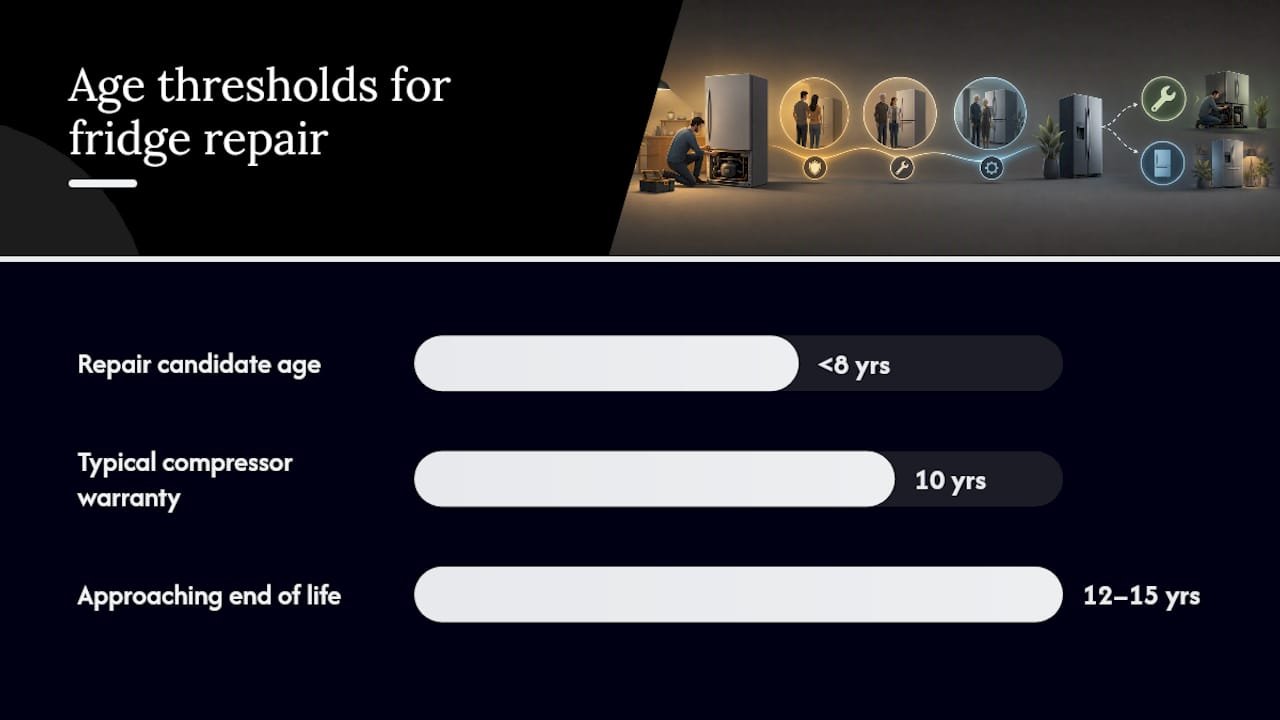
The clearest tool for this decision is the 50% rule: if the repair quote exceeds half the cost of a comparable new refrigerator, replacement is usually the better financial move. Say a similar new fridge costs $1,400. A $500 quote on the same fridge stays comfortably under that line, and repair becomes the smarter bet.
Age matters just as much as the math. Follow these steps to sort a genuine repair candidate from a fridge that’s better off replaced:
- Check the fridge’s age. Units under eight years old are usually worth repairing if the quote is reasonable; units past 12 to 15 years are approaching the end of their expected service life regardless of repair cost.
- Look up the model’s premium status. High-end built-in or panel-ready refrigerators often justify repair even past typical age thresholds, since replacement costs run several thousand dollars higher than a standard model.
- Pull up your warranty documentation. Many manufacturers cover the compressor part itself with warranties that can be up to about 10 years on certain models from brands like LG and Samsung, though labor and refrigerant are rarely included after the first year.
- Get a second quote if the first one feels high. Compressor jobs are complex enough that estimates can vary by hundreds of dollars between shops for the same symptom.
Before signing off on any repair, verify these warranty details:
- Compressor part warranty length and whether it’s still active on your unit.
- Whether labor is covered separately from parts, since many warranties only cover the compressor itself.
- Refrigerant charge exclusions, which some warranties don’t cover at all.
- Whether the warranty transfers if you bought the fridge secondhand.
Once you have a written, all-in sealed-system price, compare it against the retail cost of a comparable new model in the same size and efficiency class. If you’re weighing whether the appliance itself is worth saving versus starting fresh, the same logic that applies to replacing interior doors holds true here: age, remaining useful life, and repair cost all factor into a genuinely informed decision, not just the sticker price of the fix.
Is It Really the Compressor, or Something Cheaper?
A surprising number of “dead compressor” calls turn out to be something far less expensive. The start relay, a small component that kicks the compressor motor into gear, fails often enough that some service guides suggest roughly half of apparent compressor complaints trace back to it or another simpler, cheaper part. Before you approve a compressor replacement, it’s worth ruling out the cheaper suspects first.
Here’s how to tell them apart:
- Start relay failure usually presents as a fridge that hums, clicks repeatedly, or shuts off shortly after starting. This part typically costs a fraction of a full compressor job.
- Dirty condenser coils can make a compressor run constantly and overheat, mimicking compressor failure. Angi’s cost data notes that coil cleanliness directly affects compressor strain and performance.
- Fan motor problems show up as a fridge that runs but doesn’t cool evenly, since a failed evaporator or condenser fan starves the system of airflow.
- Control board faults can cause erratic cycling that looks like compressor trouble but has nothing to do with the sealed system at all.
Three checks are safe for any homeowner to do before calling a technician: confirm the outlet has power and the breaker hasn’t tripped, pull the fridge out and vacuum visible dust off the condenser coils, and check that the thermostat setting hasn’t been accidentally changed. Beyond that, stop. Testing compressor continuity and resistance requires proper meters and interpretation, and iFixit’s troubleshooting guide is clear that values outside expected ranges are a technician’s call to make, not a homeowner’s.
That’s exactly why the diagnostic visit matters. A reputable shop applies that fee toward the repair if you move forward, so ruling out the cheap fixes first doesn’t cost you twice.
Pro Tip: Record a short video or audio clip of the noise your fridge is making before the technician arrives. A clicking sound, a hum that stops abruptly, and a constant drone all point to different problems, and a recording helps the tech diagnose faster.
What Happens During a Professional Compressor Replacement?
A genuine compressor swap is a sealed-system repair, which means it follows a specific technical sequence rather than a simple part swap. The technician recovers the existing refrigerant using certified equipment, removes the failed compressor, and brazes in the new one. From there, the filter drier gets replaced, the system gets pulled down to a deep vacuum to remove moisture and air, and finally it’s recharged with refrigerant and leak-tested before being handed back to you.
This entire sequence, refrigerant recovery through final leak test, explains why sealed-system labor costs more than a simple parts swap. Under federal law, EPA Section 608 requires certified technicians to handle any refrigerant recovery and recharge. This isn’t a suggestion. Sealed-system compressor work is not a legal or safe DIY project, regardless of how capable you are with a wrench.
Labor hours vary by unit type, generally ranging from a few hours for standard compressors to somewhat longer for high-efficiency or built-in units, reflecting differences in complexity and diagnostics.
Before the technician starts, ask three questions: how long is the parts warranty on the new compressor, is labor covered separately if something goes wrong within 90 days, and will you receive an itemized invoice showing the refrigerant type and quantity used. A shop that hesitates on any of these answers is worth a second call for comparison.
How Long Does It Take, and How Do You Lock In a Fair Price?
Most compressor jobs run from same-day diagnosis to a completed repair within 2 to 5 business days, assuming the part is in stock locally. If the compressor needs to be special-ordered, or if a leak test after the first recharge reveals a slow leak needing a follow-up visit, add several more days to that window.
When you request a quote, ask for these specifics in writing: total parts cost with the compressor part number listed, labor hours and rate, refrigerant type and charge cost, disposal fee for the old unit and refrigerant, and the warranty terms on both parts and labor. A shop unwilling to itemize these categories is one worth avoiding.
A few tactics genuinely lower your final bill:
- Check your compressor’s warranty status before scheduling anything, since a covered part can eliminate the biggest line item entirely.
- Ask directly about OEM versus aftermarket pricing, since the gap between them is often larger than homeowners expect.
- Bundle any other minor repairs into the same visit to avoid a second travel fee.
- Schedule during business hours rather than nights or weekends to skip emergency surcharges.
Pro Tip: Walk away from any quote that refuses to specify refrigerant type and amount in writing. That’s one of the easiest places for a bill to balloon after the work is already underway.
The MDTech Perspective: How We Diagnose a Compressor Complaint
Most compressor complaints we field aren’t compressor problems at all until we’ve ruled out the start relay, the fans, and the control board first. Our technicians document symptoms, run the appropriate tests, and only then present a written, all-in quote covering parts, labor, and refrigerant. Every sealed-system job goes to an EPA-certified technician, no exceptions, and the diagnostic fee gets applied toward the repair if you approve it. That order of operations exists to keep homeowners from paying for a compressor they never needed.
— MDTECH
Get a Written Compressor Quote Before You Decide
Skipping straight to a compressor replacement without ruling out the cheaper suspects is how homeowners overpay. Mdtechservices runs a diagnostic first, applies that fee toward your repair if you move forward, and gives you a written, itemized quote covering parts, labor, and refrigerant before any sealed-system work begins.
Our technicians handle everything from start-relay swaps to full compressor replacements, and every repair comes with clear terms on parts and labor. If your fridge is still under its compressor warranty, we’ll check that first, since it can eliminate your biggest cost before we even discuss labor. Booking is simple: visit our refrigerator repair page to schedule a diagnostic visit, or explore how our appliance repair services work before you commit to a full compressor swap. Get the diagnosis first. The right decision usually follows from there.
Sources
- How Much Does a Refrigerator Compressor Cost? 2026 Data — Angi
- Should you repair or replace your broken refrigerator? — Consumer Reports
- Section 608 technician certification requirements — EPA
- Refrigerator compressor replacement cost: What U.S. buyers typically pay (2026) — LatestCost