
TL;DR:
- Immediate action in plumbing emergencies focuses on stopping water flow, protecting electrical systems, and containing damage. Preparing an emergency kit, knowing shutoff valve locations, and acting in the correct sequence can reduce damage and costs. Calling a licensed plumber early helps prevent escalation and expensive repairs.
Emergency plumbing steps are the immediate, prioritized actions you take to stop water damage, protect your home’s structure, and stay safe before a licensed plumber arrives. Scenarios like burst pipes, sewage backups, and water heater failures demand fast, correct responses. Every minute of delay costs money and compounds damage. This guide walks you through exactly what to do, what to avoid, and how to prepare so you never face a plumbing crisis unprepared.
What supplies do you need before a plumbing emergency?
Preparation is the single most effective thing you can do to reduce damage during a plumbing crisis. Knowing where your shutoff valves are and having the right tools on hand turns a chaotic situation into a manageable one. Fumbling for valves during an active leak is one of the most common reasons minor incidents escalate into major repairs.
Build your emergency plumbing kit
A well-stocked emergency kit should include these items, stored together in one accessible location:
- Adjustable wrench for shutting off fixture valves and supply lines
- Heavy-duty towels and buckets to contain and collect leaking water
- Flashlight (with fresh batteries) for inspecting dark utility areas
- Rubber gloves to protect your hands from contaminated water
- Plumber’s tape (Teflon tape) for temporary thread seals
- Plumber’s epoxy or pipe repair clamps for small cracks or splits
- Rubber patch kit for temporary pipe sealing
Pro Tip: Take photos of your main water shutoff valve, individual fixture valves, electrical breaker panel, and gas shutoff. Save them in a labeled album on your phone. Professional plumbers recommend this because it saves critical seconds when every second counts.
Know your shutoff valve locations
| Valve Type | Typical Location | What It Controls |
|---|---|---|
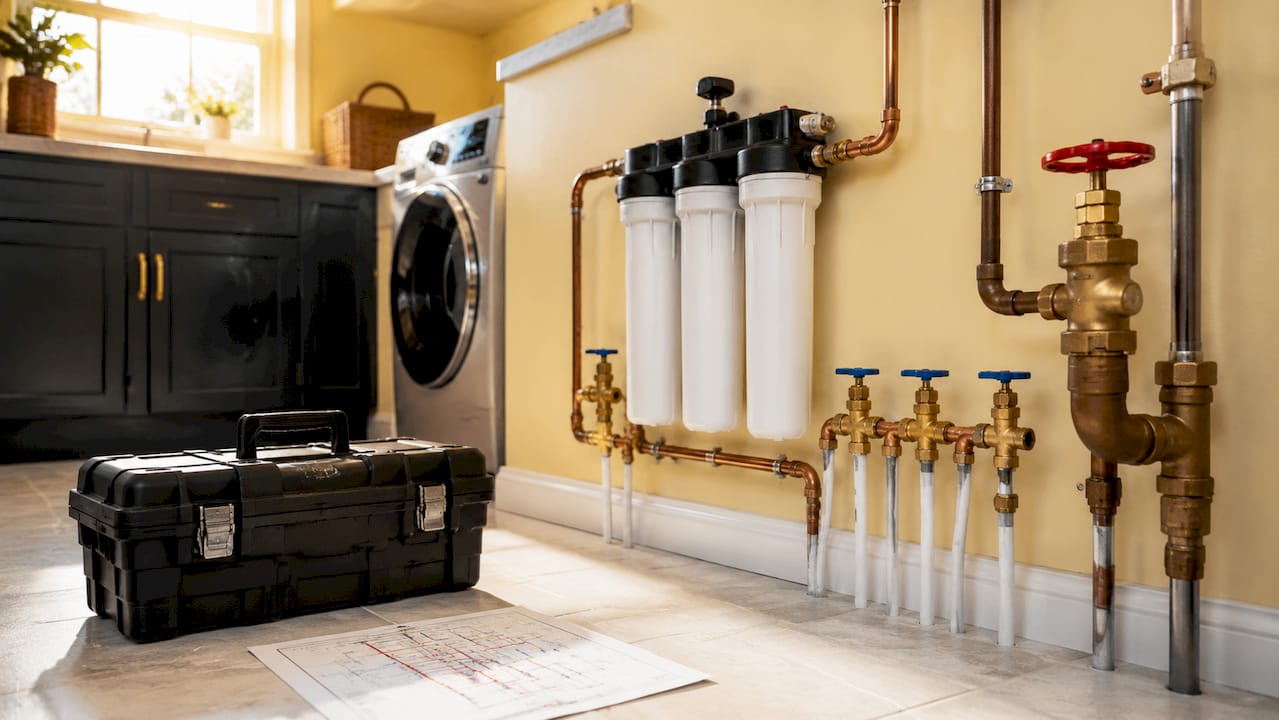
| Main water shutoff | Near water meter, garage, or utility room | All water in the home |
| Toilet supply valve | Behind or below the toilet tank | Toilet water supply only |
| Sink supply valves | Under the sink cabinet | Hot and cold for that fixture |
| Water heater valve | On the cold water inlet pipe above the unit | Water heater supply |
| Gas shutoff | Near gas meter or behind appliances | Gas supply to home |
Save the contact number for a trusted 24/7 licensed plumber in your phone before you ever need one. Searching for help during an active flood adds unnecessary stress and delay.
What are the immediate steps for a plumbing emergency?
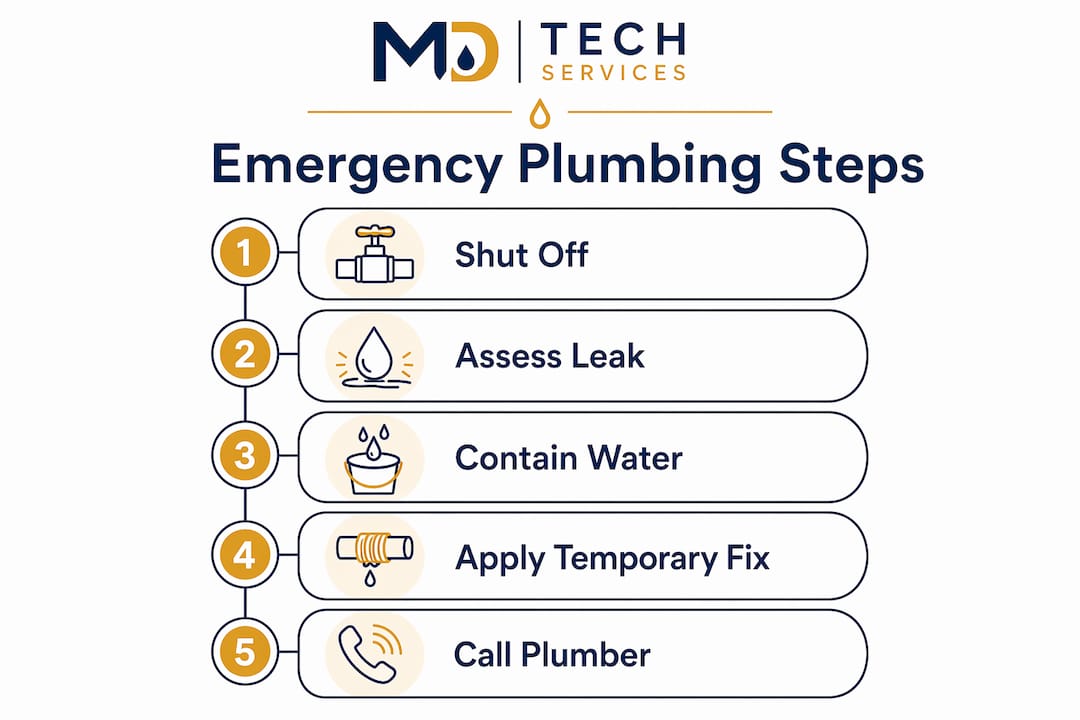
The steps for plumbing emergencies follow a clear priority order: stop the water, protect against electrical hazards, contain the damage, document it, and call for help. Skipping steps or acting out of order creates new risks. Follow this sequence every time.
-
Shut off the nearest fixture valve first. For a leaking toilet, turn the valve behind the tank clockwise. For a leaking sink, turn the valves under the cabinet. This targets the problem without cutting water to the whole house.
-
Shut off the main water supply for large or unknown leaks. High-pressure pipe bursts require bypassing fixture valves entirely and going straight to the main shutoff. Do not waste time searching for a localized valve when water is spreading fast.
-
Cut power at the circuit breaker if water is near electrical areas. Water near electrical outlets or panels creates a life-threatening hazard. Go to your breaker panel and shut off the circuits covering the affected area. Never walk through standing water to reach a plugged-in appliance.
-
Contain the water. Place towels along doorways to stop water from spreading to adjacent rooms. Set buckets under active drips. Open floor drains if available to direct water away from flooring and subfloor.
-
Document everything before cleanup. Take photos and video of all visible damage, including wet walls, flooring, and affected fixtures. Insurance adjusters require this documentation, and skipping it can cost you a claim.
-
Call an emergency plumber with specific details. Providing information about whether you have shut off the fixture valve or the main supply helps dispatchers assess severity and prepare the right equipment before arrival.
Pro Tip: Mold can begin growing within hours of water exposure, which can add thousands of dollars to your repair bill. Speed matters not just for stopping the leak but for limiting what comes after it.
The urgency of mold growth after water intrusion is a strong reason to call a professional even after you believe you have stopped the leak. Surface drying is not the same as structural drying.
What temporary fixes can you apply before help arrives?
Temporary repairs buy time. They are not permanent solutions, but they can slow or stop a leak long enough for a licensed plumber to arrive and fix the problem correctly. Use only the methods below. Anything beyond these risks making the situation worse.
- Plumber’s epoxy: Knead the two-part compound together and press it firmly over a small crack or pinhole leak. It works on copper, PVC, and steel pipes. It sets in minutes and holds under moderate pressure.
- Pipe repair tape (silicone self-fusing tape): Wrap tightly around a leaking joint or small split. Overlap each layer by half. This works best on pipes with low to moderate water pressure.
- Rubber patch and clamp: Press a rubber patch over a split and secure it with a pipe clamp or hose clamp. This method handles slightly larger cracks than tape alone.
- Toilet float adjustment: If your toilet is overflowing, lift the float inside the tank manually to stop the fill valve. Tie it up temporarily with a piece of string if needed.
Safety warning: Never attempt repairs on older, brittle pipes by overtightening fittings or valves. Overtightening aging pipes can crack them further and turn a small leak into a major rupture. If you smell gas near any appliance or pipe, do not attempt any repair. Leave the building immediately, avoid using light switches or phones inside, and call 911 and your gas utility from outside.
The goal of any DIY plumbing emergency tip is stabilization, not repair. Keep that distinction clear and you will avoid creating a second emergency on top of the first.
What mistakes make plumbing emergencies worse?
Common errors during plumbing crises fall into two categories: delayed action and overconfident action. Both extend damage and increase costs. Recognizing these mistakes before they happen is part of how to handle plumbing emergencies effectively.
-
Delaying the water shutoff. Every additional minute of flow soaks flooring, drywall, and insulation deeper. The first action is always to stop the water, not to assess the damage.
-
Misidentifying the severity. A slow drip under a sink is not the same as a burst supply line behind a wall. If water is spreading, discolored, or accompanied by a drop in water pressure throughout the house, treat it as a major emergency.
-
Overtightening valves on old pipes. Brittle, aging piping cracks under excess torque. Turn shutoff valves firmly but not forcefully. If a valve will not turn, do not force it.
-
Ignoring electrical hazards. Standing water and live circuits are a fatal combination. Power must be cut at the breaker before you enter any flooded area near outlets or panels.
-
Waiting too long to call a professional. DIY plumbing emergency tips cover stabilization only. Structural leaks, sewage backups, and pipe bursts inside walls require licensed intervention.
When to call immediately vs. when to attempt a temporary fix
| Situation | Correct Response |
|---|---|
| Dripping faucet or slow sink leak | Shut fixture valve, apply tape or epoxy, schedule a plumber |
| Burst pipe with spreading water | Shut main valve immediately, call emergency plumber |
| Toilet overflow | Adjust float, shut supply valve, call plumber if cause is unknown |
| Sewage backup | Do not use any drains, call emergency plumber immediately |
| Gas smell near pipes or appliances | Evacuate, call 911 and gas utility from outside |
Emergency plumbers charge between $100 and $500 per hour, with higher rates for after-hours, weekends, and holidays. That cost is still far lower than the structural repair bill from a burst pipe left unaddressed for hours. Calling early is almost always the less expensive decision.
Key takeaways
Stopping water flow immediately is the single most important emergency plumbing step, and every other action depends on completing it first.
| Point | Details |
|---|---|
| Shut off water first | Use the nearest fixture valve for small leaks or the main shutoff for large ones. |
| Cut power near water | Turn off affected circuits at the breaker before entering any flooded area. |
| Use temporary fixes carefully | Epoxy, pipe tape, and rubber clamps stabilize leaks but do not replace professional repair. |
| Document all damage | Photos and video before cleanup protect your insurance claim. |
| Call a plumber with details | Tell the dispatcher which valves you shut off to speed diagnosis and response. |
What we have learned from responding to plumbing emergencies
After working with homeowners across Orange County and Los Angeles County through hundreds of plumbing calls, the pattern is consistent. The homeowners who limit their damage are almost never the ones with the most plumbing knowledge. They are the ones who stayed calm and knew where their shutoff valves were.
Panic is the real enemy in a plumbing emergency. It causes people to run past the shutoff valve looking for the source of the leak, or to call for help before stopping the water. Those extra minutes are expensive. We have seen a single overlooked shutoff valve turn a $300 repair into a $4,000 flooring replacement.
The other thing we see constantly is homeowners attempting repairs they are not equipped for. Plumber’s tape and epoxy are legitimate tools. Trying to unsweat a copper joint with a torch from a hardware store tutorial is not. Knowing the boundary between stabilization and repair is what keeps a manageable situation from becoming a structural one.
Our honest recommendation: build your emergency kit today, photograph your valves this week, and save a plumber’s number before you need it. The routine maintenance steps that prevent emergencies are just as important as knowing how to respond to them. Preparation is not dramatic, but it is the most effective thing you can do for your home.
— MDTECH
Mdtechservices is ready when you need us
When a plumbing emergency hits your home in Orange County or Los Angeles County, Mdtechservices provides fast, reliable response from licensed technicians who know exactly what to do. We are available for urgent calls and arrive prepared to diagnose and repair the problem correctly the first time.

Save our number before you need it. When you call, tell us which valves you have shut off and describe what you are seeing. That information helps us dispatch the right technician with the right equipment. You can also review our full emergency plumbing checklist to prepare your home before a crisis occurs. For homeowners who want to understand all available plumbing service options, our site covers everything from routine maintenance to emergency repairs. Do not wait for an emergency to find out who to call.
FAQ
What is the first step in a plumbing emergency?
Shut off the nearest fixture valve immediately for a localized leak, or go straight to the main water shutoff for a burst pipe or unknown source. Stopping the water flow is always the first priority.
Is it safe to stay in a home with a burst pipe?
It depends on whether water has reached electrical areas. If flooding is near outlets, panels, or appliances, cut power at the breaker and leave the affected area until a licensed plumber and electrician confirm it is safe.
How much does an emergency plumber cost?
Emergency plumbers charge between $100 and $500 per hour, with higher rates for after-hours and weekend calls. Calling early in an emergency almost always costs less than waiting and allowing damage to spread.
Can i use plumber’s tape to fix a burst pipe?
Plumber’s tape works on small cracks and joint leaks as a temporary measure. A burst pipe with significant pressure requires a pipe clamp or professional repair. Tape alone will not hold under high-pressure flow.
When should i call 911 instead of a plumber?
Call 911 immediately if you smell gas near any pipe or appliance. Gas leaks require evacuation and emergency utility response, not plumbing repair. Do not use light switches or phones inside the building before evacuating.