
Most central AC repairs cost between $205 and $907, with a typical repair landing around $431. The biggest swing factor is which part failed: a bad capacitor might run $150, while a compressor replacement can push past $2,600. If your unit is showing warning signs, don’t wait for a breakdown.
- Schedule a diagnostic visit before the part fails completely
- Request a written, line-item estimate before any work begins
- Ask whether the diagnostic fee gets credited toward the repair
Key Takeaways
AC repair costs typically range from $205 to $907, with the failed component, labor rates, and refrigerant type driving most of the variation between quotes.
| Point | Details |
|---|---|
| Know your cost range | Most repairs run $205–$907, with capacitors on the low end and compressors on the high end. |
| Apply both replacement rules | Use the 50% rule and $5,000 rule together for a defensible repair-or-replace decision. |
| Insist on itemized quotes | Diagnostic fees, labor, parts, and refrigerant should appear as separate invoice lines. |
| Fix leaks, not just symptoms | Repeated recharges without leak detection waste money every cooling season. |
| Work with a transparent local provider | MDTech Services issues written, line-item estimates and checks warranty status before quoting labor. |
Table of Contents
- How Much Does AC Repair Cost by Component?
- What Factors Affect AC Repair Cost the Most?
- Should You Repair or Replace Your AC Unit?
- What Should You Expect During an AC Service Visit?
- How Can You Reduce AC Repair Costs Long Term?
- How MDTECH Services Prices and Diagnoses AC Repairs
- Frequently Asked Questions
- Sources
How Much Does AC Repair Cost by Component?
Your invoice total depends almost entirely on which part broke. Electrical components tend to be cheap and fast to fix. Mechanical and refrigerant-system failures cost far more, both in parts and labor hours.
Here’s what homeowners typically see on a repair invoice:
- Capacitor: typically costs a few hundred dollars installed. This is the most common AC repair, and it’s often the fastest fix a technician makes all week.
- Contactor: $150–$350 installed, usually bundled with a service call.
- Condensing fan motor: generally costs several hundred dollars installed.
- Thermostat: usually costs a few hundred dollars, depending on whether you upgrade to a smart model.
- Circuit board: costs vary widely depending on unit age and brand, generally ranging from low to mid hundreds of dollars.
- Refrigerant recharge (simple): typically costs a few hundred dollars for a straightforward top-off with 2–4 pounds.
- Refrigerant leak repair (line set or coil): $700–$1,600 or more, since brazing and evacuation add significant labor.
- Evaporator or condenser coil replacement: generally costs several hundred to a few thousand dollars.
- Compressor: commonly $1,000 and up, often landing between $1,300 and $3,500 installed.
Most single-component electrical repairs stay under $500. Anything involving refrigerant lines, coils, or the compressor tends to cross the $1,000 mark, sometimes by a wide margin.
If your system is still under a manufacturer’s parts warranty, you may only owe labor, which can cut a $1,500 compressor job down to $300–$600 out of pocket. Always ask the technician to check the unit’s serial number against the warranty registration before assuming you’ll pay full price.
What Factors Affect AC Repair Cost the Most?
Two homeowners with the same broken part can get very different quotes, and it’s rarely about one company overcharging. Several variables stack on top of each other.
- Labor rates: Residential HVAC labor typically runs $75–$150 per hour, depending on your region and the technician’s experience level.
- Emergency or after-hours service: labor rates often increase significantly if you call at night, on a weekend, or during a holiday.
- Seasonal demand: Quotes tend to increase during peak summer heat when HVAC companies are very busy.
- Refrigerant type: Older systems using R-22 face steep per-pound costs since the refrigerant has been phased out, while R-410A is more available and A2L refrigerants in newer units bring their own handling requirements.
- Access difficulty: A unit tucked in an attic or on a steep roofline often carries an accessibility surcharge, sometimes $50–$150, because it simply takes longer to reach and remove the panels safely.
If you live in a place like Los Angeles, where summer temperatures spike fast and HVAC companies see a rush of same-week calls, booking a non-emergency repair early in the season can save you both the wait and the after-hours premium.
Should You Repair or Replace Your AC Unit?
Two simple math checks tell you whether a repair estimate makes financial sense, or whether you’re about to throw good money at a dying system.
- The 50% rule. If the repair estimate exceeds a significant portion of the cost of a new unit, replacement usually wins.
- The $5,000 rule. Multiply the system’s age in years by the repair cost. If that number tops $5,000, most guidance points toward replacement. A 12-year-old unit with an $800 repair estimate (12 × $800 = $9,600) clears that threshold easily.
Run both rules together. When they agree, you have a defensible case either way, and you’re not just guessing.
Replacement becomes the more likely answer when you’re dealing with an R-22 system (since refrigerant costs alone can wreck the repair budget), a unit that’s broken down more than once this year, or a compressor/coil failure on a system already past 12–15 years old.
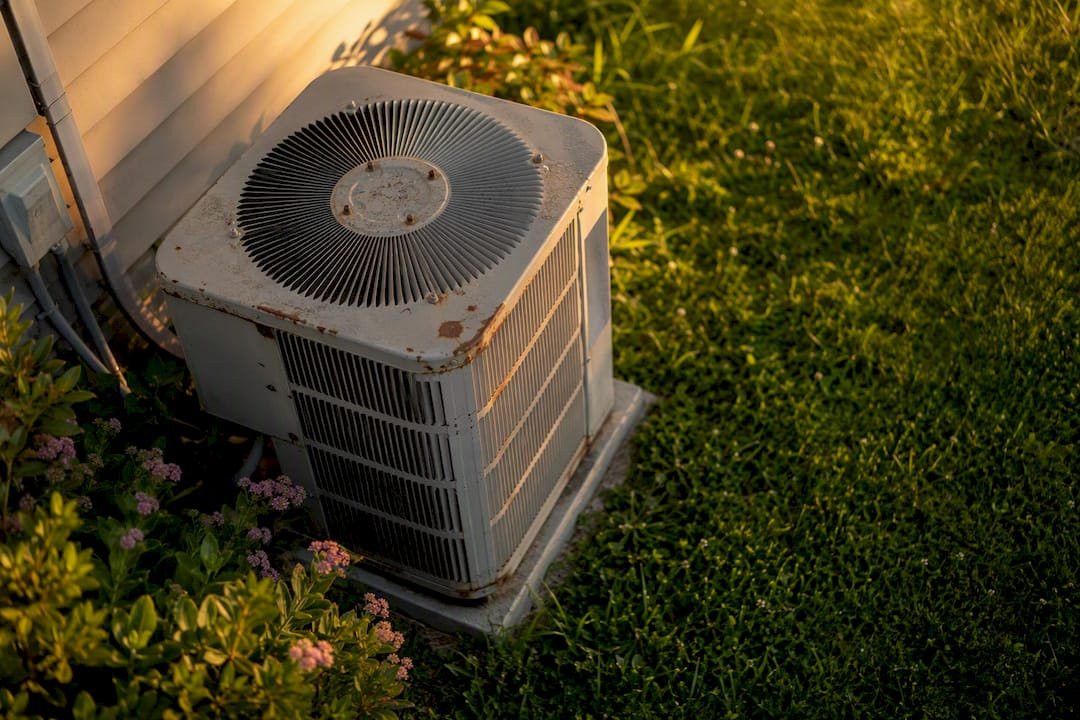
Pro Tip: Keep your repair invoices in one folder. When you’re staring down a big estimate, having last year’s repair costs on hand makes the math on both rules a lot faster.
What Should You Expect During an AC Service Visit?
A technician’s first stop is almost always the diagnostic. Most companies charge a $75–$200 service-call fee for this, and many credit that fee toward the repair if you approve the work on the same visit. That’s worth asking about upfront, since it can mean the difference between paying twice or just once.
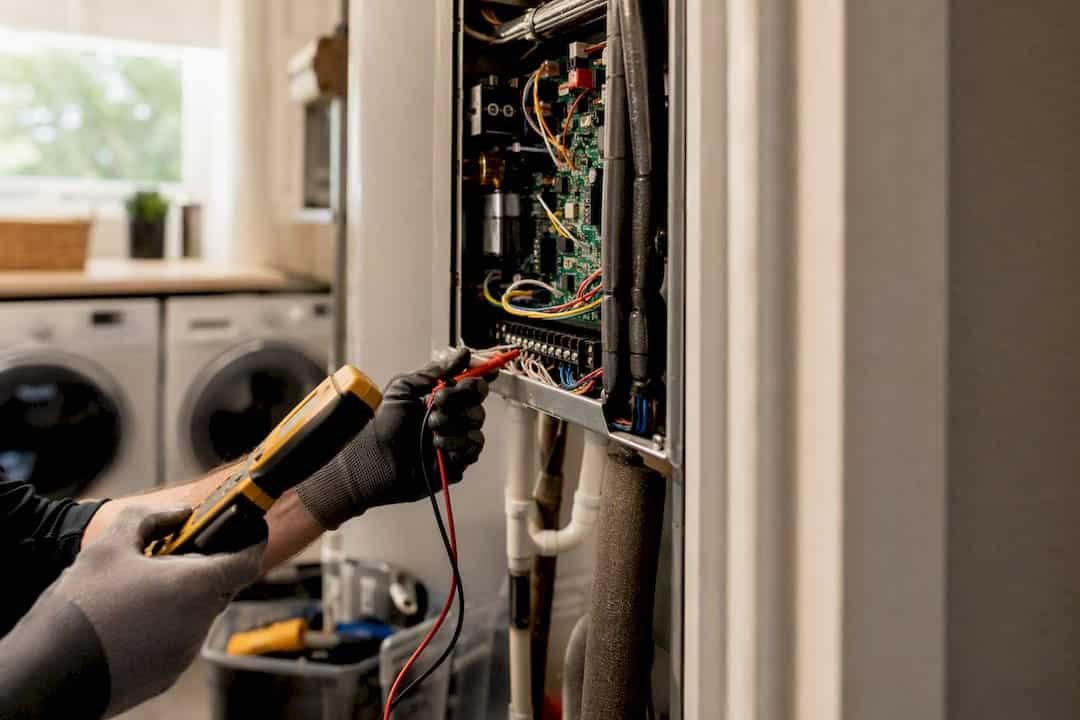
From there, pricing breaks into a few predictable buckets: labor hours (often one hour for a capacitor swap, several hours for a coil or compressor job), the part itself, refrigerant priced by the pound if your system is low, and sometimes disposal or access fees. Insist on seeing each of these broken out on your invoice rather than lumped into one number.
| Invoice Line | Typical Cost |
|---|---|
| Diagnostic/service call | $75–$200 |
| Labor (per hour) | $75–$150 |
| Capacitor (parts + labor) | low to mid hundreds |
| Refrigerant recharge (2–4 lbs) | moderate cost |
| Emergency surcharge | significantly increased labor rate |
A clear, itemized quote is your best defense against surprise charges. If a technician won’t break down labor from parts, that’s a sign to ask more questions before signing off. Our HVAC troubleshooting guide walks through what a proper diagnostic actually involves.
How Can You Reduce AC Repair Costs Long Term?
The cheapest repair is the one you never need. A seasonal tune-up, typically priced between $125 and $200, catches worn capacitors and dirty coils before they cause a breakdown in July. If someone quotes you under $50 for a full tune-up, treat that as a red flag rather than a bargain.
- Change filters every one to three months to reduce strain on the fan motor.
- Keep the outdoor condenser clear of debris and vegetation.
- Insist on leak detection, not just a recharge, if your system needs refrigerant more than once a season.
- Ask about a maintenance plan, since returning customers often get priority scheduling and reduced diagnostic fees.
Refrigerant top-offs feel cheap in the moment, but they’re a symptom, not a fix. A technician should pressure-test or dye-trace the system to find the actual leak before recharging, otherwise you’re paying for the same visit again next summer.
Pro Tip: If you’ve paid for a recharge twice in one cooling season, stop authorizing a third one until someone finds the leak. You’re spending repair money on a problem that was never actually solved.
How MDTECH Services Prices and Diagnoses AC Repairs
MDTECH Services diagnoses AC issues with the same line-item transparency this guide recommends, serving homeowners across Orange County and Los Angeles County. We credit the diagnostic fee toward approved repairs and confirm parts warranty before quoting labor. Ask your technician about warranty coverage, parts sourcing, and refrigerant handling before work begins.
A Technician’s Note on the Most Common Surprise
The mistake we see most: homeowners approving a recharge without asking why refrigerant is low in the first place. Always request a line-item estimate and a warranty check before you sign anything.
Book an AC Diagnostic With a Local, Licensed Team
MDTech Services gives you a written, line-item estimate before any work starts, not a verbal ballpark that changes once the panel comes off. Our licensed technicians serve Orange County and Los Angeles County homeowners directly, checking parts warranty status and refrigerant handling requirements as part of every diagnostic visit.
If your system is cycling strangely, blowing warm air, or needing refrigerant more than once this season, the smartest next step is a proper diagnostic, not another guess. Visit our HVAC repair guide to see what’s included, then book your appointment so a licensed technician can give you a real number instead of an estimate over the phone.
Frequently Asked Questions
How much is AC repair for a typical single-visit fix?
Most single-visit repairs, like a capacitor or contactor swap, fall between $150 and $500 once you include the service-call fee and an hour of labor.
What does heat pump repair cost compared to standard AC repair?
Heat pump repair cost tends to track closely with central AC repair for shared components like capacitors and fan motors, though reversing valve issues specific to heat pumps can push costs higher.
Does tankless water heater repair cost compare to AC repair pricing?
Tankless water heater service cost is a separate budget category, but simple maintenance like descaling a tankless water heater is usually far cheaper than a major AC component repair.
How much does mini split repair cost versus central AC repair?
Mini split repair cost often runs lower for single-zone issues since there’s no ductwork involved, though multi-zone system diagnostics can take longer and cost more in labor.
Is AC repair cost in Los Angeles higher than the national average?
Los Angeles AC repair cost can run above the national median during peak summer months due to high demand, though off-season scheduling often brings quotes closer to typical national ranges.
How long does a typical AC repair take from diagnosis to completion?
Simple repairs like a capacitor or contactor often finish same-day within one to two hours. Coil or compressor jobs may take several hours or require a follow-up visit if parts need ordering.
Can financing help cover a large AC repair bill?
Many HVAC providers offer payment plans or financing options for repairs exceeding $1,000, which can help you avoid delaying a necessary compressor or coil repair.
Sources
- 2026 Cost to Repair Central Air | HVAC & AC Repair Costs (Thumbtack)
- AC Repair Cost Calculator — 2026 Central Air Repair Estimator | UseCalcPro
- AC Repair Cost: Common Issues & When to Replace (2026) | Fixr
- What Is the Average Central Air Conditioner Repair Cost? | Trane
- Carrier resources: guidance on repair vs replacement and repair-cost reasoning