
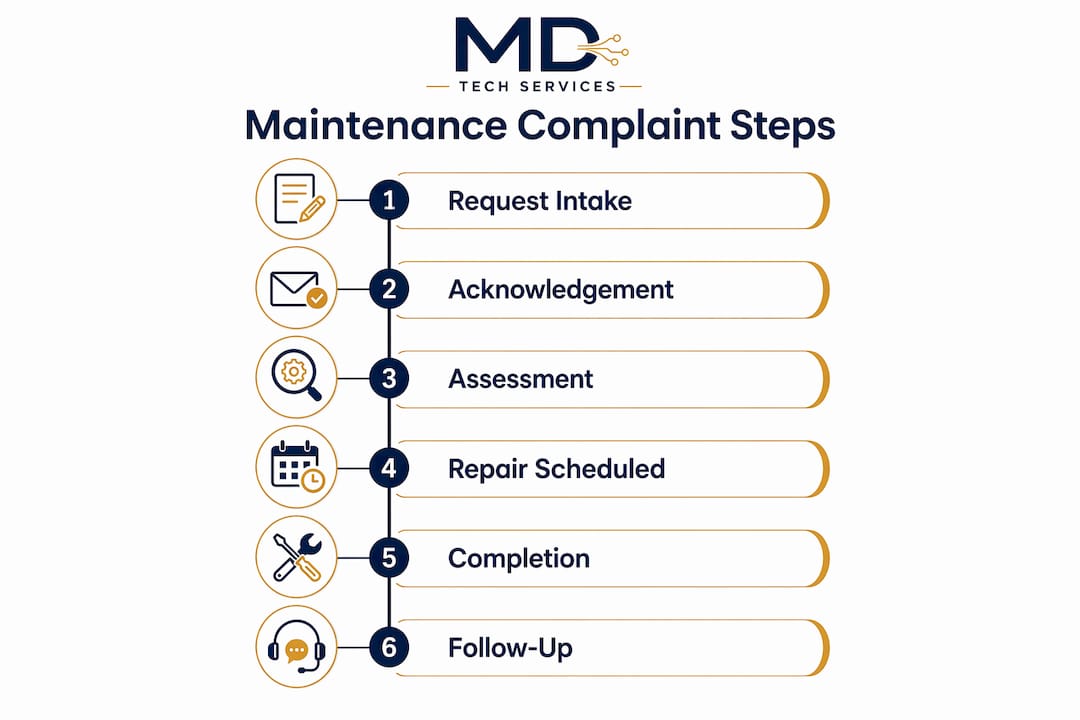
The most effective way to handle tenant maintenance complaints is to follow a consistent, documented process: collect every request in writing, acknowledge it within 24 hours, prioritize by urgency, give proper entry notice, complete the repair, and follow up to confirm the issue is resolved. That sequence protects you legally and keeps tenant relationships intact.
Here is the core process at a glance:
- Require written requests. Text, email, or an online portal all work. Verbal requests invite disputes that a written record prevents, and a standardized written intake gives you a defensible paper trail from day one.
- Acknowledge within 24 hours. Even a brief “Received your request about the kitchen faucet. I’ll have a plumber contact you by Thursday” stops a tenant from claiming you ignored them.
- Prioritize by urgency. A gas leak is same-day. A dripping faucet is routine. Treating every complaint the same wastes resources and creates legal exposure.
- Give proper entry notice. Most states require 24 hours’ written notice before entering for non-emergency repairs. Emergencies are the exception, not the rule.
- Document everything. Log the date of the request, who did the work, when it was completed, and what it cost. Photos before and after are your best defense in any dispute.
- Follow up after the repair. A quick message confirming the work is done and asking whether the issue is resolved prevents repeat complaints and shows professionalism.
Pro Tip: Create a simple maintenance request template that captures the unit number, tenant name, issue description, date reported, and tenant availability. Using the same form every time removes guesswork and makes your documentation consistent across all properties.
What are the most common maintenance complaints tenants make?
Knowing what tenants complain about most lets you prepare faster responses and spot patterns before they become legal problems. The complaints landlords see most often fall into a few clear categories:
- Plumbing issues: Leaky faucets, running toilets, slow drains, and burst pipes. Plumbing problems escalate quickly. A slow drip under a sink can destroy cabinetry and flooring if left unaddressed.
- Heating and cooling failures: No heat in winter and no air conditioning during a heat wave both cross into habitability territory fast. HVAC complaints are among the most legally sensitive a landlord receives. You can review HVAC repair basics to better understand what technicians will assess.
- Appliance malfunctions: Refrigerators, stoves, dishwashers, and in-unit washers and dryers are frequent sources of complaints, especially in older units. When a refrigerator fails, food safety becomes an immediate concern.
- Electrical problems: Tripped breakers, non-functioning outlets, and flickering lights. Any complaint involving sparks or burning smells is an emergency, full stop.
- Pest infestations: Rodents and insects often signal a habitability issue, not just a nuisance. Many states treat active infestations as a landlord responsibility under housing codes.
- Structural concerns: Roof leaks, broken windows, damaged exterior doors, and mold. These directly affect safety and habitability.
The urgency level matters as much as the category. A broken refrigerator in a unit with no backup is urgent. A cosmetic crack in drywall is not. Distinguishing emergencies from routine repairs determines your legal response timeline and your repair budget.
What are your legal responsibilities as a landlord for maintenance?
The implied warranty of habitability is the legal foundation of every landlord’s maintenance obligation in the United States. Recognized in most US jurisdictions, it requires landlords to keep residential rental property safe and fit for human habitation, regardless of what the lease says. You cannot contract your way out of it.
Under this doctrine, landlords must maintain essential systems including heating, plumbing, electrical, and structural integrity. If you fail to do so, tenants may withhold rent or break leases under state law. Courts have consistently held that a tenant’s obligation to pay rent depends on the landlord’s compliance with habitability standards.
Recommended best practices for legal protection include:
- Conduct formal inspections at move-in, mid-lease, and move-out, and document each one with photos and a signed checklist.
- Respond in writing to disputed repairs. If a tenant claims damage that is actually their responsibility, inspect and document your findings before making any liability decision. Provide a written assessment stating why the repair is or is not your obligation.
- Follow state-specific repair timelines. Emergency repairs require same-day or immediate response. Routine repairs typically must be addressed within a reasonable period, often 3–7 days depending on the state.
- Keep a maintenance log for every property. Date of request, acknowledgment sent, contractor used, work completed, and invoice on file. That log is your defense against habitability lawsuits and deposit disputes.
- Check your rental property appliance obligations to confirm which appliances fall under your habitability duty in your state.
How should you communicate with tenants during a maintenance issue?
Consistent, structured communication reduces tenant anxiety and follow-up escalations as much as the repair itself does. Tenants who feel ignored escalate. Tenants who receive clear, factual updates generally wait.
A repeatable message format works well for every stage of the process:
- Acknowledge the issue by name (“the kitchen faucet leak you reported”).
- Confirm what you understand about the problem.
- Explain next steps clearly, including who will handle the repair.
- Give a timeline as a window, not an exact time. Vendors run late. “Between 10 AM and 2 PM Thursday” is more honest than “10 AM Thursday.”
- Ask any needed questions upfront, such as whether pets will be present or whether the tenant wants to be home.
One of the most useful distinctions in tenant communication is separating response time from resolution time. Tenants tolerate longer repairs when they are kept well-informed. A fast acknowledgment, even before you have scheduled a contractor, lowers stress and demonstrates that you are engaged. Specific timelines and vendor contact details are more effective than vague updates like “we’re working on it.”
Pro Tip: After any phone call with a tenant about a maintenance issue, send a brief written follow-up summarizing what was discussed and what happens next. This creates a record and prevents misunderstandings about timelines or commitments.
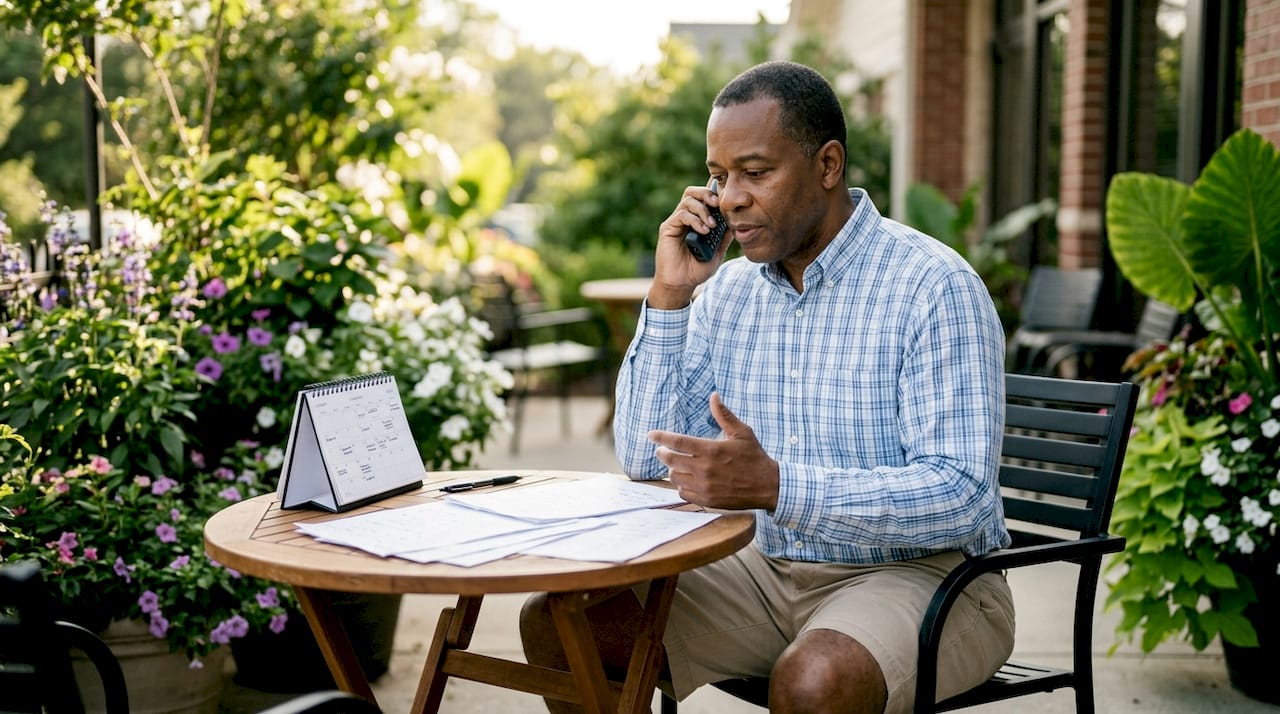
After the repair is complete, send a written confirmation and ask whether the issue is fully resolved. That single step catches problems before they become repeat complaints and shows the tenant that their comfort matters to you.
What preventive maintenance reduces tenant complaints?
Preventive maintenance is the most cost-effective long-term approach to reducing habitability issues and keeping repair costs manageable. Catching a failing HVAC capacitor during a spring inspection costs far less than an emergency replacement call in August. The National Apartment Association consistently points to seasonal upkeep as the foundation of sound property management.
Practical preventive tasks that directly reduce complaint frequency include:
- HVAC filter changes every 1–3 months, depending on the unit and filter type. A clogged filter strains the system and reduces air quality, both of which generate complaints.
- Seasonal inspections of roofing, gutters, and drainage before winter and spring. Blocked gutters cause water intrusion, which leads to mold complaints.
- Water heater checks annually to catch sediment buildup and anode rod wear before the unit fails.
- Appliance inspections at lease renewal to identify wear on refrigerators, stoves, and dishwashers before tenants report failures.
- Plumbing walkthroughs to check for slow drains, supply line wear, and toilet components. You can use a plumbing maintenance checklist to standardize these visits.
- Smoke and carbon monoxide detector testing at least annually, with battery replacements documented.
Document every preventive visit with dates, findings, and any work performed. That record demonstrates landlord diligence if a tenant later claims a habitability issue was ignored. It also helps you spot recurring problems in specific units before they escalate. Encouraging tenants to report small issues early, rather than waiting until something fails completely, is one of the most practical tenant maintenance tips you can implement.
How do you handle disputes or tenant refusal to allow access for repairs?
Disputes over maintenance and access are among the most legally sensitive situations a landlord faces. Handling them calmly and by the book protects you from liability and keeps the situation from escalating into an eviction proceeding.
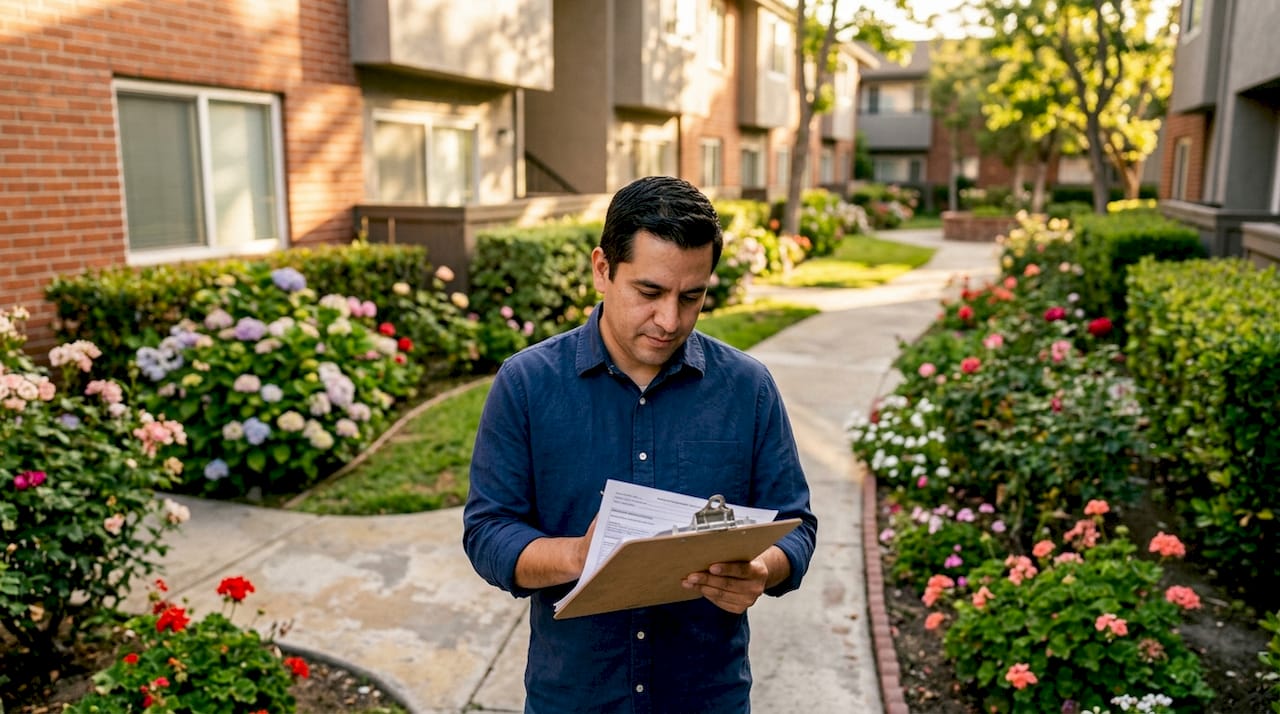
When a tenant disputes responsibility for a repair, the right response is always to inspect first and document your findings before making any decision. Never refuse to investigate. Provide a written assessment explaining your conclusion, and if the damage is tenant-caused, include a repair cost estimate and note that the amount may be deducted from the security deposit at move-out. Responding professionally in writing, even when you disagree with the tenant’s position, creates the paper trail you need if the dispute goes further.
When a tenant refuses to allow access for a scheduled repair, the process is clear. If you have given proper written notice for a legitimate repair during reasonable hours, the tenant generally cannot legally refuse entry. Most leases include language requiring access under these conditions, and state statutes grant landlords affirmative access rights for permitted purposes. If a tenant still refuses, document the refusal in writing immediately, remind them of their lease obligations and applicable state law, and attempt to reschedule. Continuing refusals may constitute a lease violation and can support eviction proceedings.
Self-help remedies like removing doors or changing locks to gain access are prohibited in virtually every US jurisdiction. Do not go there.
When a tenant submits repeated or seemingly frivolous requests, document every request and every response, even when no action is warranted. Ignoring frivolous requests gives the tenant grounds to claim you were unresponsive, which is a far worse legal position than over-documenting. If a pattern of requests appears designed to harass or manufacture a habitability claim, consult a landlord-tenant attorney before taking any action.
When disputes escalate beyond what you can resolve directly, bring in outside support: a licensed specialist to provide an independent diagnosis, a mediator, or legal counsel. Acting early, before emotions run high, almost always produces a better outcome.
Key Takeaways
Handling tenant maintenance complaints well comes down to one repeatable system: written intake, prompt acknowledgment, urgency-based prioritization, documented repairs, and consistent follow-up at every stage.
| Point | Details |
|---|---|
| Written intake is non-negotiable | Require all requests in writing to create a defensible record and prevent “he said/she said” disputes. |
| Acknowledge within 24 hours | Prompt acknowledgment, even before a repair is scheduled, reduces tenant frustration and legal risk. |
| Habitability is legally binding | The implied warranty of habitability applies regardless of lease terms; tenants may withhold rent if it is breached. |
| Preventive maintenance cuts complaints | Seasonal inspections and routine upkeep catch failures before tenants report them, lowering costs and complaint volume. |
| Document disputes and access refusals | Always inspect, respond in writing, and consult an attorney if repeated refusals or frivolous patterns emerge. |
Need a Reliable Repair Partner for Your Rental Properties?

When a tenant reports an appliance failure, HVAC breakdown, or plumbing issue, you need a technician who shows up on time and gets it right the first time. Mdtechservices serves landlords and property managers across Orange County and Los Angeles County with licensed, experienced technicians for appliance repair, HVAC service, and plumbing. Whether you need a residential appliance diagnosis or a fast HVAC fix before a habitability complaint turns into a legal issue, Mdtechservices is ready to help. Contact us today to schedule service or book an appointment online.