
TL;DR:
- Gas leak detection combines sensory awareness and certified devices to identify escaping natural gas or propane early.
- Homeowners should act immediately if they smell gas, hear hissing sounds, or see outdoor signs of leaks, and call emergency services from a safe distance.
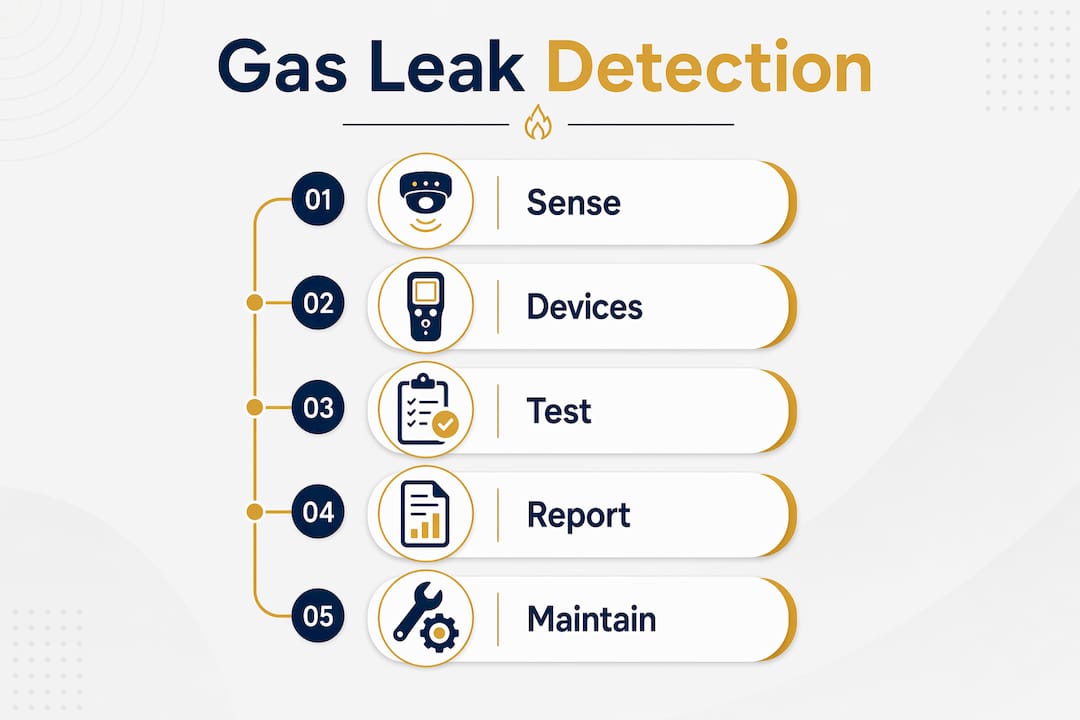
Gas leak detection is the process of identifying escaping natural gas or propane in a residential space before it reaches dangerous concentrations. Natural gas is colorless and odorless in its pure form, but US federal regulations require utility companies to add mercaptan, a sulfur compound that produces the familiar rotten egg smell. That single safety measure saves lives every year. Still, smell alone is not enough. Knowing how to detect gas leaks using both your senses and certified detection tools gives you the best chance of catching a problem early and protecting everyone in your home.
What sensory signs indicate a gas leak in your home?
Your senses are your first line of defense, and they can alert you to a problem before any device does. Knowing what to look, listen, and feel for makes a real difference.
Smell

The rotten egg or sulfur odor is the most recognized warning sign. It comes directly from mercaptan, the odorant added to natural gas by law. If you notice this smell near your stove, furnace, water heater, or gas meter, treat it as a leak until a professional confirms otherwise. Do not assume the smell will pass on its own.
Sound
A hissing or whistling sound near a gas line, appliance connection, or meter is a strong indicator of escaping gas. Persistent hissing sounds near gas appliances or outdoor meter locations require immediate professional attention. The sound may be faint, so listen carefully in quiet moments, especially near utility areas.
Visual cues
Gas leaks can show up outdoors in surprising ways. Bubbles forming in standing water near your gas meter, dirt blowing upward from a small hole in the yard, or patches of dead and wilting vegetation above buried gas lines all point to an underground leak. These signs of gas leaks outdoors are easy to overlook but should never be dismissed.
Physical symptoms
Your body can also signal a problem. Dizziness, headaches, nausea, and fatigue from gas exposure require immediate emergency response. Natural gas displaces oxygen in enclosed spaces, and symptoms can escalate to unconsciousness quickly. If multiple people in your home feel unwell at the same time with no obvious cause, a gas leak is a serious possibility.
Pro Tip: If you notice any combination of these signs at once, such as a faint smell plus unexplained headaches, do not wait to confirm. Treat it as a confirmed leak and act immediately.
What tools and technology can help detect gas leaks?
Your senses are valuable, but they have real limits. Certified detection devices fill the gaps your nose and ears cannot.
Gas leak detectors
Gas detectors certified to NFPA 715 standards provide early warning beyond what human senses can catch, especially during sleep or after repeated exposure dulls your sense of smell. NFPA 715 is the National Fire Protection Association standard specifically for residential fuel gas alarms. These devices monitor combustible gas levels continuously and sound an alarm before concentrations reach dangerous levels.
Gas detectors vs. CO detectors
This distinction matters more than most homeowners realize. Carbon monoxide detectors cannot detect natural gas or propane. A CO detector monitors carbon monoxide, a byproduct of incomplete combustion. A natural gas detector monitors methane or propane directly. You need both devices in your home, and they are not interchangeable.
| Device type | What it detects | What it misses |
|---|---|---|
| Natural gas detector | Methane, propane (combustible gases) | Carbon monoxide |
| CO detector | Carbon monoxide | Natural gas, propane |
| Combination alarm | Both CO and combustible gas | Nothing, when properly placed |
The soapy water test
The soapy water test is a safe, accessible method for checking accessible pipe connections. Apply a mixture of dish soap and water to a joint or fitting. Bubbles forming at that spot confirm escaping gas at that connection. This test works only on pipes you can see and reach. It should never replace a professional inspection or a certified detector.
Where to place detectors
- Install a natural gas detector in every room with a gas appliance, including the kitchen, utility room, and garage.
- Place a detector near sleeping areas so an alarm wakes you during the night.
- Mount natural gas detectors near the ceiling, since methane is lighter than air and rises.
- Install CO detectors at breathing height, roughly 5 feet from the floor, since CO disperses evenly.
- Test every detector monthly and replace units according to the manufacturer’s recommended schedule.
Pro Tip: A combination alarm that detects both combustible gas and carbon monoxide covers both hazards in one unit. Place one in your utility room and one near bedrooms for layered protection.
What immediate actions should you take if you suspect a gas leak?
Speed and calm matter equally here. The right sequence of actions protects you and your neighbors.
- Stop what you are doing. Do not finish a task, turn off the stove, or grab belongings. Leave immediately on foot.
- Do not touch any electrical devices. Leave lights on or off as they are. Do not flip switches, use your phone, ring a doorbell, or start a car inside the garage.
- Leave doors open as you exit. This helps ventilate the space and reduces gas concentration.
- Warn neighbors if it is safe to do so. A gas leak can affect adjacent units in apartments or townhomes.
- Call 911 and your gas utility from outside. Move at least several houses away before making any call.
- Do not re-enter the building. Wait for emergency responders to clear the space.
Never attempt to find or fix a gas leak yourself. Even a minor spark from a doorbell, light switch, or cell phone can ignite gas at combustible concentrations. Leave the building first, then call for help. No repair is worth the risk.
Professionals emphasize that reporting a suspected leak immediately is always the right call, even if you are not certain. Assuming someone else already reported it is one of the most dangerous mistakes a homeowner can make.
How to prevent gas leaks and maintain safety proactively?
Prevention reduces the chance of a leak ever reaching a dangerous level. These steps work together to build a safer home.
- Schedule annual professional gas line inspections. A licensed technician checks connections, fittings, and appliance hookups for wear, corrosion, and loose joints. Regular professional inspections reduce leak risk and catch problems before they become emergencies.
- Install NFPA 715-compliant fuel gas alarms. These are a distinct category from smoke alarms and CO detectors. They represent an emerging home safety standard that many homeowners still do not have.
- Monitor your gas bill for unusual spikes. A sudden increase in gas usage with no change in habits can indicate a slow leak in your system. Contact your utility provider if you notice an unexplained jump.
- Maintain proper appliance ventilation. Gas appliances need adequate airflow to combust cleanly. Blocked vents increase the risk of both gas buildup and carbon monoxide production. Learn more about proper appliance venting and why it matters for your home’s safety.
- Use licensed technicians for all gas appliance installations. Improper connections are a leading cause of residential gas leaks. Never install or reconnect a gas appliance yourself.
| Preventive action | Frequency |
|---|---|
| Professional gas line inspection | Annually |
| Detector battery and function test | Monthly |
| Gas appliance servicing | Annually or per manufacturer guidance |
| Gas bill usage review | Monthly |
| Detector unit replacement | Per manufacturer schedule (typically 5–7 years) |
Pro Tip: Keep a written record of every inspection and detector test. If you ever sell your home or file an insurance claim, that documentation proves your due diligence.
What are common mistakes homeowners make when detecting gas leaks?
Knowing what not to do is just as important as knowing the right steps. These mistakes put homeowners at serious risk.
- Assuming someone else reported it. Urgency is everything with gas leaks. Never assume a neighbor or family member already called. You make the call.
- Relying only on smell. Odor fatigue causes some people to stop detecting mercaptan after repeated exposure. This is exactly why certified gas detectors exist. Your nose can fail you at the worst moment.
- Using electronics during a suspected leak. Turning on a light, checking your phone, or starting a car can all create a spark. Any spark near combustible gas concentrations can cause an explosion.
- Attempting DIY leak repairs. Homeowners who try to locate or fix leaks themselves risk igniting the gas. Only trained professionals should handle leak detection and repair work.
- Ignoring physical symptoms. Dizziness or nausea that clears up when you step outside is a strong signal of indoor gas exposure. Do not dismiss it as tiredness or illness without ruling out a leak.
- Confusing CO detectors with gas detectors. This is one of the most common and dangerous misconceptions in home safety. The two devices detect completely different hazards and cannot substitute for each other.
Key Takeaways
Detecting gas leaks early requires combining sensory awareness, certified detection devices, and immediate professional response.
| Point | Details |
|---|---|
| Mercaptan signals a leak | The rotten egg smell is added by law; treat it as a confirmed leak until cleared by a professional. |
| Detectors fill sensory gaps | NFPA 715-compliant gas alarms catch leaks during sleep or when odor fatigue reduces your ability to smell gas. |
| CO detectors are not substitutes | Natural gas detectors and CO detectors monitor different hazards and both are needed in every home. |
| Evacuate before calling | Leave the building immediately and call 911 from a safe distance before using any electronic device. |
| Prevention beats response | Annual inspections, proper ventilation, and monthly detector tests reduce leak risk significantly. |
What we have learned from years of gas appliance work
After working on gas appliances and lines across Orange County and Los Angeles County, the pattern we see most often is not a dramatic explosion risk. It is a slow, quiet leak that a homeowner noticed weeks earlier and talked themselves out of taking seriously. The smell came and went. The headache seemed like stress. The hissing was probably just the pipes settling.
The homeowners who stay safest are the ones who act on the first sign, not the third. They also understand that a CO detector on the wall does not mean they are covered for gas leaks. That confusion is genuinely common, and it leaves real gaps in home safety.
We also see what happens when appliances are installed without proper connections or when gas lines go years without a professional check. The wear is invisible until it is not. Scheduling a gas line inspection once a year is the single most effective thing a homeowner can do to stay ahead of a problem. It costs far less than the alternative.
The technology available now, particularly NFPA 715-compliant fuel gas alarms, gives homeowners a real safety advantage. Use it. Do not rely on your nose alone when a certified device can monitor your home around the clock.
— MDTECH
Gas safety services from Mdtechservices
Gas safety at home starts with knowing the signs, but it does not end there. Mdtechservices provides licensed appliance repair, installation, and gas line services across Orange County and Los Angeles County. Our technicians handle everything from routine inspections to appliance repair and installation for gas-connected systems, so you never have to guess whether a connection is safe.

If you noticed a smell, heard a hissing sound, or simply want peace of mind before another season of heavy appliance use, our team is ready to help. We book quickly, work cleanly, and leave your home safer than we found it. Reach out to Mdtechservices to schedule an inspection or repair today.
FAQ
What does a gas leak smell like?
A gas leak smells like rotten eggs or sulfur. That odor comes from mercaptan, a chemical that US federal regulations require utility companies to add to natural gas for detection purposes.
Can a carbon monoxide detector detect a gas leak?
No. Carbon monoxide detectors only detect CO, a byproduct of incomplete combustion. You need a separate natural gas detector, certified to NFPA 715 standards, to detect methane or propane leaks.
What should I do if I smell gas in my house?
Leave the building immediately without touching any electrical devices, then call 911 and your gas utility from a safe distance outside. Never re-enter until emergency responders clear the space.
Where should I install a natural gas detector?
Install natural gas detectors near the ceiling in every room with a gas appliance, including the kitchen and utility room, and near sleeping areas. Methane is lighter than air and rises, so ceiling placement improves detection speed.
How often should gas lines be professionally inspected?
Gas lines should be inspected by a licensed technician at least once a year. Annual inspections catch corrosion, loose fittings, and wear before they develop into active leaks.