
A burst pipe can release hundreds of gallons of water in under an hour, and water damage accounts for 29% of all homeowner insurance claims. In Orange County and Los Angeles County, where older housing stock mixes with newer construction, plumbing emergencies can strike without warning. Whether you’re staring at a flooded hallway or a toilet backing up at midnight, the next 10 minutes matter more than anything else. This guide walks you through exactly what to do: how to identify a real emergency, what tools to grab, how to stop the damage, and when to call in a licensed plumber.
Table of Contents
- Know what counts as a plumbing emergency
- Gather your emergency plumbing toolkit
- Immediate repair steps for common plumbing emergencies
- Troubleshooting, verification, and when to call a professional
- Find local experts for emergency plumbing repair
- Frequently asked questions
Key Takeaways
| Point | Details |
|---|---|
| Identify true emergencies | Focus on situations with flooding, health hazards, or loss of water to avoid unnecessary panic. |
| Keep a basic toolkit | Having essential plumbing tools ready can speed up your response and avoid costly damage. |
| Follow step-by-step repairs | Use clear instructions for burst pipes and clogged drains to minimize risk and restore function. |
| Verify repairs and seek help | Check your work and call professionals when issues persist or safety is at risk. |
Know what counts as a plumbing emergency
Not every dripping faucet or slow-draining sink is a crisis. But some plumbing problems demand immediate action, and knowing the difference can save you thousands of dollars and serious health risks.
True plumbing emergencies share one or more of these traits: active flooding, exposure to raw sewage, or a complete loss of water or sanitation. Understanding what is emergency plumbing helps you respond with the right level of urgency instead of either panicking over a minor drip or ignoring something dangerous.
Here are the situations that qualify as genuine emergencies:
- Burst or ruptured pipes actively spraying or flooding your home
- Sewage backup into sinks, tubs, or toilets (a serious health hazard)
- Complete loss of water to your home
- Gas line issues connected to plumbing fixtures
- Overflowing toilet that won’t stop
- Water heater failure causing flooding or no hot water
On the other hand, a slow drain that’s still draining, a minor faucet drip, or a toilet that runs occasionally can usually wait for a scheduled appointment. The key distinction is whether the situation is actively getting worse or poses a health or safety risk right now.
Remember: A sewage backup is never a “wait and see” situation. Raw sewage contains bacteria and pathogens that can make your family seriously ill. Treat any sewage exposure as an emergency, full stop.
Gather your emergency plumbing toolkit
Once you’ve confirmed it’s a real emergency, the last thing you want is to scramble around looking for tools. A pre-stocked emergency plumbing kit stored in an accessible spot, like under the kitchen sink or in a garage cabinet, can cut your response time dramatically.
The essential tools for plumbing emergencies include a plunger, adjustable wrench, pipe tape, buckets, a wet/dry vacuum, and a flashlight. Most of these cost under $20 each, and together they cover the majority of emergency scenarios you’ll face as a homeowner.
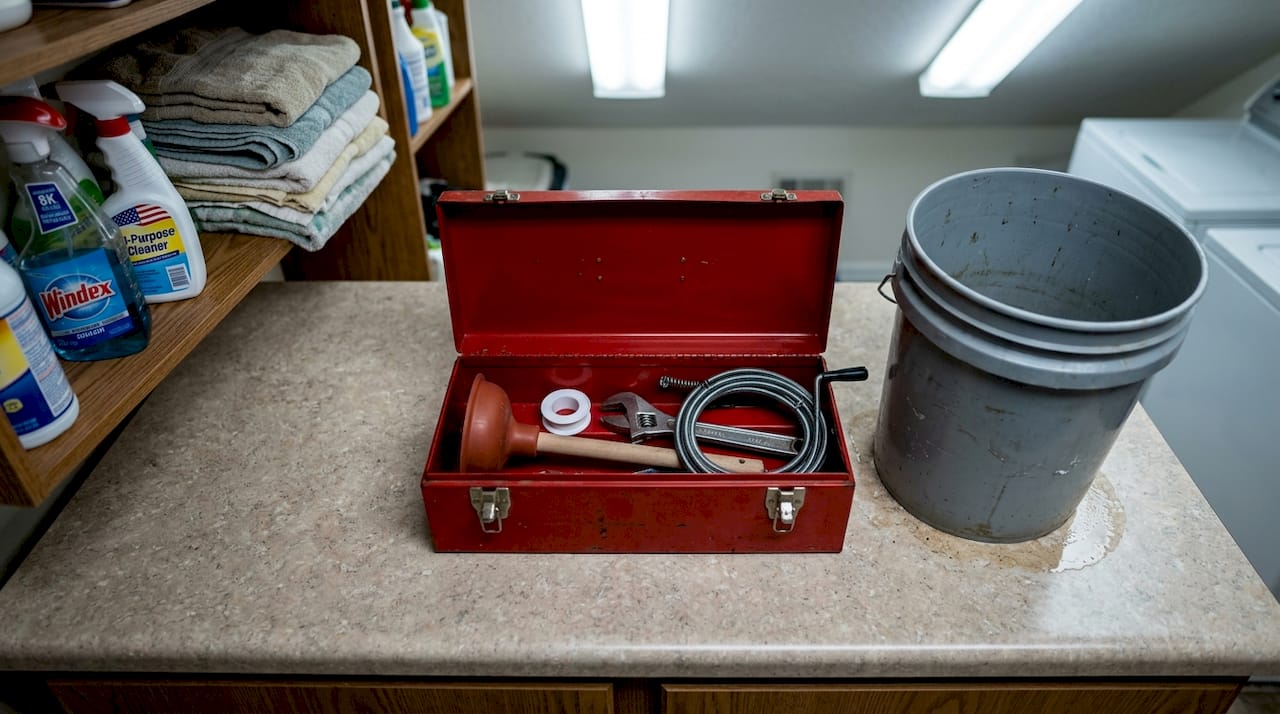
Here’s a quick comparison of the most critical tools and what each one handles:
| Tool | Primary use | Estimated cost |
|---|---|---|
| Cup plunger | Sink and tub clogs | $8 to $15 |
| Flange plunger | Toilet clogs | $10 to $20 |
| Adjustable wrench | Shutting off valves, tightening fittings | $15 to $30 |
| Pipe/Teflon tape | Sealing threaded pipe joints temporarily | $3 to $6 |
| 5-gallon buckets (x2) | Catching leaking water | $5 to $10 each |
| Wet/dry vacuum | Removing standing water fast | $40 to $80 |
| Flashlight or headlamp | Seeing in crawl spaces and under sinks | $10 to $25 |
Beyond the basics, consider adding a pipe repair clamp (a temporary fix for small pipe cracks), a drain snake for stubborn clogs, and waterproof work gloves. Knowing the types of plumbing services that professionals handle versus what you can DIY also helps you decide when to reach for the phone instead of the wrench.
Pro Tip: Walk every adult in your household to your main water shutoff valve right now, before any emergency happens. In a burst pipe situation, every second counts, and you don’t want to be searching for it while water pours across your floor. Good plumbing maintenance basics start with knowing your home’s layout.
Immediate repair steps for common plumbing emergencies
With your toolkit close at hand, you’re ready to follow step-by-step instructions for immediate repairs. The two most common scenarios Orange County and Los Angeles County homeowners face are burst pipes and serious drain or toilet backups. Here’s exactly what to do for each.
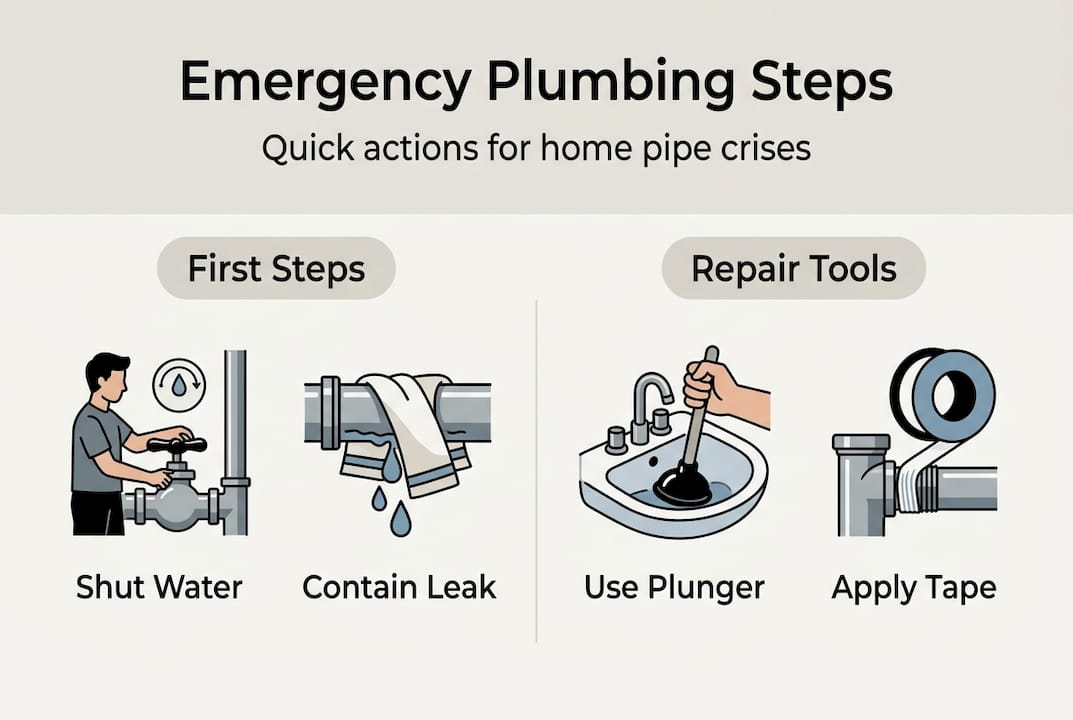
Burst pipe: step-by-step response
A burst pipe is the most time-sensitive plumbing emergency you’ll encounter. Follow these steps in order:
- Shut off the main water supply immediately. Your main shutoff is usually near the water meter, often at the front of the house or in a utility area. This single step stops the flooding.
- Open all faucets and flush toilets to drain the remaining water from your pipes. This reduces pressure and limits how much water ends up on your floors.
- Contain the water using buckets, towels, and your wet/dry vacuum. Move furniture and valuables out of the affected area fast.
- Turn off electricity to any rooms with standing water. Water and live electrical outlets are a deadly combination. If you’re unsure, flip the breaker for the entire affected zone.
- Apply a pipe repair clamp or pipe tape over the break as a temporary fix only. This buys time but is not a permanent solution.
- Call a licensed plumber right away. The burst pipe response protocol is clear: professional repair is required to restore safe water service.
Here’s a quick reference for what to do versus what to avoid:
| Action | Do it | Avoid it |
|---|---|---|
| Shut off main water | Immediately | Never delay this step |
| Use wet/dry vac on standing water | Yes | Don’t use a regular vacuum |
| Apply pipe tape as temp fix | Yes, briefly | Don’t rely on it long-term |
| Turn on electricity in wet areas | Never | Until fully dry and inspected |
| Call a plumber | Yes, same day | Don’t wait to see if it “dries out” |
For real-world context on how these steps play out, check out emergency repair examples from Orange County homeowners who’ve handled similar situations.
Clogged drain or toilet backup: step-by-step response
A backed-up toilet or drain that’s overflowing is messy, but it’s also manageable if you act correctly. The key is knowing what not to do as much as what to do.
- Stop using all water in the house if multiple drains are backing up. This is a strong signal of a main sewer line issue, not just a single clog.
- Use a flange plunger on the toilet with firm, steady strokes. Don’t plunge aggressively; you risk splashing contaminated water.
- Avoid chemical drain cleaners entirely. They often worsen clogs and can damage pipe interiors, especially in older homes common throughout LA and Orange County.
- Try a drain snake for sink or tub clogs if plunging doesn’t clear the blockage within a few attempts.
- Call a plumber if the backup returns quickly, affects multiple fixtures, or involves any sewage smell. These are signs of a deeper sewer line problem.
Important: If you see water backing up in your shower when you flush the toilet, stop all water use immediately. That’s a main line backup, and continuing to use water will make it significantly worse.
Pro Tip: A streamlined plumbing repair workflow always starts with isolation: identify the source, stop the flow, then address the damage. Skipping straight to the fix without stopping the source is the most common mistake homeowners make under pressure.
Troubleshooting, verification, and when to call a professional
Even after you’ve handled the immediate repair, confirming everything is working and knowing when to get outside help can save you from future headaches. A fix that looks good in the moment can hide a bigger problem underneath.
After addressing a burst pipe or clog, run through this verification checklist:
- Check all faucets for normal water pressure and flow after turning the main supply back on
- Inspect the repaired area for any drips, moisture, or discoloration on walls and ceilings
- Run water through affected drains for 2 to 3 minutes and watch for slow drainage or gurgling sounds
- Check under sinks and around the base of toilets for any pooling water
- Monitor for 24 hours after the repair, especially if you used a temporary fix like pipe tape
Pro Tip: Take photos of any damage before and after your repair. If you end up filing a homeowner’s insurance claim, documentation of the timeline and your immediate response can support your case significantly.
Some situations clearly require a licensed plumber, no matter how handy you are. Call a professional if you notice any of the following:
- Repeated clogs or sewage backups that keep returning after clearing
- Water stains or soft spots on walls, ceilings, or floors that suggest a hidden leak
- A sudden drop in water pressure throughout the whole house
- Any repair involving your main water line, sewer line, or water heater
- Visible mold growth within 24 to 48 hours of a water event
Knowing how to verify a licensed plumber before you hire is just as important as the repair itself. In California, plumbers must hold a valid C-36 license issued by the Contractors State License Board. Always ask for the license number and verify it online before work begins.
Find local experts for emergency plumbing repair
DIY steps get you through the first critical minutes, but some repairs need a licensed professional to be done safely and correctly.

At MDTech Services, we serve homeowners across Orange County and Los Angeles County with fast, reliable plumbing repair service you can count on when things go wrong. Our licensed technicians handle everything from burst pipe repairs to sewer line diagnostics, and we’re built for urgent calls. Whether you need to understand the full range of plumbing services for homeowners or want to see how we streamline every plumbing repair workflow for faster results, we’re ready to help. Book online or call us directly for same-day service.
Frequently asked questions
What is the first step when facing a burst pipe?
Shut off your main water supply immediately to stop flooding and limit damage to your home. Every second the water runs, the repair cost goes up.
Should I use chemical cleaners during a drain backup?
No. Chemical drain cleaners frequently make clogs worse and can corrode older pipes, turning a simple fix into a costly replacement.
How do I know if I need a plumber for an emergency?
Call a plumber if there’s active flooding, a sewage backup or health hazard, or if the same problem keeps returning after your own repairs.
What tools should every homeowner have for plumbing emergencies?
The essential emergency kit includes a plunger, adjustable wrench, pipe tape, two buckets, a wet/dry vacuum, and a reliable flashlight. Store them together in one easy-to-reach spot.