
Hidden appliance leaks silently drain your wallet and threaten your home’s structural integrity. Many Orange and Los Angeles County homeowners discover leaks only after extensive damage appears, turning a minor issue into a multi-thousand dollar nightmare. Appliance leaks cause 10% of water damage claims, with undetected leaks wasting 10,000 gallons per year and costing $14,000 in repairs. This guide reveals practical detection methods you can implement today, from simple visual checks to advanced smart sensors, helping you catch leaks early and protect your investment.
Table of Contents
- Why Appliance Leaks Are A Hidden Threat In Orange And LA Homes
- Gathering Your Tools And Preparing For Leak Detection
- Step-By-Step Guide To Detecting Appliance Leaks At Home
- Troubleshooting Common Detection Challenges And Next Steps
- Protect Your Home With Expert Appliance Leak Detection And Repair
- FAQ
Key takeaways
| Point | Details |
|---|---|
| Visual inspections catch early signs | Check for water stains, warped flooring, mold growth, and musty odors around appliances monthly to spot leaks before major damage occurs. |
| Water meter tests reveal hidden leaks | Turn off all water use for 1-2 hours and monitor your meter for movement to detect leaks you cannot see. |
| Smart sensors provide real-time alerts | Install leak detectors near high-risk appliances to receive instant notifications and prevent extensive water damage. |
| Professional detection ensures accuracy | Advanced electronic tools identify hidden leaks and prevent misdiagnosis when DIY methods fall short. |
Why appliance leaks are a hidden threat in Orange and LA homes
Appliance leaks rarely announce themselves with dramatic floods. Instead, they start as tiny drips behind washing machines or slow seepage under dishwashers, gradually saturating subflooring and drywall. By the time you notice a problem, moisture has already compromised structural elements and created ideal conditions for toxic mold growth.
Washing machines and dishwashers rank among the most common culprits in residential water damage. These appliances connect to your home’s water supply through flexible hoses and seals that deteriorate over time. A single failed connection can release gallons of water per hour, especially during active cycles when water pressure peaks.
The financial impact extends beyond immediate repairs. Undetected leaks waste 10,000 gallons annually and inflate water bills by hundreds of dollars. Insurance claims for water damage average $14,000, but many policies exclude gradual leaks discovered after damage becomes severe. Prevention through early detection protects both your budget and your home’s value.
Orange and Los Angeles County homes face unique vulnerability factors. Clay-rich soils common throughout the region shift with moisture changes, potentially stressing plumbing connections. Many older homes feature original appliance installations with aging components. Summer heat accelerates rubber seal degradation, while winter temperature fluctuations cause expansion and contraction in pipes and hoses.
Understanding why appliances leak empowers you to focus inspections on vulnerable points. Common causes include:
- Worn rubber gaskets and O-rings that lose flexibility over time
- Corroded valve connections where metal components meet water supply lines
- Cracked drain hoses subjected to repeated bending and pressure changes
- Loose fittings that vibrate free during appliance operation
- Clogged drain systems that force water to find alternative escape routes
Local climate conditions accelerate these failure modes. Southern California’s hard water deposits mineral buildup inside valves and connections, restricting flow and increasing pressure on seals. UV exposure through windows degrades plastic and rubber components faster than in cooler climates. Regular visual inspections catch these issues before small problems become catastrophic failures.
Gathering your tools and preparing for leak detection
Effective leak detection requires minimal investment in specialized equipment. Most homeowners already own the essential tools needed for thorough inspections. A bright LED flashlight illuminates dark spaces behind and beneath appliances where leaks hide. Absorbent towels help you test suspected damp areas and clean up minor moisture during inspections. Your smartphone serves multiple purposes, from photographing problem areas to running apps that connect with smart leak sensors.
Establish a monthly inspection routine focusing on specific symptoms that signal active or developing leaks. The following table outlines warning signs organized by location and severity:
| Location | Early Warning Signs | Advanced Damage Indicators |
|---|---|---|
| Floor surfaces | Slight dampness, discoloration | Warping, buckling, soft spots when pressed |
| Wall areas | Faint water stains, peeling paint | Visible mold growth, bulging drywall |
| Appliance exteriors | Rust spots, mineral deposits | Corrosion, visible water trails |
| Air quality | Subtle musty smell | Strong mildew odor, increased humidity |
Visual inspections look for water pools, warped flooring, mold, rust, and musty odors near washers, dryers, refrigerators, and dishwashers. Pull appliances away from walls when possible to examine rear connections and floor surfaces. Many leaks originate at supply line connections located behind units where moisture accumulates unnoticed.
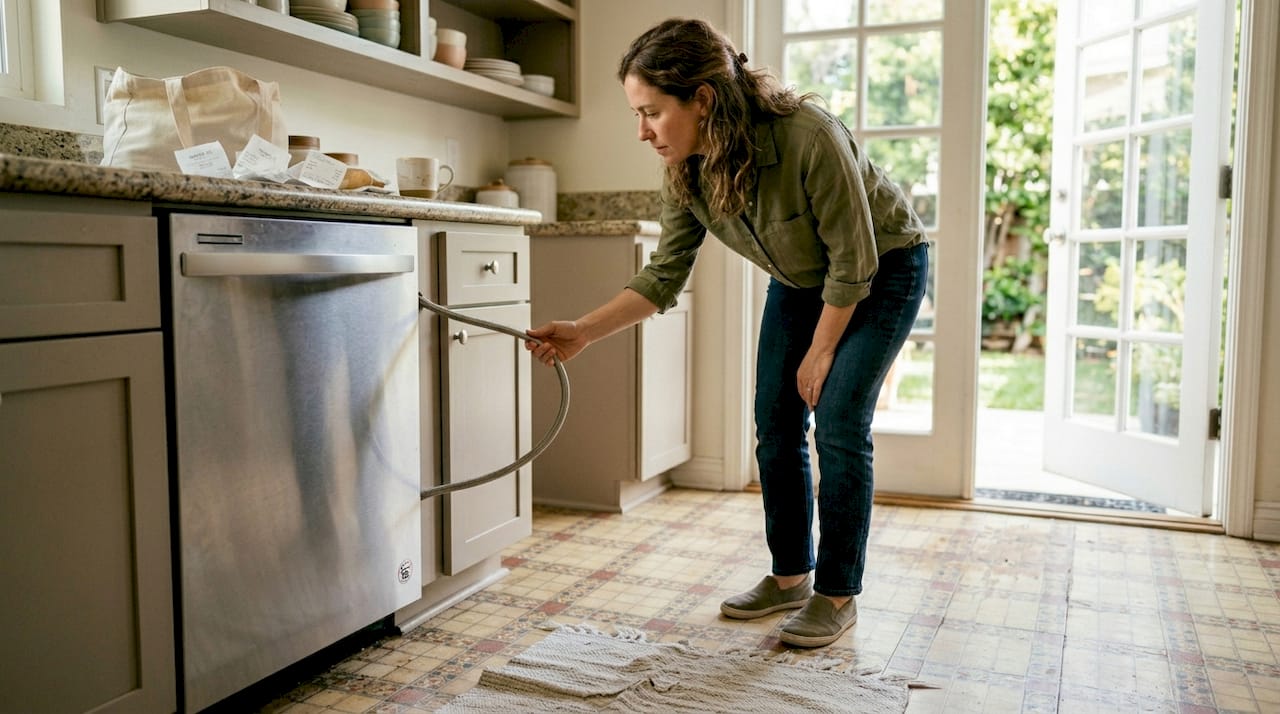
Water meter tests require preparation to ensure accurate results. Locate your main water meter, typically found in a concrete box near the street or attached to an exterior wall. Note the current reading or photograph the dial for reference. Plan your test during a period when no one will use water for one to two hours, avoiding toilet flushes, faucet use, irrigation systems, and ice maker cycles.
Smart leak sensors represent modern technology’s answer to proactive detection. These battery-powered devices sit on floors near appliances, monitoring for moisture contact. When water touches the sensor pad, the unit sends alerts to your smartphone via WiFi or Bluetooth. Premium models integrate with home automation systems and can trigger automatic water shutoff valves. Position sensors in high-risk zones:
- Directly beneath washing machine water supply connections
- Under dishwasher front panels where door seals may fail
- Behind refrigerators with ice makers and water dispensers
- Near water heater drain pans and pressure relief valves
Pro Tip: Check appliance hoses and connections every six months by running your hand along their length while the appliance operates. Feel for dampness, bulges, or soft spots that indicate imminent failure. Replace any hose showing wear before it ruptures, choosing braided stainless steel versions over rubber for superior durability and burst resistance.
Understanding signs of appliance failure helps you recognize when routine maintenance becomes urgent. Preparation transforms leak detection from reactive crisis management into proactive home protection.
Step-by-step guide to detecting appliance leaks at home
Systematic inspection methods reveal leaks at various stages, from active drips to hidden moisture accumulation. Follow these proven steps to thoroughly assess your appliances and plumbing connections.
Step 1: Conduct comprehensive visual inspections around each major appliance. Start with your washing machine by examining the floor immediately surrounding the unit. Look for water pooling, dampness, or discoloration on flooring materials. Trace supply hoses from wall connections to machine inlets, checking for moisture, corrosion, or mineral deposits. Open the washer door and inspect the rubber boot seal for tears, mold, or standing water. Move to your dishwasher and check the floor in front of the unit, then open the door to examine the bottom pan for water accumulation. Pull the refrigerator forward to inspect the water line connection and the floor beneath the ice maker compartment.
Step 2: Perform a water meter test to detect leaks by checking for unexpected meter movement when water use is shut off for 1-2 hours. Record your meter reading or take a clear photo showing all digits. Ensure every water-using fixture and appliance remains off during the test period. After waiting, check the meter again. Any movement indicates water flowing somewhere in your system, confirming an active leak. This method catches hidden leaks inside walls, under slabs, or in locations visual inspections miss. Calculate leak severity by noting how much the meter advanced, with even small movements suggesting significant daily water loss.
Step 3: Install and monitor smart leak sensors near high-risk appliances for continuous protection. Position sensors with their probe pads flat against the floor in areas where water would naturally flow during a leak. Test each sensor by placing a few drops of water on the pad, verifying that alerts reach your phone within seconds. Configure alert settings to notify multiple household members, ensuring someone always receives warnings. Check sensor batteries quarterly and clean probe pads monthly to maintain sensitivity.
Comparing detection approaches helps you choose the right method for your situation:
| Method | Accuracy | Cost | Detection Depth | Best For |
|---|---|---|---|---|
| Visual inspection | Moderate | Free | Surface only | Active leaks, obvious damage |
| Water meter test | High | Free | Whole system | Hidden leaks, verification |
| Smart sensors | Very high | $20-$100 per sensor | Real-time monitoring | Prevention, early warning |
| Professional detection | Highest | $150-$500 | Complete assessment | Complex issues, pre-purchase inspections |
Combining methods provides comprehensive coverage. Monthly visual checks catch obvious problems, quarterly meter tests verify system integrity, and continuous sensor monitoring alerts you to new leaks immediately. This layered approach minimizes the window between leak onset and discovery.
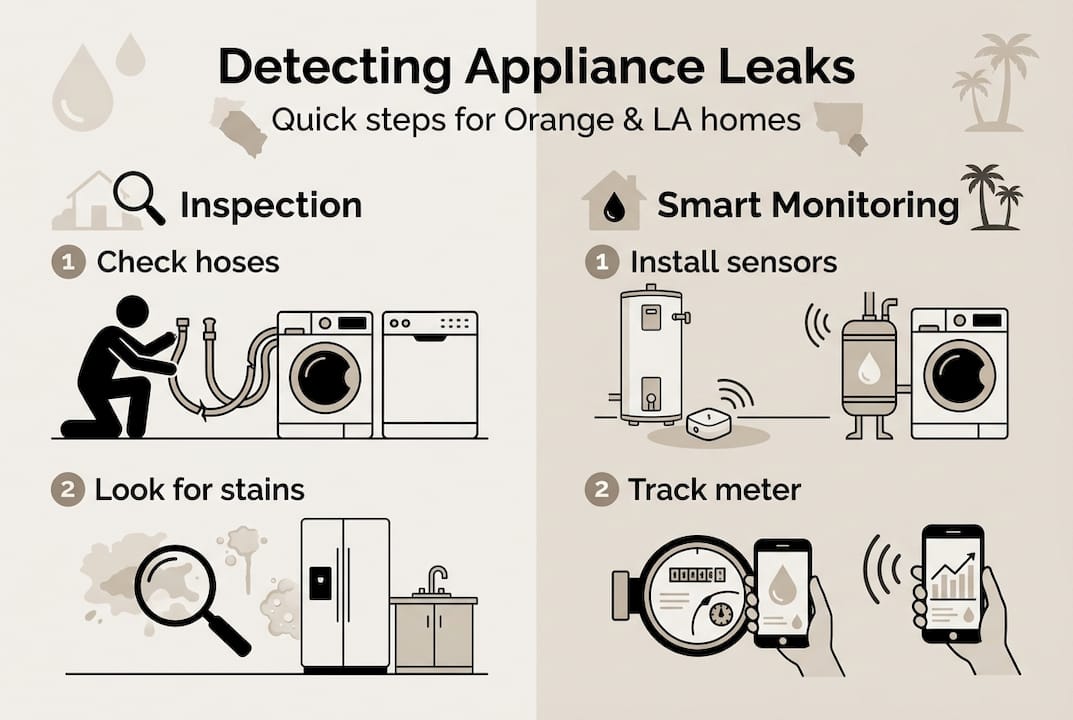
Pro Tip: Act within 24 hours of discovering any moisture or leak signs to minimize damage and mold risk. Even small amounts of water can penetrate porous materials and begin degradation processes. Quick response often means the difference between a simple hose replacement and extensive structural repairs.
Learning to diagnose appliance noise complements leak detection since unusual sounds often precede failures. Grinding, squealing, or hissing noises may indicate pump problems, bearing wear, or valve issues that could soon cause leaks. Understanding why professional appliance repair matters helps you recognize when DIY detection should transition to expert intervention.
Troubleshooting common detection challenges and next steps
Even thorough DIY inspections sometimes miss leaks or produce confusing results. Hidden leaks occur in spaces you cannot easily access, such as inside walls, beneath concrete slabs, or in crawl spaces above ceilings. Slow leaks release moisture gradually, allowing materials to absorb water without visible pooling. You might also confuse condensation, spills, or humidity issues with actual appliance leaks, leading to unnecessary repairs or missed problems.
Several factors signal the need for professional assistance:
- Persistent musty odors despite no visible moisture or mold
- Unexplained water bill increases after DIY checks reveal nothing
- Mold growth appearing repeatedly in the same location
- Damp spots on walls or ceilings with no obvious source above
- Water meter showing usage when all fixtures are confirmed off
Professional detection becomes essential when leaks hide behind finished surfaces or when you need definitive answers before making repair decisions. Professional detection uses advanced technology reducing misdiagnosis and preventing further damage but costs $150+. Technicians employ infrared cameras that visualize temperature differences caused by moisture, acoustic sensors that detect the sound of water escaping under pressure, and moisture meters that measure water content in building materials without destructive testing.
Scenarios where professional tools provide clear advantages include:
- Pre-purchase home inspections to identify hidden damage before closing
- Insurance claims requiring documented evidence of leak location and extent
- Renovations where you need to verify areas are dry before closing walls
- Persistent problems where multiple DIY attempts have failed to locate the source
- Situations where destructive investigation would cost more than professional detection
Pro Tip: Select qualified local service providers in Orange and LA by verifying their licensing, insurance coverage, and experience with your specific appliance brands. Ask about their detection methods and whether they provide written reports with photos documenting findings. Local expertise matters because technicians familiar with regional construction methods and common appliance installations in your area work more efficiently and accurately.
Early professional intervention typically costs a fraction of the restoration expenses you will face after prolonged water exposure. A $200 detection service that prevents $5,000 in structural repairs represents exceptional value and protects your home’s long-term integrity.
Recognizing signs of faulty appliances helps you schedule timely repairs before minor issues escalate. When detection reveals problems beyond your comfort level or expertise, professional repair services provide the specialized knowledge and tools needed for lasting solutions.
Protect your home with expert appliance leak detection and repair
After learning DIY detection methods, you understand that some situations demand professional expertise and equipment. MDTech Services combines advanced leak detection technology with deep local knowledge of Orange and Los Angeles County homes, helping you identify and resolve appliance leaks before they cause extensive damage.

Our experienced technicians use non-invasive electronic detection tools that pinpoint leak sources without unnecessary wall demolition or guesswork. We service all major appliance brands and provide comprehensive appliance repair services that address root causes, not just symptoms. Quick scheduling minimizes appliance downtime and prevents water damage from progressing while you wait for service.
Explore our detailed appliance repair homeowner guide for additional maintenance tips, or contact us for plumbing repair service when leaks extend beyond appliance connections. Our licensed technicians serve your neighborhood with the responsiveness and reliability that protects your home and preserves your peace of mind.
FAQ
How can I tell if my washing machine is leaking?
Look for water pooling around the base, damp flooring, mold growth on nearby walls, or unusual gurgling sounds during cycles. Rising water bills without increased usage also suggest hidden leaks. Check supply hoses, drain connections, and door seals regularly for moisture, corrosion, or deterioration. Review signs you need appliance repair for comprehensive indicators that your washer requires professional attention.
What are the benefits of using smart leak detectors near appliances?
Smart leak detectors alert homeowners via app and can trigger auto shutoff valves to prevent damage. They provide real-time monitoring that catches leaks immediately, often before you notice any visible signs. This early warning system helps you avoid extensive water damage, mold growth, and costly repairs by enabling quick action. Install them in high-risk areas like laundry rooms, under sinks, and behind refrigerators for maximum protection.
When should I hire a professional for appliance leak detection?
Call a professional when leaks persist despite thorough DIY checks, when mold and musty odors appear without obvious moisture sources, or when your water bill increases unexpectedly. Pros use advanced detection tools preventing further damage and ensure accurate diagnosis. Complex or hidden leaks often require electronic equipment that visualizes moisture inside walls and under floors. Early professional hiring cuts restoration costs significantly and prevents structural damage from progressing. Consider professional appliance repair when detection reveals problems requiring specialized repair knowledge.
Can hard water cause appliance leaks in Orange and LA County homes?
Hard water prevalent throughout Southern California deposits minerals inside valves, connections, and internal components. These deposits restrict water flow, increase pressure on seals, and accelerate corrosion of metal fittings. Over time, mineral buildup weakens gaskets and creates stress points where leaks develop. Regular descaling and periodic hose replacement help combat hard water effects and extend appliance lifespan.
How often should I inspect appliances for potential leaks?
Conduct visual inspections monthly, checking floors, walls, and connections around all water-using appliances. Perform water meter tests quarterly to verify no hidden leaks exist in your system. Inspect and feel hoses every six months for signs of wear, replacing any that show cracks, bulges, or softness. Annual professional inspections provide thorough assessments that catch developing problems before they cause damage, especially in homes with older appliances or previous leak history.