
TL;DR:
- A running toilet wastes between 200 and 4,000 gallons of water daily, significantly increasing utility bills. Most issues originate from a faulty flapper, a misadjusted fill valve, or damaged flush valve seat, which homeowners can often repair themselves. Ignoring these problems can cause extensive water damage, mold growth, and environmental strain, emphasizing the importance of regular maintenance and timely repairs.
A running toilet is defined as a condition where water flows continuously or intermittently from the tank into the bowl because internal components fail to stop the flow. This is one of the most common plumbing problems homeowners face, and it costs more than most people realize. Running toilets waste 200 to 4,000 gallons of water per day depending on leak severity. That waste adds up fast on your utility bill. Understanding why does toilet keep running starts with three internal parts: the flapper, the fill valve, and the flush valve seat.
Why does a toilet keep running after flushing?
A toilet keeps running because one of three internal tank components is not doing its job. The flapper is not sealing, the fill valve is not shutting off, or the flush valve seat is damaged. Flapper failure causes about 70% of all running toilet cases. That single statistic tells you where to look first every time.
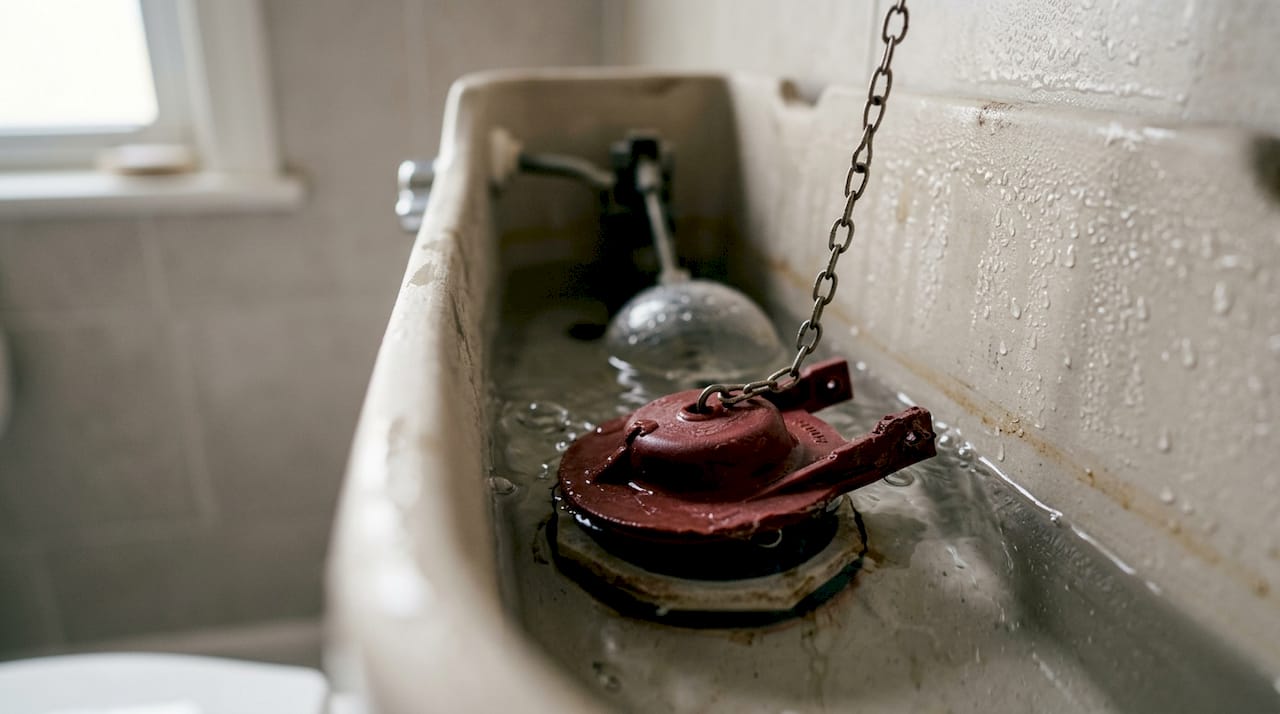
Flapper problems
The flapper is a rubber seal at the bottom of the tank. When you flush, it lifts to release water, then drops back down to stop the flow. Over time, rubber degrades, warps, or collects mineral buildup, and the seal breaks. When that happens, water trickles constantly from the tank into the bowl.
The easiest way to confirm a flapper leak is the dye test. Drop food coloring into the tank and wait 15 minutes without flushing. If color appears in the bowl, the flapper is leaking. This test costs nothing and takes less than 20 minutes.
Fill valve and float issues
Fill valve problems account for about 20% of running toilet cases. The fill valve controls how water refills the tank after a flush. When it malfunctions, water keeps entering the tank even after it is full, spilling into the overflow tube and draining into the bowl. A misadjusted float is often the culprit here. The float is the buoyant device that signals the fill valve to shut off when the water reaches the correct level.
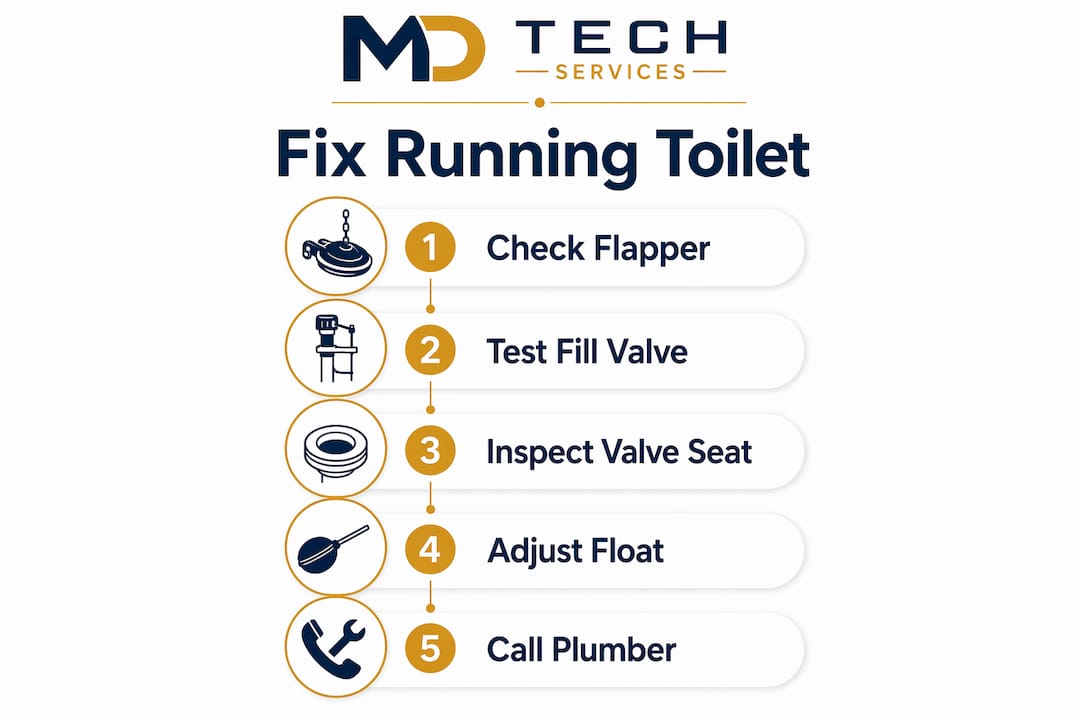
Flush valve seat damage
The flush valve seat is the rim the flapper presses against to create a seal. If this surface is cracked, corroded, or coated with mineral deposits, even a brand-new flapper will not seal properly. Flush valve seat damage causes roughly 10% of running toilet issues. You can feel for roughness or cracks by running your finger around the seat rim.
Pro Tip: Before you assume the flapper is bad, press down on it with your finger while the toilet is running. If the sound stops, the flapper is the problem. If it does not stop, the fill valve or float is the likely cause.
How do you fix a toilet that keeps running?
Most running toilet repairs fall within the DIY skill range of the average homeowner. Parts typically cost between $8 and $25 and the work takes about 20 to 45 minutes without special tools. Here is how to work through the repair in order.
-
Turn off the water supply. Locate the shutoff valve behind or below the toilet and turn it clockwise until it stops. Test the valve before you start. A stuck or corroded shutoff valve can cause flooding if it fails mid-repair. If the valve does not turn smoothly, replace it before doing anything else.
-
Flush and empty the tank. Flush once to drain most of the water. Use a sponge or towel to remove any remaining water from the tank bottom.
-
Replace the flapper. Unhook the old flapper from the pegs on the overflow tube and disconnect the chain from the flush handle arm. Take the old flapper to a hardware store to match the size and style. Snap the new flapper onto the pegs, reconnect the chain with about half an inch of slack, and turn the water back on. Check for leaks.
-
Adjust or replace the fill valve. If the water level is too high and spilling into the overflow tube, adjust the float. Set the float so water sits about 1 inch below the overflow tube. On a ball float, bend the arm down slightly. On a cup float, pinch the clip and slide it down the shaft. If adjusting does not fix the issue, replace the entire fill valve assembly.
-
Inspect the flush valve seat. Run your finger around the seat rim. If it feels rough or gritty, clean it with fine steel wool or a toilet-safe abrasive pad. If it is cracked, the entire flush valve needs replacement, which is a more involved repair.
-
Test the repair. Turn the water back on, let the tank fill, and watch and listen for 10 minutes. Repeat the dye test if you replaced the flapper.
Pro Tip: Schedule any professional plumbing work during regular business hours. After-hours appointments carry a 50–100% surcharge compared to standard rates, so a repair that costs $150 on a Tuesday morning could cost $300 on a Saturday night.
When to call a licensed plumber
Some situations call for professional help. Improper DIY repairs, including ignoring shutoff valve condition, can cause water damage that leads to higher repair costs and insurance complications. Call a licensed plumber if the shutoff valve is stuck or leaking, if the flush valve seat is cracked, or if you see water on the floor around the toilet base. Professional toilet repair averages $250 to $271 for standard jobs, but that cost is far lower than repairing water-damaged flooring or drywall.
What happens if you ignore a running toilet?
Ignoring a toilet running constantly is a costly decision. The water waste alone can push your monthly utility bill significantly higher, and the damage can extend well beyond the bathroom.
- Water waste: A severe leak can waste up to 4,000 gallons per day. Even a slow, quiet leak wastes hundreds of gallons weekly.
- Higher utility bills: Continuous water flow registers on your meter around the clock. Homeowners often notice a spike in their bill before they hear the running sound.
- Floor and subfloor damage: Condensation and minor overflow from a constantly cycling tank can seep under the toilet base over time, rotting the subfloor and requiring expensive structural repairs.
- Mold growth: Persistent moisture in and around the toilet creates conditions for mold, which poses health risks and is expensive to remediate.
- Escalating repair costs: A $12 flapper left unreplaced can eventually lead to a corroded flush valve seat, turning a 20-minute fix into a $200-plus professional repair.
The environmental cost matters too. Municipal water systems treat and pump every gallon that reaches your home. Wasting thousands of gallons daily puts real strain on local water resources, particularly in drought-prone areas like Southern California.
How to prevent your toilet from running again
Prevention is straightforward and takes less than an hour per year. A few simple habits protect your toilet from the most common causes of a toilet water running issue.
- Inspect tank parts annually. Lift the tank lid once a year and look at the flapper, fill valve, and float. Rubber flappers typically last 4–5 years before they begin to degrade.
- Check for mineral buildup. Hard water leaves calcium deposits on the flapper and flush valve seat. Wipe these surfaces with white vinegar on a cloth to dissolve buildup before it breaks the seal.
- Test the shutoff valve. Turn it off and back on once a year to keep it from seizing. A valve that has not moved in years is a flooding risk during any repair.
- Adjust the float as needed. Water level should sit about 1 inch below the overflow tube. Check this every time you open the tank lid.
- Follow a maintenance checklist. Mdtechservices publishes an annual plumbing maintenance checklist that covers toilets, shutoff valves, and other household plumbing systems.
Pro Tip: Replace the flapper and fill valve at the same time if either one is more than five years old. The combined parts cost under $25, and doing both at once saves you from opening the tank again in six months.
| Maintenance task | Recommended frequency |
|---|---|
| Inspect flapper and fill valve | Once per year |
| Clean flush valve seat | Once per year |
| Test shutoff valve | Once per year |
| Check float height | Every 6 months |
| Replace rubber flapper | Every 4–5 years |
Following routine plumbing maintenance steps consistently is the single most reliable way to avoid emergency repairs and the water waste that comes with a neglected toilet.
Key Takeaways
A running toilet almost always traces back to a failed flapper, a misadjusted fill valve, or a damaged flush valve seat, and fixing it promptly prevents water waste, higher bills, and costly home damage.
| Point | Details |
|---|---|
| Flapper is the top cause | Flapper failure causes about 70% of running toilets; start diagnosis there. |
| Dye test confirms the leak | Add food coloring to the tank and check the bowl after 15 minutes without flushing. |
| DIY parts are inexpensive | Replacement parts cost $8–$25 and most repairs take under 45 minutes. |
| Ignoring it costs more | A neglected leak can waste thousands of gallons daily and damage floors and subfloors. |
| Annual inspection prevents problems | Checking tank parts once a year catches wear before it becomes a running toilet. |
What I’ve learned after years of toilet repairs
After working on residential plumbing across Orange County and Los Angeles County, the pattern is clear: most homeowners wait too long. They hear the running sound, assume it will stop on its own, and call us three months later with a warped subfloor and a water bill that doubled.
The flapper is almost always the first thing to check, and it is almost always the fix. But here is what most DIY guides skip: always test your shutoff valve before you touch anything inside the tank. A valve that has not moved in five years can crack or fail when you finally turn it. That turns a $12 repair into an emergency call. I have seen it happen more times than I can count.
My honest advice is this. If the shutoff valve turns smoothly and the problem is a flapper or float adjustment, do it yourself. The parts are cheap, the process is simple, and you will finish before lunch. But if the valve is stiff, the flush valve seat is cracked, or water is already on the floor, call a licensed plumber. Get a written estimate before any work starts, and describe the problem precisely so the quote reflects the actual job. Paying $150 for a professional repair beats paying $1,500 to fix water damage from a repair gone wrong.
— MDTECH
Mdtechservices can help with your plumbing repairs
Running toilets are fixable, but some repairs need a licensed professional to do the job safely and correctly.

Mdtechservices serves homeowners across Orange County and Los Angeles County with responsive, licensed plumbing and appliance repair services. Whether you need a quick toilet fix or a full plumbing inspection, our team arrives prepared and gives you a clear estimate before starting any work. You can review our homeowner repair guide to understand your options, or visit our plumbing safety tips page to prepare before a technician arrives. Book an appointment online or call us directly to get your toilet running properly again.
FAQ
What is the most common reason a toilet keeps running?
A worn or warped flapper is the most common cause, responsible for about 70% of running toilet cases. Replacing it typically costs under $15 and takes less than 30 minutes.
How do I know if my fill valve or flapper is the problem?
Press down on the flapper while the toilet is running. If the sound stops, the flapper is the issue. If it continues, the fill valve or float needs adjustment or replacement.
How much does it cost to fix a running toilet?
DIY repairs using a replacement flapper or fill valve cost $8–$25 in parts. Professional repairs average $250 to $271 for standard toilet issues, with simpler fixes ranging from $60 to $150.
Can a running toilet cause water damage?
Yes. Continuous tank cycling creates moisture that can seep under the toilet base over time, damaging the subfloor and promoting mold growth. Fixing the problem promptly prevents structural damage.
How do I stop my toilet from running without calling a plumber?
Perform the dye test to confirm a flapper leak, then replace the flapper or adjust the float height to sit about 1 inch below the overflow tube. Both fixes require no special tools and take under 45 minutes.