
TL;DR:
- Simple daily habits, affordable maintenance, and targeted upgrades can significantly lower HVAC energy bills annually. Sealing leaks, maintaining filters, and optimizing thermostat settings are highly effective cost-saving strategies. Upgrading to energy-efficient systems and employing smart zone control further maximize long-term savings without major investments.
Heating and cooling account for nearly half of a typical home’s energy bill, yet most people assume the only real ways to save on HVAC bills involve expensive equipment replacements. That thinking leads to frustration and missed savings. The truth is that a combination of simple daily habits, affordable maintenance tasks, and targeted upgrades can reduce HVAC energy costs by hundreds of dollars each year. Whether you own your home or rent, there are practical steps you can take starting today to cut down air conditioning bills and lower heating costs without a major investment.
Table of Contents
- Key takeaways
- 1. Optimize thermostat settings to reduce HVAC energy costs
- 2. Maintain your HVAC system and replace filters regularly
- 3. Seal air leaks and improve insulation
- 4. Use fans, ventilation, and shading to reduce HVAC workload
- 5. Upgrade to energy-efficient systems and smart zone control
- What I’ve learned working with homeowners on HVAC savings
- Let Mdtechservices help you take the next step
- FAQ
Key takeaways
| Point | Details |
|---|---|
| Thermostat setbacks add up fast | Reducing your temperature setting by 7–10°F for 8 hours daily can save roughly 10% annually. |
| Filter changes protect efficiency | Clogged filters force your system to work harder, driving up costs every month you skip this step. |
| Air sealing beats most upgrades | Sealing leaks around windows, doors, and ducts can cut bills by 15–20% at a fraction of upgrade costs. |
| Fans cool people, not rooms | Ceiling fans only save energy when someone is in the room. Leaving them on wastes electricity. |
| Zone control stops wasted energy | Smart thermostats with zoning prevent you from heating or cooling rooms that no one is using. |
1. Optimize thermostat settings to reduce HVAC energy costs
One of the most underused ways to save on HVAC bills requires no tools and no money. It just takes a few minutes to set up. Adjusting your thermostat 7–10°F for eight hours a day, whether during sleep or while you’re away, saves about 10% annually on heating and cooling.
The common mistake most people make is thinking that setting the thermostat much colder will cool the house faster. It doesn’t. Your AC runs at the same speed regardless of the setpoint. Setting it to 60°F when you want 72°F just means it runs longer and costs more. The DOE recommends programmable thermostat settings that keep the home warmer during the day in summer and cooler at night in winter, which naturally reduces workload without sacrificing comfort.
Humidity is the other factor most people overlook. When indoor humidity is high, a room feels warmer than the thermostat reads. Combining thermostat setbacks with humidity control prevents the discomfort that causes people to override their savings settings and crank the AC back down.
- Set your thermostat 7–8°F higher in summer when you leave for work
- Program cooler temps 30 minutes before you return home, not when you walk in
- Use a dehumidifier in humid months to make your set temperature feel more comfortable
- Avoid frequent manual adjustments, since consistency helps the system run in longer, more efficient cycles
Pro Tip: If you have a programmable thermostat but have never programmed it, you are likely leaving 10% in savings on the table every single month.
2. Maintain your HVAC system and replace filters regularly
Routine maintenance is one of the most affordable heating solutions available to any homeowner or renter. A clean, well-maintained system simply uses less energy to do the same job.
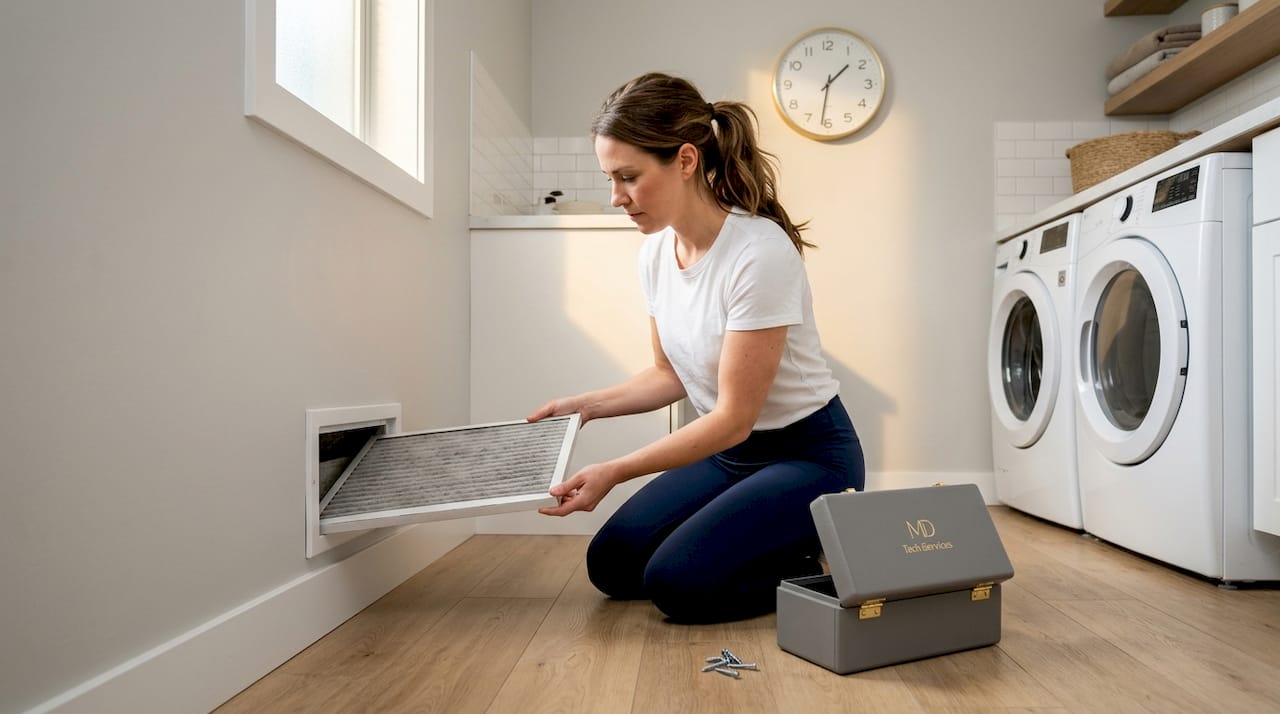
Changing standard air filters monthly and pleated filters every three months prevents the buildup that forces your blower motor to work harder. A clogged filter is like breathing through a towel. Your system strains, uses more electricity, and delivers less conditioned air. The cost of a filter is a few dollars. The cost of ignoring it shows up in every bill.
Beyond filters, annual professional furnace inspections typically run $80 to $200 and pay for themselves in energy savings and avoided repairs. A technician will check refrigerant levels, clean coils, inspect electrical connections, and catch small issues before they become costly breakdowns. Annual maintenance can recover up to 10% of the energy lost through accumulated buildup and inefficiency.
- Replace air filters on a consistent schedule and write the date on the filter when you install it
- Schedule a professional tune-up once a year, ideally before peak heating or cooling season
- Clear at least two feet of space around your outdoor condenser unit to maintain airflow
- Check signs your air ducts need cleaning at least once a year, since dirty ducts reduce airflow and push your system harder
Pro Tip: Set a recurring calendar reminder every 30 or 90 days for filter replacement. It takes two minutes and makes a measurable difference on your monthly bill.
3. Seal air leaks and improve insulation
Air leaks are quiet bill killers. You pay to heat or cool air that escapes through gaps around windows, doors, electrical outlets, and duct connections before it ever reaches the rooms you want conditioned. Sealing these leaks can reduce bills by 15 to 20%, making it one of the highest-return steps on this list.
The table below compares common sealing and insulation upgrades by cost and impact so you can prioritize where to spend your time and money.
| Upgrade | Approximate cost | Typical energy savings |
|---|---|---|
| Caulking windows and door frames | $5–$20 DIY | 5–10% reduction in drafts |
| Weather stripping on exterior doors | $10–$30 DIY | Noticeable comfort improvement |
| Attic insulation top-up | $500–$2,000 | Up to 15% on heating and cooling |
| Duct sealing with mastic or tape | $200–$500 professional | 10–20% on conditioned air delivery |
| Crawlspace insulation | $1,000–$3,000 | 5–15% depending on climate |
Duct leaks deserve special attention. Duct leakage tests using pressure methods identify the biggest inefficiencies, and sealing ducts nearest the air handler provides the best return because that’s where pressure losses are greatest. Exposed ducts running through unconditioned attics or crawlspaces are the highest priority.
For renters, focus on the low-cost DIY options. A $10 roll of weather stripping on a drafty apartment door makes a real difference and requires no landlord permission.
4. Use fans, ventilation, and shading to reduce HVAC workload
Your HVAC system doesn’t have to do all the work. Strategic use of fans, ventilation, and shading can meaningfully lower how often your system runs, which directly cuts down air conditioning bills.
Ceiling fans create a wind-chill effect that makes a room feel up to four degrees cooler. That means you can raise your thermostat four degrees and feel the same comfort level, which saves real money. The critical rule: turn ceiling fans off when leaving a room. Fans cool people through evaporation, not the air in the room. Running a fan in an empty room wastes electricity with zero benefit.
- Run bathroom and kitchen exhaust fans while cooking or showering to pull heat and humidity out of the home; fans vented outside reduce AC workload measurably
- Use blackout curtains or cellular shades on west-facing windows during afternoon hours to block solar heat gain in summer
- Plant shade trees or install exterior awnings on south and west-facing windows for a long-term passive cooling solution
- On mild evenings when outdoor temps drop below 75°F, open windows and use box fans to flush hot air and rest your AC entirely
The DOE guidance on keeping indoor temps closer to outdoor temps rather than overcooling your home is one of the most cost-effective mindset shifts you can make. Every degree closer to the outdoor temperature is a degree your system doesn’t have to work for.
5. Upgrade to energy-efficient systems and smart zone control
Sometimes the most effective long-term step to maximize HVAC efficiency is a targeted upgrade. This does not mean replacing everything at once. It means knowing when an older system costs you more to run than a new one would cost to buy.
| Factor | Older system (10+ years) | ENERGY STAR® certified system |
|---|---|---|
| Annual efficiency (SEER rating) | 8–10 SEER | 16–20+ SEER |
| Average annual operating cost | Higher by 20–40% | Significantly reduced |
| Repair frequency | Increasing | Low for first 5–10 years |
| Available rebates | None | Utility and federal rebates apply |
| Zone control compatibility | Limited | Full smart zone support |
Smart thermostats with zone control prevent the waste of conditioning rooms that no one is using. In a home with bedrooms on one side and a living area on the other, you can cool only where people actually are. That’s one of the most direct ways to lower HVAC expenses without any lifestyle compromise.
Before you invest, check for utility rebates in your area. Many California utilities, including those serving Orange County and Los Angeles County, offer meaningful rebates on ENERGY STAR® equipment and smart thermostats. These rebates can cut your out-of-pocket cost by 15 to 30%.
When is replacement the right call? Watch for these signals:
- Your system is more than 12–15 years old and needs a repair costing more than half its replacement value
- Your energy bills have increased steadily over the past two to three years without a clear lifestyle cause
- The system runs constantly but struggles to maintain the set temperature
You can explore the full case for upgrading your HVAC system and the efficiency gains that come with it before committing to any investment.
Pro Tip: Ask your HVAC technician for your system’s current SEER rating before scheduling a repair. If it’s below 14, a new unit will often pay for itself within five to seven years through energy savings alone.
What I’ve learned working with homeowners on HVAC savings
In my experience helping homeowners and renters in Orange County and Los Angeles, the most consistent pattern I see is this: people wait for a big problem before taking HVAC seriously. A system fails in July, they replace it in an emergency, and then they wonder why the new system still costs a lot to run. The answer is almost always unsealed ducts or a neglected filter habit.
What I’ve found actually works is building a short, repeatable maintenance routine. A filter swap every 30 days costs a few dollars and maybe three minutes. A yearly tune-up costs less than a dinner for four. These habits prevent the compounding inefficiency that quietly inflates bills year after year.
I also want to address renters specifically. You can’t insulate your attic or replace the unit. But you can manage your thermostat, run exhaust fans, block afternoon sun with curtains, and use smart HVAC habits that require no structural changes. In my experience, renters who apply these behavioral strategies consistently see meaningful reductions in their bills, often 10 to 15%, with zero investment.
The mindset shift worth making: think of HVAC efficiency not as a single fix but as an ongoing practice. Small habits maintained consistently beat one-time upgrades left unattended.
— MDTECH
Let Mdtechservices help you take the next step
If you’ve read through these strategies and want to move from information to action, Mdtechservices is ready to help. Our licensed technicians serve homeowners and renters throughout Orange County and Los Angeles County with professional HVAC inspections, filter system reviews, duct sealing assessments, and full system tune-ups.

Whether your system needs a routine check or you’re noticing signs of reduced performance, our team can diagnose the issue, advise on repairs, and help you understand your upgrade options clearly. Start with our HVAC repair guide to understand what a professional inspection covers and what to expect. You can also review our timely HVAC repair guidance to see how addressing small issues now prevents larger costs later. Call us or book an appointment online to get your system running at its best.
FAQ
How much can I save by adjusting my thermostat?
Turning your thermostat back 7–10°F for eight hours daily saves about 10% annually on heating and cooling bills. Using a programmable or smart thermostat to automate this schedule maximizes those savings without any daily effort.
How often should I change my HVAC air filter?
Standard fiberglass filters should be replaced monthly, while higher-quality pleated filters typically last up to three months. Homes with pets or allergy concerns benefit from more frequent changes.
Do ceiling fans actually lower my energy bill?
Ceiling fans reduce how hot a room feels, allowing you to raise your thermostat setting and run the AC less. However, they only save energy when someone is in the room; leave fans on in empty rooms and you simply add to your electricity bill.
What is the fastest DIY way to cut air conditioning bills?
Sealing gaps around windows and doors with caulk and weather stripping is one of the fastest and most affordable steps. Combined with blocking afternoon sun with curtains, these two actions can produce noticeable bill reductions within the first billing cycle.
When should I replace my HVAC system instead of repairing it?
If your system is more than 12 to 15 years old and a repair costs more than half the price of replacement, upgrading to an ENERGY STAR® unit is usually the better financial decision. Newer systems with higher SEER ratings reduce operating costs enough to recover the investment over time.