
Most range hoods should sit between 24 and 36 inches above the cooking surface, measured from the cooktop to the bottom of the hood. Where you land in that range depends on your fuel type, the hood model and the instructions printed with it. Gas cooktops need more clearance than electric or induction, and the manual for your specific hood always overrides a general rule.
This guide gives the numbers manufacturers publish, explains why gas is different, shows how to measure your own kitchen, and lists the mistakes we see when a hood is installed or replaced.
TL;DR
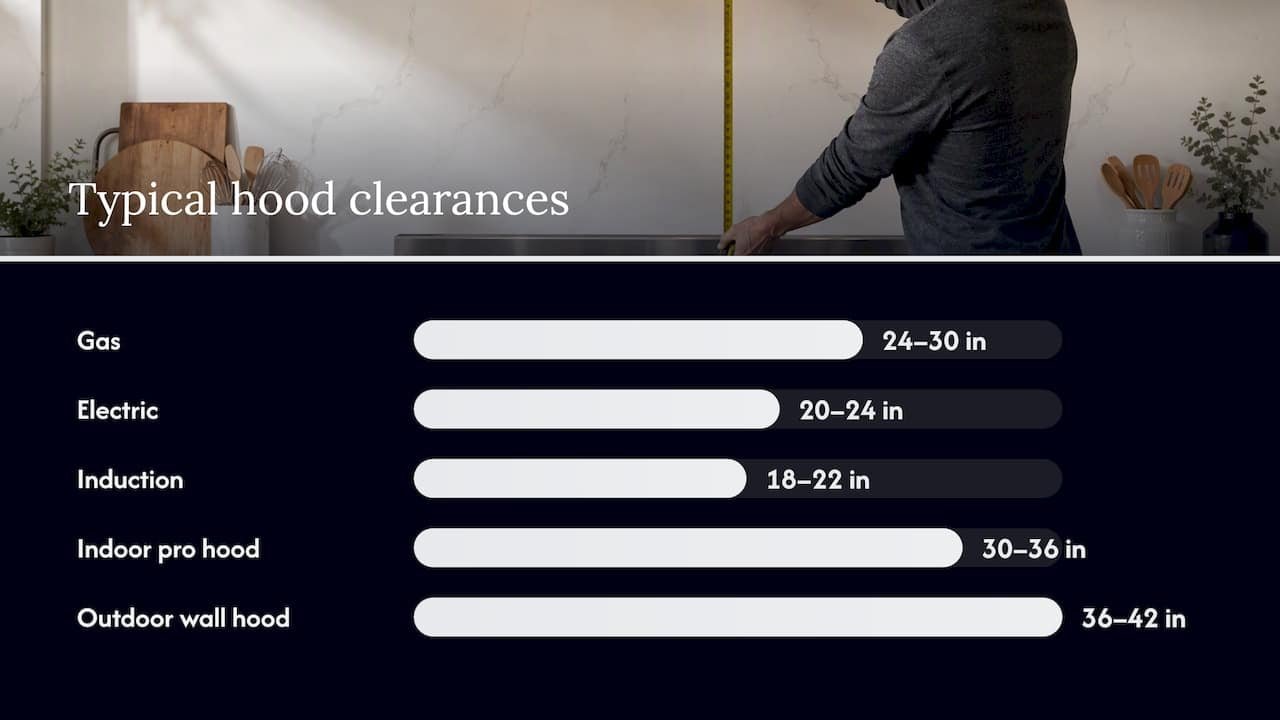
- Typical mounting height is 24 to 30 inches above a gas cooktop, 20 to 24 inches above electric and 18 to 22 inches above induction, according to KitchenAid.
- Professional-style and larger hoods often call for 30 to 36 inches, so read the installation guide for your exact model before you drill.
- Too low restricts access and adds heat and fire risk. Too high and the hood captures less smoke, grease and odor.
- Measure from the top of the cooktop (or the grates) to the underside of the hood, and check the result against the manual and your local code.
- A hood that vents outdoors through a duct works better than one that recirculates air.
Table of Contents
- Standard range hood height by cooktop type
- Range hood height over a gas stove
- How to measure range hood mounting height
- How hood type, manuals and codes affect the number
- What happens if the hood is too high or too low
- Other measurements that affect performance
- Our perspective on range hood height
- Need help with a hood, range or gas hookup?
- FAQ
- Sources
Standard range hood height by cooktop type
There is no single universal number, because manufacturers publish different ranges for different products. The figures below come from major appliance makers and give you a realistic picture of what to expect.
| Cooktop or hood type | Typical clearance (cooktop to hood bottom) | Source |
|---|---|---|
| Gas | 24 to 30 inches | KitchenAid |
| Electric | 20 to 24 inches | KitchenAid |
| Induction | 18 to 22 inches | KitchenAid |
| Cooktop ventilation hood (one Wolf model) | 24 to 36 inches | Wolf installation guide |
| Indoor pro-style hood (Wolf) | 30 to 36 inches | Wolf design guide |
| Outdoor wall hood (Wolf) | 36 to 42 inches | Wolf design guide |
Other makers give similar windows. Broan-NuTone recommends 24 to 30 inches from the cooktop to the bottom of the hood for maximum performance, and warns that some models differ. Whirlpool lists 20 to 24 inches for electric and 24 to 30 inches for gas, and says the hood should generally be no more than 36 inches above either surface.
Another way to say it: one range installation manual states that a standard hood should be 30 to 36 inches above the countertop, which typically puts the bottom of the hood 66 to 72 inches above the floor. That floor-based figure is useful when you are standing in the kitchen with a tape measure and want a quick sanity check.
The spread between these sources is not a contradiction. Each manufacturer tests its own hood’s capture performance and sets the range it can stand behind. That is why the number in your manual matters more than any chart, including this one.
Range hood height over a gas stove
Gas is the case where homeowners most often get the height wrong, and the one where a mistake carries the most risk.
An open flame produces more radiant heat and more hot air rising off the cooking surface than an electric or induction element. KitchenAid treats fuel type as a practical variable for this reason: gas generally needs more clearance than electric or induction because of the open flame and greater ambient heat.
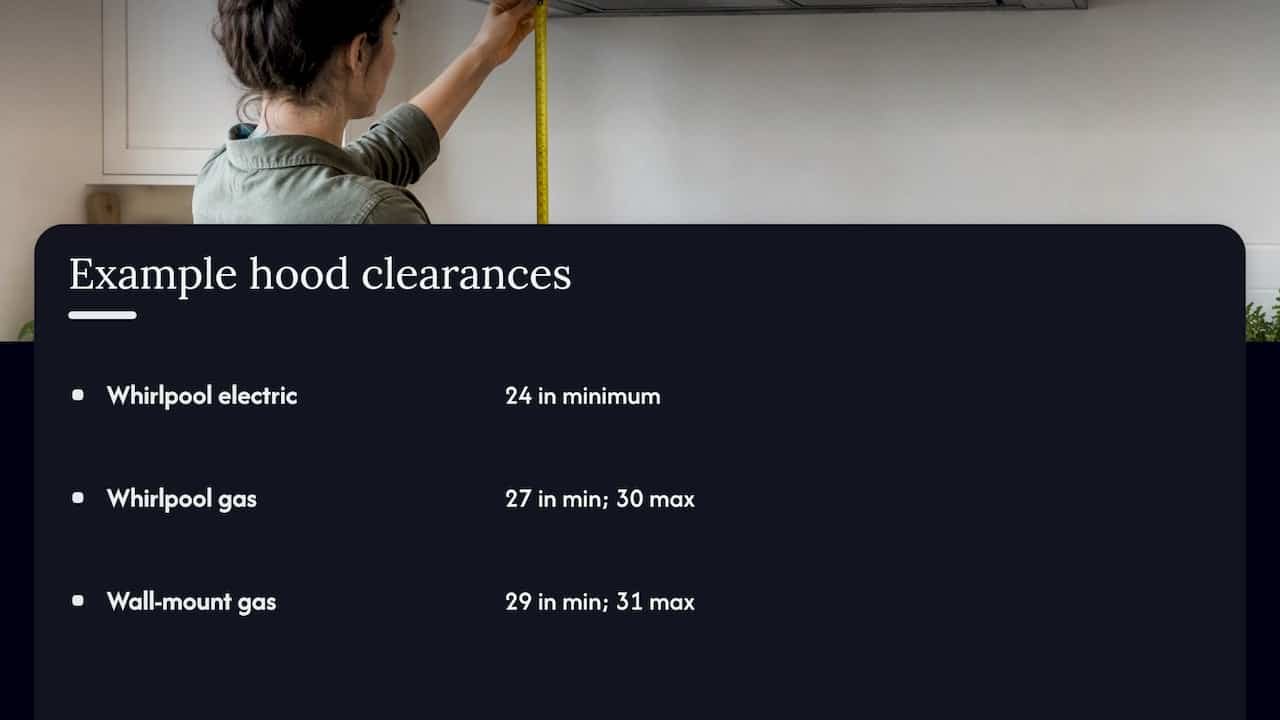
To give you a concrete example, one Whirlpool hood specification sheet requires a 24-inch minimum above an electric cooking surface and a 27-inch minimum above a gas surface, with a suggested maximum of 30 inches. So for that hood over a gas range, you would mount the bottom between 27 and 30 inches above the cooking surface. Another hood might require 29 inches minimum and suggest 31 inches maximum, as in one wall-mount hood installation manual for a 30-inch and 36-inch model. The point is that the minimum is a firm limit set by the manufacturer, not a suggestion.
Combustible materials above the burners
The cabinet or wall above your range matters as well. A GE range installation guide warns that unprotected combustible material above the burners requires 30 inches of clearance, or 24 inches when the material is protected as specified. The same guide recommends a hood that projects at least 5 inches beyond the cabinet fronts to reduce burn or fire risk. If you have wood cabinets directly over a gas range, this is the first thing to check before you choose a hood depth.
A caution about downward-blowing hoods
The installation guide for one GE gas rangetop warns against air-curtain hoods that blow downward, because the airflow may interfere with gas-burner operation and create a fire or explosion hazard. If your hood has an unusual airflow design and you cook on gas, confirm in both manuals that the pairing is approved.
If you smell gas, see yellow flames on a burner that should burn blue, or notice soot after a hood install, stop using the appliance and have a licensed technician look at it. Our gas appliance repair team handles exactly these cases, and our guide to gas safety at home explains what to watch for.
How to measure range hood mounting height
Measuring takes ten minutes and a tape measure. Do it before you buy a hood, not after.
- Find the cooking surface. On a range, measure from the top of the cooktop surface. If the grates sit noticeably higher than the surface, take a second measurement from the grate tops as well, and follow whichever your hood manual specifies.
- Measure up to the cabinet. For an under-cabinet hood, measure from the top of the cooktop to the bottom of the upper cabinet. Victory’s help center describes the same method: subtract the hood’s height from that number to find the remaining clearance.
- Subtract the hood height. If the cabinet is 30 inches above the cooktop and the hood body is 6 inches tall, the hood bottom will sit 24 inches above the cooktop. That works for electric or induction, but it is too low for a hood that requires a 27-inch minimum over gas.
- Compare with the manual. Check the minimum and maximum in the installation guide. If your result falls outside them, you need a different hood, a shorter hood body, or a change to the cabinet.
- Mark the wall. Use a level and mark the center of the cooktop and the height of the hood bottom before you lift anything.
For a wall-mount chimney hood with no cabinet, you choose the height yourself within the manufacturer’s range. A useful check is the floor distance: with a 36-inch counter, a 30 to 36 inch clearance puts the hood bottom at 66 to 72 inches above the floor, as noted in the range manual cited above. Taller cooks may want the upper end of the range so they do not bump their head.
Worked example
Say you have a 36-inch gas range with a 36-inch countertop height and a wall hood rated for 27 to 30 inches. You would mount the bottom of the hood between 63 and 66 inches above the floor. If the ceiling is 8 feet (96 inches), that leaves room for the hood body and ducting above, but you would still confirm the duct run and the length of the chimney cover before ordering.
How hood type, manuals and codes affect the number
Three things set your final height: the hood, the cooktop and the code.
The hood. Under-cabinet, wall-mount, island and downdraft hoods all have different published ranges. Professional-style hoods are larger and more powerful, so they are often mounted higher, which is why Wolf specifies 30 to 36 inches for indoor pro hoods and 36 to 42 inches for an outdoor wall hood in its design guide.
The cooktop. The range or cooktop manual may state its own clearance to the hood, especially for gas. KitchenAid’s ventilation guide says the installer must follow the clearances on the hood’s model, serial and rating plate, and that governing codes and ordinances must be observed.
The code. The International Residential Code requires appliances and equipment to be installed according to the manufacturer’s instructions, and sets clearances to combustible materials, as laid out in Chapter 41 of the 2024 IRC. Local jurisdictions adopt and amend these codes, so your city or county building department has the final say. Fine Homebuilding’s advice is to check the installation manual and local building codes before you commit to a height. For a broader view of why this matters in California homes, see our guide on why safety codes are enforced.
Wolf’s installation guide also asks for qualified installation under applicable codes and standards, and requires enough makeup air to prevent combustion gases from backdrafting. In a gas kitchen, that is not a detail to skip. A powerful hood in a tight house can pull exhaust from a gas water heater or furnace back into the living space. Our article on why venting gas appliances matters covers the broader picture.
What happens if the hood is too high or too low
Too low
A hood hung too close restricts your access to the cooking surface, which Wolf notes in its design guide. Beyond the inconvenience, a hood below the minimum puts the hood, the filters and any nearby cabinet in a hotter zone than they were designed for. Over gas, that is a real fire concern, and it can void the hood’s or the range’s warranty.
Too high
Mounting too high compromises performance. KitchenAid says a hood mounted too high captures smoke, grease and odors less effectively and recommends consulting the owner’s manual if a higher installation seems necessary. The result is a greasy film on cabinets, lingering smells and a fan that runs on high without helping much.
The practical sweet spot
Stay inside the manufacturer’s range, and if you have a choice, lean toward the lower half of it for better capture, as long as you can still reach pots and see into them. If you cook with tall stockpots, check that they clear the hood with the lid on.
Other measurements that affect performance
Height is only one part of good capture. Three other details matter.
- Width. Fine Homebuilding says a well-sized hood should extend about 3 inches beyond each end of the range. A 30-inch range pairs well with a 36-inch hood.
- Venting. Ventilation guidance on reducing cooking-pollutant exposure says hoods should be properly vented outdoors through a duct, and notes that wall- or corner-mounted hoods generally perform better than less contained arrangements. The same document favors ducted exhaust over recirculation because removing contaminants from the building is more effective than filtering and returning air.
- Installation quality. Fine Homebuilding recommends leveling and centering the hood, bolting it to the wall at least at two points, and routing ductwork outside as directly as possible. Long runs with many elbows reduce airflow, no matter how well you choose the height.
If you are replacing a range and keeping the old hood, remeasure. A new range can have a different height, different grates or a different fuel type, and any of them can move you outside the allowed window. Our residential appliance installation guide walks through the checks we run when a new appliance goes in.
Our perspective on range hood height
We install and repair gas and electric kitchen appliances across Orange County and Los Angeles County, and the hood is one of the most common things we see set up wrongly. Usually nobody made a bad decision. The hood was bought for how it looked, hung at whatever height seemed natural, and the manual stayed in a drawer.
Our advice is simple. Treat the manufacturer’s minimum as a hard limit, especially over a gas range. Choose the height inside the published window that fits the people who cook there. Confirm the duct goes outdoors, and make sure the kitchen gets enough replacement air. If a gas range is being converted from LP to natural gas or moved, check the hood clearance at the same time, because a burner change can alter the flame and the heat the hood sees.
We would rather measure twice and move a bracket than have you find out later that a cabinet is scorched or a warranty claim is denied.
— MDTECH
Need help with a hood, range or gas hookup?
If you are installing a new range, swapping a hood or moving a cooktop, our licensed technicians can check clearances, gas connections and venting as part of the job. See our appliance installation services, or if something already seems wrong with a gas range, book through our gas appliance repairs page. You can also start from mdtechservices.com to request an appointment in Orange County or Los Angeles County.
FAQ
What is the standard height for a range hood above a stove?
Most manufacturers publish a window of 24 to 36 inches from the cooktop to the bottom of the hood. Gas is usually 24 to 30 inches, electric 20 to 24 and induction 18 to 22, per KitchenAid. Your hood’s manual sets the exact minimum and maximum.
How high should a range hood be over a gas stove?
Plan on at least 24 inches, and often more. One Whirlpool specification requires a minimum of 27 inches over gas and suggests no more than 30. Always follow the minimum in your own hood and range manuals, and keep combustible cabinets in mind.
Can I mount my hood higher than recommended if I am tall?
You can go to the top of the manufacturer’s range, but not beyond it without checking the manual. KitchenAid notes that a hood mounted too high captures less smoke, grease and odor. If the maximum is not comfortable for you, a more powerful hood designed for a higher mount may be a better answer than raising a standard one.
Does a larger hood need to be mounted higher?
Often yes. Professional-style hoods are commonly specified at 30 to 36 inches for indoor use, and outdoor wall hoods at 36 to 42 inches, according to Wolf’s design guide. Check the guide for your model, since the number depends on the design.
Do I need a permit or inspection to change the hood height?
That depends on your city or county and on the work involved, such as new ductwork or gas line changes. The IRC requires installation according to the manufacturer’s instructions, and local building departments adopt their own versions of the code. Call your building department, or ask a licensed installer, before you start.
Sources
- KitchenAid: What’s the Right Range Hood Height Above a Stove?
- Wolf: Cooktop Ventilation Hood installation guide
- Wolf: Pro Ventilation Hoods design guide
- Broan-NuTone: How high should I mount my hood above my stove?
- Whirlpool: Range Hood Sizes
- Range installation manual (24, 30, 36 and 48 inch ranges)
- Whirlpool hood dimension guide
- Wall-mount range hood installation manual
- GE range installation guide
- GE rangetop installation guide
- Victory Range Hoods FAQ
- KitchenAid ventilation pairing guide
- 2024 International Residential Code, Chapter 41
- Fine Homebuilding: Installing a Range Hood
- Reducing Exposure to Cooking Pollutants