
Switching your appliances to a new energy source is often more complex than many american homeowners expect. Over 60 percent of appliance failures after conversion can be traced back to missed technical details or ignored safety standards. With more families aiming for lower bills or cleaner energy, understanding proper appliance conversion makes a real difference. This guide strips away the confusion, offering practical steps and insights so you can make informed decisions while keeping your home safe and efficient.
Table of Contents
- Defining Appliance Conversion and Its Purpose
- Types of Appliance Conversions Explained
- The Appliance Conversion Process Step by Step
- Legal and Safety Standards in California
- Costs, Risks, and Common Pitfalls to Avoid
Key Takeaways
| Point | Details |
|---|---|
| Appliance Conversion Definition | Appliance conversion modifies existing appliances to use different energy sources or configurations, helping homeowners adapt to changing needs. |
| Types of Conversions | Common conversions include voltage modifications and fuel source transformations to enhance efficiency and functionality. |
| Conversion Process | The process involves a thorough evaluation, technical preparation, and a structured implementation phase to ensure safety and effectiveness. |
| Compliance and Risks | Conversions must adhere to local safety regulations, and homeowners should avoid DIY modifications to prevent potential failures and costly damage. |
Defining Appliance Conversion and Its Purpose
Appliance conversion is a specialized technical service that involves modifying an existing appliance to operate using a different energy source or configuration. At its core, this process allows homeowners to adapt their household equipment to meet changing energy needs, efficiency requirements, or personal preferences.
Understanding appliance conversion requires recognizing its practical applications. According to handf enterprises, conversion services can transform existing equipment – such as converting a fuel-based cooker to electricity – which provides homeowners significant flexibility. Typical conversion scenarios include:
- Switching from propane (LP) to natural gas
- Transforming oil-powered equipment to electric systems
- Modifying appliances to support different voltage requirements
- Updating older appliances to more energy-efficient configurations
The primary purpose of appliance conversion extends beyond simple equipment modification. Conversion services enable homeowners to optimize their household systems for improved performance, reduced energy costs, and enhanced sustainability. By professionally adapting existing appliances, residents can avoid complete equipment replacement, which often represents a more expensive and disruptive alternative.
From a technical perspective, conversions require specialized knowledge. As info.tenontours.com explains, successful conversions involve understanding complex electrical and mechanical specifications, ensuring that the appliance can safely operate under new energy parameters without compromising its fundamental functionality. Professional technicians carefully assess voltage requirements, frequency compatibility, and potential system modifications to guarantee safe and effective transformation.
Types of Appliance Conversions Explained
Appliance conversions encompass several specialized techniques that allow homeowners to modify existing equipment for improved functionality, efficiency, and energy performance. These transformations address diverse needs across different household appliances, enabling residents to adapt their systems without complete replacement.
According to info.tenontours.com, one critical type of conversion involves voltage modification. This process ensures appliances can safely operate across different electrical systems, particularly important for homeowners with equipment from different regions or with specific power requirements. Key voltage conversion types include:
- Stepping down voltage from 240v to 120v
- Supporting dual-voltage appliances
- Adapting equipment for different electrical frequency standards
- Preventing potential electrical system damage
Handf Enterprises highlights another significant conversion category: fuel source transformation. This approach allows homeowners to switch appliances between different energy sources, such as converting from:
- Oil to electric systems
- Gas to electric configurations
- Propane (LP) to natural gas
- Solid fuel to more modern energy sources
Professional technicians typically categorize appliance conversions into three primary classifications: electrical, fuel source, and voltage adaptations.
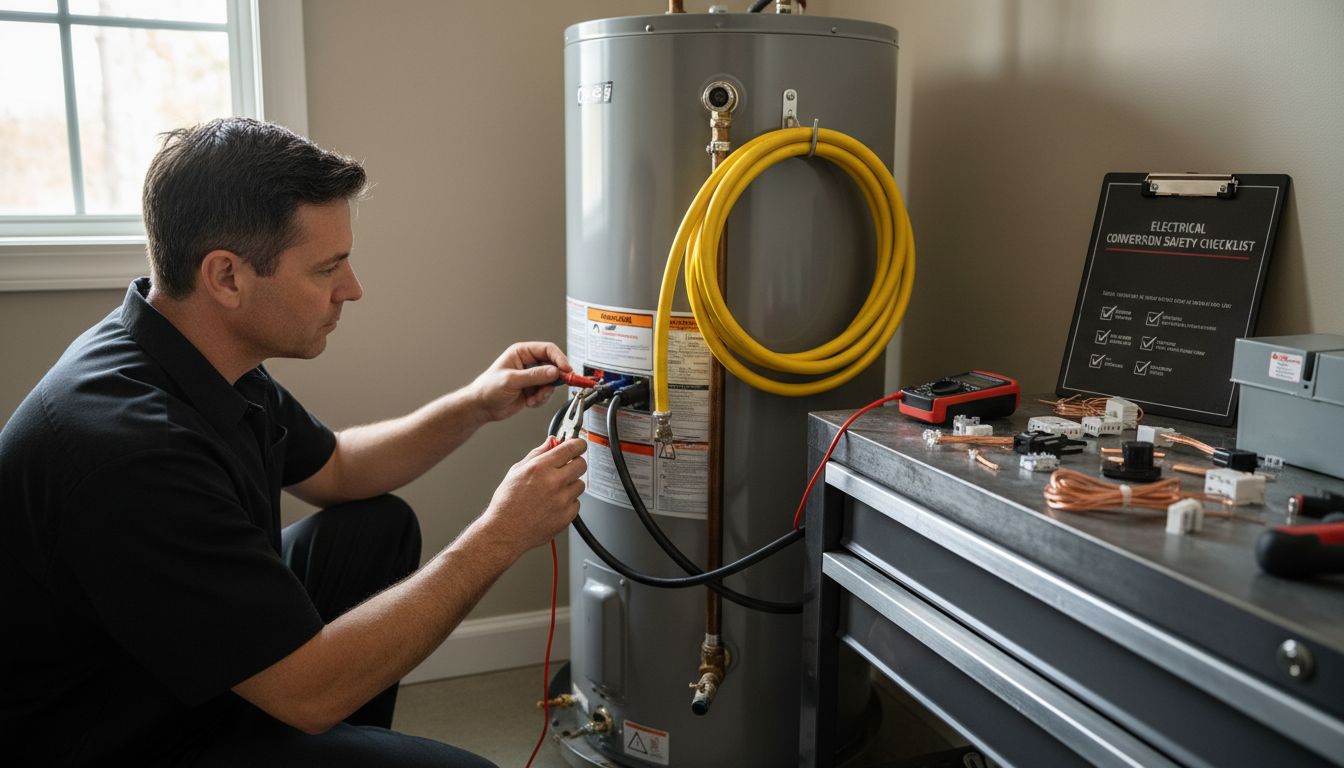 Each conversion requires specialized knowledge to ensure safe and effective implementation. Homeowners should always consult licensed professionals who can assess the specific requirements of their appliances and recommend the most appropriate conversion strategy.
The complexity of these conversions varies widely. Some modifications can be completed within a single day, while others might require more extensive technical intervention. Factors such as the appliance’s age, existing infrastructure, and specific energy requirements all play crucial roles in determining the feasibility and approach of a successful appliance conversion.
The Appliance Conversion Process Step by Step
Successful appliance conversion requires a systematic approach that combines technical expertise, careful assessment, and precise implementation. Homeowners seeking to modify their household equipment must understand the comprehensive process that professional technicians follow to ensure safe and effective transformation.
According to handf enterprises, the initial stage of appliance conversion involves a comprehensive evaluation of the existing equipment. Professional technicians typically conduct a detailed initial assessment that includes:
- Examining the current appliance’s make and model
- Evaluating existing energy infrastructure
- Identifying specific conversion requirements
- Determining compatibility with proposed energy systems
The next critical phase involves technical preparation. info.tenontours.com emphasizes the importance of understanding voltage and electrical specifications before attempting any conversion. Key preparation steps include:
- Verifying the appliance’s current electrical specifications
- Checking voltage compatibility
- Identifying necessary conversion components
- Assessing potential electrical system modifications
Professional conversion typically follows a structured five-step process. Technicians first conduct a comprehensive diagnostic assessment, then develop a detailed conversion plan tailored to the specific appliance and homeowner’s requirements. The implementation phase involves carefully disconnecting existing systems, installing necessary conversion components, and reconfiguring electrical or fuel connections.
The final stages of appliance conversion include rigorous testing and calibration. Technicians perform multiple safety checks to ensure the converted appliance operates efficiently and meets all manufacturer and regulatory standards. Homeowners receive detailed documentation explaining the conversion process, new operating parameters, and maintenance recommendations, ensuring they understand the full scope of their appliance’s transformation.
Legal and Safety Standards in California
Appliance conversions in California are subject to stringent legal and safety regulations designed to protect homeowners and ensure system reliability. These comprehensive standards govern every aspect of equipment modification, from electrical configurations to energy efficiency requirements, creating a robust framework for residential appliance transformations.
According to climate.smiller.org, heating and ventilation system conversions must adhere to specific technical guidelines. The regulations focus on ensuring that converted systems maintain optimal performance, particularly when switching between different energy sources like gas and electric. Key compliance requirements include:
- Maintaining original ductwork compatibility
- Ensuring proper electrical circuit configurations
- Verifying heat pump and air handler dimensionality
- Confirming voltage and amperage specifications
The International Energy Agency (IEA) emphasizes that California’s safety standards extend beyond immediate equipment modifications. The state mandates energy efficiency benchmarks that require converted appliances to meet stringent performance criteria. These regulations aim to:
- Reduce overall household electricity consumption
- Implement minimum energy performance standards
- Promote technological innovations
- Support environmental sustainability goals
Professional technicians must obtain proper permits and certifications before conducting any appliance conversion. This process involves detailed inspections, documentation, and compliance verification to ensure that all modifications meet local building codes, electrical safety standards, and energy efficiency regulations. Homeowners should always work with licensed professionals who understand California’s complex legal requirements and can navigate the intricate certification processes.
Costs, Risks, and Common Pitfalls to Avoid
Appliance conversion is a complex process that requires careful consideration of potential financial investments, technical challenges, and potential risks. Homeowners must approach these modifications with a comprehensive understanding of the potential complications and strategic planning to minimize unexpected expenses and technical difficulties.
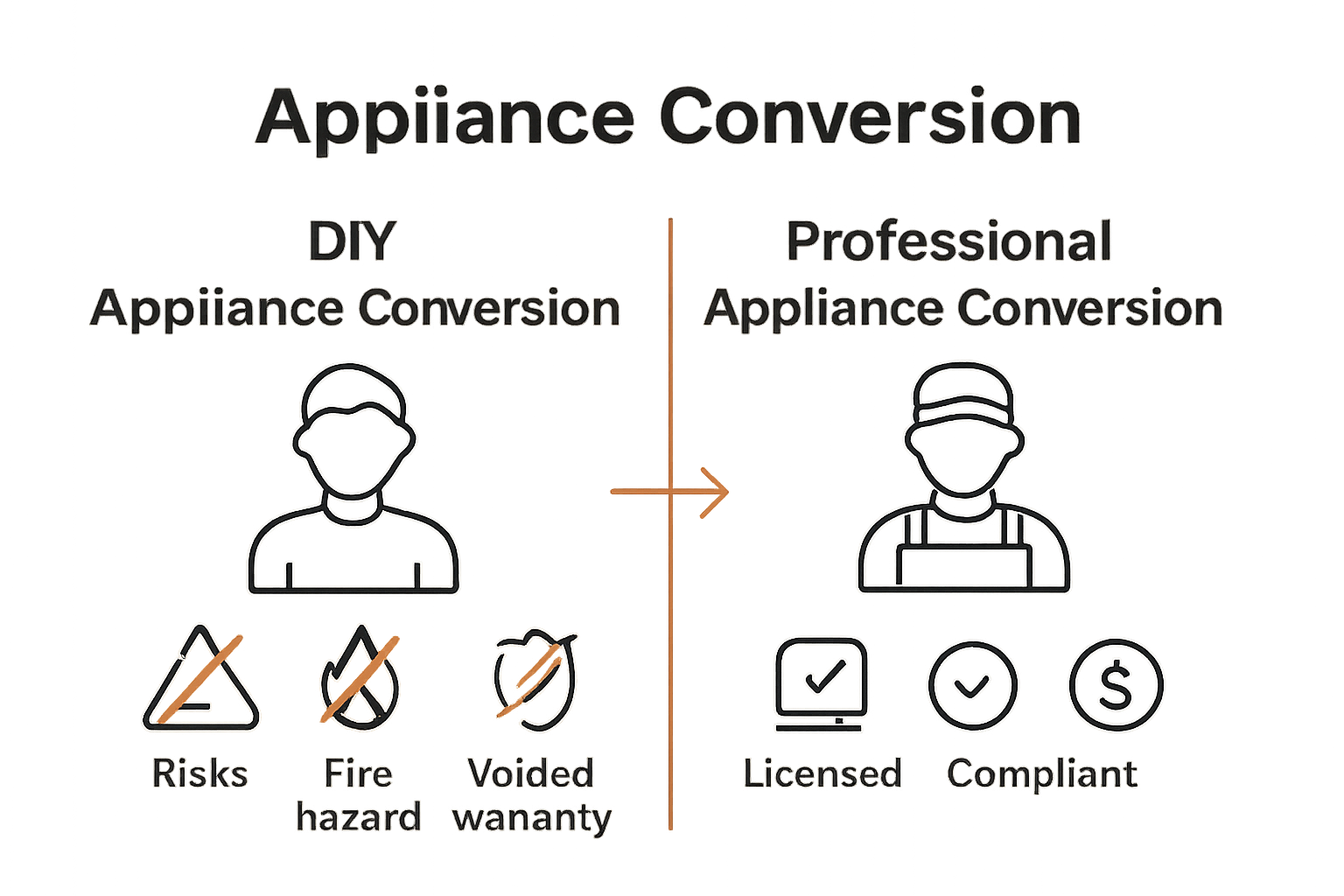
According to info.tenontours.com, one of the most critical risks involves electrical compatibility. Improper voltage conversions can lead to catastrophic equipment failure. The source warns that converters should be used carefully, noting they can only be safely operated for a maximum of 1-2 hours and must precisely match the appliance’s electrical specifications. Key potential risks include:
- Sending an appliance into electrical overload
- Causing irreparable damage to expensive equipment
- Creating potential fire hazards
- Voiding manufacturer warranties
Handf Enterprises highlights that conversion costs can vary dramatically based on the complexity of the modification. Typical cost considerations encompass:
- Equipment assessment fees
- Necessary component replacements
- Labor for specialized technical work
- Potential infrastructure modifications
- Permit and certification expenses
Common pitfalls in appliance conversion often stem from attempting do-it-yourself modifications without proper technical expertise. Professional technicians emphasize that seemingly minor errors can result in significant financial losses. Homeowners should be particularly cautious about attempting conversions without understanding the intricate electrical, mechanical, and regulatory requirements specific to their equipment and location.
Expert Appliance Conversion Services Tailored for California Homeowners
Understanding the complexities and safety requirements of appliance conversion can be overwhelming. The risk of incorrect voltage adjustments or fuel source modifications can lead to costly damage or even safety hazards. Many homeowners struggle with navigating legal standards and ensuring their appliances operate efficiently after conversion. At MDTech Services we specialize in precise appliance conversions like LP to natural gas and voltage adaptations to keep your home safe and energy-efficient.

Don’t leave your home’s essential systems to chance. Rely on our licensed technicians in Orange County and Los Angeles County who bring expertise, reliability, and safety focus to every conversion project. Visit MDTech Services today to schedule an appointment and secure a smooth transition for your appliances. Let us help you avoid costly mistakes while enhancing your home’s performance with professional appliance conversion solutions. Learn more about our comprehensive residential appliance repair and installation services and take the first step toward safer, more efficient appliances now.
Frequently Asked Questions
What is appliance conversion?
Appliance conversion is a technical service that modifies an existing appliance to operate with a different energy source or configuration, allowing homeowners to adapt their equipment to changing energy needs or preferences.
Why should I consider converting my appliances?
Converting appliances can optimize performance, reduce energy costs, and enhance sustainability. It allows homeowners to upgrade their systems without needing complete equipment replacement, which is often more expensive and disruptive.
What types of appliances can be converted?
Common types of appliance conversions include switching fuel sources, such as converting oil or propane systems to electric, and modifying electrical specifications, such as adapting appliances for different voltage requirements.
What are the safety standards for appliance conversion?
Appliance conversions must adhere to strict legal and safety regulations to ensure system reliability and efficiency. This includes meeting energy efficiency benchmarks and obtaining necessary permits to ensure compliance with local building codes.