
If your hot water smells like rotten eggs but your cold water does not, the cause is almost always inside your water heater. The usual culprits are sulfur-reducing bacteria in the tank or a chemical reaction with the tank’s magnesium anode rod. Both can be corrected, and neither means you need a new heater right away. This guide shows you how to confirm where the smell comes from, what the fix involves, what is safe to do yourself, and when a licensed technician should take over.
TL;DR
- A rotten egg or sulfur smell in hot water is hydrogen sulfide gas, usually produced by bacteria in the water heater or by a reaction with the anode rod.
- Compare hot and cold water at several faucets first. Odor only in hot water points to the heater. Odor in both points to your plumbing or water supply.
- Typical fixes are disinfecting and flushing the tank, replacing the anode rod with a different material, or adding water treatment when the smell keeps coming back.
- Water heater work involves gas, electricity, scalding water and pressure, so have a licensed professional handle it unless you are very familiar with the equipment.
- If the smell is strong, you feel dizzy or ill, or you smell gas rather than eggs, leave the area and get help right away.
Table of Contents
- What the smell actually is
- Step 1: Find out where the smell comes from
- Is it safe to shower in water that smells like sulfur?
- Step 2: Understand what the fix involves
- What you can safely do yourself
- The first signs a water heater is going bad
- Perspective: why we start with the whole heater
- Getting help in Orange County and Los Angeles County
- How to prevent the smell from returning
- FAQ
- Sources
What the smell actually is
The rotten egg odor is hydrogen sulfide. State health agencies describe the same recipe: sulfur, hydrogen and bacteria. Sulfur-reducing bacteria live where there is little or no oxygen, such as the inside of a warm tank, and they convert sulfur compounds into hydrogen sulfide. The same Wisconsin guidance notes that electrons from a magnesium anode can nourish these bacteria.
That explains why the problem so often shows up only on the hot side. A water heater keeps water warm and still for hours, with little oxygen and a steady supply of sulfate from your water. That is a comfortable home for the bacteria.
The Minnesota Department of Health points to two common water heater causes: sulfur bacteria, or a reaction between sulfate in the water and the magnesium anode rod. The anode rod is a metal rod installed in the tank to attract corrosion so the steel tank does not rust. It does its job well, but with certain water chemistry it can create a smell as a side effect.
Step 1: Find out where the smell comes from
Before anyone touches the heater, spend ten minutes narrowing down the source. The Portland Water Bureau suggests comparing hot and cold water and checking different faucets. The Minnesota Department of Health gives the same advice: compare the odor in hot and cold taps, and check whether it is present throughout the house or only at certain fixtures.
Here is how to read the results.
| What you notice | Most likely source |
|---|---|
| Only hot water smells, at every faucet | Water heater (bacteria or anode rod reaction) |
| Hot and cold both smell, at every faucet | Water supply, well, or whole-house plumbing |
| Only one or two faucets smell | Plumbing at those fixtures |
| Smell disappears when you move away from the sink | The drain, not the water |
| Smell appears only when the shower first starts | Often the drain or fixture, not the water itself |
A simple test: fill a clean glass with hot water at the kitchen sink, carry it to another room, and smell it away from the drain. If the glass smells, the water is the problem. If it does not, the odor is coming up from the drain. In that case, a dry or fouled trap is a likely cause, and our guide on pinpointing a sewer smell in the bathroom walks through refilling traps first.
You do not need a lab test to confirm hydrogen sulfide. The New Hampshire Department of Environmental Services says laboratory confirmation is not necessary because people can detect the gas at concentrations lower than most laboratory equipment can measure. Your nose is a good enough detector.
Is it safe to shower in water that smells like sulfur?
At the low levels that cause a nuisance smell in a home, hydrogen sulfide is mostly an unpleasant odor. But the gas itself is not harmless at higher concentrations. The federal ATSDR toxicology guide for hydrogen sulfide states that high-level inhalation exposure can cause serious effects, including respiratory distress, neurological symptoms and loss of consciousness.
In practical terms:
- Run the bathroom fan or open a window while you shower, especially in a small, closed bathroom.
- If the smell is overpowering, you feel lightheaded, get headaches, or have trouble breathing, get out of the room and into fresh air, and call a professional before using the water heater again.
- If anyone in the home has asthma or another breathing condition, talk to a doctor about whether to avoid the affected water until it is fixed.
- Do not confuse a rotten egg smell from the faucet with a natural gas leak. Utilities add a sulfur-like odorant to natural gas. If you smell it near the heater, the furnace or a gas appliance rather than at the tap, do not use switches or flames, leave the house, and call your gas utility or 911 from outside.
Step 2: Understand what the fix involves
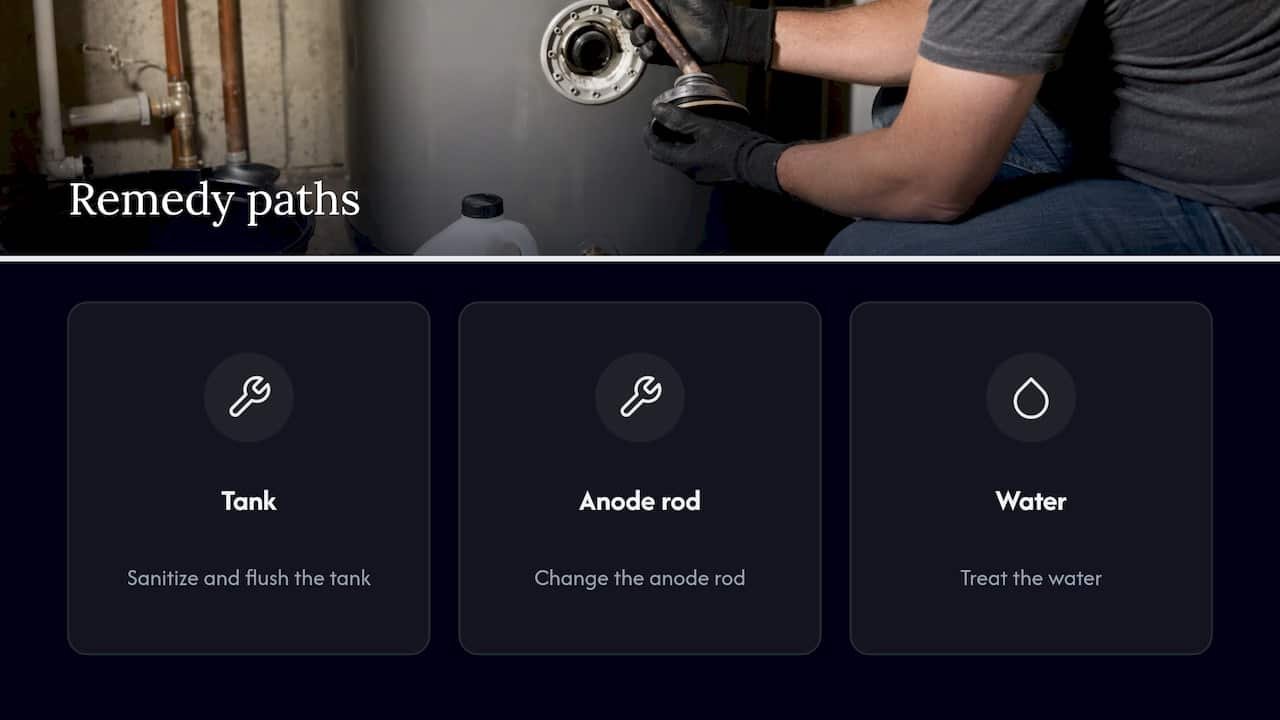
Once you know the heater is the source, the options come down to three paths: sanitize the tank, change the anode rod, or treat the water. Often the answer is a combination.
Disinfect and flush the tank
The Minnesota Department of Health says you can disinfect and flush the heater with chlorine bleach, or raise the temperature to 160°F (71°C) for several hours and flush afterward. It also advises consulting the manufacturer or dealer about an operable pressure relief valve and scalding precautions.
That last point matters. Water at 160°F can scald in seconds, and a tank held at that temperature needs a working relief valve. The U.S. Department of Energy recommends everyday settings of 120°F for most homes, so this is a short-term treatment only and the thermostat must go back afterward. A technician handles the temperature changes, the flush and the return to a safe setting in one visit, and checks the relief valve while at it.
Flushing also clears sediment. Sediment settles at the bottom of a standard tank and can shelter bacteria. Rheem notes that rumbling or popping noises usually point to sediment buildup, so a noisy tank that also smells is a good candidate for a full flush.
Replace the magnesium anode rod
If the smell comes back soon after disinfecting, the anode rod is the next suspect. The Minnesota Department of Health notes that the magnesium anode can be removed or replaced with a different material such as aluminum. Changing the material removes the reaction that feeds the odor.
There is an important trade-off. The anode rod protects the tank from corrosion, so it should be swapped, not simply removed and left out. Replacing it is a small job compared with replacing the tank. We explain the cost logic in our anode rod replacement cost breakdown.
One more point: a rod that is badly worn, or a tank that has been neglected for years, may show other trouble. Sometimes the technician finds the rod is gone entirely, and the tank has started to corrode. That is a good reason to have the heater inspected as a whole instead of only chasing the smell.
Treat the water if the smell keeps returning
If cold water smells too, or the odor persists after you treat the heater, the cause may be upstream. According to New Hampshire DES, when all hot and cold faucets smell, sulfur or iron-reducing bacteria may be affecting your well or plumbing. The agency recommends disinfecting the well and plumbing, and if the odor returns after repeated disinfection, a water-treatment system may be needed.
The same document explains that hydrogen sulfide can be treated with aeration, oxidation or activated carbon, and the right method depends on factors including how much hydrogen sulfide is in the water. A water-treatment specialist can test your water and match the system to the problem. Most homes in Orange County and Los Angeles County are on municipal water, so a smell that affects only the hot side is far more likely to be a heater issue than a supply issue. If you are on a private well, the well itself should be part of the investigation.
What you can safely do yourself
We serve homeowners, landlords and property managers, and we are straightforward about this: most of the repair work belongs with a licensed professional. The state guidance agrees. Unless you are very familiar with water heater operation and maintenance, the Minnesota Department of Health recommends having a plumber or water-system professional do the work.
What you can do without risk:
- Run the diagnostic test above and write down which faucets smell and whether it is hot only or both.
- Note the heater’s age and type. The data plate on the tank shows the manufacture date, and whether it is gas or electric.
- Check for other symptoms. Rusty or brownish water, rumbling noises, moisture around the base, or water that is not getting as hot as it used to are all worth mentioning to the technician.
- Keep the thermostat at its normal setting. Do not raise it to try to kill the bacteria on your own. The treatment temperature is a controlled procedure with scalding risks.
- Do not mix chemicals in or around the tank. Bleach and other products can create dangerous fumes, and the dosing depends on tank size.
If you want to understand the equipment better, the Washington State Department of Health encourages homeowners to become familiar with their home’s systems and how to maintain them. Our water heater maintenance checklist for homeowners and the step by step water heater fix guide cover the routine items so you know what a healthy heater looks like.
The first signs a water heater is going bad
A smell is often one clue among several. Rheem lists unusual noises, discolored or smelly water and other warning signs as indicators that a water heater is in trouble. It specifically ties brown or reddish water to corrosion inside the tank or a deteriorating anode rod, and a rotten egg odor to bacterial growth in warm, stagnant areas of the tank.
In day-to-day terms, watch for:
- Noises. Popping, rumbling or cracking while the heater runs.
- Discolored water. Rust-colored or muddy hot water, but clear cold water.
- Odor. Sulfur or metallic smell on the hot side only.
- Moisture. Drips, rust streaks or puddles at the base. If you see any, read our guide on securing a leaking water heater and shut off the supply before calling.
- Weak hot water. Running out sooner than before, which can also show up as no hot water in the shower.
One or two of these together, especially on an older tank, is the moment to schedule an inspection instead of waiting for a failure that floods a garage or closet.
Perspective: why we start with the whole heater
Most calls about smelly hot water start the same way: a homeowner has tried air fresheners, run the water longer, or poured something into the drain, and the smell is still there. The first thing we do is confirm the source. We compare hot and cold, check the fixtures, and inspect the heater itself, because treating the wrong thing wastes your money and your time.
When the heater is the cause, we look at the whole picture: the anode rod, sediment in the tank, the thermostat setting, the relief valve and the age of the unit. A smell can be the only visible sign of a heater that needs attention, and fixing it properly means you are not back in a few weeks with the same problem.
We also care about doing this safely. Heating water to disinfection temperatures, working with gas lines and handling pressure relief valves are jobs for licensed, experienced technicians. Our approach is to give you a clear explanation of what we found, what we recommend and why, and to stand behind the work. Orange County and Los Angeles County homes have a mix of water conditions and heater types, and we see them every week.
MDTECH
Getting help in Orange County and Los Angeles County
If your hot water smells like sulfur, our licensed technicians can inspect the heater, identify whether the cause is bacteria, the anode rod or something else, and carry out the repair. We also handle the related plumbing and gas work, so one visit can cover the heater, the connections and the venting. For a closer look at how we approach tank problems in this region, see our page on water heater repair for California homes.
You can book an appointment online or contact MDTech Services for plumbing repair and water heater service across Orange County and Los Angeles County.

If your heater runs on gas and you are not sure the smell is hydrogen sulfide, our team also handles gas appliance repairs, so you do not need to guess when safety is on the line.
How to prevent the smell from returning
Sulfur odor in hot water tends to return when the conditions that created it are still there. A few habits keep the risk down:
- Flush the tank on a schedule. Removing sediment takes away both a hiding place for bacteria and a drag on efficiency. The maintenance checklist shows what a regular service looks like.
- Inspect the anode rod periodically. A worn rod is a corrosion risk, and the right material for your water can prevent odor.
- Use the heater regularly. Water that sits for weeks in a tank, such as in a vacation property or a vacant rental, is more likely to turn stagnant. Landlords and property managers should flush the heater before a new tenant moves in after a long vacancy.
- Keep the thermostat at a safe, consistent setting. Never leave it at a disinfection temperature.
- Act on early signs. A faint smell is easier and cheaper to correct than one that has been running for months.
FAQ
Why does my hot water smell like rotten eggs but my cold water does not?
The water heater is almost certainly the source. Sulfur-reducing bacteria can grow in the warm, low-oxygen tank, and a magnesium anode rod can react with sulfate in the water. Both produce hydrogen sulfide gas on the hot side only. A technician can disinfect the tank or change the anode rod to stop it.
Is smelly hot water dangerous?
At the low levels behind a household odor, it is mainly a nuisance, but hydrogen sulfide is hazardous at high concentrations, according to the ATSDR. Ventilate the bathroom, and leave the area if you feel dizzy, get headaches or struggle to breathe. If you smell gas near an appliance, leave the house and call your gas utility or 911.
Can I fix a smelly water heater myself?
The disinfection and anode rod procedures involve high temperatures, pressure relief valves, gas or electrical connections and chemicals. Health agency guidance advises having a plumber or water-system professional do the work unless you are very experienced with water heaters. What you can do safely is run the hot and cold comparison and note your findings for the technician.
How do I know if the smell is from the water heater or the drain?
Fill a glass with hot water, move away from the sink and smell it. If the glass smells like sulfur, it is the water. If it does not, the odor is coming from the drain or a dry trap. Our sewer smell guide explains how to check and refill traps.
What if the smell comes back after the heater is treated?
A return of the odor usually means the cause is wider than the tank: bacteria in the plumbing, a well, or the supply. Disinfecting the plumbing is the next step, and if the smell still returns after repeated disinfection, a water-treatment system, such as aeration, oxidation or carbon filtration, may be needed.
Sources
- Sulfur Bacteria Problems in Wells, Wisconsin DNR
- Why Does My Water Smell Like Rotten Eggs? Hydrogen Sulfide, Minnesota Department of Health
- Taste and odor issues in drinking water, Portland Water Bureau
- Taste and Odor in Drinking Water, New Hampshire DES
- Hydrogen Sulfide and Carbonyl Sulfide ToxGuide, ATSDR
- Color, taste and odor problems in drinking water, Washington State Department of Health
- 5 Signs Your Water Heater Is Going Bad, Rheem