
California enforces residential safety codes — including the California Building Standards Code (Title 24), the California Plumbing Code, and HSC Section 17926 — to protect life, property, indoor air quality, and energy performance in every home. For homeowners, landlords, and property managers in Orange County and Los Angeles County, that enforcement is not a bureaucratic hurdle. It is the difference between a safe installation and a liability.
Three reasons code enforcement matters most for property owners:
- Safety: Codes prevent gas leaks, carbon monoxide buildup, fires, and water damage from faulty installations.
- Insurance and resale: Unpermitted or noncompliant work can trigger claim denials and force costly remediation before a sale closes.
- Legal standing: HSC §17926 requires CO detectors in any dwelling with fossil-fuel appliances, with fines per offense for noncompliance.
Table of Contents
- What do safety codes actually protect against in your home?
- Which California codes apply to residential appliances, HVAC, plumbing, and gas?
- Why does enforcement benefit you beyond just following the rules?
- What happens when you ignore code requirements?
- When do you need permits, and what do they cost?
- How does the enforcement process actually work?
- Your practical compliance checklist before, during, and after work
- How a licensed local technician keeps your home code-compliant
- Key Takeaways
- Why we put enforcement at the center of every job
- Mdtechservices serves Orange and Los Angeles County homeowners who need code-compliant work done right
- Authoritative sources for California code text and guidance
What do safety codes actually protect against in your home?
Codes exist because specific, predictable failures happen when residential appliances, HVAC systems, plumbing, and gas lines are installed without oversight. Each hazard maps directly to a real scenario.
Gas leaks are the most immediate risk. An improper LP-to-natural-gas conversion — wrong orifice sizing, missing pressure test, or unapproved fittings — can result in a slow leak that accumulates in an enclosed space. Carbon monoxide follows a different path: a blocked or improperly vented furnace or water heater produces CO that has no odor and no color. Residents may not notice until symptoms appear. Fire from improper venting is a third failure mode, particularly when combustion appliances are installed without adequate clearance or when flue connections are left loose.
On the plumbing side, faulty pipe connections or missing shutoff valves can cause water intrusion that goes undetected inside walls for months, leading to mold and structural damage. Around appliances, miswired electrical connections create shock and fire hazards that are invisible until something fails.
Codes reduce downstream costs as much as they prevent immediate harm. A single gas leak remediation, mold abatement, or CO-related hospitalization costs far more than the permit and licensed installation that would have prevented it. Property owners who skip the permit often pay twice: once for the original work and again to bring it up to code before a sale or after an insurance claim.
Pro Tip: If you have a gas appliance, furnace, or attached garage, check that working CO detectors are installed on each level of the home. California law requires them, and they are your first line of defense against a hazard you cannot see or smell. For more on ventilation and CO safety, Mdtechservices has a practical guide.
State law also authorizes local jurisdictions to require seismic gas shutoff devices and water heater bracing, recognizing that earthquake-related fire and water hazards are a specific California risk. In Orange and Los Angeles counties, local ordinances may go beyond state minimums.
Which California codes apply to residential appliances, HVAC, plumbing, and gas?
Understanding which code governs which work helps you ask the right questions before any project starts.
| Code / Standard | What it regulates for homeowners |
|---|---|
| California Building Standards Code (Title 24) | HVAC design, equipment efficiency, ductwork, energy compliance, permits, and field verification for residential mechanical systems |
| California Plumbing Code / Fuel Gas Standards | Gas pipe sizing, load calculations, pressure requirements, and AHJ approval for gas appliance installations |
| HSC §17926 | Mandatory CO detector installation in dwellings with fossil-fuel appliances or attached garages; notice and fine provisions |
| Appliance Efficiency Regulations (Title 20) | Point-of-sale efficiency certification for appliances; manufacturers must certify equipment before it can be sold in California |
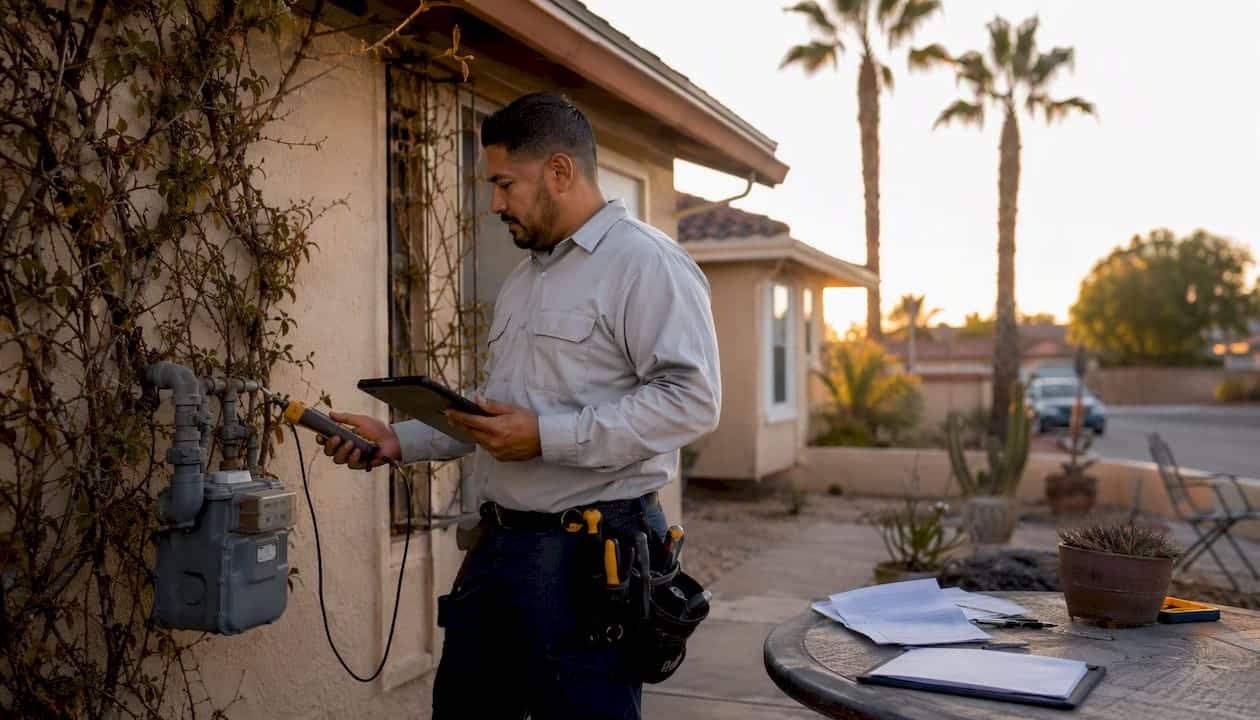
Title 24 is the broadest of these. It covers energy, mechanical, plumbing, accessibility, and fire/life safety standards, and local jurisdictions can adopt stricter ordinances when local conditions justify them. For HVAC work specifically, the Energy Code requires certified equipment and either prescriptive or performance compliance depending on climate zone and project scope.
The Title 20 and Title 24 relationship is worth understanding clearly. Title 20 is enforced at the point of sale: an appliance must be certified before a retailer can sell it. Title 24 is enforced at the project level through permits and inspections. Equipment that is legal to sell may still require additional documentation or system-level compliance for a specific installation. Your licensed technician should supply both the product-level certification and the system-level compliance documentation when required.
Gas piping follows the California Plumbing Code and fuel gas standards. Proper pipe sizing, load calculations, and, when required by the Authority Having Jurisdiction (AHJ), submission of installation plans for approval are all mandatory steps before any gas appliance goes live.
Why does enforcement benefit you beyond just following the rules?
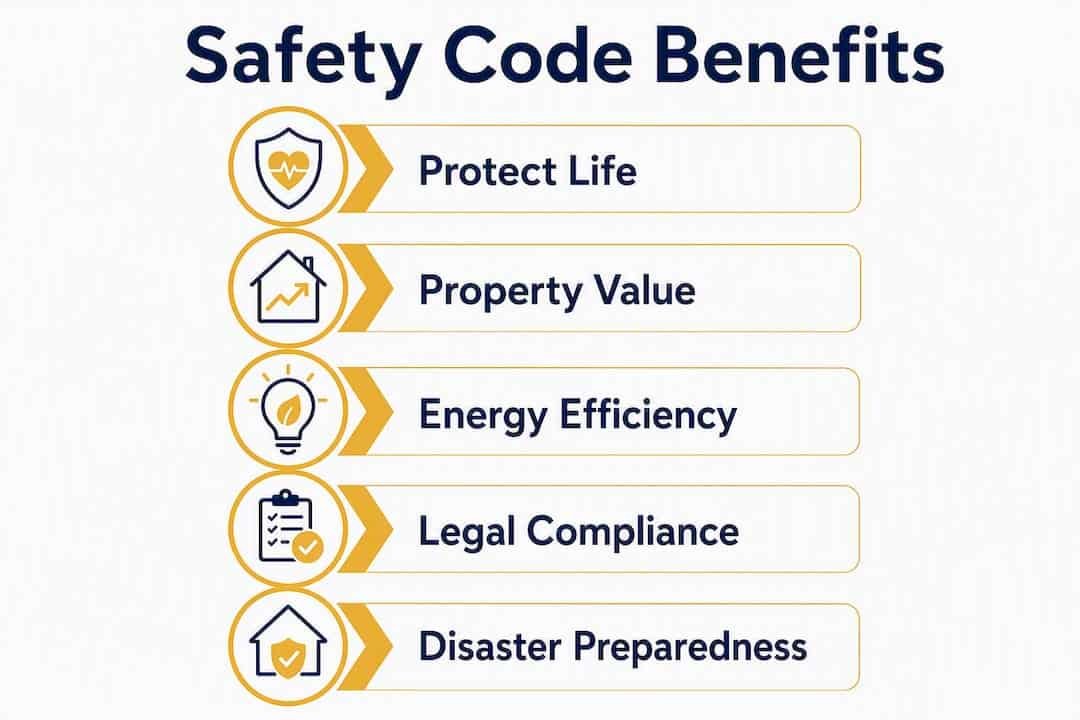
Having codes on paper is not enough. Enforcement is what converts written standards into verified, safe installations.
- Validated safety: A passed inspection confirms the installation meets the standard, not just that someone claims it does.
- Lower long-term liability: Landlords and property managers who document permitted, inspected work have a clear record if a tenant raises a safety concern or an insurer requests proof.
- Smoother real-estate transactions: Unpermitted work surfaces during escrow. Permitted work does not slow a sale.
- Energy code compliance: Title 24 compliance can qualify homeowners for utility incentives and rebates tied to verified energy performance.
- Local protection: Jurisdictions in Orange and Los Angeles counties can adopt stricter rules, such as mandatory seismic gas shutoff, based on local risk assessments. Checking with your local AHJ before planning gas work protects you from surprises.
California’s building codes are updated on a multi-year cycle to align with energy, safety, and decarbonization goals. Recent updates have accelerated heat pump adoption and tightened installation rules for gas appliances, including new electric-readiness requirements for certain gas appliances under the 2025 Energy Code.
What happens when you ignore code requirements?
Noncompliance carries real consequences across four categories.
- Health and safety: Fire, explosion, CO poisoning, and water damage are the direct outcomes of improperly installed gas lines, venting, or plumbing.
- Legal penalties: HSC §17926 specifies fines per offense for missing CO detectors, with a notice and correction period. Local AHJs can issue stop-work orders and require full remediation of unpermitted work.
- Insurance consequences: Insurers routinely deny claims when damage traces back to unpermitted or noncompliant work. A gas fire in a kitchen with an unconverted appliance is unlikely to be covered.
- Resale impact: Unpermitted HVAC, plumbing, or gas work must be disclosed in California. Buyers either negotiate a price reduction or require remediation before closing.
When local enforcement fails to secure correction of a violation, the Division of Codes and Standards may step in. State law gives the Division authority to act after notice, and it may process permits and collect fees directly when a local building department has not resolved the issue.
When do you need permits, and what do they cost?
Not every repair triggers a permit, but most installations and conversions do. Here is a practical reference:
| Project type | Permit typically required? | Typical review/inspection timeline |
|---|---|---|
| Gas appliance conversion (LP to natural gas) | Yes | 1–3 weeks depending on AHJ |
| HVAC equipment replacement (same location) | Yes in most jurisdictions | 1–2 weeks |
| Major plumbing alterations (new gas line, drain relocation) | Yes | 1–3 weeks |
| Like-for-like appliance swap (no gas work) | Often no | N/A |
| New gas piping or load additions | Yes | 2–4 weeks with plan review |
Cost factors for permits include the scope of work, the local AHJ’s fee schedule, whether plan review is required, and whether HERS (Home Energy Rating System) or field verification is needed for energy code compliance. Permit fees vary by city and county, so contact your local building department for current schedules.
- Determine whether your project triggers a permit by calling your local building department or AHJ before scheduling work.
- Confirm your contractor will pull the permit, not just perform the work.
- Schedule the inspection before the work is concealed (walls closed, connections buried).
- Retain the permit card and inspection sign-off with your property records.
How does the enforcement process actually work?
Understanding the sequence helps you know what to expect and what to ask your contractor.
- Plan submittal: For permitted work, the licensed contractor submits plans or a permit application to the local building department or AHJ.
- Permit issuance: The AHJ reviews the submittal and issues a permit when the proposed work meets code requirements.
- Installation by a licensed technician: Work proceeds under the permit. Only licensed contractors should perform gas, HVAC, or major plumbing work.
- Inspection and field verification: An inspector verifies the installation against the permit and applicable code. For HVAC work, HERS field verification may be required to confirm energy code compliance.
- Certificate of compliance or correction notice: A passing inspection results in a certificate or sign-off. A correction notice requires the contractor to fix deficiencies before re-inspection.
If a local building department fails to secure correction of a violation, the Division of Codes and Standards can act after providing notice. In some cases, a 10-day correction window applies before the Division steps in.
Inspectors typically verify:
- Proper venting and combustion air for gas appliances
- Gas pipe sizing and pressure test results
- CO detector installation per HSC §17926
- Appliance certification documentation
- Ductwork connections and insulation for HVAC systems
Your practical compliance checklist before, during, and after work
Before any project begins:
- Confirm the contractor holds a current California contractor’s license and carries insurance.
- Ask whether a permit is required and who will pull it.
- Request equipment certification documentation (Title 20 appliance efficiency certification).
During the project:
- Verify the permit is posted at the job site.
- Do not allow walls or connections to be concealed before inspection.
After the work is complete:
- Obtain the signed inspection record or certificate of compliance.
- Confirm CO detectors are installed on every level with a fossil-fuel appliance or attached garage, per HSC §17926.
- Keep all permit records, inspection sign-offs, and equipment documentation with your property files.
Pro Tip: Title 20 certification confirms an appliance is legal to sell in California. Title 24 compliance confirms the system as installed meets energy code. Ask your technician for both documents — they are not the same thing, and you need both for a complete record. For a deeper look at safe plumbing and appliance venting, Mdtechservices covers the details.
Red flags that signal unpermitted or noncompliant work: no permit posted, missing venting on a gas appliance, no gas pressure test performed, absent CO detectors, and no written documentation from the contractor.
How a licensed local technician keeps your home code-compliant
Licensed technicians do more than install equipment. They manage the compliance process from start to finish.
A qualified technician will:
- Size and install gas piping to California Plumbing Code requirements
- Perform gas pressure tests before and after connection
- Handle LP-to-natural-gas or natural-gas-to-LP appliance conversions with the correct certified conversion kits
- Coordinate HERS or field verification for HVAC installations requiring energy code sign-off
- Prepare permit-ready documentation for the AHJ
- Advise on CO detector placement per HSC §17926
Call a licensed technician for any gas work, appliance conversion, major HVAC replacement, or when an inspection has failed and corrections are required. Property managers overseeing multiple units in Orange or Los Angeles County benefit from having a single licensed provider who understands local AHJ requirements across different cities.
Mdtechservices handles both the technical installation and the permit and inspection coordination for appliance repair and installation, HVAC, plumbing, and gas conversions across Orange County and Los Angeles County.
Pro Tip: Before scheduling any gas conversion or HVAC replacement, ask your technician which compliance path they plan to use — prescriptive or performance — and what field verification will be required. That question alone tells you whether they understand Title 24 or are guessing.
Key Takeaways
Enforcing residential safety codes in California protects life, property, and long-term value by requiring permitted, inspected installations under Title 24, the California Plumbing Code, and HSC §17926.
| Point | Details |
|---|---|
| Pull permits for gas and HVAC work | Most gas conversions, HVAC replacements, and plumbing alterations require a permit from your local AHJ. |
| CO detectors are legally required | HSC §17926 requires CO detectors in any dwelling with fossil-fuel appliances, with fines per offense for noncompliance. |
| Title 20 and Title 24 are separate | Title 20 certifies appliances at point of sale; Title 24 governs system-level compliance through permits and inspections. |
| Keep all documentation | Retain permits, inspection sign-offs, and equipment certifications with your property records for insurance and resale. |
| Mdtechservices handles compliance end-to-end | Licensed technicians from Mdtechservices manage installation, gas conversions, and permit coordination in Orange and Los Angeles counties. |
Why we put enforcement at the center of every job
Most homeowners and landlords think of code compliance as paperwork. After years of working on gas conversions, HVAC installations, and plumbing projects across Orange and Los Angeles counties, we see it differently. The permit and inspection process is the mechanism that catches the mistakes that cause fires, CO incidents, and failed insurance claims. A licensed technician who skips the permit is not saving you time. They are transferring risk onto you.
What gets overlooked most often is the two-layer compliance system: an appliance can be certified for sale under Title 20 and still require additional documentation for the specific installation under Title 24. Property owners who do not know to ask for both documents end up with gaps in their records that surface at the worst possible time, usually during escrow or after a claim.
Enforcement is not the obstacle. It is the verification that the work was done right.
Mdtechservices serves Orange and Los Angeles County homeowners who need code-compliant work done right
When you need appliance repair or installation, HVAC service, plumbing work, or a gas conversion handled correctly the first time, Mdtechservices is the local provider for Orange County and Los Angeles County. Our licensed technicians pull permits, perform pressure tests, coordinate inspections, and supply the documentation your property records require.
We cover appliance repair and installation, HVAC repair, plumbing services, and LP-to-natural-gas conversions for residential properties throughout Orange County and Los Angeles County. Every job is performed by licensed, insured technicians who know local AHJ requirements and California code standards. Book your service appointment online or call us directly to get a code-compliant installation scheduled.
Authoritative sources for California code text and guidance
These primary sources are the authoritative references for the codes discussed in this article. Contact your local building department or AHJ for jurisdiction-specific rules and current fee schedules, as local ordinances may be stricter than state minimums.
- California Building Standards Commission — Title 24 FAQ: Official explanation of Title 24’s scope, parts, and local adoption process.
- California Energy Commission — HVAC Guidance: Code requirements for residential HVAC systems, including equipment certification and energy compliance paths.
- California Energy Commission — Residential Compliance Manual, Chapter 4: Mandatory HVAC measures, prescriptive and performance compliance options, and field verification requirements.
- Health and Safety Code §17926: Full text of California’s CO detector mandate, notice requirements, and fine provisions.
- California HSC Division 13, Part 3 — Enforcement provisions: State law governing local building department enforcement duties and Division of Codes and Standards escalation authority.
- AB 1923 — Seismic gas shutoff legislative reference: Legislative basis for local seismic gas shutoff ordinances in California.