
The six highest-impact actions you can take right now to cut your home energy bills include adjusting your thermostat when you leave or sleep, maintaining your HVAC filter, sealing visible air leaks with caulk or weatherstripping, scheduling a professional HVAC tune-up, lowering your water heater setpoint and insulating the pipes, and replacing inefficient bulbs with LEDs. In Orange and Los Angeles counties, the mild but variable coastal and inland climate means your cooling system runs longer in this area, so HVAC-related fixes deliver outsized savings here. The U.S. Department of Energy, ENERGY STAR, and Mdtechservices all point to the same starting list:
- Thermostat setback when away or asleep (7°–10°F for 8 hours)
- Filter inspection and replacement monthly or per manufacturer schedule
- Air sealing at doors, windows, and utility penetrations
- Professional HVAC tune-up before cooling season (spring) and heating season (fall)
- Water heater setpoint lowered to 120°F with pipe insulation added
- LED bulbs in all high-use fixtures; smart power strips for electronics
Table of Contents
- No-cost and low-cost steps you can do this weekend
- Higher-impact investments worth planning for
- HVAC actions that typically produce the largest savings
- Where your home loses the most energy — and how to fix it
- Appliance and water-heater steps that lower operating costs
- Signs you should call a licensed technician
- Realistic costs and savings to plan for
- A simple seasonal maintenance schedule for OC & LA homes
- How Mdtechservices helps OC & LA homeowners lower energy bills
- Key Takeaways
- A local technician’s perspective on what OC & LA homeowners miss most
- Book a service visit in Orange or Los Angeles County
- Useful sources and further reading
No-cost and low-cost steps you can do this weekend
These tasks cost little or nothing and can be completed in an afternoon. They are the fastest ways to reduce household energy use before investing in larger upgrades.
- Thermostat setback: Adjusting 7°–10°F for 8 hours a day saves up to 10% per year on heating and cooling. Set it manually or program a schedule tonight.
- Filter check: Pull your HVAC filter and hold it to the light. If you cannot see light through it, replace it. Monthly inspection prevents airflow restriction that raises energy use and wears out equipment faster.
- LED swaps: Replace bulbs in rooms used more than three hours daily. LEDs use a fraction of the energy of incandescent bulbs and last years longer.
- Caulk and weatherstrip: Run your hand along door frames and window sills on a windy day. Any draft you feel is money leaving the house. A $5 tube of caulk and a weatherstripping kit handle most of it.
- Ceiling fans: Set fans to run counterclockwise in summer to push cool air down. This lets you raise the thermostat a few degrees without losing comfort.
- Smart power strips: Plug your TV, gaming console, and chargers into a smart strip. Standby power across all plugged-in devices can account for a significant share of your electricity bill.
Statistic: Adjusting your thermostat 7°–10°F for 8 hours a day can save as much as 10% per year on heating and cooling costs, according to the U.S. Department of Energy.
Pro Tip: If your home uses a heat pump, do not use a standard programmable thermostat for large setbacks. Heat pumps recover slowly from big temperature swings and can trigger expensive auxiliary heat. Use an ENERGY STAR certified smart thermostat designed specifically for heat pumps.
Higher-impact investments worth planning for
Once the free fixes are done, these upgrades deliver the biggest long-term savings. The California Energy Commission recommends a whole-house approach and a professional energy audit to prioritize which upgrades pay back fastest for your specific home.
- Attic insulation top-up: Many OC and LA homes built before 1990 are under-insulated. Adding insulation to reach current recommended levels is one of the fastest-payback upgrades in Southern California.
- Targeted air sealing: Sealing and insulating the building envelope can save up to 20% on heating and cooling costs. Do air sealing before adding insulation so you do not trap moisture.
- High-efficiency HVAC replacement: When your system is aging or failing, replacing it with a high-efficiency heat pump or central AC unit can reduce monthly bills. Improper sizing can significantly reduce system efficiency, so a proper load calculation is important. See when upgrading HVAC makes sense for a clear breakdown.
- ENERGY STAR appliances: Replacing an aging refrigerator or washing machine with an ENERGY STAR model cuts operating costs and reduces repair frequency.
- Windows: Upgrading single-pane windows improves comfort and reduces heat gain in inland LA and OC areas where summer temperatures spike.
Financing and rebates: California’s weatherization and energy efficiency programs, including PACE financing and utility rebates, can significantly offset upgrade costs. Check with your local utility and the California Energy Commission before committing to any large project.
| Upgrade | Approx. Cost Range | Key Benefit |
|---|---|---|
| Attic insulation top-up | — | Reduces heat gain/loss year-round |
| Air sealing (DIY + pro) | — | Up to 20% heating/cooling savings |
| HVAC tune-up | — | Restores efficiency, prevents failure |
| Heat pump replacement | — | Major long-term efficiency gain |
| ENERGY STAR appliances | Varies by appliance | Lower operating and repair costs |

HVAC actions that typically produce the largest savings
Your HVAC system accounts for roughly 32% of your home’s total energy use. Keeping it running correctly is the single most reliable way to cut electricity bills.
- Set a thermostat schedule. Program setbacks for sleep and away periods. For heat-pump homes, use a compatible smart thermostat to avoid auxiliary heat activation.
- Replace filters monthly. Dirty filters reduce HVAC efficiency and accelerate component wear. Check monthly; replace when restricted.
- Clean evaporator and condenser coils. Dirty coils force the compressor to work harder. This is a technician task during a seasonal tune-up.
- Check refrigerant charge. Low refrigerant is a sign of a leak, not just a top-off situation. A licensed tech must diagnose and repair the source.
- Schedule seasonal tune-ups. Cooling systems should be checked in spring and heating systems in fall to catch refrigerant leaks, dirty coils, and airflow problems before they become costly failures.
Pro Tip: ENERGY STAR compares a professional HVAC tune-up to a car’s oil change. Skip it once and the system still runs. Skip it for several seasons and you are looking at a premature replacement. For HVAC efficiency tips specific to California homes, Mdtechservices has a detailed guide.
Where your home loses the most energy — and how to fix it
Air leaks are among the greatest sources of energy loss in any home, and many of the worst ones are hidden. Not all air leaks are obvious: large losses often occur around plumbing penetrations, chimneys, and behind cabinets.
High-impact leak locations to check:
- Attic floor penetrations (plumbing pipes, electrical wires, recessed lights)
- Duct boots where supply registers meet the floor or ceiling
- Gaps around chimneys and fireplace dampers
- Rim joists in the garage or basement
- Behind kitchen and bathroom cabinets against exterior walls
- Door thresholds and window frames
How to seal them:
- Use paintable caulk for gaps under ¼ inch around window frames and baseboards.
- Apply expanding spray foam for larger gaps around pipes and wires in the attic floor.
- Install door sweeps and weatherize exterior doors to stop drafts at thresholds.
- Replace or add weatherstripping on any door that does not close snugly.
- For attic penetrations and structural gaps, hire a contractor. The California Energy Commission recommends a whole-house energy audit to identify and prioritize these hidden losses.
Appliance and water-heater steps that lower operating costs
Water heating accounts for about 15% of a home’s energy use and is one of the easiest areas to trim without any major investment.
- Lower your water heater to 120°F. Most units ship set at 140°F. Dropping to 120°F reduces standby heat loss and cuts scalding risk.
- Insulate the first 6 feet of hot water pipes leaving the heater. Pipe insulation sleeves cost a few dollars and pay back quickly.
- Set your refrigerator to 35°–38°F and freezer to 0°F. Colder settings waste energy without improving food safety.
- Clean refrigerator coils annually. Dusty coils make the compressor run longer. Pull the unit out and vacuum the coils at the back or bottom.
- Run the dishwasher on the energy-saving cycle and skip the heated dry setting. Air drying costs nothing.
- Line-dry laundry when weather permits. In OC and LA, that is most of the year.
- Unplug chargers, printers, and small appliances when not in use. Standby power adds up across a full household.
When an appliance is more than 10–15 years old and repairs are becoming frequent, replacing it with an ENERGY STAR model is usually the better financial decision. See appliance repair vs. replacement guidance to weigh your options.
Signs you should call a licensed technician
Some problems are clear DIY territory. Others are not, and attempting them without a license can void warranties, fail California inspections, or create safety hazards.
Call a licensed tech when you notice:
- Unusual smells (burning, sulfur, or musty odors from vents or appliances)
- Frequent short-cycling or the system running constantly without reaching setpoint
- Visible oil stains near refrigerant lines (a sign of a refrigerant leak)
- An unexplained spike in your energy bill with no change in usage habits
- Water pooling near the air handler or furnace
- Pilot light or ignition problems on gas appliances
Before the technician arrives, document:
- Your last three utility bills (note any unusual spikes)
- The make, model, and serial number of the affected equipment
- Photos of any visible damage, stains, or error codes
- A brief description of when the problem started and how often it occurs
Questions to ask any contractor:
- Are you licensed and insured in California?
- Will this work require a permit, and will you pull it?
- What warranty covers parts and labor?
- Did you perform a load calculation before recommending equipment sizing?
Pro Tip: Always verify a contractor’s California license at the CSLB website before booking. Local reviews on Google and a written scope of work before any job starts are the two fastest ways to avoid surprises.
Realistic costs and savings to plan for
Statistic: In typical forced-air homes, 20%–30% of conditioned air is lost through duct leaks and poor connections, according to ENERGY STAR. Sealing accessible ducts in attics and crawlspaces with mastic or metal-backed tape (not cloth duct tape) recaptures that loss directly.
| Work Item | Typical Cost | Estimated Annual Savings |
|---|---|---|
| Filter replacement (DIY) | $10–$30 | Prevents efficiency loss and early failure |
| Duct sealing (pro) | — | Recaptures 20%–30% of lost conditioned air |
| Attic insulation top-up | — | Up to 20% on heating/cooling costs |
| HVAC seasonal tune-up | — | Maintains rated efficiency; avoids costly repairs |
| Heat pump replacement | — | Significant long-term reduction in heating/cooling costs |
The DOE thermostat setback figure (up to 10% on heating and cooling per year) is one of the most reliable numbers in home energy efficiency because it requires no equipment purchase at all.
A simple seasonal maintenance schedule for OC & LA homes
Staying ahead of the seasons keeps your system efficient and avoids peak-season emergency calls.
Spring (March–May) — Cooling prep:
- Schedule your AC tune-up before temperatures climb. This is the most important professional visit of the year for OC and LA homeowners.
- Replace the HVAC filter.
- Clear debris from the outdoor condenser unit.
- Test the thermostat and confirm cooling mode works correctly.
- Check window and door seals after winter.
Summer (June–August) — Mid-season checks:
- Inspect the filter again mid-July; replace if restricted.
- Confirm ceiling fans run counterclockwise.
- Check that vents are open and unobstructed in all rooms.
Fall (September–November) — Heating prep:
- Schedule your heating system tune-up before the first cold nights.
- Inspect the furnace or heat pump for any off-season issues.
- Check attic insulation and seal any new gaps found.
- Test smoke and carbon monoxide detectors.
Winter (December–February) — Safety and efficiency review:
- Inspect gas appliance connections and pilot lights.
- Insulate exposed hot water pipes in unconditioned spaces.
- Keep the thermostat at a consistent setpoint overnight rather than large swings.
For a complete seasonal HVAC checklist tailored to California homes, Mdtechservices has a step-by-step resource available online.
How Mdtechservices helps OC & LA homeowners lower energy bills
Mdtechservices serves homeowners across Orange County and Los Angeles County with licensed HVAC repair and installation, residential appliance repair, plumbing services, and LP-to-natural-gas conversions. Every service visit includes an inspection, a prioritized list of recommended fixes, and a clear quote before any work begins.
What you get with Mdtechservices:
- Licensed technicians who know California permitting requirements
- HVAC tune-ups, refrigerant checks, coil cleaning, and system diagnostics
- Appliance repair and installation for all major brands
- Gas appliance conversions from LP to natural gas, handled safely and to code
- Online appointment booking with same-week availability in most cases
Before your service visit, prepare:
- Model and serial numbers for the equipment being serviced
- Your last two or three utility bills
- Photos of any visible damage or error codes
Pro Tip: California requires permits for most HVAC replacements and gas line work. Always confirm your technician will pull the required permits. Unpermitted work can affect your homeowner’s insurance and complicate a future home sale.
Key Takeaways
Adjusting your thermostat 7°–10°F for 8 hours a day, sealing air leaks, and scheduling seasonal HVAC tune-ups are the three highest-return actions any OC or LA homeowner can take to cut energy costs this year.
| Point | Details |
|---|---|
| Thermostat setback saves up to 10% | Adjust 7°–10°F for 8 hours a day; use a heat-pump-compatible smart thermostat if applicable. |
| Duct leaks waste 20%–30% of conditioned air | Seal accessible ducts with mastic or metal-backed tape; hire a pro for attic ductwork. |
| Air sealing cuts heating/cooling costs up to 20% | Prioritize attic penetrations, duct boots, and plumbing gaps before adding insulation. |
| Water heating is ~15% of home energy use | Lower setpoint to 120°F and insulate the first 6 feet of hot water pipes this weekend. |
| Mdtechservices covers OC & LA for HVAC and appliance work | Licensed technicians handle tune-ups, repairs, installations, and gas conversions with permits. |
A local technician’s perspective on what OC & LA homeowners miss most
The most overlooked energy loss we find in Orange and Los Angeles county homes is not the thermostat setting or even the filter. It is the attic. Coastal humidity accelerates insulation degradation, and attic venting that was adequate when a home was built often falls short after decades of use. When we inspect a home that has had consistently high cooling bills, the attic is the first place we look. Poorly vented attics trap heat that radiates down through the ceiling all night, forcing the AC to run well past sunset. Sealing attic penetrations and verifying ventilation before adding insulation is the sequence that actually works. We also see gas appliance connections that have never been inspected since installation. In California, that is a safety issue as much as an efficiency one. Every job we do is permitted and inspected, because your family’s safety and your home’s value depend on it.
Book a service visit in Orange or Los Angeles County
Your energy bills tell a story, and Mdtechservices can help you read it. Whether your HVAC is running inefficiently, an appliance is overdue for service, or you need a full HVAC repair assessment, our licensed technicians serve all of Orange County and Los Angeles County with fast scheduling and transparent pricing.
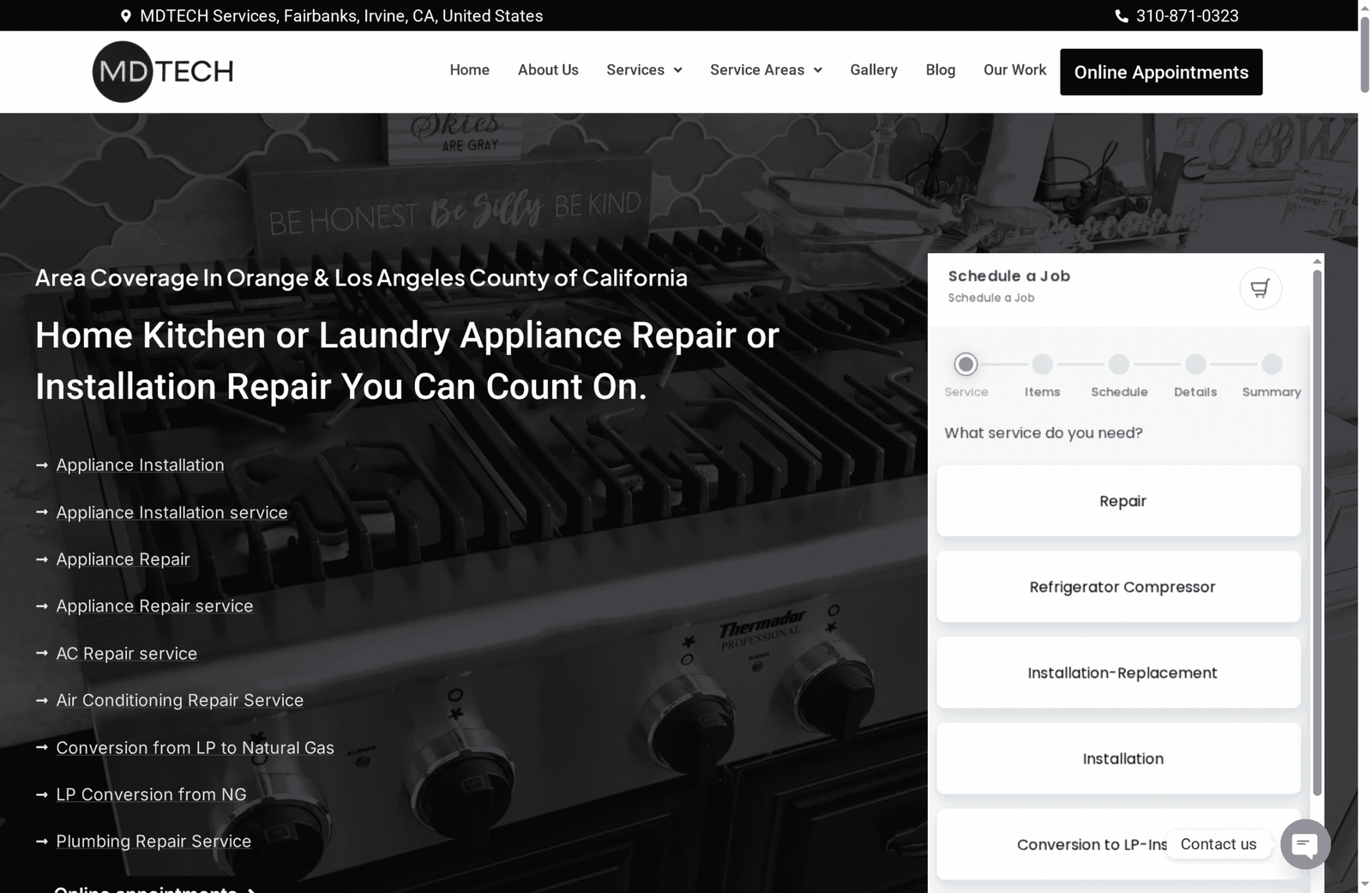
Prepare your model and serial numbers, pull your last two utility bills, and book your appointment online today. Our team will inspect, diagnose, and give you a clear written scope before any work begins. Call us or book online at mdtechservices.com to get started.
Useful sources and further reading
- U.S. Department of Energy — Programmable Thermostats: Thermostat setback savings data and guidance for heat-pump owners.
- ENERGY STAR — Heating and Cooling: Smart thermostat recommendations, maintenance checklists, and duct guidance.
- ENERGY STAR — Ducts: Data on conditioned air lost through duct leaks and sealing methods.
- California Energy Commission — Single Family Home Resources: Rebate programs, PACE financing, and whole-house audit guidance for California homeowners.
- DOE — Detecting Air Leaks: Where hidden air leaks occur and how to find them.
- DOE — Home Energy Checklist: Daily, monthly, and annual energy-saving actions for homeowners.
Check your local utility (SCE, SoCalGas, LADWP) for current rebates on ENERGY STAR appliances, smart thermostats, and HVAC equipment before purchasing any upgrade.