
TL;DR:
- Clearing drain clogs early prevents costly pipe damage, water damage, and health hazards. Professional inspections and scheduled cleanings extend pipe life and reduce recurring issues. Regular maintenance and proper disposal habits help keep drains flowing freely.
Clearing drain clogs is the single most effective action you can take to protect your plumbing system from costly, preventable damage. A blocked drain does not stay a minor inconvenience for long. Left alone, it creates standing water, bacterial growth, and pipe stress that compounds into expensive repairs. Fixing drainage obstructions can save homeowners around 10% on their annual water bills. That saving alone makes the case for acting early, but the real reasons to clear drain clogs go much deeper than your water bill.
Why clear drain clogs before they become serious problems
Drain clearing is the process of removing a specific blockage to restore water flow. Drain cleaning, by contrast, is a periodic service that removes buildup throughout the pipe system to prevent future clogs from forming. Most homeowners only think about their drains when water backs up in the sink or tub. By that point, the blockage has usually been building for weeks or months. Addressing clogs early keeps your pipes flowing freely and protects the entire plumbing system from the strain of restricted flow. You can learn more about the difference between these two approaches in this guide on drain cleaning for your home.
What causes drain clogs and why they form
Most clogs do not appear overnight. They build gradually from materials that enter your drains every day. Understanding the causes helps you stop them before they become blockages.
- Grease, fats, and oils. These substances flow down drains as liquids but solidify as they cool inside pipes. Over time, they coat pipe walls and trap other debris passing through.
- Hair and soap scum. Bathroom drains collect hair with every shower. Soap scum binds hair strands together, creating dense mats that water cannot push through.
- Foreign objects and debris. Food scraps, cotton swabs, wipes labeled “flushable,” and small toys are common culprits in kitchen and bathroom drains.
- Mineral scale buildup. Hard water areas, including much of Southern California, deposit calcium and magnesium inside pipes. Over years, this narrows the pipe diameter and slows flow noticeably.
- Tree root intrusion. Roots follow moisture and can invade drainage lines through tiny cracks or joints, causing blockages that no plunger will fix.
Recurring clogs often stem from systemic causes like grease buildup or root intrusion rather than random bad luck. If the same drain clogs repeatedly, the cause is almost certainly structural, not just surface debris.
What happens when drain clogs are left uncleared?
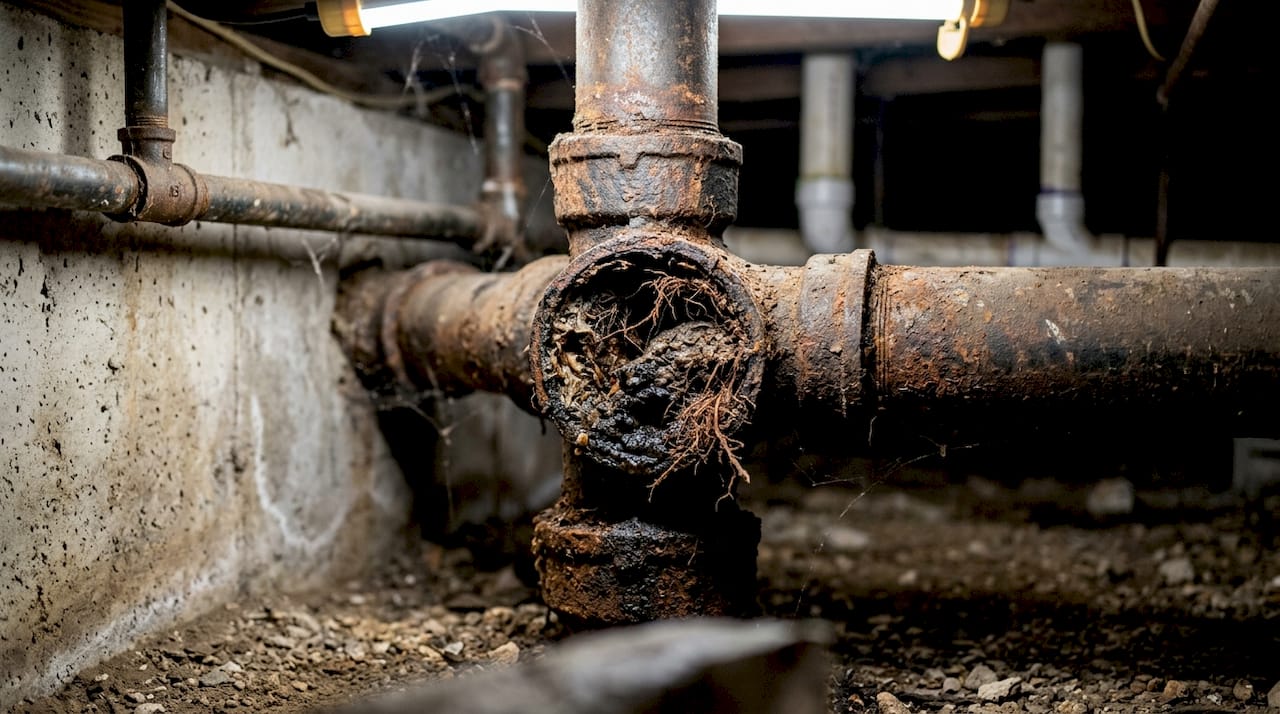
Ignoring a clogged drain creates a chain of problems that grows more serious with each passing week. The consequences range from health hazards to structural damage.
Health risks come first. Blocked drains harbor bacteria, mold, and pests that pose real health hazards. Stagnant water sitting in a partially blocked pipe is a breeding ground for pathogens. Mold spores spread through your home’s air, and standing water near drain openings attracts insects and rodents.
Water damage follows quickly. A slow drain becomes a backed-up drain. A backed-up drain becomes a sewage overflow. Water that escapes pipes or fixtures damages floors, walls, and cabinetry. Mold takes hold within 24–48 hours of water exposure, turning a plumbing problem into a remediation project.
Failing to address minor drain issues can lead to emergency plumbing disasters costing $500 to over $10,000 depending on damage severity. That cost range reflects everything from a simple professional clearing to full pipe replacement and water damage restoration.
Pipe damage compounds over time. Constant pressure from blockages stresses pipe joints and seals. Older pipes made from cast iron or galvanized steel corrode faster when exposed to the organic acids produced by decomposing debris. A clog that costs $150 to clear today can become a pipe replacement costing thousands if ignored for a season.
How to effectively clear drain clogs
The right method depends on the severity and location of the blockage. Start with the least invasive approach and escalate only when needed.
- Use a cup plunger or flange plunger. A cup plunger works on flat sink drains. A flange plunger seals toilet openings. Apply firm, steady strokes rather than frantic pumping. This method clears most minor sink and tub clogs without any tools or chemicals.
- Try the baking soda and vinegar method. Pour one cup of baking soda followed by one cup of white vinegar down the drain. Wait 15 minutes, then flush with hot water. This breaks down light grease and soap scum buildup effectively.
- Use a hand snake or drain auger. A hand snake reaches 15–25 feet into a pipe and physically breaks up or retrieves the clog. This is the right tool for hair clogs in bathroom drains that a plunger cannot dislodge.
- Avoid chemical drain cleaners for serious clogs. Chemical cleaners often fail on deep clogs and can cause pipe corrosion, especially in older plumbing. The heat they generate can warp plastic pipes and accelerate corrosion in metal ones. Use them only as a last resort for very minor buildup.
- Call a professional for recurring or deep blockages. Professionals use hydro-jetting, which blasts water at high pressure to scour pipe walls clean, and video camera inspections to identify structural problems. These tools go far beyond what any DIY method can accomplish.
Pro Tip: If the same drain clogs more than twice in a year, schedule a video camera inspection. Recurring blockages at the same spot often indicate a structural problem like pipe collapse or root intrusion that clearing alone will never fix permanently.
Knowing when to call a professional is one of the most practical skills a homeowner can develop. The guide on common household plumbing issues covers the specific signs that mean a problem has moved beyond DIY territory.
Preventive measures that reduce drain clog occurrence
Reactive clearing fixes today’s problem. Proactive maintenance prevents tomorrow’s emergency. The two approaches are not interchangeable.
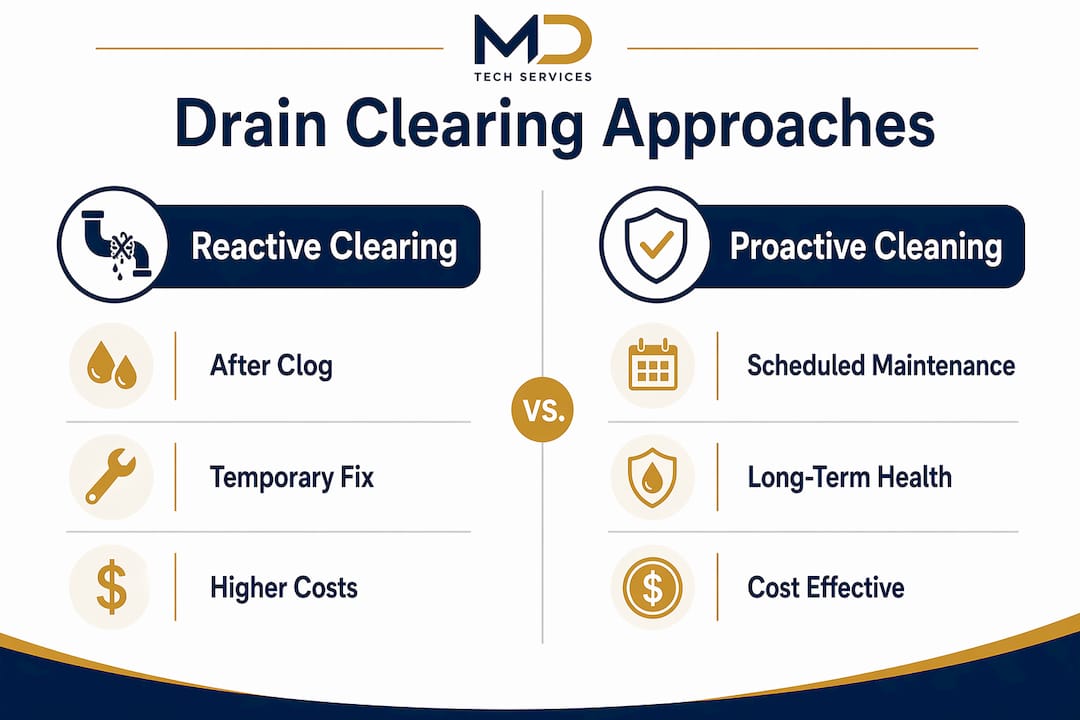
| Approach | Reactive clearing | Proactive cleaning |
|---|---|---|
| Timing | After a clog forms | On a scheduled basis |
| Method | Plunger, snake, or chemical | Professional hydro-jetting, enzyme treatments |
| Result | Restores flow temporarily | Removes buildup, extends pipe life |
| Cost profile | Low upfront, high if delayed | Consistent, predictable annual cost |
Homeowners with a proactive maintenance mindset drastically reduce long-term plumbing costs through regular servicing. The table above shows why: proactive cleaning removes the conditions that cause clogs before they block flow entirely.
Practical habits that protect your drains every day:
- Pour cooled grease into a container and throw it in the trash, never down the sink.
- Install mesh drain guards in every shower and tub to catch hair before it enters the pipe.
- Run hot water for 30 seconds after washing dishes to push grease further down and out of the drain system.
- Schedule a professional drain cleaning once a year, or twice a year if you have older pipes or hard water.
Pro Tip: Enzyme-based drain treatments, available at most hardware stores, use natural bacteria to digest grease and organic matter inside pipes. Used monthly, they significantly slow the rate of buildup between professional cleanings.
Treating your plumbing as a system worth maintaining, rather than a set of fixtures to ignore until they fail, is the mindset that separates homeowners who rarely face emergencies from those who do. The benefits of preventative plumbing extend well beyond drain health and into every part of your home’s water system. You can also find practical guidance on cleaning benefits for homeowners that applies directly to maintaining drain health.
Key Takeaways
Clearing drain clogs promptly prevents health hazards, pipe damage, and emergency repair costs that routinely reach thousands of dollars.
| Point | Details |
|---|---|
| Clear clogs early | Early clearing stops minor blockages from becoming sewage backups or pipe failures. |
| Know the root cause | Recurring clogs signal structural problems like root intrusion that require professional diagnosis. |
| Avoid chemical cleaners | Chemical products can warp plastic pipes and corrode metal ones, worsening the original problem. |
| Choose proactive cleaning | Scheduled professional cleaning removes buildup before it blocks flow and extends pipe lifespan. |
| Build daily habits | Drain guards, proper grease disposal, and monthly enzyme treatments reduce clog frequency significantly. |
What years of plumbing calls have taught me about drain health
After working with homeowners across Orange County and Los Angeles County, I have seen one pattern repeat itself constantly. A homeowner ignores a slow drain for three months, tries a chemical cleaner twice, and then calls us when the pipe backs up completely. By that point, what started as a $100 clearing job has become a $600 repair, sometimes more.
The uncomfortable truth is that most plumbing emergencies are not sudden. They are the result of small problems that were visible weeks or months earlier. A gurgling drain, a slow tub, a faint sewer smell near a floor drain. These are not quirks. They are warnings.
I also want to be direct about chemical drain cleaners. Homeowners reach for them because they are cheap and available. But the heat and corrosive action that dissolves a clog also degrades the pipe itself, particularly in homes built before 1980 with galvanized steel or older PVC. You may clear the clog today and accelerate a pipe failure six months from now.
My honest recommendation: treat your drains the way you treat your HVAC system. Schedule a professional cleaning once a year. Get a camera inspection if you see recurring clogs. And stop waiting for a backup to take the problem seriously.
— MDTECH
Professional drain and plumbing services from Mdtechservices
Mdtechservices serves homeowners across Orange County and Los Angeles County with licensed plumbing technicians who handle everything from routine drain cleaning to full pipe inspections.

If your drains are slow, gurgling, or backing up, the right step is a professional assessment before the problem escalates. Our team uses video camera inspections and hydro-jetting to identify and clear blockages that DIY methods cannot reach. We also provide routine plumbing maintenance to keep your system running reliably year-round. For a full checklist of what your plumbing system needs, the plumbing checklist for homeowners is a practical starting point. Contact Mdtechservices to schedule your service today.
FAQ
Why should you clear drain clogs quickly?
Clearing a clog early prevents stagnant water, bacterial growth, and pipe stress that escalate into expensive repairs. Emergency plumbing repairs from neglected clogs can cost $500 to over $10,000.
What is the difference between drain clearing and drain cleaning?
Drain clearing removes a specific blockage to restore flow temporarily. Drain cleaning is a scheduled service that removes buildup throughout the pipe system to prevent future clogs.
Can chemical drain cleaners damage your pipes?
Yes. Chemical cleaners generate heat that can warp plastic pipes and corrode metal ones, particularly in older plumbing systems. A plunger or hand snake is a safer first option.
How often should drains be professionally cleaned?
Most homes benefit from professional drain cleaning once a year. Homes with older pipes, hard water, or a history of recurring clogs should schedule service twice a year.
When does a clogged drain require a professional?
A drain that clogs repeatedly in the same location requires a professional inspection. Recurring blockages often indicate structural problems like pipe collapse or root intrusion that standard clearing cannot fix.