
TL;DR:
- Proper ventilation is essential to remove indoor pollutants, moisture, and allergens, especially during wildfire seasons.
- Energy-efficient systems like ERV and balanced ventilation meet strict California codes and improve air quality.
- Investing in professional installation, regular maintenance, and IAQ monitoring ensures healthier, more efficient homes in Southern California.
Most homeowners in Orange and Los Angeles County assume that cracking a window handles their home’s air quality needs. It does not. Modern homes are built tighter than ever, and that means pollutants, moisture, and allergens get trapped inside without a proper ventilation system to move them out. California’s wildfire seasons add another layer of risk, pushing outdoor particulates indoors when you least expect it. This guide walks you through how home ventilation systems actually work, the types available, what local codes require, and how to get the most out of your system for better health and lower energy bills.
Table of Contents
- What is home ventilation and why does it matter?
- Main types of home ventilation systems
- Regulatory standards and sizing for Southern California homes
- Energy efficiency, air quality, and system performance
- Advanced options and pitfalls: What most homeowners miss
- Our take: What most ventilation guides miss for SoCal homes
- Connect with experts for your ventilation needs
- Frequently asked questions
Key Takeaways
| Point | Details |
|---|---|
| Healthier indoor air | Proper ventilation removes allergens, pollutants, and moisture, improving health and comfort. |
| Local code compliance | California Title 24 requires mechanical ventilation, sized for your home and verified by experts. |
| Energy savings | Modern ERV/HRV systems cut heating bills by up to 30% and reduce HVAC load. |
| Expert system selection | Choose ERV for Orange and LA County to manage humidity and wildfires; integrate with HVAC for performance. |
| Avoid common pitfalls | Monitor sensors, maintain ducts, and combine ventilation with filtration for best results. |
What is home ventilation and why does it matter?
Home ventilation is not just about fresh air. Home ventilation refers to controlled exchange of indoor and outdoor air to maintain healthy indoor air quality (IAQ), remove pollutants, moisture, and odors while minimizing energy loss. That is a very different job than what an open window can do on a busy day in Anaheim or Burbank.
Natural ventilation depends entirely on wind, temperature differences, and window placement. On calm days, or during wildfire season when you need windows closed, natural airflow simply stops. That leaves your family breathing recirculated air loaded with dust mites, cooking fumes, cleaning product vapors, and moisture from showers and cooking.
The health risks are real. Poor IAQ contributes to allergy flare-ups, respiratory issues, mold growth, and chronic fatigue. Moisture that has nowhere to go condenses on walls and windows, creating conditions where mold thrives. In Southern California’s warmer months, this cycle accelerates quickly.
California ventilation requirements are among the strictest in the country for good reason. California Title 24/CBC adopts ASHRAE standards, requiring mechanical whole-dwelling ventilation in all new and significantly renovated homes. If your home has been updated or remodeled without addressing ventilation, you may already be out of compliance.
Here is why proper ventilation matters for your home:
- Health protection: Removes allergens, mold spores, VOCs, and cooking byproducts
- Comfort: Regulates humidity and temperature for a more consistent indoor feel
- Structural protection: Prevents moisture buildup that damages walls, insulation, and framing
- Energy efficiency: Controlled air exchange reduces the load on your HVAC system
- Code compliance: Meets Title 24 and ASHRAE 62.2 requirements for Orange and LA County homes
“Proper ventilation reduces IAQ complaints by 50%, making it one of the most impactful upgrades a homeowner can make.”
Professional vent installation ensures your system is sized correctly and positioned to deliver these benefits from day one.
Main types of home ventilation systems
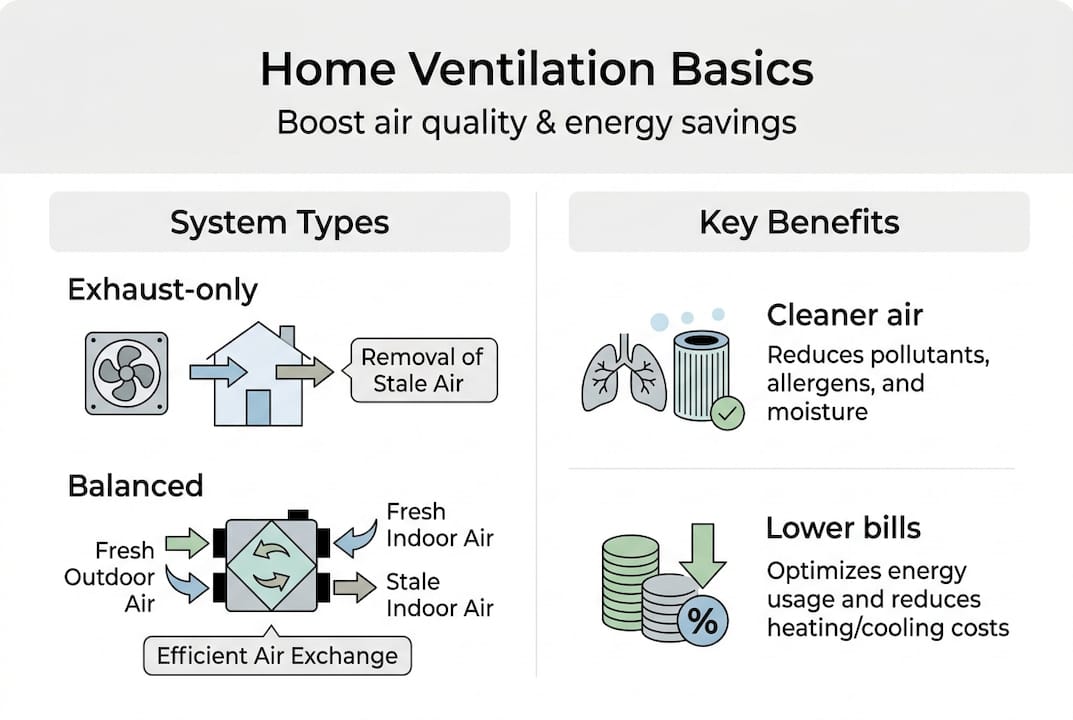
Not all ventilation systems are built the same. Each type handles air exchange differently, and the right choice depends on your home’s layout, tightness, and your budget. Main types include exhaust-only, supply-only, balanced, and ERV/HRV systems, with ERV and HRV units recovering 70 to 90% of energy from exhaust air.
| System type | How it works | Upfront cost | Energy savings | Best for |
|---|---|---|---|---|
| Exhaust-only | Pulls stale air out; outdoor air enters through gaps | Low | Minimal | Older, leaky homes |
| Supply-only | Pushes fresh air in; stale air escapes through gaps | Low to moderate | Moderate | Dry climates |
| Balanced | Equal intake and exhaust, pressure-neutral | Moderate | Good | Modern tight homes |
| ERV/HRV | Balanced plus heat/moisture recovery | Higher | Excellent | SoCal, all climates |
HRV and ERV systems are the gold standard for energy-conscious homeowners. An ERV (energy recovery ventilator) transfers both heat and moisture between incoming and outgoing air streams. An HRV (heat recovery ventilator) transfers heat only. In Southern California’s mild, dry climate, ERVs are generally the better choice because they help maintain comfortable humidity levels year-round.
Quick pros and cons to keep in mind:
- Exhaust-only: Simple and cheap to install, but can depressurize your home and pull in unconditioned air from uncontrolled locations
- Supply-only: Good for positive pressurization, but may increase humidity issues in humid climates
- Balanced: Reliable and pressure-neutral, but no energy recovery without an ERV or HRV core
- ERV/HRV: Best energy performance, but requires professional commissioning and regular filter maintenance
Pro Tip: Balanced systems provide pressure-neutral ventilation, which protects your home from moisture-driven infiltration and is ideal for modern, tightly built homes in Orange and LA County.
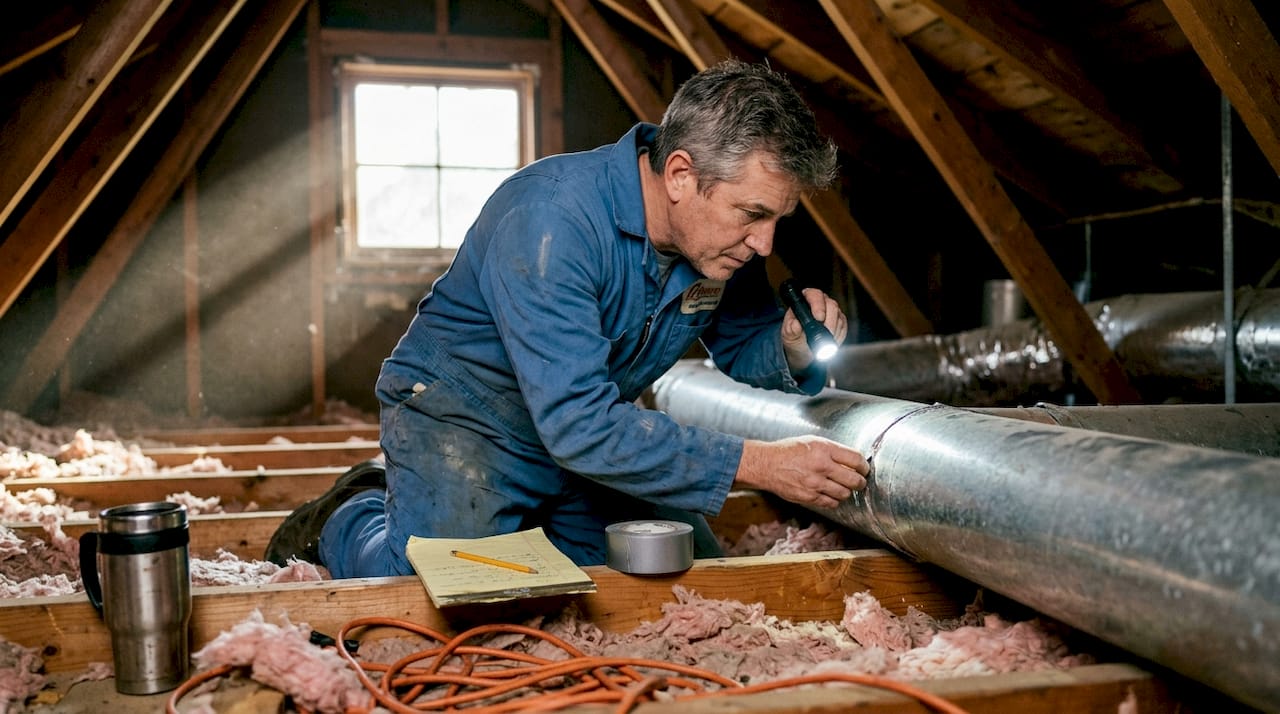
If your existing system needs attention, a licensed vent repair specialist can assess whether your current setup is performing as intended. Our HVAC technicians are familiar with the specific demands of Southern California homes.
Regulatory standards and sizing for Southern California homes
Knowing which system to choose is only part of the equation. You also need to know how much ventilation your home actually requires under California code.
ASHRAE 62.2 governs residential ventilation, setting minimums at 7.5 CFM per person plus 1 CFM per 100 square feet of floor area for continuous operation. California Title 24 applies these standards directly to Orange and LA County homes, and inspectors verify compliance during permitted work.
Here is how those numbers translate to real homes:
| Home size | Bedrooms | Occupants | Required CFM (continuous) |
|---|---|---|---|
| 1,000 sq ft | 2 | 3 | 32.5 CFM |
| 1,500 sq ft | 3 | 4 | 45 CFM |
| 2,000 sq ft | 3 | 4 | 50 CFM |
| 2,500 sq ft | 4 | 5 | 62.5 CFM |
For kitchens, California kitchen exhaust standards require range hoods with a minimum of 100 CFM for ducted systems. Bathrooms typically need 50 CFM exhaust fans at minimum.
Here are the steps to size and verify your ventilation system:
- Calculate your home’s floor area and typical occupancy count
- Apply the ASHRAE 62.2 formula to determine minimum CFM requirements
- Select a system type and model rated at or above that CFM
- Have a licensed contractor perform a HERS (Home Energy Rating System) test after installation
- Document results and keep records for future permit applications or home sales
Pro Tip: HERS testing is not just for new builds. It confirms your system meets Title 24 and can protect you from costly corrections during future renovations or sales inspections.
Proper duct installation and fan installation are critical to hitting these CFM targets consistently over time.
Energy efficiency, air quality, and system performance
Once your system is properly sized and installed, the benefits show up quickly in both your health and your utility bills.
ERV, HRV, and MVHR systems reduce indoor pollutants by 40 to 60%, lower allergen exposure, and cut heating energy use by 15 to 30%. They also reduce your overall HVAC load by 15 to 25%, meaning your air conditioner and heater work less to maintain comfort. That is a meaningful reduction for homeowners facing Southern California’s summer cooling bills.
It is worth noting that real-world energy savings can vary depending on your existing HVAC setup. Homes with heat pumps may see a smaller performance gap compared to traditional gas systems, so discuss your specific configuration with a qualified technician before projecting savings.
Statistic callout: Up to 60% less indoor pollutants have been reported in homes with properly installed ERV or HRV systems compared to homes relying on natural ventilation alone.
Ways to get the most out of your ventilation system:
- Install occupancy or CO2 sensors to automatically adjust airflow based on actual indoor activity
- Change filters every 3 to 6 months to maintain airflow efficiency and filtration quality
- Integrate with your existing HVAC so the systems work together rather than competing
- Schedule annual professional inspections to catch duct leaks, sensor drift, and motor wear early
- Add HEPA or activated carbon filtration for added protection during wildfire season
Pro Tip: In Southern California, integrating your ERV with your HVAC system is the most effective way to manage humidity fluctuations, wildfire smoke, and seasonal pollutant spikes all at once.
A properly installed blower installation ensures your system moves the right volume of air without creating pressure imbalances that reduce efficiency.
Advanced options and pitfalls: What most homeowners miss
Most ventilation guides stop at the basics. But for homeowners in Orange and LA County, there are specific edge cases that deserve attention before you finalize your system.
Airtight homes are increasingly common as energy codes tighten. If your home tests above 3 ACH50 (air changes per hour at 50 pascals pressure), you need a dedicated MVHR or ERV system. Airtight homes require MVHR or ERV; demand-controlled systems save 20 to 50% of fan energy but risk IAQ if sensors fail; and robust ducting is essential in seismic zones like Los Angeles and Orange County.
Demand-controlled ventilation (DCV) uses CO2 or humidity sensors to increase airflow only when needed. This sounds ideal, and it often is. But sensor calibration drifts over time. A sensor that reads low will tell your system to ventilate less, and your air quality suffers before anyone notices. Regular sensor testing is not optional with DCV systems.
Southern California’s seismic activity also creates a unique challenge. Duct connections can loosen over time from minor tremors, leading to air leaks that reduce system performance and allow unconditioned air into your living spaces. Flexible duct connectors and secure mounting brackets help, but only if they are installed correctly from the start.
Common homeowner mistakes to avoid:
- Ignoring sensor calibration schedules on demand-controlled systems
- Skipping annual duct inspections after earthquake activity
- Underestimating wildfire season filtration needs
- Installing exhaust fans without checking for adequate makeup air
- Overlooking bathroom and kitchen exhaust as part of the whole-home ventilation plan
Pro Tip: Monitor CO2 levels and relative humidity with a simple indoor air quality monitor. Combine your ventilation system with high-quality filtration and UV purification for the best protection during wildfire events.
For homes with complex layouts or ADU additions, air conditioning installation and ventilation planning should be coordinated from the start to avoid costly retrofits. Learn more about demand-controlled ventilation to understand how sensor-based systems perform in real-world conditions.
Our take: What most ventilation guides miss for SoCal homes
Most online ventilation guides are written for a generic American home in a generic climate. They miss what makes Orange and LA County different. Dry summers, mild winters, and wildfire seasons that push hazardous particulates indoors create a ventilation challenge that a basic exhaust fan simply cannot address.
We have seen homeowners invest in exhaust-only systems that meet a minimum code threshold but leave them exposed during Santa Ana wind events when outdoor air quality drops sharply. Title 24 sets a floor, not a ceiling. Smart homeowners treat it as the starting point, not the finish line.
From our experience, the homeowners who get the best results invest upfront in a balanced ERV system, schedule HERS testing after installation, and check their IAQ sensors every six months. They also work with licensed technicians who understand local code and climate, not just general HVAC principles.
“In Orange and LA, ventilation is about health, not just air exchange. Smart, code-ready systems pay off in safety and lower bills.”
If you are planning a remodel or upgrade, start the ventilation conversation early. Proper local vent installation integrated into your project from the beginning saves money and delivers better results than retrofitting later.
Connect with experts for your ventilation needs
Understanding your ventilation options is a strong first step. Taking action is what protects your home and your family’s health.

MDTech Services connects Orange and LA County homeowners with experienced, licensed technicians who handle everything from vent installation experts to full system upgrades and compliance checks. Our professional HVAC technicians are familiar with Title 24 requirements and the specific demands of Southern California’s climate. Whether you need a new ERV system, duct repairs, or a HERS-ready inspection, we are ready to help. For a broader look at what HVAC service involves, our HVAC repair guide is a solid place to start. Reach out today to schedule a consultation and get your home’s air quality working for you.
Frequently asked questions
How do I know if my home needs better ventilation?
Common signs include musty odors, condensation on windows, persistent allergy symptoms, and elevated CO2 readings. Professional HERS testing can confirm whether your system meets Title 24 standards.
What’s the difference between ERV and HRV in SoCal?
ERVs transfer both heat and moisture, while HRVs transfer heat only. In Southern California’s dry climate, ERVs are preferred for managing humidity and seasonal pollutants more effectively than HRVs.
How much ventilation is required for California homes?
California Title 24 and ASHRAE 62.2 require mechanical systems sized by home area and occupancy, typically around 50 CFM continuous for a 2,000 square foot, three-bedroom home.
Can natural ventilation alone meet California code?
No. Title 24 requires mechanical whole-home ventilation because natural airflow is unreliable in modern, tightly built homes and cannot consistently meet minimum IAQ standards.
Are advanced features like demand-controlled ventilation worth it?
Demand-controlled systems can save significant energy, but sensor failures risk IAQ if calibration is neglected. They are worth the investment only when paired with a reliable maintenance schedule.