
Every homeowner in Orange and Los Angeles County who relies on gas appliances faces a choice between propane and natural gas. This decision impacts not just your energy bills, but also the safety and performance of your home. Gas appliance conversion involves modifying an appliance designed for one gas fuel to operate efficiently and safely on another, requiring careful adjustments to internal components. Discover how expert conversion brings peace of mind and reliable energy tailored for California households.
Table of Contents
- Defining Gas Appliance Conversion Clearly
- LP Versus Natural Gas: Key Differences
- Gas Appliance Conversion Process Explained
- Local Regulations and Safety Codes in California
- Common Risks, Costs, and What to Avoid
Key Takeaways
| Point | Details |
|---|---|
| Gas Appliance Conversion Process | Modifying an appliance from one gas type to another requires specific adjustments and must be performed by licensed professionals. |
| Differences Between Natural Gas and Propane | Natural gas and propane have distinct properties that affect conversion, including pressure, energy density, and delivery methods. |
| Importance of Compliance | Meeting California’s CARB certification and local building codes is mandatory for safety and legal compliance. |
| Cost Considerations | Conversion costs can vary significantly, typically ranging from $300 to $800, but long-term savings may be achieved through lower fuel costs. |
Defining Gas Appliance Conversion Clearly
Gas appliance conversion sounds technical, but it’s straightforward once you break it down. At its core, gas appliance conversion involves modifying an appliance originally designed for one type of gas fuel to operate safely on another type. In Orange and Los Angeles County, this typically means converting appliances from propane (LP) to natural gas, or vice versa.
Your appliance doesn’t magically switch fuels on its own. The conversion process requires adjusting internal components that control how fuel flows and burns. Think of it like recalibrating your car’s engine to run on a different fuel grade—the basic machinery stays the same, but specific settings change to match the new fuel’s properties.
Understanding fuel properties and appliance design is critical for safe conversions. Natural gas and propane have different pressures, densities, and combustion characteristics. Your technician must account for these differences to ensure proper performance.
Common appliances eligible for conversion include:
- Stoves and cooktops
- Water heaters
- Fireplaces and inserts
- Dryers
- Ovens and ranges
- Pool heaters
Not every appliance can be converted. Some units are single-fuel only and lack the components necessary for switching. Your licensed technician will assess whether your specific appliance qualifies before proposing conversion work.
The conversion process involves several key adjustments:
- Burner orifices (the small openings controlling fuel flow) must be sized correctly for the new fuel type
- Regulators need adjustment to match the pressure requirements of the new fuel
- Safety components like pressure switches are verified for proper operation
- Testing confirms efficient combustion and safety standards are met
Proper conversion requires licensed professionals who understand both fuel properties and your specific appliance’s design—this isn’t a DIY project.
Why convert in the first place? Most homeowners in our region switch from propane to natural gas because natural gas often costs less, requires no tank refills, and offers consistent supply reliability. Some properties lack natural gas access and need propane as their primary fuel source.
The conversion timeline typically spans one to two days for most residential appliances. Your MDTech Services technician will handle disconnection, conversion, testing, and reconnection with minimal disruption to your home.
Pro tip: Before scheduling conversion work, confirm your home has access to the target fuel source (natural gas line or propane tank availability), as this affects feasibility and cost.
LP Versus Natural Gas: Key Differences
Natural gas and propane are not interchangeable fuels, despite both being gases that heat your home. Understanding their differences is essential before deciding on a conversion, especially in Orange and Los Angeles County where both fuels are widely available.
Natural gas primarily consists of methane and travels to your home via underground pipelines. Propane (LP gas) is stored in pressurized tanks and derives from crude oil refining or natural gas processing. This fundamental difference shapes everything else about how each fuel operates.
The two fuels have different energy densities. Propane delivers more energy per unit volume than natural gas, which means smaller amounts of propane produce the same heat output. This affects burner sizing and appliance design during conversion.
Storage and delivery methods differ significantly:
- Natural gas arrives continuously through pipelines, requiring no storage tank
- Propane requires a pressurized tank on your property or underground
- Natural gas pressure is lower and more consistent
- Propane pressure fluctuates based on temperature and tank level
Combustion characteristics create the most critical difference for conversion work. Natural gas and propane have different pressures and burn at different rates. Your appliance’s burner orifices must be correctly sized for whichever fuel you’re using.
Safety considerations vary between the two fuels. Natural gas is lighter than air and rises away from ground level if leaked. Propane is heavier than air and pools at ground level, creating different hazard profiles. Your technician must account for these properties when converting.
Cost patterns differ too. In our region, natural gas typically costs less per unit of energy than propane. However, natural gas requires pipeline infrastructure, while propane works anywhere with tank access.
Here’s a side-by-side comparison of natural gas and propane properties relevant to appliance conversion:
| Property | Natural Gas | Propane (LP) |
|---|---|---|
| Main Component | Methane | Propane, Butane |
| Delivery Method | Underground pipeline supply | Pressurized storage tank |
| Typical Pressure Range | Lower, highly consistent | Higher, varies with temp |
| Energy per Unit Volume | Lower | Higher |
| Leak Behavior | Rises, dissipates upward | Sinks, accumulates low |
| Usual Regional Cost | Lower in most of California | Higher per heating value |
| Maintenance Frequency | Rarely needed, steady supply | Needs tank refills |
The choice between natural gas and propane affects not just your immediate costs, but your long-term energy reliability, safety requirements, and appliance compatibility.
Common reasons homeowners switch from propane to natural gas include lower operating costs, elimination of tank refills, and uninterrupted supply. Some properties convert the opposite direction when natural gas lines aren’t available.
Pro tip: Compare your local natural gas and propane rates before conversion, as pricing can shift seasonally—sometimes propane costs less in summer months, making timing important for your decision.
Gas Appliance Conversion Process Explained
The conversion process isn’t a simple flip of a switch. It requires careful assessment, precise adjustments, and thorough testing to ensure your appliance operates safely and efficiently with its new fuel type.
Your technician starts by evaluating your specific appliance. Not all units can be converted—some manufacturers design appliances for a single fuel only. The technician reviews your appliance’s manual and design specifications to confirm conversion eligibility before proceeding.
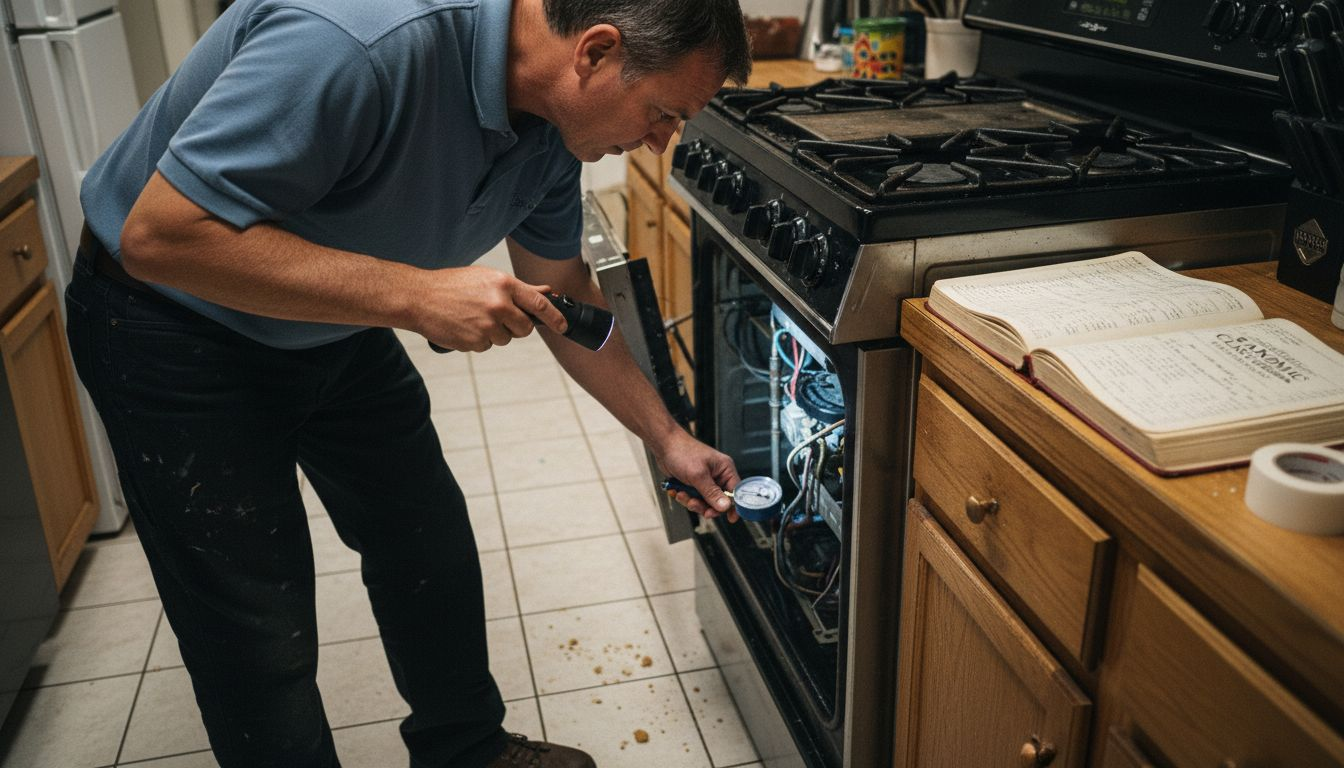
Once approved for conversion, the work begins with component modifications. The most critical adjustment involves burner orifices, the small openings controlling fuel flow to flames. Each fuel type requires different orifice sizes because natural gas and propane flow at different pressures and rates.
The conversion process follows these main steps:
- Assess appliance design and manufacturer specifications
- Modify or replace burner orifices for the new fuel type
- Adjust or replace regulators to match fuel pressure requirements
- Replace any incompatible components
- Conduct combustion and safety testing
Regulators demand careful attention during conversion. These devices control fuel pressure entering your appliance. Natural gas requires lower pressure regulation than propane, so pressure regulation adjustments are essential for proper performance.
Once physical modifications are complete, testing begins. Your technician performs combustion testing to verify the fuel-air mixture is correct. Improper mixture leads to incomplete combustion, safety hazards, and poor efficiency. Testing confirms your appliance burns fuel completely and safely.
Proper conversion requires adherence to safety codes and manufacturer specifications—skipping steps or using inexperienced technicians creates serious safety risks.
Leak testing is another critical step. The technician uses specialized equipment to detect even microscopic leaks in connections and components. Your home’s safety depends on leak-free installations. Licensed professionals conduct conversion work with strict adherence to local regulations and safety codes.
The entire process typically takes one to two days for residential appliances. Your MDTech Services technician handles disconnection, conversion, testing, and reconnection professionally.
Compliance matters. Your conversion must meet local codes and maintain your appliance’s certification and warranty. Using unlicensed technicians voids warranties and violates building codes in Orange and Los Angeles County.
Pro tip: Ask your technician for a post-conversion report documenting all modifications, test results, and compliance certifications—this documentation protects your home warranty and proves code compliance to future buyers.
Local Regulations and Safety Codes in California
California doesn’t just suggest safety standards for gas appliance conversions—the state mandates them. As a homeowner in Orange or Los Angeles County, understanding these requirements protects your investment and ensures your family’s safety.
The California Air Resources Board (CARB) oversees all fuel conversion systems. Any appliance conversion switching between natural gas and propane must meet CARB certification requirements. CARB certification ensures emissions compliance and confirms your conversion doesn’t increase harmful emissions beyond authorized limits.
Certification isn’t optional—it’s mandatory. Your conversion system must demonstrate it meets safety standards and won’t harm air quality. Licensed technicians handle this paperwork and provide documentation proving your work complies with state regulations.
Key California requirements include:
- CARB certification for all fuel conversion systems
- Licensed technician installation and inspection
- Documentation of compliance and testing results
- Adherence to local building codes in Orange and Los Angeles County
- Warranty maintenance through certified work
Local building departments in Orange and Los Angeles County also have jurisdiction over conversions. They may require permits before work begins and inspections after completion. These local requirements work alongside state regulations to protect homeowners.
The 2022 California Energy Code introduces additional considerations. While focused on new construction, California’s building energy efficiency standards increasingly influence retrofit work and future-proofing requirements for existing homes.
Non-compliance carries serious consequences. Unlicensed conversions void your appliance warranty, create liability if accidents occur, and result in building code violations. Insurance may deny claims if accidents involve non-compliant installations.
California’s regulatory framework exists because improper conversions create real dangers—gas leaks, improper combustion, and safety hazards that endanger families.
MDTech Services technicians are licensed and stay current with all California regulations. We handle permits, inspections, and CARB compliance documentation so you don’t have to navigate bureaucracy alone.
When obtaining quotes for conversion work, ask about compliance documentation. Reputable companies provide proof of CARB certification, local permits, and inspection completion before work concludes.
Pro tip: Request a copy of your CARB certification and local inspection permits after conversion completion—keep these documents in your home file as proof of compliance for insurance, warranty claims, and future property sales.
Common Risks, Costs, and What to Avoid
Gas appliance conversions carry real risks if done improperly. Understanding these dangers helps you make informed decisions and avoid costly mistakes that could endanger your family or damage your home.
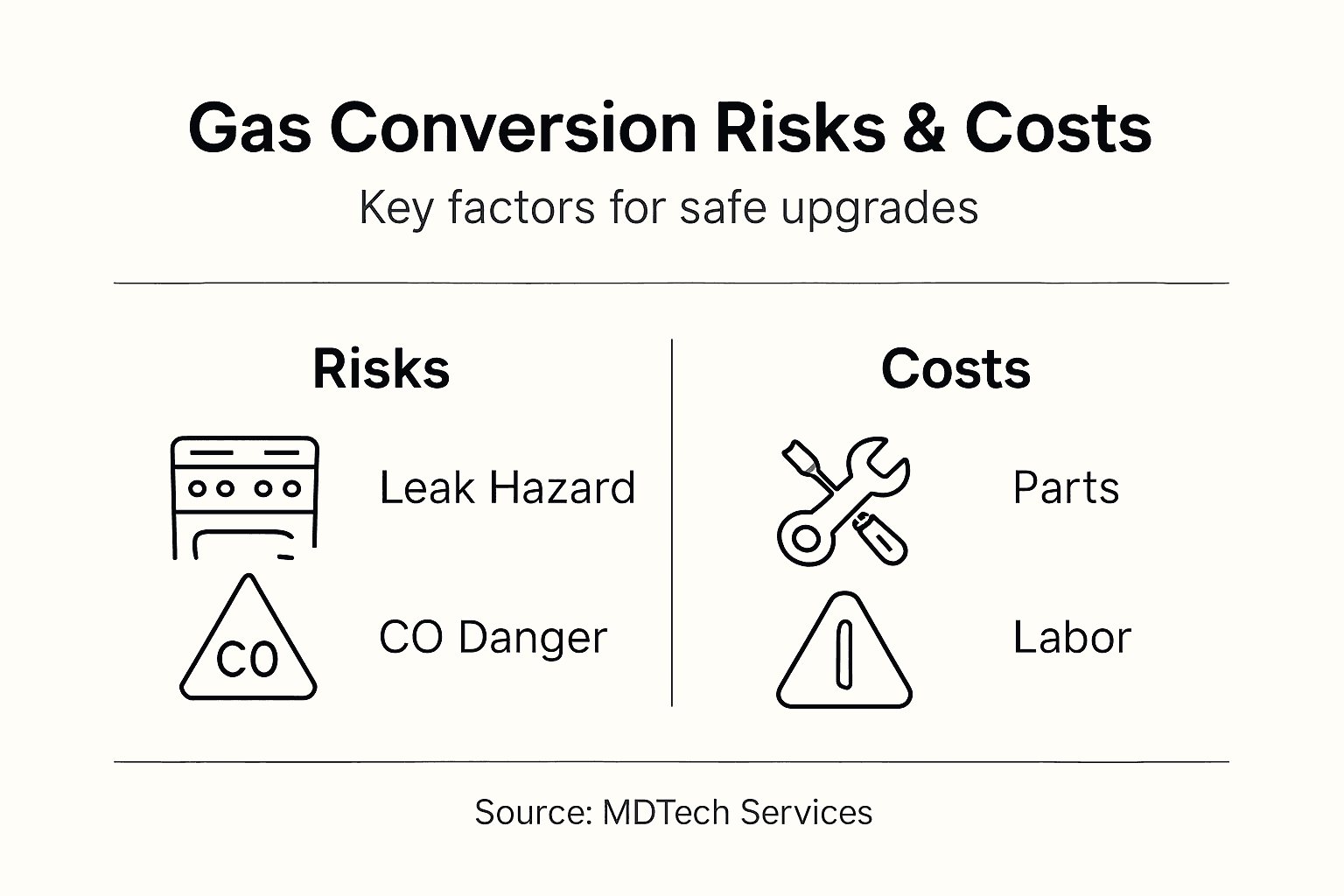
Carbon monoxide is the silent threat. Improper conversions lead to incomplete fuel combustion, which produces this deadly, odorless gas. Improper combustion from faulty conversions creates serious health risks including poisoning and long-term respiratory damage. Only certified professionals should handle conversions.
Gas leaks represent another major hazard. Faulty connections, incorrect component sizing, or use of non-approved parts allow gas to escape undetected. Small leaks accumulate to dangerous levels quickly, creating explosion and fire risks.
Common risks homeowners should avoid:
- DIY conversions or using unlicensed technicians
- Ignoring ventilation requirements for safety
- Skipping safety inspections after conversion
- Using non-compliant or incorrect replacement parts
- Failing to obtain required permits and certifications
Costs vary significantly based on your appliance type and fuel conversion direction. Most residential conversions range from $300 to $800 per appliance, though complex units may cost more. This includes component replacement, labor, testing, and compliance documentation.
Budget considerations:
Review these common cost factors and compliance requirements associated with appliance conversions:
| Aspect | Average Cost or Requirement | Why It Matters |
|---|---|---|
| Burner Orifice Replacement | $100–$200 per appliance | Ensures correct fuel flow |
| Regulator Adjustment | $150–$350 per conversion | Matches pressure to safe level |
| Safety Testing and Inspection | $100–$200 per appliance | Confirms safe operation |
| Permits & Compliance Docs | $50–$150 per project | Required for warranty/insurance |
| CARB Certification | Mandatory in California | Legal and insurance protection |
| Use of Licensed Technician | Always required | Prevents liability, ensures quality |
- Burner orifice replacement: $100-$200
- Regulator adjustment or replacement: $150-$350
- Safety testing and inspection: $100-$200
- Permits and compliance documentation: $50-$150
Skipping proper procedures creates hidden costs. Exposure to nitrogen dioxide and combustion byproducts from improperly converted appliances affects air quality and health. Medical expenses from gas exposure far exceed conversion costs.
The cheapest conversion upfront becomes the most expensive if it creates safety hazards, health problems, or requires emergency repairs.
Non-compliant work voids appliance warranties and creates liability. If accidents occur with unlicensed conversions, your homeowners insurance may deny claims entirely. Property damage, medical bills, and legal fees dwarf conversion savings.
Red flags to avoid:
- Technicians unwilling to provide CARB certification documentation
- Quotes significantly lower than industry standards
- No mention of safety testing or inspection procedures
- Companies without licensing or insurance verification
Pro tip: Get written quotes from at least two licensed technicians that include itemized costs, warranty details, and compliance documentation timelines—this protects you from surprise fees and ensures proper service.
Upgrade Your Home Safely with Expert Gas Appliance Conversion
Converting your gas appliances from propane to natural gas or the other way around is a complex process that demands precision and licensed expertise. The challenges of correct burner orifice sizing, regulator adjustments, and rigorous safety testing can feel overwhelming. Ignoring these critical steps risks dangerous leaks, carbon monoxide hazards, and voided warranties. You deserve peace of mind knowing your home upgrade is handled safely and meets all California regulations.
MDTech Services specializes in residential appliance conversions in Orange County and Los Angeles County. Our licensed technicians bring unmatched knowledge in fuel properties and appliance design to ensure your conversion is efficient, compliant, and reliable. We prioritize your family’s safety and protect your investment by delivering thorough testing and documentation for every project. Learn more about how we can help by visiting our Gas Appliance Conversion services.

Don’t wait until a safety risk or costly surprise arises. Schedule your professional gas appliance conversion today with MDTech Services and experience responsive, expert service you can trust. Visit our site now to book an appointment and secure your home upgrade with confidence.
Frequently Asked Questions
What is gas appliance conversion?
Gas appliance conversion is the process of modifying an appliance designed for one type of gas fuel to operate safely on another type, such as switching between propane and natural gas.
Why would I want to convert my gas appliance?
Homeowners often convert gas appliances to benefit from lower operating costs, no need for fuel tank refills, and a more reliable fuel supply.
What appliances are commonly eligible for conversion?
Common appliances eligible for conversion include stoves, cooktops, water heaters, fireplaces, dryers, and ovens.
What are the main differences between propane and natural gas?
Natural gas primarily consists of methane and is delivered through pipelines, while propane is stored in pressurized tanks and has higher energy density per unit volume. They have different combustion characteristics and safety profiles, which must be considered during conversion.