
Facing rising utility bills in Orange and Los Angeles Counties makes every homeowner rethink how their house stays comfortable year-round. Upgrading your home’s HVAC system brings more than a quick fix. It delivers a smarter approach to energy efficiency and healthier indoor air. By focusing on advanced system upgrades, you can choose improvements that reduce long-term costs and keep your living spaces cleaner and more comfortable.
Table of Contents
- What Upgrading Your HVAC System Means
- Types of HVAC System Upgrades Available
- Key Features of Modern HVAC Technology
- How HVAC Upgrades Improve Air Quality
- Financial Impact: Costs, Savings, and Incentives
- Common Mistakes to Avoid When Upgrading
Key Takeaways
| Point | Details |
|---|---|
| Investment in Comfort and Efficiency | Upgrading HVAC systems significantly improves home comfort and energy efficiency. |
| Choosing the Right Upgrade | Evaluate specific needs to select suitable HVAC upgrade options, such as partial replacements or complete retrofits. |
| Leveraging Financial Incentives | Take advantage of federal and state financial incentives to offset upgrade costs. |
| Avoiding Common Mistakes | Conduct thorough planning and seek professional advice to prevent costly errors during upgrades. |
What Upgrading Your HVAC System Means
Upgrading an HVAC system goes far beyond simply replacing old equipment. It represents a strategic investment in your home’s comfort, energy efficiency, and air quality. By understanding what this process entails, homeowners in Orange and Los Angeles Counties can make informed decisions that deliver long-term benefits.
The upgrade process involves comprehensive evaluation of your current heating, ventilation, and air conditioning infrastructure. This means carefully assessing existing system performance, identifying inefficiencies, and determining optimal system upgrades that align with your specific home’s requirements. Modern HVAC upgrades typically focus on several critical areas:
- Improving overall energy efficiency
- Enhancing indoor air quality
- Reducing monthly utility expenses
- Implementing advanced temperature control technologies
- Minimizing environmental impact
Understanding the nuanced components of an HVAC system upgrade requires looking beyond surface-level replacements. Advanced system upgrades involve strategic modifications to compressors, heat exchangers, and control mechanisms. These technical enhancements are not just about swapping out equipment, but about creating a more responsive, intelligent home environment.
The financial implications of HVAC upgrades extend well beyond immediate installation costs. Homeowners can expect significant long-term savings through reduced energy consumption and decreased maintenance expenses. Modern HVAC system capabilities now incorporate smart technologies that allow for unprecedented precision in temperature and humidity control.
Pro tip: Before scheduling an HVAC upgrade, request a comprehensive home energy audit to identify specific efficiency opportunities and potential cost savings.
Types of HVAC System Upgrades Available
Homeowners in Orange and Los Angeles Counties have several strategic options when considering HVAC system upgrades. HVAC equipment improvements range from targeted component replacements to comprehensive system overhauls, each designed to enhance home comfort and energy efficiency.
The primary categories of HVAC system upgrades include:
- Partial Component Replacements
- Upgrading individual components like compressors
- Replacing outdated heat exchangers
- Modernizing control mechanisms
- Complete System Retrofits
- Full equipment replacement
- Advanced ventilation system installations
- Integration of smart home technologies
- Energy Efficiency Enhancements
- Installing variable air volume systems
- Adding energy recovery ventilators
- Implementing high-efficiency filtration units
Understanding these upgrade paths requires examining the specific technological capabilities available. HVAC system upgrade frameworks now emphasize not just equipment replacement, but holistic performance improvement. Modern upgrades focus on creating intelligent, responsive home environments that adapt to changing temperature and air quality needs.
Each upgrade strategy offers unique benefits, from reducing monthly utility expenses to improving indoor air circulation and implementing cutting-edge climate control technologies. Homeowners should carefully evaluate their specific requirements, considering factors like home size, existing infrastructure, and long-term energy consumption goals.
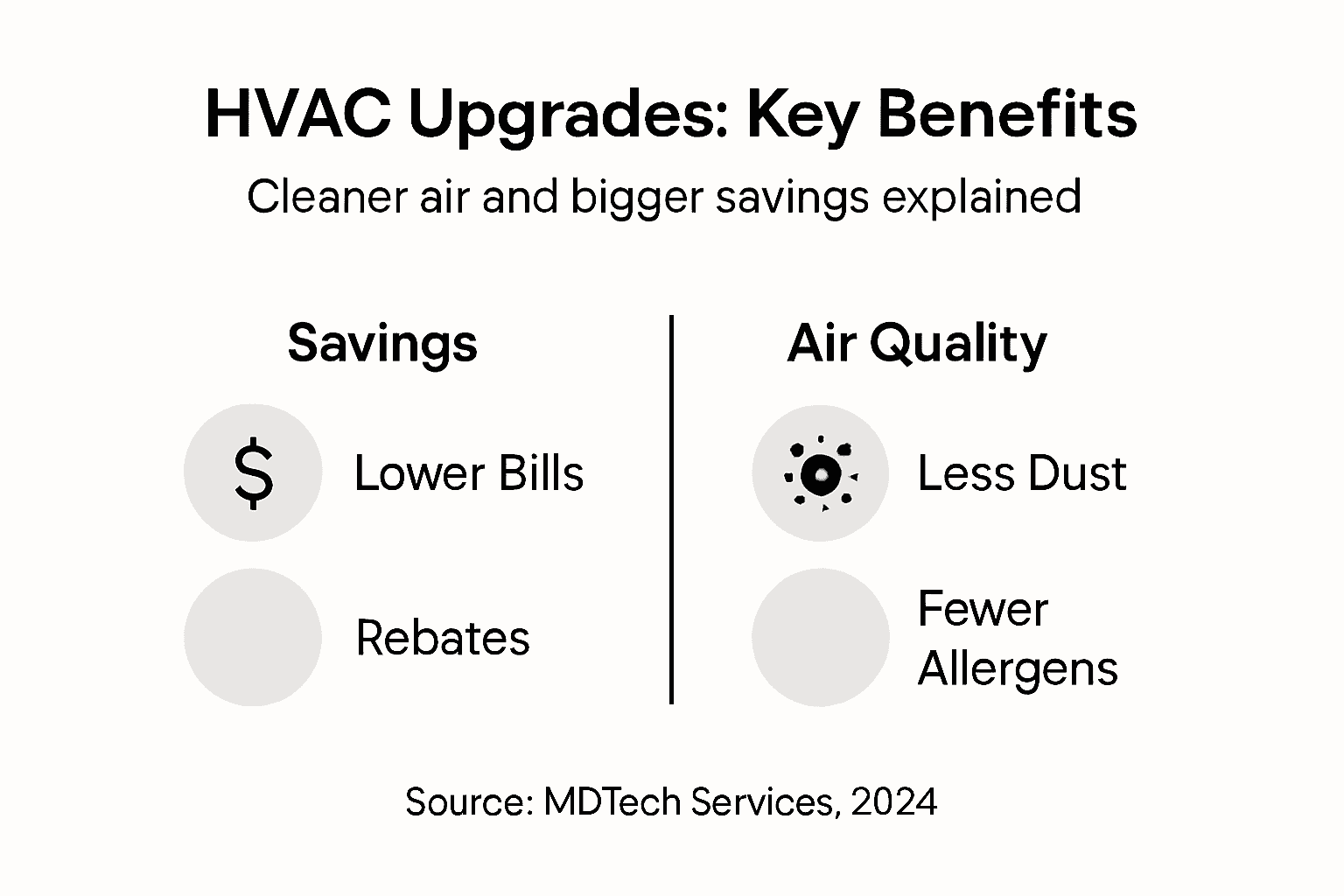
Here’s a practical comparison of popular HVAC upgrade strategies for homeowners:
| Upgrade Type | Ideal For | Expected Benefit | Complexity Level |
|---|---|---|---|
| Partial Component Replacement | Homes with minor issues | Lower cost, targeted fix | Low to Moderate |
| Complete System Retrofit | Older, inefficient homes | Major energy savings | High |
| Efficiency Enhancement | Modern homes | Maximized system performance | Moderate |
Pro tip: Consult with a professional HVAC technician to perform a comprehensive home energy assessment before selecting your upgrade strategy.
Key Features of Modern HVAC Technology
Today’s HVAC systems represent a quantum leap beyond traditional heating and cooling technologies. Advanced HVAC design technologies now integrate sophisticated sensors, intelligent controls, and energy-efficient components that transform how homeowners manage indoor climate and air quality.
The most innovative features of modern HVAC technology include:
- Smart Control Systems
- Real-time temperature monitoring
- Adaptive learning algorithms
- Remote smartphone accessibility
- Precision zone temperature management
- Energy Efficiency Technologies
- Variable speed compressors
- Advanced thermal insulation
- Low global warming potential refrigerants
- Integrated energy recovery systems
- Air Quality Enhancement Features
- Multi-stage air filtration
- Humidity control mechanisms
- Particulate matter detection
- UV air purification systems
Homeowners in Orange and Los Angeles Counties can now leverage high-performance HVAC innovations that dramatically reduce energy consumption while maintaining exceptional comfort levels. These systems utilize cutting-edge technologies like desiccant dehumidification and variable speed components to create intelligent, responsive home environments.
The integration of smart home technologies has revolutionized HVAC performance. Modern systems can now automatically adjust settings based on occupancy, external temperature, and individual room requirements, providing unprecedented levels of comfort and efficiency.
Below are key smart HVAC technology features and their business impact:
| Feature | Functionality | Impact on Home Value |
|---|---|---|
| Adaptive Learning Algorithms | Auto-adjust climate preferences | Improves comfort, efficiency |
| Remote Smartphone Access | Control system from anywhere | Enhances convenience |
| Zone Temperature Management | Adjust temps per room automatically | Increases appeal, efficiency |
| Advanced Filtration | Removes allergens and pollutants | Boosts health and air quality |
Pro tip: Request a professional energy audit to understand which specific modern HVAC features would provide the most significant benefits for your home.
How HVAC Upgrades Improve Air Quality
Indoor air quality represents a critical health consideration for homeowners, and modern HVAC upgrades offer sophisticated solutions to environmental challenges. Advanced ventilation strategies now enable precise control over airborne contaminants, dramatically improving the air residents breathe daily.
Key improvements in air quality through HVAC upgrades include:
- Contaminant Reduction
- Removing particulate matter
- Eliminating volatile organic compounds
- Filtering microscopic allergens
- Neutralizing harmful microorganisms
- Humidity and Circulation Management
- Balanced moisture levels
- Consistent air exchange
- Preventing mold growth
- Reducing respiratory irritants
- Advanced Filtration Technologies
- HEPA filter integration
- Multi-stage air purification
- UV light sterilization
- Electrostatic particle removal
Homeowners in Orange and Los Angeles Counties can now leverage comprehensive indoor air quality solutions that transform their living environments. These sophisticated systems go beyond basic temperature control, actively monitoring and improving air composition through intelligent sensor networks and precision filtration mechanisms.
The most significant advancement in modern HVAC technology is the ability to create a dynamic, responsive indoor environment. By continuously analyzing air quality metrics, these systems can automatically adjust ventilation, filter intensity, and humidity levels to maintain optimal living conditions.
Pro tip: Schedule an annual professional HVAC inspection to ensure your system’s air quality features are functioning at peak performance.
Financial Impact: Costs, Savings, and Incentives
HVAC system upgrades represent a significant financial investment for homeowners, with potential long-term economic benefits that extend far beyond initial installation costs. Federal tax credits and rebates now provide substantial financial incentives that can dramatically reduce the overall expense of modernizing home climate control systems.
The financial considerations of HVAC upgrades include multiple key components:
- Upfront Investment
- Equipment purchase costs
- Professional installation expenses
- Potential structural modifications
- Removal of existing systems
- Ongoing Savings
- Reduced monthly utility bills
- Lower maintenance expenses
- Extended equipment lifespan
- Increased home energy efficiency
- Available Financial Incentives
- Federal tax credits
- State-level rebate programs
- Energy efficiency grants
- Low-interest financing options
Homeowners in Orange and Los Angeles Counties can leverage comprehensive energy assistance programs that provide financial support for HVAC system upgrades. These programs are designed to make energy-efficient home improvements more accessible, particularly for households with limited financial resources.
The economic calculus of HVAC upgrades goes beyond simple cost comparisons. Modern systems can reduce energy consumption by 20-40%, translating to significant long-term savings. When combined with available tax credits and rebates, the financial argument for upgrading becomes increasingly compelling.
Pro tip: Request detailed cost-benefit analysis from multiple HVAC professionals to understand your specific potential savings and incentive opportunities.
Common Mistakes to Avoid When Upgrading
HVAC system upgrades can quickly become complex and expensive when homeowners fail to plan strategically. Critical system assessment strategies are essential to preventing costly missteps that could compromise both performance and efficiency.
The most common mistakes homeowners make during HVAC upgrades include:
- Poor Initial Planning
- Skipping comprehensive system evaluation
- Neglecting home’s specific climate requirements
- Overlooking existing infrastructure limitations
- Failing to calculate precise equipment needs
- Technical Compatibility Errors
- Selecting mismatched system components
- Ignoring ventilation system integration
- Underestimating home’s thermal characteristics
- Choosing incorrectly sized equipment
- Financial and Operational Oversights
- Prioritizing upfront cost over long-term efficiency
- Neglecting potential energy savings
- Avoiding professional installation assessments
- Skipping routine maintenance planning
Homeowners in Orange and Los Angeles Counties must recognize that HVAC upgrade complexities extend far beyond simple equipment replacement. Professional guidance becomes crucial in navigating the intricate landscape of modern heating and cooling technologies.
Understanding these potential pitfalls can help homeowners make more informed decisions, ensuring their HVAC upgrade delivers maximum comfort, efficiency, and value. Each upgrade represents a significant investment that requires careful consideration of technical, financial, and performance factors.
Pro tip: Consult with a licensed HVAC professional who can perform a comprehensive home energy assessment before making any upgrade decisions.
Maximize Comfort and Savings with Expert HVAC Upgrades
Upgrading your HVAC system is essential to achieving cleaner air and bigger savings as highlighted in the article. Many homeowners face challenges such as inefficient energy use, poor indoor air quality, and outdated equipment that can lead to higher utility bills and discomfort. With terms like energy efficiency enhancements, advanced ventilation, and smart control systems emphasized, it is clear that professional guidance is critical for transforming your home environment effectively and safely.
At MDTech Services, we understand these pain points and offer trusted solutions focused on expert HVAC repair and installation in Orange County and Los Angeles County. Our licensed technicians specialize in modernizing your home’s heating and cooling systems to help you enjoy improved air quality, reduced energy costs, and reliable performance. By choosing our team, you tap into local expertise that prioritizes responsiveness, safety, and lasting value.
Ready to take the next step in upgrading your HVAC system? Schedule an appointment with MDTech Services today to experience professional service tailored to your home’s unique needs.

Don’t wait until small inefficiencies become costly problems. Visit MDTech Services now and secure your home comfort with our reliable HVAC repair and installation options. Learn more about how we bring smart HVAC solutions to life and protect your family’s air quality by exploring our full range of services at MDTech Services. Your path to bigger savings and cleaner air starts here.
Frequently Asked Questions
Why should I consider upgrading my HVAC system?
Upgrading your HVAC system can improve energy efficiency, enhance air quality, reduce monthly utility costs, and extend the lifespan of your equipment, providing a healthier and more comfortable living environment.
What are the types of HVAC system upgrades available?
HVAC upgrades can be categorized into partial component replacements, complete system retrofits, and energy efficiency enhancements, allowing homeowners to choose options that best suit their specific needs and budget.
How do modern HVAC technologies improve air quality?
Modern HVAC systems feature advanced filtration, humidity control, and contaminant reduction technologies that significantly reduce allergens, pollutants, and harmful microorganisms, leading to better indoor air quality.
What financial incentives are available for upgrading HVAC systems?
Homeowners can take advantage of federal tax credits, state rebate programs, and energy efficiency grants, which can substantially lower the overall cost of upgrading their HVAC systems.