
Turbo Air Repair & Installation California
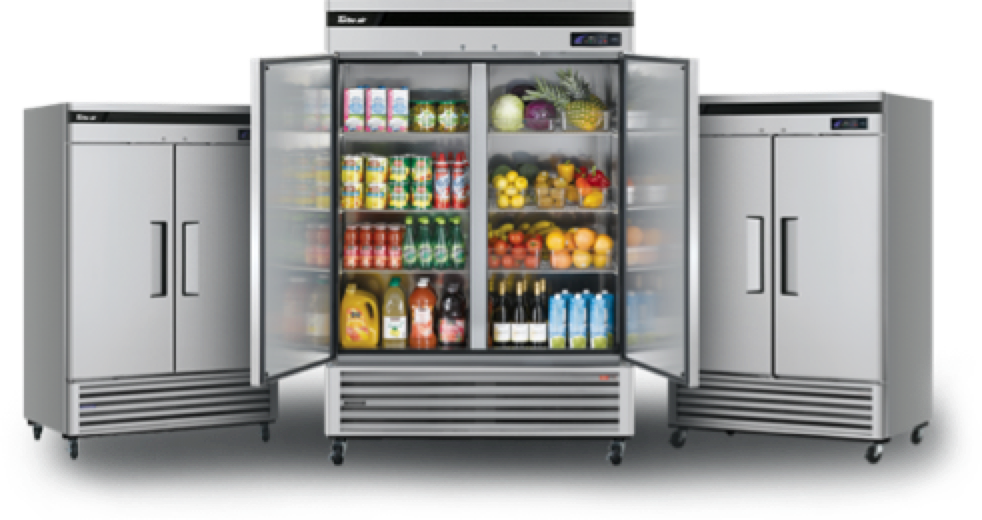
Turbo Air Repair & Installation California: Professional Technical Guide
Turbo Air has revolutionized the commercial refrigeration industry with its patented self-cleaning condenser technology and energy-efficient designs. From the “PRO Series” reach-ins to “Super Deluxe” glass door merchandisers, Turbo Air units are engineered with high-density polyurethane insulation and eco-friendly R290 hydrocarbon refrigerants. For businesses throughout California, maintaining a Turbo Air unit is essential for reducing energy costs and preventing compressor failure. This guide serves as an authoritative resource for diagnosing and servicing Turbo Air equipment to factory specifications.
Engineering Standards and Patented Self-Cleaning Technology
The hallmark of Turbo Air engineering is the Self-Cleaning Condenser (SCC) system. This patented technology utilizes a fine mesh filter to capture dust, while a rotating brush moves vertically 2–3 times per day to prevent accumulation. A primary focus for any technician is the mechanical integrity of this brush assembly. If dust is allowed to build up, the condenser cannot expel heat, leading to increased head pressure and eventual thermal overload of the compressor.
California safety protocols demand that any service involving pressurized gas or internal manifold work be performed by a licensed professional. You can verify technical standing through the DCA. In California’s high-traffic environments, ensuring that the 60mm thick, high-density walls remain uncompromised is vital for thermal efficiency. While residential brands like GE Appliances are common, the industrial sophistication of Turbo Air requires a technician who understands specialized “Turbo Cooling” and “Turbo Freezer” rapid-chill logic.
The Science of R290 Safety and Digital Thermal Logic
Turbo Air utilizes R290 (Propane), a natural refrigerant with a GWP (Global Warming Potential) of 3. These systems are hermetically sealed and contain less than 150 grams of refrigerant. The “Turbo Cooling” function allows the unit to run at full power for a set period to rapidly pull down temperatures after a heavy loading session.
While nationwide platforms like Sears Home Services provide broad repair support, the specific digital controllers on Turbo Air units—which display “HI” for temperatures above 64.4°F and “LO” for those below -49°F—require exact thermistor calibration. If a unit fails to cool, the technician must diagnose whether the “Energy Saving Fan Controller” is improperly delaying the evaporator fans.
Turbo Air Digital Controller Diagnostic Codes
Turbo Air units utilize an advanced LED display to alert technicians to system malfunctions.
| Alarm Code | Engineering Meaning | Technical Diagnostic Path |
| HI | High-Temperature Alarm | Cabinet > 64.4°F; check condenser brush and door seals |
| LO | Low-Temperature Alarm | Cabinet < -49°F; verify if compressor relay is stuck closed |
| F1 | Communication Fault | Inspect wiring between the indoor and outdoor control boards |
| F2 | Ambient Sensor Fault | Check resistance of the ambient thermistor (replace if open) |
| P5 | Compressor Top Overheat | Verify refrigerant charge and condenser fan operation |
According to EPA standards, all refrigerant work must be conducted by Section 608 Technician Certification holders. This is a non-negotiable safety requirement for California operators handling R290 systems to prevent ignition hazards in the kitchen environment.
Diagnostic Procedures for High-Efficiency Chilling
Turbo Air units are designed for high-volume durability. If a unit stops making temperature, the technician must evaluate the self-cleaning brush path. Often, large-scale aggregators like HomeAdvisor or Thumbtack list general handymen who may miss the “fan-overheat” issues caused by the 24-hour non-stop evaporator fan cycle.
-
Step 1: Verify power at the outlet; Turbo Air units are sensitive to voltage drops which can damage the digital inverter.
-
Step 2: Inspect the self-cleaning condenser filter; ensure the brush is not obstructed by debris.
-
Step 3: Test the “Turbo Cooling” button; if the unit fails to ramp up, the control board’s power relay likely needs replacement.
-
Step 4: Check the high-density insulation; any puncture in the 60mm wall can cause localized condensation and thermal loss.
For a broader perspective on energy-efficient cooling and safety standards, the Wikipedia page on Refrigeration provides essential technical context.
Component Integrity and Supply Chain Authority
The reliability of a Turbo Air repair is intrinsically linked to the quality of the parts installed. While you can find basic accessories at retailers like The Home Depot, Lowe’s, Target, and Best Buy, critical mechanical parts such as Turbo Air compressors, SCC brush motors, and digital logic boards should be sourced through verified distributors like Encompass or Sears PartsDirect. Using non-OEM components can void the manufacturer’s 7-year compressor warranty.
California Compliance and Licensing Requirements
In California, commercial appliance service is governed by strict licensing laws. At MDTECH SERVICES, we operate as a core professional developer in the repair industry, fully bonded and insured to work on both high-pressure gas and industrial electrical systems throughout the state.
Major repairs must be executed in accordance with CSLB guidelines. Choosing an unverified provider in California can lead to insurance claim denials and potential safety hazards. We adhere to the Bureau of Household Goods and Services standards to ensure every Turbo Air unit we service meets the 5-year parts and labor warranty requirements as of June 1, 2023.
People Also Ask (Technical FAQ)
Why is my Turbo Air unit beeping and showing “HI”?
The “HI” code indicates the internal temperature has exceeded 64°F. This is a failsafe to protect your inventory. In California’s hot climate, this is frequently caused by a dirty SCC filter or a door gasket that has lost its magnetic seal.
How do I manually trigger the self-cleaning condenser brush?
While the system is automated, you can often trigger a manual cycle through the “Manual Defrost” or “Turbo” button combinations on the digital controller to ensure the brush is moving freely.
Are Turbo Air refrigerators covered by home warranties like Liberty Home Guard?
Turbo Air is a commercial brand. Most warranties from Liberty Home Guard exclude commercial equipment. However, Turbo Air offers its own extensive protection, including an additional 2 years on compressors for specific E-line models.
Professional Service Throughout California
When a technical failure occurs, the speed and accuracy of the diagnosis determine the survival of your inventory. At MDTECH SERVICES, we specialize in the unique engineering of Turbo Air products. We serve the entire California region with a deep inventory of factory-spec parts. While general networks like Mr. Appliance offer broad support, our focus is on the specific mechanical nuances of the Turbo Air brand.
For immediate assistance, visit our Google Maps Location to verify our service headquarters and available technicians in your area.
Why Technical Expertise Matters
Turbo Air units are precision-tuned machines with a 15-20 year lifespan. They require a technician who understands the thermodynamics of R290 and the electrical logic of “Energy Saving Fan Controllers.” By choosing a service provider that functions as a core professional developer in the technical space, you ensure your investment is protected across California.
For more information, visit our official site at MDTECH SERVICES. We provide transparent diagnostics, documented repair logs, and a commitment to the highest California service standards. Our team maintains NATE Certification level workmanship, ensuring that every Turbo Air system is restored to its peak factory performance.
Contact Information:
-
Business Name: MDTECH SERVICES
-
Address: Lake Forest CA, 92630, USA
-
Email: dispatch1@md-techusa.com
-
Phone: 310-871-0323