
A standard thermostat replacement typically runs $114 to $264 installed, with most homeowners landing around $184. A basic swap with existing compatible wiring sits at the low end, while smart-thermostat installs that require a new C‑wire, extra zones, or drywall work push the total toward $500 or more. Wiring compatibility, not the thermostat itself, is usually what decides your final bill.
TL;DR:
- Installing a smart thermostat with additional features like remote sensors or multi-zone zoning can cost between $300 and $600, depending on wiring complexity.
- Running a new C-wire for a smart thermostat typically adds $75 to $250 to the total installation cost, influenced by access conditions.
- Simple thermostat swaps with compatible wiring usually cost $50 to $120, while complex jobs with drywall patching or rerouting can exceed $500.
- Repair costs for minor thermostat issues are generally between $50 and $150, making replacement the smarter choice if repair exceeds half the replacement price.
- Proper preparation, such as photographing wiring terminals and understanding your HVAC system type, can significantly reduce diagnostic and labor costs.
Table of Contents
- Thermostat Prices By Type: Manual, Programmable, and Smart
- Thermostat Installation Cost Factors: Labor, Wiring, and Drywall
- Should You Install a Thermostat Yourself or Hire a Pro?
- Repair vs. Replacement: When the 50% Rule Applies
- Compatibility and Wiring: Why the C‑Wire Matters
- Energy Savings, Rebates, and Realistic Payback
- Getting an Accurate Thermostat Installation Cost Estimate
- What MDTech Sees on Real Thermostat Jobs
- Paying More Upfront vs. Choosing the Budget Option
- Book a Thermostat Installation With MDTech Services
- Where to Verify These Numbers Yourself
- Sources
Thermostat Prices By Type: Manual, Programmable, and Smart
The unit you choose sets your floor price, but labor and features decide where you actually land. A basic manual thermostat costs $15 to $50 for the unit itself, and installation is usually quick since these models rarely need extra wiring. Programmable thermostats run $25 to $100 and add scheduling features, though the Department of Energy notes their savings depend entirely on correct programming — a detail that matters more than most buyers realize.
Basic smart thermostats without remote sensors typically cost $100 to $250 for the unit, while models with room sensors, learning algorithms, or full HVAC integration climb to $200 to $300 or higher before labor. Installed totals tell the real story:
- Manual thermostat: $50 to $120 installed, assuming existing wiring is compatible.
- Programmable thermostat: $100 to $250 installed, including basic labor.
- Basic smart thermostat: $200 to $400 installed, per HVAC pricing data.
- Smart thermostat with remote sensors or zoning: $300 to $600 installed, depending on sensor count and wiring complexity.
Remote sensors, multi-zone compatibility, and HVAC system integration are the three features that most reliably add cost, both in unit price and in the labor needed to configure them correctly. If you’re weighing a smart model against a basic programmable one, understanding what a smart thermostat actually does before you buy saves you from paying for features you won’t use.
Thermostat Installation Cost Factors: Labor, Wiring, and Drywall
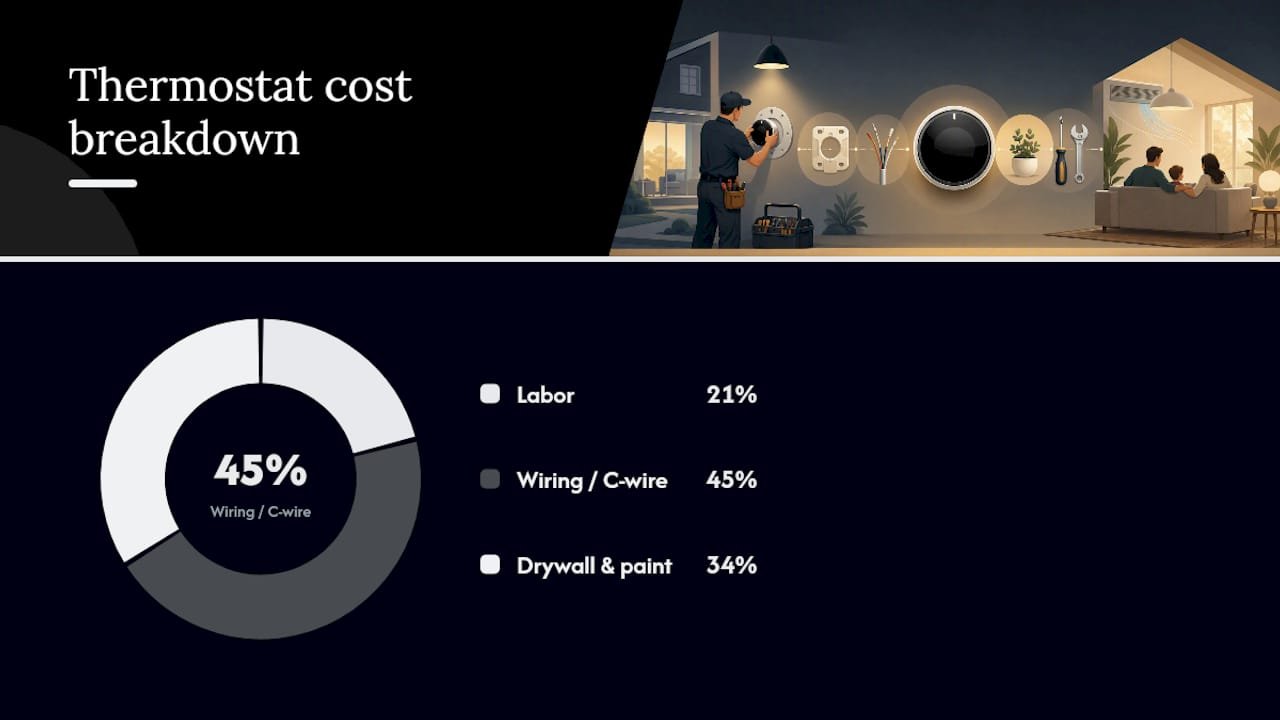
Labor rates for HVAC and electrical work generally run $65 to $100 per hour, according to HomeAdvisor’s cost data, though rates vary by region in ways the Bureau of Labor Statistics wage tables confirm are common across skilled trades. A simple like-for-like swap takes 30 to 60 minutes. Add new wiring and that job can stretch to two or three hours.
Four factors drive most of the price swing between a $100 job and a $500 one:
- Simple swap labor: $50 to $100 total when wiring is compatible and no new C‑wire is needed.
- New wiring or C‑wire installation: $75 to $250 added, depending on wall access and attic or crawlspace conditions.
- Drywall patching and paint: $50 to $200 if wires need rerouting through finished walls, since patching and repainting are typically billed separately from HVAC labor.
- Multi-zone or multi-unit jobs: Each additional zone or thermostat typically adds a smaller incremental labor charge rather than doubling the full first-unit price, since the technician is already on-site with tools out.
HomeWyse’s calculator shows how much itemized labor and parts can shift a total, which is exactly why two quotes for the “same” job can differ by hundreds of dollars.
Should You Install a Thermostat Yourself or Hire a Pro?
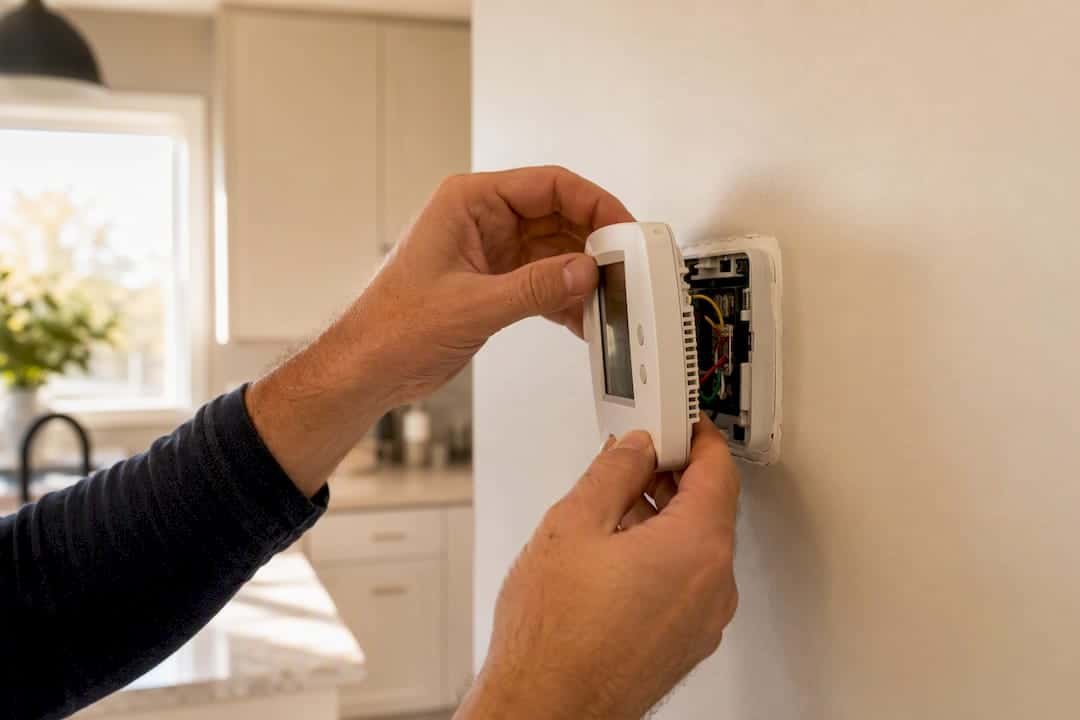
DIY makes sense when your existing wiring is clearly labeled, your new thermostat is a direct compatibility match, and you’re not dealing with a heat pump or multi-stage system. In that scenario, you skip the labor charge entirely and pay only for the unit.
Call a professional when any of these apply:
- No C‑wire is present and your smart thermostat requires one.
- You have a heat pump, which uses different wiring conventions than standard forced-air systems.
- Your system runs multiple stages or zones with unclear or undocumented wiring.
- You want installation covered under a workmanship warranty, since most manufacturer warranties don’t cover damage from incorrect self-installation.
Pro Tip: Before you touch a single wire, take a clear, well-lit photo of your existing thermostat’s wiring terminals and label connections. If you end up calling a technician anyway, that photo alone can cut diagnostic time significantly.
Repair vs. Replacement: When the 50% Rule Applies
Minor thermostat problems, like a dead battery, a calibration drift, or a loose wire, typically cost $50 to $150 to repair. Full replacement, by comparison, runs $114 to $264 on average.
The 50% rule offers a useful gut check: if a repair costs more than half of what a full replacement would cost, replacement is usually the smarter financial move. It’s a guideline, not a law, and it bends based on:
- Age: A thermostat over 10 years old often lacks modern compatibility and energy features worth paying for anyway.
- Warranty status: A unit still under warranty may make repair free or nearly free.
- Functionality gaps: If you’re repairing a manual thermostat, replacing it with a programmable or smart model may cost only slightly more while adding real capability.
Compatibility and Wiring: Why the C‑Wire Matters
A C‑wire, or “common wire,” supplies continuous 24-volt power to your thermostat. Most smart thermostats need one to keep their screens, Wi‑Fi radios, and sensors running around the clock, unlike simple mechanical thermostats that don’t require constant power.
- Running a new C‑wire typically costs $75 to $250, based on wall and attic access, per HVAC pricing guides.
- Power connector kits (also called “power extender kits”) sometimes let installers avoid running new wire entirely, at a lower cost than a full wire pull.
- Heat pump systems use different wiring conventions than standard gas or electric furnaces, and not every smart thermostat supports them out of the box.
- Checking compatibility yourself is straightforward: take a photo of your current thermostat’s wiring terminals and run it through the manufacturer’s online compatibility checker before you buy anything.
Energy Savings, Rebates, and Realistic Payback
ENERGY STAR-certified smart thermostats save homeowners an average of about 8% on heating and cooling costs, or roughly $50 per year, though results shift with climate, occupancy, and how the household actually uses the device.
By the numbers: ENERGY STAR reports an average 8% HVAC savings, about $50 annually, tied directly to correct setup and use.
Programmable thermostats promise similar savings on paper, but usability research from Lawrence Berkeley National Laboratory found that many households never program them correctly, which erases much of the projected benefit. Smart thermostats attempt to automate around that human error.
- Utility rebates are common and vary by provider, some instant at checkout, others requiring mail-in or online submission.
- A $250 smart thermostat with a $50 instant rebate and $50/year in savings pays for itself in roughly four years, faster if your utility also offers an installation credit.
Getting an Accurate Thermostat Installation Cost Estimate
A quote is only as good as the information behind it. Before you call anyone, gather what a technician needs to give you a real number instead of a rough guess.
- Photograph your control board and wiring terminals so the technician can assess compatibility remotely or on arrival.
- Note your HVAC system model and type, including whether you have a heat pump or multi-stage system.
- Ask specifically about C‑wire work, itemized labor versus parts, and any diagnostic or trip fee separate from the repair itself.
- Ask about drywall or patching costs if wires might need rerouting.
- Confirm licensing, insurance, and any warranty on labor, not just on the thermostat itself.
- Compare two quotes line by line, not just as bottom-line totals, since one contractor’s “labor” may hide a diagnostic fee another bills separately.
Homeowners who want a deeper walkthrough of system basics before that call can review MDTech’s guide to HVAC troubleshooting first.
What MDTech Sees on Real Thermostat Jobs
Across jobs in Orange County and Los Angeles County, three patterns show up consistently. A straightforward swap with existing compatible wiring typically lands near $150 to $200 total. A smart thermostat requiring a new C‑wire run through an accessible attic space usually finishes in the $350 to $450 range. Jobs involving finished walls, rerouted wiring, and drywall patching push past $500.
- The most common surprise: undocumented or mislabeled wiring from a previous, non-permitted installation.
- MDTech separates diagnostic time from labor on every quote, so homeowners see exactly what they’re paying for.
- Full pricing context lives in MDTech’s guide to how thermostats save energy.
Paying More Upfront vs. Choosing the Budget Option
Higher upfront cost earns its keep when you’re adding remote sensors, multi-zone control, or full HVAC integration, features that genuinely change comfort and efficiency over years of use. If your goal is simply reliable temperature control with no smart features, a budget programmable model is a perfectly reasonable choice and won’t leave you shortchanged. Most homeowners land somewhere in between: match the thermostat to how you actually live, not to the most feature-rich box on the shelf.
— MDTECH
Book a Thermostat Installation With MDTech Services
Skipping the guesswork on wiring compatibility is where MDTech Services earns its keep. Every thermostat visit includes a full inspection of your existing wiring, an itemized estimate before any work begins, and a compatibility check against your specific HVAC system, whether that’s a standard furnace or a heat pump setup that needs different wiring logic.
A quoted visit from MDTech covers the thermostat itself, any C‑wire work your system needs, and guidance on permit requirements if your job involves rerouting wires behind finished walls. Our licensed technicians work throughout Orange County and Los Angeles County, and we separate diagnostic time from labor on every estimate so you know exactly what you’re paying for before we start. If you’re ready to get a real number instead of a guess, request a quote through our appliance and HVAC service page and we’ll walk you through what your specific setup requires.
Where to Verify These Numbers Yourself
- ENERGY STAR’s smart thermostat FAQ covers certified models and average savings claims.
- Energy.gov’s programmable thermostat guidance explains why correct programming matters more than the thermostat itself.
- HomeAdvisor’s installation cost data and Angi’s cost breakdown both offer updated national pricing ranges worth cross-checking against local quotes.
- Homeowners exploring a broader energy-efficiency upgrade before installing a new thermostat can also review Cozee Bay’s home energy saver checklist for context on how thermostats fit into a whole-house plan.
Sources
- How Much Does Thermostat Installation or Replacement Cost? 2026 Data | HomeAdvisor
- Thermostat Installation Cost in 2026: Full Guide | HVACPricingGuide