
A gas leak smells like rotten eggs, sulfur, or sometimes a skunk. Natural gas and propane have no odor of their own, so the gas industry adds a harmless chemical called mercaptan to make leaks easy to notice. If you smell it indoors, do not investigate. Leave the building on foot, and call from a safe distance. This guide explains what the smell is, how natural gas and propane differ, why the odor can seem to come and go, and what to do in the first minutes.
TL;DR
- Gas leaks smell like rotten eggs or sulfur because a harmless odorant called mercaptan is added to gas that has no smell.
- Propane is odorized too, usually with ethyl mercaptan, and smells like rotten eggs or skunk spray.
- If you smell gas indoors, do not touch switches, phones, or appliances. Leave on foot, then call 911 or your gas utility from outside.
- A faint or fading odor is not a reason to wait. Odor can fade, so leave and call even if you only suspect a leak.
- Once the utility makes the area safe, a licensed technician should find and repair the cause before the gas is turned back on.
Table of Contents
- What a Gas Leak Smells Like
- Propane vs. Natural Gas: Does the Smell Differ?
- What to Do If You Smell Gas Inside Your Home
- What If You Smell Gas Outside?
- Why the Smell Can Come and Go
- Why Gas Leaks Are Taken So Seriously
- Common Causes of Gas Odors in a Home
- Our Perspective on Gas Odors
- After the Utility Makes It Safe: Getting the Source Repaired
- Need Gas Appliance Repair in Orange County or Los Angeles County?
- FAQ
- Sources
What a Gas Leak Smells Like
Most people describe it as rotten eggs or sulfur. Some say it is closer to a skunk, or to rotten cabbage. The smell is strong on purpose. Mercaptan has an extremely low odor threshold: most people can detect it at about 0.8 parts per billion, while a common household smell like nail polish remover is not noticeable until roughly 4,000 ppb.
The gas itself is a different story. The methane in natural gas is odorless and colorless, and the rotten egg smell comes from the odorant that the gas company adds. The American Public Gas Association notes that odorizing is a safety feature required of all natural gas utilities in the US.
The odorant is not toxic in the small amounts used. PHMSA describes it as a harmless, non-toxic chemical added to gas distribution systems so a leak is easier to detect. The smell is a warning signal. The gas that carries it is the hazard.
Other signs that go with the smell
Your nose is not the only tool. Utilities and regulators point to a few more signs:
- A hissing or roaring sound near a gas line or appliance. The Indiana Utility Regulatory Commission lists a hissing sound alongside the rotten egg smell as a common sign.
- Bubbles when soapy water touches a gas connection, according to the same source.
- Outdoors, blowing dirt, bubbling water, or dead or dying plants near a gas line.
- Headache or light-headedness, which can happen if gas begins to displace oxygen in a room.
If you notice any of these inside your home, treat it the same way as the smell. Leave first. Do not stay to test connections yourself.
Propane vs. Natural Gas: Does the Smell Differ?
The two smell very similar, and you should treat both the same way. Both fuels are odorless in their natural state, and odorants are added to each. According to a NIOSH investigation report, the two most common odorants are methyl mercaptan for natural gas and ethyl mercaptan for propane, and both smell like rotten eggs or rotten cabbage. Ferrellgas describes the propane smell as similar to rotten eggs or even a skunk.
The bigger difference is how the gas behaves after it escapes:
| Natural gas | Propane (LP) | |
|---|---|---|
| Odor | Rotten eggs or sulfur | Rotten eggs or skunk |
| Common odorant | Methyl mercaptan | Ethyl mercaptan |
| Weight vs. air | Lighter, rises and spreads upward | Heavier, sinks toward the ground |
| Typical home source | Utility gas line and meter | Tank or cylinder on the property |
The weight difference comes from FortisBC’s explanation: natural gas rises, while propane sinks. In practice, propane can collect in low spots such as basements, crawl spaces, and floor-level cabinets. That is one more reason not to wander through the house looking for the source.
One propane quirk is worth knowing. Ferrellgas notes that you may smell propane even without a leak when a tank is almost empty, because the leftover odorant becomes more concentrated. You cannot tell that situation from a real leak by smell alone, so the safe response is the same.
What to Do If You Smell Gas Inside Your Home
The goal is to get out and let trained responders handle the rest. Regulators and utilities give consistent guidance.
- Stop what you are doing. NIPSCO advises that you do not smoke or light a match, and that you do not use anything that could spark, such as a light switch, appliance, flashlight, or phone.
- Do not create a spark. CenterPoint Energy adds that you should not turn electrical switches on or off, and should not use your cell phone or electronic devices inside the affected area.
- Leave on foot right away. Take family members and pets, and do not stop to gather belongings. The New Hampshire Department of Energy says to get to a safe location 300 feet away or more and to close the door behind you.
- Do not open windows to air out the house. The IURC specifically advises against this when a leak is suspected. CenterPoint Energy says not to open or close windows unless you are exiting.
- Call from a safe place. Once you are outside and away from the building, call 911 or your gas utility. PHMSA advises staying upwind if possible.
- Do not try to find the leak or shut the gas off yourself. CenterPoint Energy says not to attempt to locate the source and not to shut off the meter unless you have been trained.
Who to call in Orange County and Los Angeles County
Most homes in our service area are served by the Southern California Gas Company. SoCalGas says that if you smell natural gas or suspect a leak, you should evacuate and call 1-800-427-2200 from a safe location. The line is staffed around the clock, and you can call 911 as well. If your home runs on propane, call your propane supplier’s emergency number, or 911 if you are unsure.
A utility will typically make the situation safe and shut off the gas. National Grid explains that if the leak is in your home, its crews make it safe and turn off the gas until a plumber or technician can make repairs. Other utilities describe similar practice, and PSE says it dispatches a technician at no charge. Check with your own utility for how it handles service calls.
What If You Smell Gas Outside?
An outdoor smell is less likely to mean a leak inside your house, but it still deserves a report. Outdoor leaks can come from pipe corrosion, cracks caused by weather or water main breaks, or accidental damage during construction or street work. A reasonable rule: if the smell is near your meter, a propane tank, or a gas line, report it. Do not start a vehicle or run powered equipment where leaking gas may be present, which is the Connecticut regulator’s guidance as well.
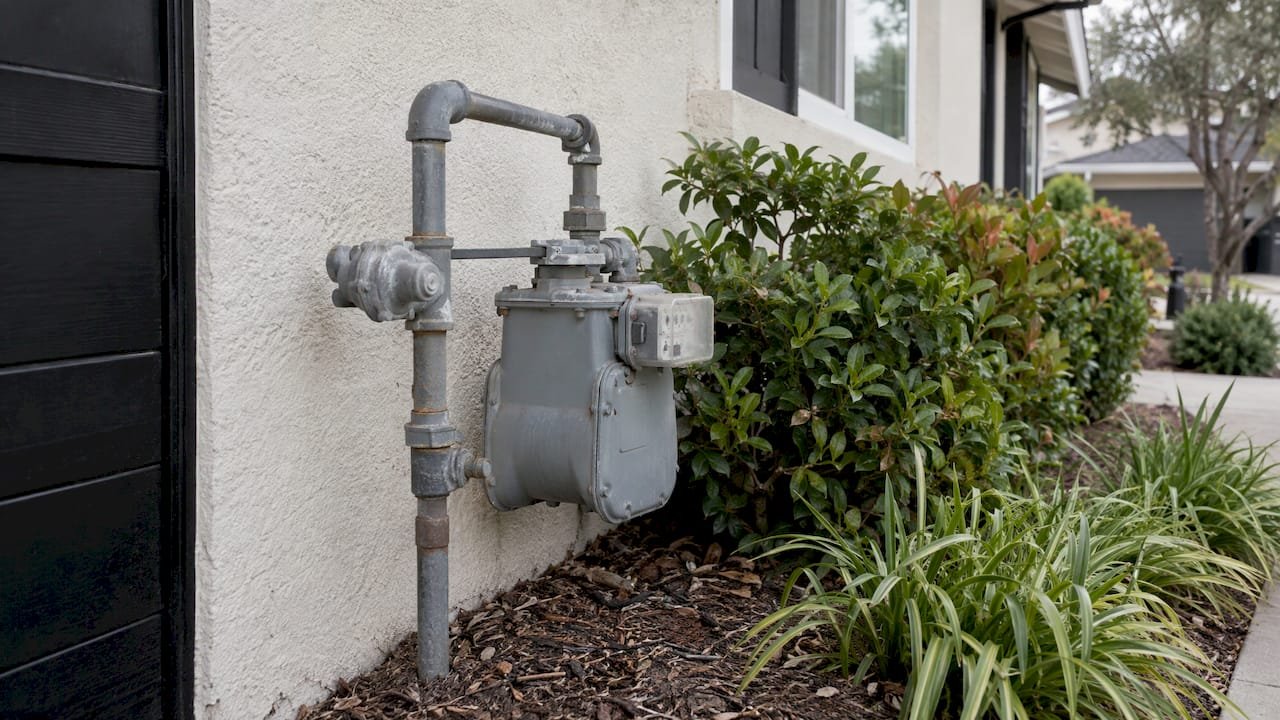
If the smell is stronger when you step back inside, treat it as an indoor leak and follow the steps above.
Why the Smell Can Come and Go
People often ask whether a gas leak smell can fade, and the answer is yes. It is one of the most important facts on this page.
- Odor fade. The IURC states that the odor may sometimes fade or be harder to detect, because physical and chemical factors can make the odorant less noticeable. NIOSH adds that the odorant can fade when gas contacts soil, concrete, and building materials.
- Olfactory fatigue. CenterPoint Energy notes that some people may not detect the odor because of a diminished sense of smell, olfactory fatigue, or other odors masking it. After a few minutes in a room, your nose can stop reporting the smell.
- Small or intermittent leaks. A loose fitting or worn connector can release gas only when an appliance runs, so the smell appears at cooking time and disappears later.
The practical takeaway is simple. A faint or fading smell does not mean the problem went away. The IURC advises that if you detect even a faint odor, or suspect a leak but cannot smell it, the safe choice is to leave the area immediately and call 911.
If you or someone in your home has a weak sense of smell, APGA notes that a gas leak detector can sound an alarm before gas reaches the explosive range.
Why Gas Leaks Are Taken So Seriously
Natural gas is flammable. Poison Control states that at concentrations of 5 to 15 percent in air it can cause a fire or explosion if ignited. That is why even a light switch can be an ignition risk, and why the guidance is to avoid any spark until you are outside.
There is also a health side. Methane is a simple asphyxiant, meaning it displaces oxygen in the air. Poison Control also notes that carbon monoxide can form when natural gas burns incompletely. A gas smell and a malfunctioning appliance can show up together, so a carbon monoxide alarm belongs in a home that uses gas appliances.
Symptoms of gas exposure
Poison Control lists these symptoms of natural gas inhalation: nausea, vomiting, headache, dizziness, confusion, vision changes, memory problems, incoordination, and sleepiness. In severe cases a person can lose consciousness. High concentrations can also leave the eyes irritated and dry.
If anyone has these symptoms after a suspected leak, move them into fresh air outside, call 911, and you can reach Poison Control at 1-800-222-1222. Do not wait to see whether symptoms pass.
Common Causes of Gas Odors in a Home
It is not always easy to pinpoint a leak, and you should not investigate one yourself. Still, knowing where leaks tend to start helps you plan for prevention. National Grid says indoor leaks can be caused by faulty appliances, leaky pipe fittings, corroded or cracked pipes, or construction work.
In the homes we serve, the usual places to look for professional attention are:
- Gas ranges, ovens, and cooktops, including worn igniters and loose connections.
- Gas dryers and water heaters, and the flexible connectors behind them.
- Furnaces and other heating equipment.
- Appliance hookups after a new installation or a move.
- Propane-to-natural-gas conversions that were done without the correct parts or checks.
If the smell appears mainly when you use the oven, our guide on what it means when your oven smells like gas walks through the safety steps. For a broader overview, see our homeowner’s guide to detecting gas leaks and the checklist in gas safety at home.
Our Perspective on Gas Odors
We take every report of a gas smell seriously, because the smell is the one early warning a household gets. Our view is simple: the odor is a signal to leave first and diagnose second. Your utility’s emergency line is the right first call. Once the area is safe, the next step is a licensed technician who finds the actual cause.
In our experience, the repair is rarely just the visible fitting. A responsible repair means checking the appliance connection, the shutoff valve, and the gas line feeding it, and confirming the system is safe before gas service returns. We aim for long-term, warranty-safe solutions rather than quick patches, because a lingering smell usually comes from a problem that was only partly addressed.
Our technicians are licensed and certified, and we offer 24/7 emergency availability across Orange County and Los Angeles County. We also work on appliance brands that many others turn away, and we aim to give upfront pricing before work starts. If you are a homeowner, landlord, or property manager, a documented repair and inspection gives you a clear record of what was done.
MDTECH
After the Utility Makes It Safe: Getting the Source Repaired
When a utility responds to a leak, its job is to secure the area. The repair of the appliance, fitting, or pipe on your side of the meter is typically your responsibility. That is where a local professional comes in.
A sensible order of events looks like this:
- Stay out until you are cleared. Re-enter only when the utility or fire department says it is safe.
- Keep the gas off. Do not relight pilot lights or restart appliances yourself.
- Book a licensed repair. Ask the technician to identify the cause, repair it, and test the connection before service resumes.
- Consider a gas line inspection. If the smell appeared with no obvious appliance cause, a gas line inspection checks the piping and connections for compliance and safety.
- Add detection. Gas and carbon monoxide detectors give you a second sense, which helps if odor fade or a weak sense of smell is a concern.
This matters for landlords and property managers too. A tenant report of a gas smell should be handled as an emergency, and the follow-up repair should be done by a licensed technician with documentation.
Need Gas Appliance Repair in Orange County or Los Angeles County?
If a gas smell has led you to a faulty range, dryer, water heater, or furnace, we can help once the area is safe. MDTech Services repairs and installs residential gas appliances, handles LP to natural gas conversions, and also covers HVAC and plumbing work. You can see what we do on our gas appliance repairs page, or book online.

If you are replacing a damaged appliance, our appliance installation services cover safe hookups. Our appliance repair services cover the major home appliance brands. Call us or book through the site, and tell us what you smelled, when, and near which appliance, so we can prepare.
FAQ
Does natural gas really smell like rotten eggs?
Yes. Natural gas itself is odorless, and utilities add mercaptan, which smells like rotten eggs or sulfur. APGA describes the smell as similar to sulfur or rotten eggs. Some people also compare it to a skunk or rotten cabbage.
Can I smell gas but have no leak?
Sometimes, yes. A nearly empty propane tank can give off a stronger smell, and a brief puff of unburned gas can happen when you light a burner. Because you cannot tell these apart from a true leak by smell, treat any strong or lasting odor as a leak. Leave and call your utility or 911.
How long can a gas leak go unnoticed?
There is no safe figure. Odor fade, a weak sense of smell, or other odors can hide a leak, and CenterPoint Energy notes that odor fade can occur in rare cases. Gas detectors and routine appliance and gas line checks help catch leaks that your nose misses.
Should I open the windows if I smell gas?
No, not as a first step. Regulators advise against opening windows or doors to ventilate, since that can create a spark risk and wastes time. The NH Department of Energy says to get out immediately and call from a safe location instead.
What is the difference between a gas leak and carbon monoxide?
A gas leak is unburned fuel escaping, and it usually has the rotten egg smell. Carbon monoxide is a byproduct of incomplete combustion, and it has no smell at all. They can happen together, so keep both gas and CO detectors working in your home.
Sources
- What To Do If You Smell Natural Gas, Connecticut PURA
- Pipeline Leak Recognition and What to Do, PHMSA
- How to Recognize a Gas Leak, NIPSCO
- PSE: What to Do About Natural Gas Leaks
- Natural Gas Safety, American Public Gas Association
- What does a natural gas leak smell like? Poison Control
- NIOSH Fire Fighter Fatality Investigation and Prevention report
- What does natural gas smell like? FortisBC
- What to Do If You Smell Propane, Ferrellgas
- IURC: Learn to recognize the signs of a gas leak
- Gas leak safety and response, CenterPoint Energy
- What To Do If I Smell Gas, NH Department of Energy
- Natural Gas Leak Map, National Grid
- Emergency Response Operations Center, SoCalGas